

In today’s complex automotive market, understanding auto financing is not just beneficial; it’s essential. Many potential car buyers overlook this crucial step, often rushing into purchase decisions without grasping the implications of financing options. This misstep can lead to unfavorable loan calculations and inflated interest rates, ultimately costing them more in the long run. By taking the time to accurately calculate financing, buyers can effectively compare various car financing options and make informed decisions that align with their financial capabilities. Understanding how different financing terms affect monthly payments empowers individuals to secure the most favorable deals. As such, delving deeper into the nuances of auto financing can unlock significant benefits, ensuring that each buyer drives away not just in a new vehicle but with peace of mind about their financial commitment. For those seeking guidance, learn more about auto finance solutions and the impact of financial management on vehicle ownership.
Key Factors Affecting Auto Financing
When considering auto financing, several key factors influence the terms and rates offered to borrowers. Understanding these factors can help car buyers make informed decisions:
- Credit Score: Higher credit scores often result in lower interest rates, making it easier for borrowers to secure favorable financing terms. Learn more about the impact of your credit score.
- Loan Term: The duration of the loan can affect the monthly payment amounts and total interest paid over the life of the loan.
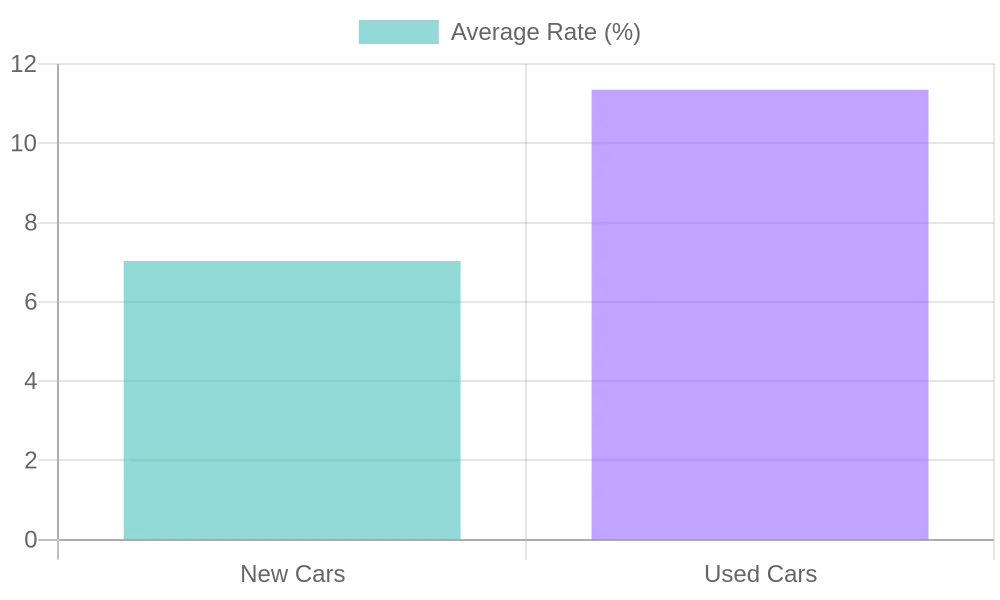
- Interest Rates: Average auto loan interest rates as of October 2023 are about 6.7% for new cars and 10.5% for used vehicles, significantly impacting overall financing costs. Read more about current rates.
- Down Payment: A larger down payment can reduce financing amounts and lower monthly payments.
- Vehicle Type: Newer vehicles may qualify for lower interest rates due to their retained value, whereas some used vehicles may incur higher costs.
Average Interest Rates for Auto Loans
As of October 2023, the average interest rates for auto loans significantly hinge on the borrower’s credit score. For new cars, rates typically range from 5.25% to 15.77%, while used cars see rates from 7.13% to 21.55%. This variance illustrates how crucial creditworthiness is in determining loan terms.
Interest Rate Comparison by Credit Score
A detailed breakdown of interest rates based on credit scores is as follows:
| Loan Type | Credit Score Range | Interest Rate Range |
|---|---|---|
| New Cars | Excellent (720+) | 5.25% to 15.77% |
| Used Cars | Excellent (720+) | 7.13% to 21.55% |
| Fair (650-699) | 11% to 15% (New) | |
| Poor (600-649) | 15% to 21% (Used) |
Research indicates that borrowers with higher credit scores frequently secure better rates, yielding significant savings over the duration of the loan. For instance, a single percentage point in interest can equate to thousands in additional payments over the lifetime of the loan.
For car buyers, understanding how their credit score aligns with the average market rates is imperative. A lower credit score not only increases monthly payments but may also hinder loan approval. This makes credit management a key focus area for potential auto buyers. For more financial strategies, learn more about managing truck ownership finances and the impact of current market trends.
Comparison of Auto Financing Options
When considering auto financing options, each choice presents distinct advantages and disadvantages depending on your financial situation and preferences. Below is a comparison of common auto financing options for individual car buyers, including their interest rates, terms, pros, and cons.
| Financing Option | Interest Rates | Terms | Pros | Cons |
|---|---|---|---|---|
| Bank Loans | 4% – 6% | 36 – 72 months | Fixed rates, established reputation | Longer approval processes |
| Credit Unions | 3% – 5% | 36 – 72 months | Lower rates, member-focused services | Limited availability of branches |
| Dealership Financing | 5% – 8% | 36 – 84 months | Convenience, promotional offers | Higher rates, potential upselling |
| Online Lenders | 4% – 7% | 24 – 60 months | Fast approval, competitive rates | Limited personal interaction |
Internal Links
-
For additional insights on managing financing for commercial vehicles, learn more here.
-
Explore how truck financing impacts economic strategies, read more on this topic.
How to Calculate Monthly Payments for Auto Loans
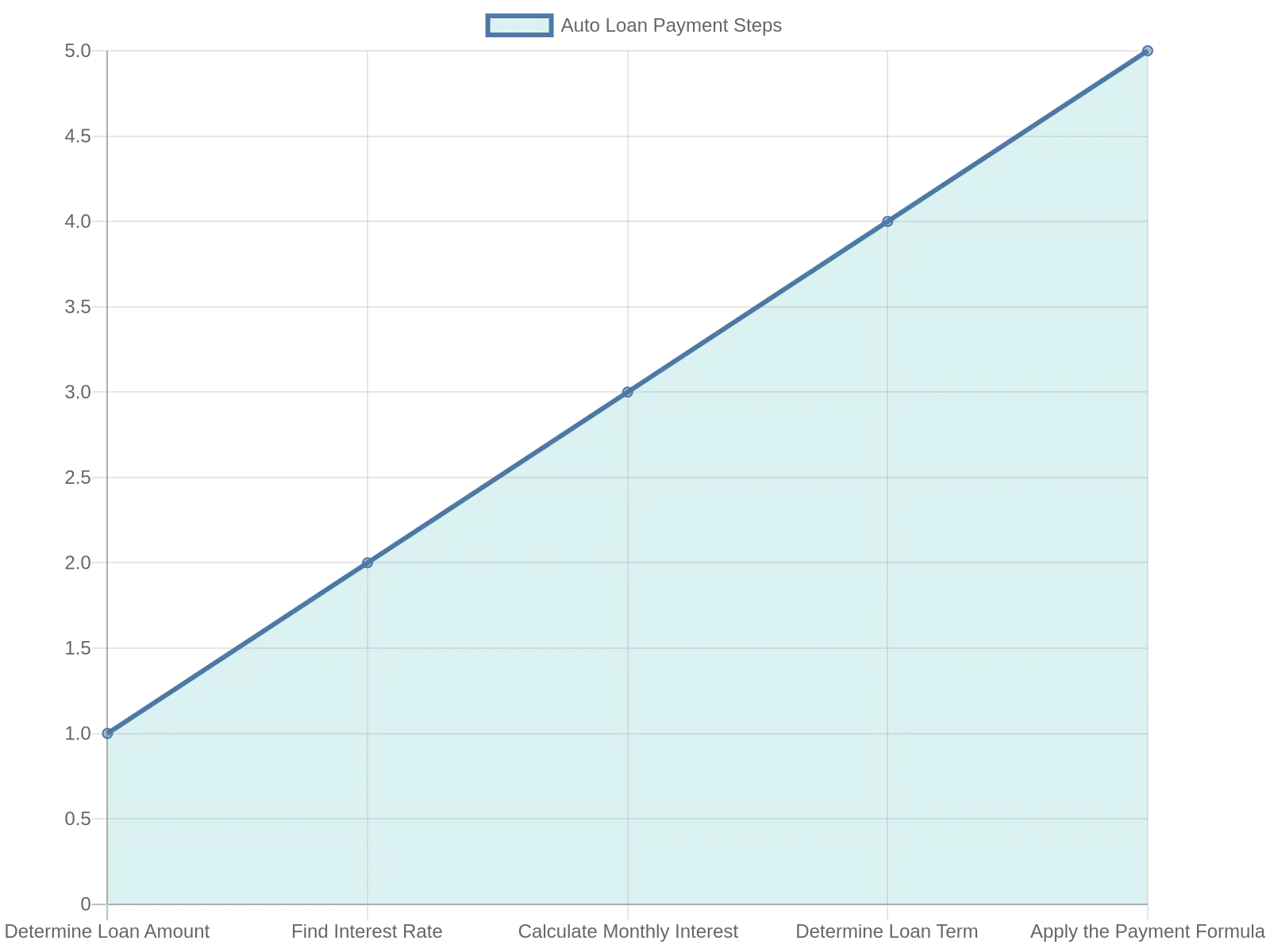
When purchasing a vehicle, understanding how to calculate your monthly payments is essential for managing your budget effectively. Here’s a step-by-step guide to help you calculate your auto loan payments accurately.
Step 1: Determine the Loan Amount
First, decide how much money you need to borrow. This typically includes the purchase price of the vehicle, minus any down payment or trade-in value. For example, if the car costs $20,000 and you make a $2,000 down payment, your loan amount will be $18,000.
Step 2: Find the Interest Rate
Next, research the current interest rates from various lenders. This rate can greatly affect your monthly payment. Let’s say you secure an interest rate of 5% annually.
Step 3: Calculate Monthly Interest Rate
Convert the annual interest rate to a monthly rate by dividing the yearly rate by 12. For a 5% annual rate:
Monthly Interest Rate (r) = 5% / 12 = 0.4167% or 0.004167 (when used in calculations)
Step 4: Determine Loan Term
Decide the loan term (the duration over which you will repay the loan), usually expressed in months. Common terms are 36, 48, or 60 months. For example, if you choose a 60-month term, you will be making payments for five years.
Step 5: Apply the Monthly Payment Formula
Use the following formula to calculate your monthly payment (M):
[ M = P \frac{r(1+r)^n}{(1+r)^n-1} ]
Where:
- M = Total monthly payment
- P = Principal loan amount
- r = Monthly interest rate
- n = Number of payments
In our example:
- P = 18,000
- r = 0.004167
- n = 60
Plugging these numbers into the formula gives:
[ M = 18000 \frac{0.004167(1+0.004167)^{60}}{(1+0.004167)^{60}-1} ]
Calculating this yields a monthly payment of approximately $347.73.
Example Summary
To recap, if you take an auto loan of $18,000 at an interest rate of 5% spanning 60 months, your monthly payment would be around $347.73. For more detailed information on managing auto loan finances, you can learn more about financing strategies.
Visual Reference
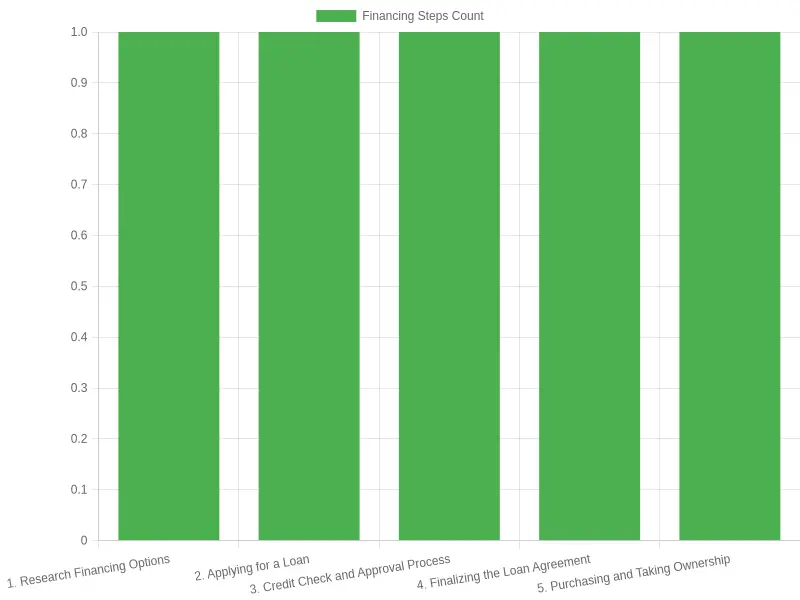
Here’s a flowchart illustrating the steps to calculate your auto loan payments.
“The cost of ignorance in financial decisions can be staggering. Understanding your budget and financing terms is crucial to avoid expensive mistakes.”
This quote emphasizes the importance of knowledge in auto financing, which can greatly impact financial health. For individuals interested in improving their financial management, understanding auto financing is essential.
Common Mistakes in Auto Financing
When it comes to auto financing, many buyers fall into common pitfalls that can result in unfavorable financial situations. Understanding these mistakes is crucial for making informed decisions. Here are some of the most prevalent mistakes:
1. Not Shopping Around for Rates
One of the biggest errors individuals make is failing to explore various financing options. Many buyers simply accept the financing offered by the dealership without comparing rates from banks, credit unions, or online lenders. This can lead to higher interest rates and increased monthly payments. Learn more about financing options.
2. Misunderstanding Loan Terms
Buyers often overlook the significance of fully understanding loan terms, including interest rates, the length of the loan, and hidden fees. Misinterpretations may lead to unexpected costs in the long run. It is vital to read the fine print and seek clarification on any terms that seem unclear. This allows buyers to avoid unpleasant surprises and make better-informed decisions. Learn more about misunderstandings in loan terms.
3. Ignoring Total Cost of Ownership
Many buyers focus solely on the monthly payment without considering the total cost of owning the vehicle. This includes not just the loan payments but also insurance, maintenance, fuel, and depreciation. Understanding the total cost of ownership can help buyers make more financially sound choices, ensuring they don’t stretch their finances too thin. For a detailed overview of costs, check out this resource.
By avoiding these mistakes, car buyers can secure better financing deals that align with their financial situations.
Monthly Payments Breakdown for Auto Loans by Term and Interest Rate
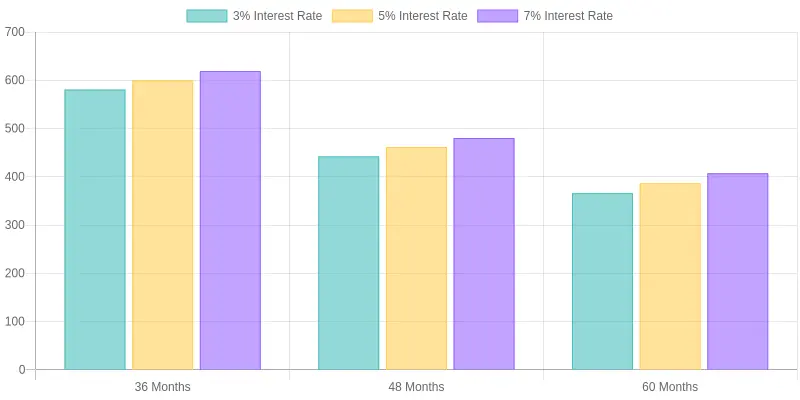
Understanding how loan terms and interest rates affect your monthly payments is crucial when calculating auto financing. Below is a visual breakdown of monthly payments for a $20,000 loan at different interest rates (3%, 5%, and 7%) and loan terms (36, 48, and 60 months).
Monthly Payment Table
| Interest Rate | Term (Months) | Monthly Payment |
|---|---|---|
| 3% | 36 | $580.61 |
| 3% | 48 | $442.21 |
| 3% | 60 | $366.03 |
| 5% | 36 | $599.88 |
| 5% | 48 | $461.74 |
| 5% | 60 | $386.66 |
| 7% | 36 | $619.14 |
| 7% | 48 | $480.33 |
| 7% | 60 | $407.24 |
Insights:
- Longer loan terms reduce the monthly payment but increase total interest paid.
- Higher interest rates increase the monthly payment.
This helps car buyers, dealerships, and fleet buyers make informed financing decisions based on their budget and cash flow preferences.
For comprehensive auto finance solutions and tips on managing truck ownership finances, you can explore more here and learn about managing truck ownership finances.
Conclusion: The Importance of Informed Auto Financing Decisions
In conclusion, making informed auto financing decisions is crucial for anyone looking to purchase a vehicle. Understanding your financial situation, loan terms, interest rates, and the dynamics of the auto market can significantly impact your long-term financial well-being. As discussed, carefully evaluating different financing options-whether through traditional loans or dealership financing-is essential. Additionally, obtaining pre-approval for a loan can empower you as a buyer, enabling you to negotiate better financing terms and helping you stay within your budget.
Being well-informed also allows consumers to recognize scams and avoid common pitfalls associated with auto loans. It is essential to keep track of market trends and be aware of your credit score, which will ultimately affect your financing options and interest rates. For more tips on managing your auto financing effectively, check out our article on smart car buying tips for first-time buyers.
As you consider your next vehicle acquisition, we invite you to think beyond just cars-perhaps it’s time to upgrade your motorcycle as well. Enhancing your ride with Summit Fairings can improve both aesthetics and performance, thereby enhancing your overall riding experience. Make the informed choice today for a better financial future!