

In the complex world of auto financing, understanding total finance charges is pivotal for anyone looking to purchase a vehicle-be it individual car buyers, auto dealerships, or small business fleet purchasers. Total finance charges, often overlooked, encompass the interest and additional fees incurred over the life of an auto loan, significantly impacting the overall cost of ownership. For car buyers, deciphering these charges can mean the difference between a feasible monthly payment and crippling debt. Auto dealerships need to be adept at this understanding, not just to streamline sales processes but also to provide transparent options to customers. Similarly, small business fleet buyers must calculate these charges meticulously; it ensures operational budgets reflect accurate costs, allowing for better financial planning. By grasping how to calculate total finance charges, stakeholders can make informed decisions, fostering a solid foundation for financial health in their automotive pursuits. Explore insights on financial management for first-time truck owners and consider the implications of auto finance solutions today.
Understanding Total Finance Charge in Auto Loans
When considering an auto loan, it’s essential for potential buyers to understand the term “total finance charge.” This term refers to the total amount of money that a borrower will pay over the life of the loan, including not just the principal and interest, but also any fees associated with obtaining the loan. The total finance charge is expressed in dollars, rather than as an interest rate, which can often provide a clearer picture of the overall cost of financing a vehicle.
Components of Total Finance Charge
The total finance charge typically includes several key components:
- Interest on the Principal Loan Amount: This is the primary component and is calculated based on the interest rate applied to the borrowed amount.
- Origination Fees: Some lenders charge upfront fees for processing the loan. These fees contribute directly to the total finance charge.
- Additional Charges: This can include costs related to loan insurance, late payment fees, and any other miscellaneous costs that are imposed by the lender throughout the loan period.
Understanding these components is crucial for buyers eager to evaluate the true cost of the loan they are considering. Without this knowledge, they might underestimate the financial burden they are taking on.
Importance for Buyers
Understanding the total finance charge helps consumers make informed decisions. Here’s why it’s important:
- Evaluating Costs: Knowing the total finance charge allows buyers to objectively compare different loan offers and understand which loan is truly more affordable over time.
- Budgeting: By clearly perceiving the complete financial obligation, buyers can better plan their budgets and avoid potential financial pitfalls.
- Financial Literacy: Gaining insights into the total finance charge promotes better financial literacy, empowering buyers to engage thoughtfully with financial products.
In conclusion, before entering into any auto loan agreement, it is critically important for buyers to scrutinize the total finance charge. This not only aids in selecting the most advantageous loan but also fosters long-term financial health and responsibility. For a deeper dive into managing loan costs effectively, you can learn more about financial implications.
Step-by-Step Guide to Calculate Total Finance Charges on an Auto Loan
Calculating the total finance charges on an auto loan is essential for smart financial planning. Here’s a structured approach to understand how these charges are calculated:
1. Gather Necessary Information
Before you begin, gather the following key information:
- Principal Loan Amount (P): The total amount borrowed.
- Annual Percentage Rate (APR): The yearly interest rate. Importantly, convert this into a monthly interest rate.
- Loan Term (n): The duration of the loan in months.
2. Convert APR to Monthly Interest Rate
To get the monthly interest rate ( r ), divide the APR by 12:
[
r = \frac{APR}{12}
]
For example, if the APR is 6%, then:
[
r = \frac{6\%}{12} = 0.5\% = 0.005 ext{ (as a decimal)}
]
3. Calculate Monthly Payment
Using the formula for the monthly payment ( M ) of an amortizing loan:
[
M = P \times \frac{r(1 + r)^n}{((1 + r)^n – 1)}
]
- Where:
- ( M ) = monthly payment
- ( P ) = principal loan amount
- ( r ) = monthly interest rate
- ( n ) = number of payments (loan term in months)
Example: For a $35,000 loan at a 6% APR over 60 months:
- Monthly interest rate ( r = 0.005 )
- Monthly payment calculation would yield:
[
M = 35000 \times \frac{0.005(1 + 0.005)^{60}}{((1 + 0.005)^{60} – 1)} \approx 677.23
]
4. Calculate Total Payments
Multiply the monthly payment by the total number of payments to find the total payments made over the life of the loan:
[
\text{Total Payments} = M \times n
]
For our example:
[
\text{Total Payments} = 677.23 \times 60 \approx 40633.80
]
5. Determine Total Finance Charges
Finally, subtract the principal amount from the total payments:
[
\text{Finance Charge} = \text{Total Payments} – P
]
Using the previous totals:
[
\text{Finance Charge} = 40633.80 – 35000 \approx 5633.80
]
Conclusion
Through these steps, we determine that the total finance charge for this auto loan scenario is approximately $5,633.80. Understanding this calculation helps in making informed decisions when financing an auto purchase.
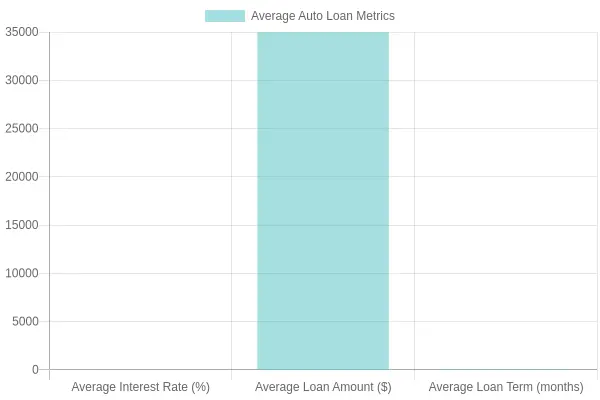
Average Auto Loan Metrics
To give context on the general conditions people are encountering in auto loans today, here are average metrics:
| Category | Value |
|---|---|
| Average Interest Rate | 6.0% |
| Average Loan Amount | $35,000 |
| Average Loan Term | 60 months (5 years) |
For more information on managing auto finances, check out our guide on managing truck ownership finances and explore auto finance solutions.
| Lender | Fee Structure | Interest Rates | Notes |
|---|---|---|---|
| Lender A | $500 origination | 3.5% | Competitive rates |
| Lender B | No origination fee | 4.2% | Flexible terms |
| Lender C | 2% of loan amount | 3.8% | Online application |
| Lender D | $300 flat fee | 4.0% | Good customer service |
| Lender E | $100 application fee | 3.7% | Fast processing |
Understanding the total finance charges on auto loans is crucial for buyers seeking the best financial decisions. Various factors can influence these charges, notably interest rates, loan term lengths, and the borrower’s credit score.
1. Interest Rates
Interest rates represent the cost of borrowing money, expressed as a percentage of the loan amount. According to sources like Credit Karma, higher credit scores lead to lower interest rates, which significantly reduce total finance charges. For instance, a borrower with a credit score above 750 may secure rates around 3% or lower, while those with scores below 600 might face rates upwards of 15%. Even a modest difference in interest rates can lead to substantial differences in total payments over the life of the loan.
2. Loan Term
The duration of the loan term also affects finance charges. Borrowers generally choose between short-term (e.g., 36 months) and long-term loans (e.g., 60 months or more). While longer terms result in lower monthly payments, they can also increase the total finance charges. For example, a $30,000 auto loan at 5% interest over 60 months could incur nearly $3,300 in interest payments, whereas a 36-month term at the same rate may total only about $1,800 in interest. Hence, opting for a shorter loan term typically results in significant savings on total finance costs.
3. Credit Scores
Credit scores fundamentally influence the terms and conditions of auto loans. Lenders use scores to assess risk, and those with higher scores generally receive more favorable terms. A good credit score not only results in lower interest rates but may also facilitate approval for larger loan amounts or less stringent repayment conditions. According to Experian, a higher credit score reduces perceived risk for lenders, making it essential for borrowers aiming to minimize whole finance charges.
Summary of Influencing Factors
In summary, potential car buyers should closely examine how these factors play a role in determining total finance charges on their auto loans:
| Factor | Impact on Finance Charges |
|---|---|
| Interest Rates | Lower rates reduce total payment amounts. |
| Loan Term | Longer terms lower monthly payments but increase overall costs. |
| Credit Scores | Higher scores result in lower rates and better terms. |
By understanding these elements, buyers can better navigate the financing landscape, ensuring a more economical choice when considering an auto loan. For additional insights on the financial implications of vehicle ownership, learn more about managing truck ownership finances.
This holistic approach can empower buyers to make informed and financially sound decisions when purchasing vehicles.
Tips to Minimize Finance Charges on Auto Loans
To effectively minimize finance charges on your auto loan, consider implementing the following actionable steps:
-
Shop Around for Loan Rates: Don’t settle for the first loan offer. Compare rates from various lenders, including banks, credit unions, and online lenders to find the best deal.
-
Improve Your Credit Score: Pay off existing debts, make timely bill payments, and reduce credit card balances. A higher credit score can lead to better financing rates.
-
Make a Larger Down Payment: The more you can put down upfront, the less you’ll need to finance, which reduces the overall finance charge and monthly payments.
-
Choose a Shorter Loan Term: While monthly payments may be higher, a shorter loan term can drastically reduce the amount of interest you pay over time.
-
Consider Automatic Payments: Many lenders offer interest rate discounts for borrowers who set up automatic payments from their bank accounts.
-
Refinance When Possible: If interest rates drop or if your credit score improves, consider refinancing your auto loan to take advantage of lower rates, which can help in reducing finance charges.
-
Pay More than the Minimum Payment: Whenever possible, pay extra towards the principal. This reduces the overall balance quicker, leading to lower finance charges over the life of the loan.
-
Avoid Additional Fees: Be aware of hidden charges associated with the loan, such as processing fees, and make sure to address any financing costs upfront.
By following these tips, you can effectively reduce the total finance charges incurred on your auto loan, ultimately saving you money in the long run. For more information on managing your auto finances, check out our guide on financial management for first-time truck owners.
Conclusion
Understanding total finance charges is crucial for car buyers, whether they are purchasing a vehicle for personal use or managing a small business fleet. The total finance charge, which encompasses the interest on the auto loan and other associated fees, directly impacts the overall cost of a vehicle. This knowledge enables buyers to make informed decisions that align with their financial situations and long-term investment goals.
Key takeaways include:
- Calculate Accurately: Knowing how to calculate total finance charges empowers buyers to compare different loan offers effectively. This often leads to more favorable financing terms and savings over the loan’s life.
- Be Informed about All Costs: Buyers should understand all components of finance charges, including potential fees associated with late payments, which can significantly increase the overall cost of the loan.
- Credit Impact: Awareness of how credit scores influence finance charges can encourage consumers to maintain good credit health, ultimately resulting in lower borrowing costs.
As consumers navigate the auto loan landscape, applying the strategies outlined in this article can lead to better financial outcomes. By understanding how to calculate and evaluate total finance charges, car buyers can secure loans that fit their budgets while ensuring they are not overpaying. For more insights about the financial aspects of truck ownership, learn more about managing truck ownership finances. Likewise, understanding alternative financing options can be critical as you evaluate your choices. Exploring auto finance solutions might uncover opportunities that suit your specific needs.
Equip yourself with knowledge, compare deals, and make sound decisions to enjoy your new vehicle without financial stress.
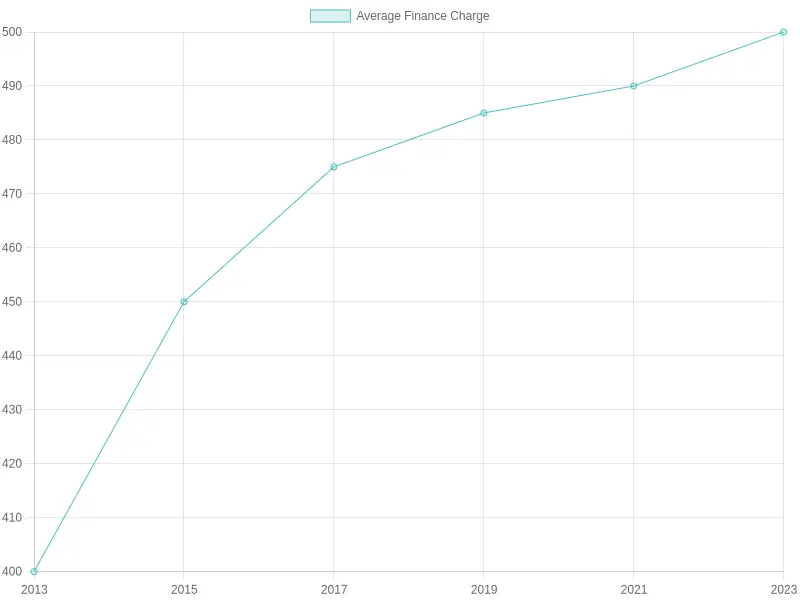
This chart illustrates the trend of average finance charges for auto loans from 2013 to 2023. Over the past decade, finance charges have steadily increased from approximately $400 to $500. This upward trend reflects overall rising interest rates and economic conditions impacting auto loan costs.
Understanding these trends is crucial for individual car buyers, dealerships, and small business fleet buyers as they plan their financing strategies. Being aware of increasing finance charges can help in negotiating better loan terms and managing total loan costs effectively.
For further insights on managing finances related to vehicle ownership, consider exploring articles on managing truck ownership finances which offers detailed financial strategies tailored for commercial vehicle buyers.
| Year | Average Finance Charge |
|---|---|
| 2013 | $400 |
| 2015 | $450 |
| 2017 | $475 |
| 2019 | $485 |
| 2021 | $490 |
| 2023 | $500 |
“Understanding the costs associated with auto loans is crucial. It goes beyond just the interest rate; factors like loan term, fees, and your credit score play significant roles in determining the total amount paid. Always compare offers to ensure you’re getting the best deal.”
- Financial Expert on Auto Loans
In understanding how to calculate the total finance charge on an auto loan, it’s essential to consider various components that contribute to the overall cost. This includes interest rates, loan terms, and any additional fees. By grasping these elements, buyers can make informed decisions and potentially save money over the life of the loan.
For more insights on managing finances related to vehicle ownership, you can learn more about managing truck ownership finances.
Ultimately, becoming well-versed in auto loan costs allows for smarter financial planning and better investment in personal or business transportation needs.