
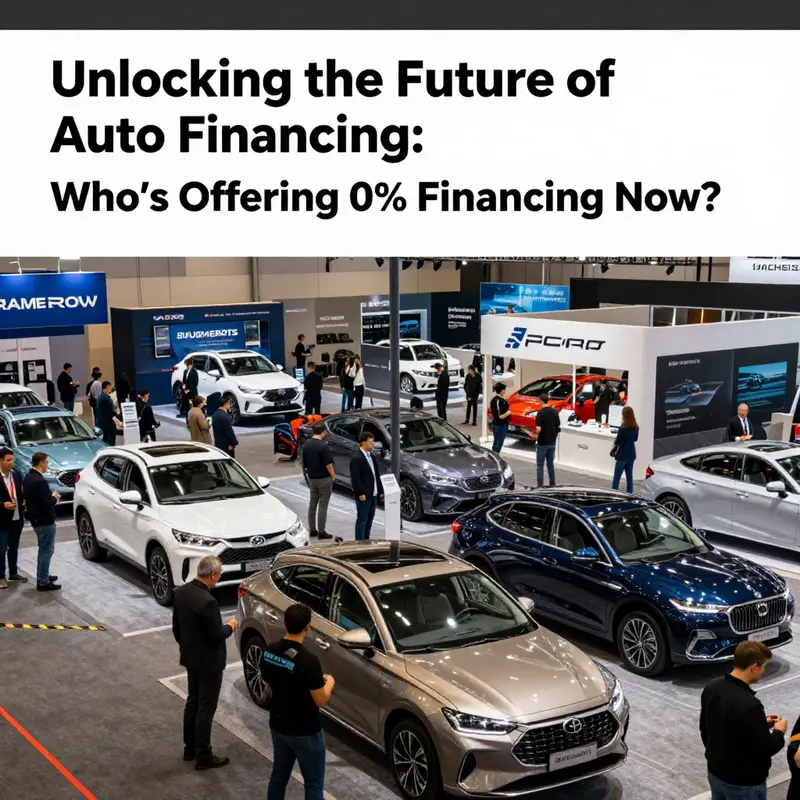
As the automotive market in 2026 evolves, the introduction of attractive financing options such as ‘0 down payment’ and ‘0% interest loans’ is becoming increasingly prevalent. This trend primarily aims to attract individual car buyers and ensure competitiveness among dealers and brands. Mainstream automotive brands like Tesla and emerging companies like Xiaomi Auto are leading the way with long loan terms that appeal to consumers. Traditional brands, on the other hand, are offering zero-interest loans with stringent qualifications that cater to high-credit individuals. Meanwhile, B2B trade firms are adapting to the needs of small businesses by providing flexible financing solutions that enable fleet purchases. In this analysis, we will delve into these various offerings, their implications for individual consumers and businesses, and the broader strategies they embody in an evolving market.
Shifting Gears: Who Is Offering 0-Down Auto Financing in 2026 and What It Means for Buyers
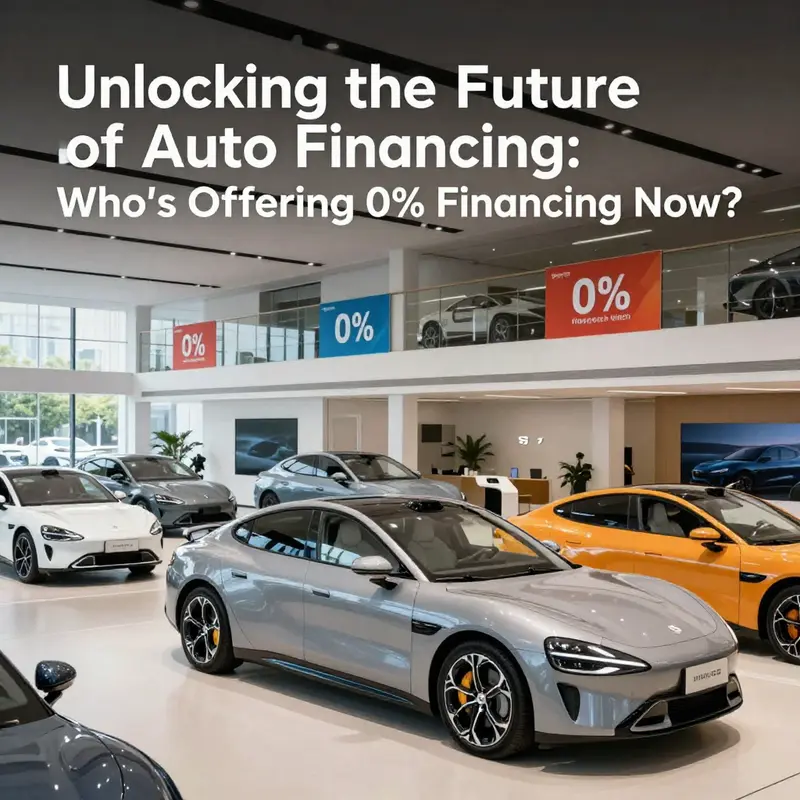
A new cadence runs through the car market as the calendar turns to 2026: a surge of financing schemes designed to lower the barrier to entry, often framed as 0 down, zero percent down, or ultra-long low-interest loans. The sale floors aren’t simply lowering sticker prices; they are rewriting the math of ownership. In this climate, the question for many buyers becomes not just whether a car is affordable, but how the financing structure reshapes what “affordable” means over time. The answer isn’t a single label or a single provider. It is a spectrum that stretches from mainstream automotive brands to traditional dealers, and even extends into the world of large trading houses and export networks that serve emerging markets. What ties these disparate players together is a shared aim: to extend repayment horizons and soften monthly commitments enough to pull buyers across the finish line. Yet behind the gloss of attractive monthly figures lies a careful balancing act between immediate affordability and long-term cost, risk, and opportunity cost for the buyer.
For consumers, the most visible thread in this tapestry is the set of offers that translate into a 0 down payment at the outset and push much of the total cost into longer repayment terms. Some brands promote a seven-year window with low, sometimes near-zero, interest in the early years. Others frame the deal as a stepwise reduction in the effective cost through promotional periods that lock in 0% interest for the first several years, followed by a modest rate thereafter. The underlying logic is simple: by spreading the price over a longer horizon, the monthly payment becomes more manageable, and the perceived accessibility of new wheels increases. In a market where monthly cash outlays compete for attention every month, this framing can be powerful cognitive leverage for buyers who might otherwise be discouraged by upfront costs or short-term financing therewith.
From a strategic perspective, the mainstream brands crafting these programs are balancing several levers at once. They want to preserve revenue margins while accelerating vehicle turnover and building loyalty in a competitive segment, especially as new entrants push into the market with glossy promises of long-term affordability. The long-term financing options often come with caveats that reward timely payments and discourage aggressive prepayment. A seven-year horizon can serve as a living advertisement for affordability, but the total interest paid over the life of the loan can be higher than a shorter-term loan with a higher monthly payment. Buyers who anticipate keeping a vehicle beyond the initial promotional period should enter these agreements with clear calculations of total cost of ownership—not just the first three or five years of low or zero interest. The difference can be substantial when depreciation, maintenance, insurance premiums, and potential penalties are layered into the calculation.
Beyond the consumer-facing banner offers, a parallel and increasingly influential strand operates in the business-to-business space. In central regions of manufacturing hubs, large automobile trading companies have built ecosystems that enable zero-financing structures for non-OEM buyers, including importers, distributors, and fleets that operate in developing markets. These traders aren’t selling directly to end users but rather to organizations that assemble fleets or maintain regional distribution networks. They leverage a combination of trade guarantees, digital platforms, and carefully tiered payment plans to reduce risk for both seller and buyer. Digital trade assurance systems, such as formal guarantee mechanisms on trusted marketplaces, provide a backbone of confidence that makes these complex arrangements possible. The effect on the retail landscape, while more indirect, is meaningful: when the channel partners behind the scenes can offer zero-down or ultra-long terms, the downstream buyer—whether a consumer or a fleet manager—gains access to more favorable budgeting, more predictable cash flow, and a wider set of models that can be financed under the same umbrella.
For those exploring these offers, a key distinction emerges between down payment expectations and the credit criteria that accompany them. In many programs, a zero-down approach is paired with stricter credit requirements or a more conservative debt-to-income ratio. The stories behind eligibility often include a premium on credit quality, sometimes framed as a high credit score threshold or a demonstrated track record of timely payments. The paradox is that while the monthly burden may look lighter, the overall risk profile of the loan can be higher if the borrower cannot sustain the long-term obligation in the face of changing circumstances—job shifts, interest rate fluctuations after promotional periods, or unforeseen maintenance costs that compound when the principal is still largely outstanding. Buyers are advised to look beyond the headline terms and to scrutinize the fine print: prepayment penalties, administrative fees, annual maintenance surcharges, and any cap on mileage that could convert a seemingly generous offer into a costly trap over time.
One useful lens through which to view these offers is the total cost of ownership. The sticker price is merely the opening act; the financing terms, maintenance costs, insurance, fuel or energy costs, and resale value all contribute to the true expense of owning a vehicle. A 0 down loan with a seven-year horizon can lower monthly payments to a comfortable level, but it can also lock a buyer into a higher cumulative interest cost if the rate remains low only for a portion of the term or if depreciation accelerates in the early years. The risk of negative equity—owing more on the loan than the car is worth—can be amplified when the loan extends well beyond the typical 3-to-5-year loan cycle that many buyers expect. In this sense, the “0” or the “lowest possible rate” becomes a strategic decision. It asks buyers to consider their expected mobility, job stability, and anticipated changes in vehicle needs over the life of the loan.
For readers navigating this terrain, a practical step is to compare offers on a like-for-like basis. Translate each option into a common metric: the total amount paid over the life of the loan, the schedule of payments, and the scenario under which the promotional terms end and the standard rate applies. This comparison should include potential fees hidden in the fine print, such as processing fees, accelerated repayment penalties, or mileage-based discounts. Another important factor is the option to refinance once any promotional period ends. Some buyers may find that refinancing at a lower rate or under shorter terms can substantially reduce the total cost, but this path requires favorable credit conditions and market rates that support a prudent refinancing decision. Consumers should not assume that initial affordability guarantees long-term savings; instead, they should run multiple scenarios, including the costs of keeping the car for the entire term versus trading in early to capitalize on newer models with fresh promotional terms.
The discourse around who is offering these arrangements is as much about narrative as it is about numbers. In the mainstream segment, several well-established brands have publicly embraced extended-term financing and remarkably low early-rate promotions. While the specifics vary by model and market, the thrust is to deliver a lower entry price that makes the vehicle appear affordable at first glance. For a reader seeking to understand the broader picture, it helps to recognize that these programs are part of a broader strategy to sustain demand in a volatile environment where supply constraints, competition, and consumer expectations are constantly evolving. This is not merely a marketing tactic; it is a structured approach to pricing and credit that intertwines the vehicle’s value proposition with the financing terms that customers accept as a condition of purchase.
Within this landscape, consumer education remains essential. Buyers should view financing as a component of the vehicle’s price proposition rather than as an afterthought. The decision to accept a 0-down plan should be paired with honest assessments of how long the buyer expects to own the vehicle, whether the model’s residual value holds up in the face of new entrants, and how the choice aligns with personal financial goals. A robust approach includes looking at the loan’s effective annual percentage rate after the promotional period, calculating how much equity might be left if the vehicle is sold or traded in early, and reviewing maintenance plans that may be bundled into the financing package. For those who want deeper context, the knowledge landscape around financing strategies offers useful frameworks to interpret these offers. Readers can explore practical discussions and data-driven insights in the broader knowledge resources available at the Knowledge hub.
As buyers weigh the allure of 0 down or seven-year low-interest deals, it is worth considering how these terms shape consumer expectations for vehicle ownership. The promise of low monthly payments can reset what buyers anticipate as normal in terms of depreciation cycles and upgrade timing. If the industry trend toward extended terms continues, the calculus of when to buy, when to hold, and when to upgrade may shift accordingly. The ecological and economic rationale behind these moves is not simply about selling more cars; it is about how financing structures influence the speed and pattern of fleet renewal, the utilization of credit, and even the way households budget for major purchases across multiple years. In this sense, the current wave of 0-down and low-interest offers can be seen as both a market experiment and a practical instrument for customers navigating a landscape of rising costs and shifting incentives.
For readers who want a consolidated view of financing strategies and risk considerations, the chapter on 0 auto financing in 2026 provides a foundation for further exploration. It invites readers to engage with the broader discourse about how credit, policy signals, and market competition interact with consumer behavior. The discussion here deliberately centers on strategic thinking rather than on brand-by-brand listings, because the core concern for most buyers is not which badge is offering the best headline rate, but how the offered terms affect long-term ownership, financial flexibility, and personal comfort with debt. Those who seek more concrete, model-specific guidance can turn to the widely available resources in the industry knowledge bases, such as the Knowledge hub, which aggregates practical considerations, calculators, and peer experiences to illuminate what these financing structures mean in real life. See the Knowledge hub for deeper dives and scenarios that align with individual circumstances.
External resource: https://www.bloomberg.com
Zero as Strategy: How Traditional Brands Redefine 0 Auto Financing for Buyers and Fleets

Zero financing has shifted from a marketing gimmick to a true strategic tool for traditional automakers seeking to stay competitive in a market undergoing rapid change. At the dawn of 2026, a spectrum of mainstream brands rolled out financing options that tilt the playing field toward buyers who crave lower monthly payments, longer horizons, and flexibility in how they manage cash flow. The effect is twofold: households eyeing new or used vehicles can access payments that feel almost like a purchase they can bear this month, while fleets and business buyers gain tools to manage capital and depreciation in an era of rising digital integration and global logistics. In this evolving landscape, the phrase 0 auto financing no longer signals a single, uniform offer. It signals a portfolio—one that blends zero down, zero interest, and long-term credit with model selection, creditworthiness, and regional policy nuances. For the consumer, the experience is often framed around the balance between affordability and total cost of ownership; for fleets, it becomes a matter of risk management, liquidity, and cross-border capability that keeps operations humming across continents.
The most visible shift on the consumer side is the emergence of ultra-long loan terms and aggressively structured down-payment options. Where a traditional loan once spanned five years, it is now common to encounter promotions that extend to seven years or longer. The practical effect is a dramatic reduction in monthly obligations, making seemingly out-of-reach vehicles affordable for a broader slice of buyers. This is not purely a matter of clever marketing. It reflects a broader policy and market environment in which lenders and automakers seek to align financing with evolving consumer needs, including the desire for predictable monthly budgets in an economy that sometimes experiences volatility in income and costs. In many markets, the bouquet of offerings includes flexible down payments, low or zero-interest promotions, and, in rare cases, even arrangements that allow customers to defer principal payments for a period. The principle is simple: when monthly cash flow becomes friendlier, the friction of ownership eases, and more people consider upgrading to a newer vehicle with better safety, efficiency, or connectivity.
Yet the reality behind zero-down or zero-interest promises is nuanced and highly conditional. Many promotions are model- and region-specific, limited by time, and contingent on creditworthiness. In practice, a strong credit profile—often a high credit score coupled with steady income and a favorable debt-to-income ratio—opens access to the most attractive terms. In many markets, 0% down or 0% APR packages are reserved for highly qualified applicants and certain high-demand models. Shorter repayment horizons—typically 36 to 48 months—still accompany some zero-interest offerings, ensuring that lenders retain manageably predictable risk levels while borrowers benefit from a lower monthly payment. A parallel development is the occasional introduction of products that resemble “no principal loan” or “easy financing” options, which permit customers to defer some or all principal repayments for a defined period. These products can ease the very first year after purchase, a period when tight budgets and expanding household expenses often collide with the lure of upgraded mobility.
From a brand perspective, these financing approaches are part of a broader modernization play. Traditional automakers are keen to present themselves not only as reliable, long-standing manufacturers but as nimble fintech-adjacent brands capable of tailoring financial products to fit a digitally empowered customer base. This appears, in many markets, as a deliberate attempt to speak the language of younger buyers who have grown up with flexible payments and subscription-like experiences. The emphasis is less on a single calendar of promotions and more on a configured experience—one that couples the right vehicle with the right financing terms, adjusted for the buyer’s credit profile, regional regulatory framework, and the vehicle’s energy and technology characteristics. In this sense, financing catalogs become a signal of inclusivity and adaptability rather than a static sales tool.
The regulatory backdrop plays a pivotal role in shaping what lenders are willing to offer and under what conditions. A notable driver in recent years has been the state’s encouragement of more accessible lending terms for a broad range of borrowers. When policymakers enable lenders to adjust down payment requirements based on borrower creditworthiness and the vehicle type, the barrier to entry for many buyers is materially lowered. This policy openness is particularly meaningful for new energy vehicles (NEVs) and other newer configurations, where heightened interest in adoption intersects with environmental and economic objectives. The regulatory intent becomes clearer when seen against the backdrop of a broader push toward digital finance, where risk assessment can leverage a richer set of data and friction between the lender and borrower can be reduced through trust-building mechanisms and trade assurance platforms.
The push to broaden access to 0 auto financing is not limited to traditional consumer channels. A distinct and increasingly important dimension arises in fleet and trade finance. In central regions of large economies, a cluster of automotive traders and exporters has built up capabilities to offer zero-financing transaction structures to importers, distributors, or fleet operators across continents, including Africa, the Middle East, Southeast Asia, and South America. These arrangements are not typically tied to the original equipment manufacturers; instead, they are grounded in the region’s mature industrial ecosystems, robust logistics networks, and sophisticated risk-management practices. By pairing flexible payment terms with digital trade guarantees—often facilitated by established platforms—the traders can mitigate the risk of cross-border, multi-party deals. The upshot is a credible alternative for buyers who want to move beyond traditional dealer finance and engage with a network that can extend credit, support logistics, and stand behind payment promises. In this space, zero financing becomes a strategic lever for market expansion, enabling fleet operators to assemble and deploy vehicle assets with a rhythm that aligns with cash flow cycles and project horizons rather than with a single purchase event.
The consumer story and the fleet narrative are not isolated. They intersect in a larger perception of ownership, value, and the path to mobility in a digitized age. The brands that succeed in this environment are those that balance affordability with responsibility. They communicate clearly about the total cost of ownership, highlighting how long-term payment structures affect depreciation, maintenance, insurance costs, and resale value. This is particularly important as longer repayment periods can alter the balance sheet in meaningful ways; the total amount paid over seven years, while lowering monthly costs, may accumulate additional interest and carry risks related to residual value and model updates. Buyers are increasingly provided with transparent calculations that help them compare scenarios—what it costs today versus what it costs over the life of a loan, and how total outlay translates into long-term mobility and reliability.
For readers who want a practical sense of the ecosystem, a useful entry point lies in the cross-border and fleet-finance dimension. Central Chinese automotive traders have built networks and digital risk controls that enable them to offer 0 financing structures to international buyers. These setups rely on trade guarantees and digitized documentation to reduce fraud, align payment schedules with supply chains, and smooth the experience for distributors and fleet operators. The model is not a blanket policy; it is a carefully managed toolkit that uses the country’s logistics strengths and financial networks to unlock capacity in regions where traditional consumer credit models may be less mature. Importantly, these arrangements often come with governance around export terms, warranty coverage, and service commitments that reassure buyers who are coordinating multiple parties and long-term asset utilization.
The regulatory and market conditions described above have a practical impact on how ownership is understood. The era of the car as a simple a-to-b purchase is receding. Vehicles are increasingly acquired through blended arrangements—financing paired with maintenance plans, telematics services, and upgrade options that allow customers to refresh fleets or households in a measured, predictable way. The net effect is a mobility ecosystem that emphasizes flexibility and resilience. The consumer who chooses 0 financing may enjoy the relief of lower monthly payments; the fleet manager who opts for a 0 financing structure gains working capital that supports asset deployment, expansion, and modernization. In both cases, the decision is embedded in a broader calculus about risk, opportunity, and the capacity to align mobility with strategic objectives.
Among the broader narratives shaping these trends is the evolution of brand images. Traditional automakers are not surrendering price competition to fintech disruptors; they are partly borrowing technology and financial innovation to reframe themselves as partners who can smooth the path to ownership. For younger buyers, who may be accustomed to digital experiences and transparent pricing, the alignment of financing with a modern customer journey matters as much as the product itself. When a brand can offer tailored terms that fit different credit profiles and life stages, it becomes more than a marker of reliability; it becomes an enabler of mobility, productivity, and personal or business growth.
For readers seeking a practical pathway to understanding these dynamics, consider sequencing your exploration around two interlinked questions. First, who benefits most from 0 auto financing in your market—individual buyers with solid but not extraordinary cash flows, or fleets seeking capital discipline and scalability? Second, what role do government policy and cross-border trade guarantees play in expanding access to these terms? The answers are not uniform, and they evolve with new data, shifting risk appetites, and the continual development of credit-scoring models and data-sharing agreements. They also reflect a larger shift in the auto industry toward a more holistic, financially aware ownership experience that treats payment terms as a strategic lever rather than a promotional hook.
For readers who want to dig deeper into how these financing philosophies translate into on-the-ground practice, a practical entry point is to explore the broader knowledge base around fleet management and ownership finances. See Managing Truck Ownership Finances for a framework that translates credit terms into fleet budgeting, risk assessment, and lifecycle planning. While consumer offers remain central to retail decisions, the fleet perspective provides a complementary lens—one that shows how 0 financing can be scaled, governed, and integrated into a company’s procurement and asset management strategies.
The dialogue around 0 auto financing is far from monolithic. It is a mosaic of consumer promotions, lender risk controls, regulatory nudges, and cross-border trade dynamics that together shape what buyers encounter in showrooms and on import lots. In this mosaic, traditional brands are choosing to act not as passive participants in a restructuring of credit terms but as active architects. They test what it means to offer terms that are not only financially attractive but also aligned with consumer expectations, policy objectives, and the realities of global logistics. The result is a market where zero down and low-interest arrangements are not sporadic exceptions but persistent features of a broader strategy to keep households and fleets moving in a rapidly digitizing world.
External reference: https://www.pbc.gov.cn/en/3253165/3253179/4289715/index.html
Zero-Interest Global Car Flows: B2B Trade Financing Across Markets

A quiet shift is redefining how fleets are built and how inventories move across borders in the global auto market.
In the B2B layer, zero-interest financing is often implemented not as a direct loan to a buyer, but as an orchestrated solution involving traders, financing partners, and purchasers. Export-oriented traders secure credit lines from banks or specialized lenders, then package a vehicle price with an arranged facility that stretches over 12 to 36 months. The buyer pays installments that effectively carry zero interest, while the financing partner bears much of the credit risk. The trader provides market access, reliability, and logistics that sustain the deal.
Mechanics vary by region but share core patterns: the trader signs with the supplier, coordinates with a financing partner, and uses interlinked contracts to align supply, risk, and cash flow. A central element is credible risk assessment based on the buyer’s operating history rather than consumer credit, and the buyer’s commitment to a steady order cadence and delivery schedule.
Geographic scope extends from manufacturing hubs in China to global markets via risk-managed platforms and guarantees such as trade assurance. Platforms specializing in asset-backed and supply-chain finance help standardize terms and reduce counterparty risk, enabling 12- to 36-month zero-interest arrangements across multiple suppliers and markets. The result is a procurement model that accelerates cross-border entry while preserving credit discipline for financiers and steady demand for traders.
Readers should see this as a coordinated ecosystem where supply, liquidity, and logistics are stitched together. It is not a gimmick but a disciplined approach to extend purchasing power in capital-constrained environments, while preserving incentives for all parties to maintain quality, on-time delivery, and post-sale support.
Zero Financing, Global Reach: Redefining Auto Markets and Supplier Relationships

A new texture is appearing in the auto market: offers that promise little or no upfront payment, paired with long horizons and flexible terms. These 0 financing structures have moved beyond simple promotions intended to lure buyers. They have become strategic tools that influence how products move from factory floors to foreign docks, how risk is allocated between suppliers and buyers, and how quickly fleets can scale to meet shifting urban and regional needs. The shift is particularly pronounced in the B2B space, where exporters and trading houses in large industrial clusters leverage these terms to differentiate themselves, win large orders, and build enduring relationships with importers, distributors, and fleet operators across continents. In this context, 0 financing is less about subsidizing a single purchase and more about shaping a collaborative ecosystem that accommodates cash flow constraints, credit gaps, and logistical realities that have become more visible in the last several years.
Crucially, these arrangements are rarely direct loans from manufacturers. Instead, they are flexible transaction structures that reduce the upfront capital burden for buyers who still need scale to enter new markets. By lowering the barrier of initial expenditure, exporters can attract high-intent buyers who have the appetite to commit to long-term procurement but may be constrained by working capital or access to traditional banking channels. The incentive for the seller is not merely to close a deal but to foster reliability and repeat business. When a buyer enters a relationship under a 0 financing framework, they are signaling readiness to place larger orders and to maintain ongoing collaboration. That dynamic shifts the conversation from a single-sale mindset to a multi-sale rhythm, where payment terms, delivery schedules, and credit checks become ongoing negotiation points rather than one-off concessions.
The operational logic behind 0 financing is grounded in meticulous risk management. Terms are not automatically granted; they hinge on order volume, the buyer’s demonstrated reliability, and platform-mediated due diligence. The structure often relies on staged payments aligned with the shipment and acceptance milestones. In a digital era, these arrangements are increasingly integrated with secure, platform-enabled processes that monitor performance, verify compliance, and regulate phased payments. The aim is to reduce the seller’s upfront risk while preserving the buyer’s liquidity, so both sides can participate in larger, faster-moving deals that would be difficult under traditional payment schemes. For buyers who operate fleets or serve rapid-rotation delivery networks, the financial cadence becomes almost as important as the product attributes themselves. A favorable payment structure can unlock the ability to deploy new vehicles into a last-mile or micro-mobility operation with a level of agility that conventional financing would not permit.
From the supplier perspective, zero-interest or zero-down financing acts as a differentiator in a crowded market. Price competition is potent, but the ability to offer liquidity on the buyer’s side reshapes the arms race. Suppliers that master these terms can attract a more diverse set of buyers, including those who lack deep credit histories or who operate in regions where traditional credit channels are less developed. This is especially relevant when suppliers aim to expand into emerging markets where logistics networks and distribution ecosystems are well established, but formal credit histories may be sparse. The 0 financing option becomes a signal of commitment to a partner’s growth trajectory. It communicates a willingness to shoulder part of the cash-flow risk in exchange for access to a broader, more scalable customer base. The payoff is not only in the size of a single order but in the potential for long-term collaboration across cycles of demand, maintenance, and eventual replacements within a buyer’s fleet.
A striking feature of this trend is the increasing role of digital trade assurance-like frameworks that secure a series of payments across transit and instalment milestones. Although the exact mechanisms vary, the core idea is straightforward: a risk-mitigated structure that reduces the probability of non-performance for both parties. For buyers, this can translate into increased confidence to place larger or more frequent orders. For sellers, it reduces the hazard of late payments and defaults, enabling more aggressive growth plans. Such frameworks often employ a combination of verifiable documents, staged guarantees, and real-time monitoring of logistics performance. They enable smaller or younger trading entities—sometimes with credible logistics networks but limited credit histories—to participate in markets that previously demanded extensive banking relationships or long-standing commercial pedigrees. This is a meaningful democratization of access in the global auto trade, where geography and credit history used to be insurmountable barriers to scale.
The geographic dimension of these programs is equally consequential. A growing chorus of exporters in central regions of large economies is building networks that connect with buyers across Africa, the Middle East, Southeast Asia, and Latin America. These exporters rely on established logistics, warehousing capacity, and cross-border shipping lanes to present a compelling proposition: cost-effective entry, reduced upfront risk, and predictable payment streams. The logistics backbone matters as much as the financing terms. A reliable distribution and after-sales framework, including repair networks and spare parts availability, makes a 0 financing plan more than a cash-flow gimmick; it becomes a credible, end-to-end service offering. Buyers in distant markets gain a pragmatic pathway to grow their fleets or inventories without tying up capital that would otherwise be needed to import, stock, and maintain vehicles.
In this ecosystem, the role of a trusted intermediary grows. Large trading houses in central hubs act as the confluence where suppliers, importers, and fleet operators meet. They provide the market intelligence, due diligence, and risk management infrastructure that makes 0 financing viable on a broad scale. These intermediaries do not replace the traditional levers of creditworthiness; rather, they complement them with organized processes, standardized terms, and clear performance metrics. They also enable scale by aggregating demand. A buyer who would need multiple small purchases over time can instead commit to larger, longer-term procurement plans with a single, bankable financing package. The efficiency gains here are material: fewer negotiations, more predictable delivery calendars, and a more stable revenue stream for the seller. In the long run, this alignment reduces the frictions that have limited cross-border auto trade in the past and promotes a more mature, data-informed market where risk is visible, quantifiable, and managed rather than hidden behind opaque credit lines.
To readers seeking a fuller sense of how these dynamics fit into a wider sourcing and risk-management landscape, the literature emphasizes the connection between financing terms and long-term supplier relationships. A January 2026 guide on strategic sourcing, drawn from B2B market intelligence, notes that the real value of 0% financing lies not in a one-off discount but in the ability to anchor a durable pathway for repeated transactions. The guide highlights the integration of financing with digital platforms that provide payment security, milestone-based verification, and traceable performance. These elements collectively create a more trustworthy channel between buyers with ambitious regional expansion plans and suppliers eager to secure high-volume commitments. In practice, the most successful programs are those that balance ambition with discipline: they set clear minimum order thresholds, require credible logistics partners, and anchor every deal in a framework of mutual accountability. The result is a marketplace where financial terms reinforce reliability rather than eroding it.
This broad shift has implications for consumer access as well. While the most visible 0 financing offers for individuals tend to surface alongside newer, electrified product lines, the underlying effects are more pervasive. When B2B financing structures succeed, they expand the pool of buyers who can participate in cross-border markets. That expansion, in turn, pushes consumers to see a wider array of options and more favorable terms because manufacturers and traders face competitive pressure to optimize every stage of the value chain. The consumer experience may begin at a local showroom with a seemingly standard loan or lease offer, but the pricing discipline, delivery speed, and service reliability that emerge from a well-functioning 0 financing ecosystem feed back into consumer financing by shaping what is perceived as affordable or value-creating over the life of a vehicle. The result is a market where financing is not merely a backdrop but a central instrument in how vehicles—whether new, electrified, or hybrid—move through global supply chains and into the hands of end users.
Readers looking to explore the mechanics and governance of these deals can consult broader resources on cross-border procurement and risk-sharing, including discussions of how vended guarantees, staged payments, and authentication protocols contribute to trust in supply chains. For more practical context on how such structures are approached in large-scale automotive trade, see the external resource linked below. And for those seeking to deepen their understanding of the foundational concepts and terms that underpin these arrangements, a concise overview can be found in the internal knowledge hub of our reference site. Knowledge is power when navigating the interplay between liquidity, logistics, and long-term relationship-building in today’s auto markets. knowledge.
As the landscape evolves, this chapter tracks a broader question: who ultimately benefits from zero- or low-cost financing terms, and how does that shape the industry’s trajectory? The answer lies in the convergence of three forces. First, the strategic instinct of exporters to differentiate through service and reliability rather than price alone. Second, the calculated risk-taking of buyers who leverage financing to accelerate growth while maintaining cash flow discipline. Third, the emergence of robust, platform-enabled risk management and payment architectures that translate promises into verifiable performance. Together, these forces create a more fluid, more scalable, and more resilient auto market that can respond to the needs of diverse buyers and diverse geographies without sacrificing financial stability.
In the chapters that follow, we will return to the consumer-facing implications and examine how the financing choices of producers, traders, and fleets intersect with the evolving policy and regulatory contexts in major markets. The narrative will circle back to the ways in which banks, credit unions, and fintechs respond to the new rhythms of auto financing, and how this translates into more predictable, accessible options for individual buyers who still belong to the broader ecosystem that enables zero- and low-interest transactions to exist in the first place. The overarching thread remains constant: financing is not a peripheral aid to selling cars; it is a core mechanism that shapes market access, supplier credibility, and the speed at which global mobility can be expanded in a manner that is both economically sound and operationally practical.
External resource: https://www.alibaba.com/sourcing-guide/automotive-parts-0-interest-financing
Final thoughts
The rise of 0 auto financing reflects a significant shift in the automotive market, catering to diverse consumer needs from individual buyers to business fleets. As the competition intensifies, mainstream brands are capitalizing on attractive financing terms to win over customers. Meanwhile, traditional brands enforce selective offers focusing on credit qualifications. In the B2B arena, trade companies are emerging as pivotal players, providing flexibility tailored specifically for small businesses. Together, these strategies signify an evolving landscape where financing is increasingly accessible and personalized, encouraging more individuals and businesses to embrace car purchasing.