

Navigating the world of auto financing can be daunting, especially with the plethora of offers available to individual car buyers, auto dealerships, franchises, and small business fleet buyers. One of the most compelling offers you may encounter is the 0% financing option, which allows eligible individuals and businesses to purchase vehicles without paying interest over the financing term. This guide will explore the types of vehicles eligible for 0% financing, the eligibility criteria set by dealerships, promotional periods during which these offers are most commonly available, the regional variations that may affect financing options, and how to compare offers effectively. Understanding these factors can empower buyers to make informed decisions, ensuring that they not only enjoy attractive financing terms but also select the right vehicles for their needs.
Zero-Interest Pathways: How Auto Dealers Structure 0% Financing Across Vehicle Types
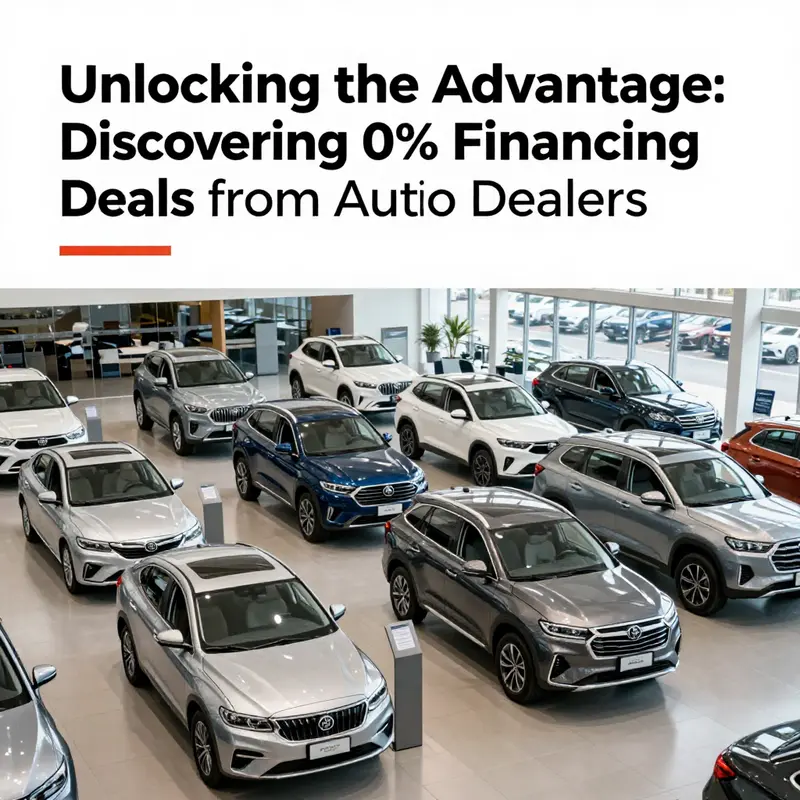
0% financing promotions can draw shoppers in, but they are not free money. They are structured with lender subsidies, model-year strategy, and buyer qualifications. New-car offers are common because manufacturers subsidize the rate to move stock and promote newer technology. Buyers typically need a strong credit profile and may face conditions like limits on loan-to-value or mandated financing through the manufacturer’s captive arm. Even with 0%, adding optional products can raise monthly payments if financed together. Used cars, leases, and specialty vehicles may show 0% promotions less often and often under stricter eligibility. Electric and hybrid models may also appear with a 0% option, but the overall cost depends on terms, mileage, and competing incentives. The key is to compare the total cost of ownership, not just the monthly payment, and to consider whether a cash rebate or a traditional loan could yield a lower long-term price.
null

null
Riding the Calendar: The Anatomy of 0% Financing Promotions at Auto Dealers
Seasonal calendars are more than a backdrop for auto deals. Dealers align 0% financing promotions with holidays, model-year transitions, and inventory cycles. The headline rate is usually conditional: it applies only to selected models, trims, or configurations and often requires financing through the dealer’s captive lender. A buyer with excellent credit may access the best terms, while others face higher down payments or shorter promotional windows. Promotions vary by region and even by dealership, meaning the same model may be eligible in one lot and not in another. End-of-year pushes, summer promotions around holidays, and the arrival of new models create windows when dealers try to move aging stock without eroding margins. Buyers should calculate the total cost across the loan, not just the monthly payment, and verify that the 0% rate applies to their chosen terms and credit tier. The “0%” banner promises savings on interest but often requires acceptance of higher sticker prices or mandatory add-ons elsewhere in the deal. By comparing offers, checking the fine print, and timing visits to peak promotion windows, shoppers can determine whether a 0% financing offer is genuinely advantageous or simply a marketing lure.
Coast-to-Coast Currents: How Regional Markets Shape 0% Financing at Auto Dealers
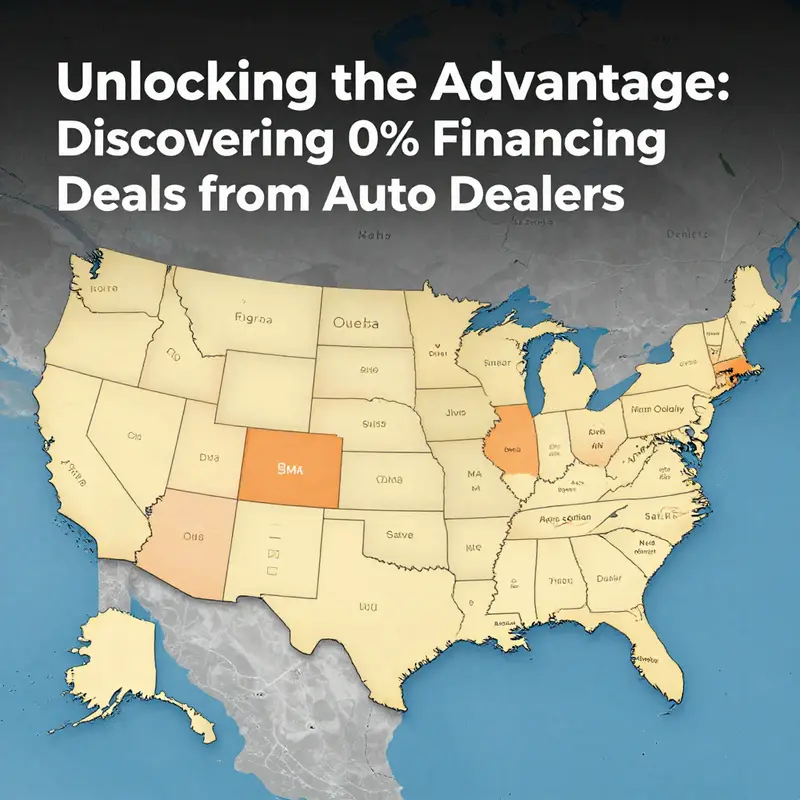
When shoppers start exploring 0% financing, they often picture a single, universal promotion that applies everywhere. In truth, the landscape of zero-percent financing is a map with shifting borders. In 2026, regional variations dominate how, when, and even whether a buyer can access 0% APR deals. The phenomenon isn’t about a nationwide dialect of pricing, but about local competition, inventory health, and the strategic choices manufacturers and their regional partners make to move metal in a volatile market. The result is a chorus of offers that can feel identical on the surface but diverge in the fine print, the required qualifications, and the models eligible for the program. To navigate this, buyers must understand not just the concept of 0% financing, but the regional rhythms that govern its availability and practicality in their area.
The core appeal of 0% financing is straightforward: no interest accrues on the financed amount for the term of the loan. In theory, that sounds like a clean path to lower total costs. In practice, the savings are entwined with conditions. A dealership may advertise 0% APR for qualified buyers, but qualification usually depends on a credit profile that lenders deem strong enough to shoulder the risk without charging interest. Location magnifies this dynamic. In highly competitive metro markets, dealers frequently coordinate with their manufacturer’s regional financing arm to stage aggressive promotions during peak selling seasons. A customer might stroll into a showroom in late spring or early autumn and encounter a banner that promises 0% for qualified buyers on certain trims or model years, but the availability of those trims, the exact model mix, and the precise credit thresholds can vary from one city block to the next.
What drives these regional differences? A handful of factors converge to shape the regional calculus. First, market competition is a tangible driver. In dense urban corridors and fast-growing suburbs, dealerships contend not only with each other but with the same manufacturer’s network elsewhere in the region. When several retailers line up similar offers, the promotional leverage can tilt toward 0% financing as a way to capture pent-up demand or to clear a pulse of inventory that might otherwise stall. In those environments, the terms may be more generous, the window of eligibility shorter, and the promotions tied to specific inventory or to particular trims that the dealer needs to move before a new model year arrives.
Second, inventory health matters. The supply chain realities of 2026 continue to color financing promotions. Regions grappling with tight stock can still offer 0% financing, but often with stricter model eligibility. Conversely, markets with broader inventory can extend 0% deals to a wider swath of vehicles because dealers can afford to absorb higher loan costs on some cars while still delivering a compelling monthly payment on the ones that qualify. This relationship between inventory and financing is not always transparent at first glance. Buyers may see a banner promising 0% financing but discover only certain configurations of a model are eligible, or the offer is valid only when the purchaser agrees to finance through a captive arm associated with the brand. In practice, that means the region’s practical chances of obtaining 0% financing hinge on the dealership’s current inventory mix and its network of financing partners.
Third, regional pricing strategies and tax environments subtly shape what 0% financing can achieve for a buyer. In states with higher sales taxes, the monthly payment savings from a 0% loan might be offset by higher upfront taxes or specially structured fees. Dealers sometimes balance this by layering in incentives such as cash rebates or lower down payments. The economics of a particular promotion can thus look different depending on where a buyer lives, even if the advertised rate is the same. It’s not just about the rate; it’s about the total package—the down payment, the term length, the required financing channel, and any required add-ons that might accompany the deal.
Another layer of regional variation comes from the dealer groups that dominate local markets. Large multi-store networks may roll out region-wide programs that look uniform but operate differently depending on local inventory and credit pools. In some areas, these groups may coordinate with a central finance office to push 0% offers across multiple locations, creating the impression of consistency. In others, individual stores have more autonomy to tailor promotions to their geography and customer base. Even within the same metro area, you can see subtle shifts from one ZIP code to another as dealership fleets adjust to local demand, competing with nearby dealers and clearing slightly different vehicle mix.
Within this landscape, the role of required qualifications deserves particular attention. 0% financing is rarely an unconditional invitation. The credit threshold matters, and the term length often aligns with the loan category the financing arm is comfortable supporting. A buyer with a pristine credit score may access a longer-term, no-interest promotion on a wider set of models; a buyer with a good but not perfect score might still see 0% offers, but on fewer models or for shorter terms. In some regions, the deal is tethered to financing through the brand’s own lending arm. In others, the lender pool may be broader, allowing more flexibility but sometimes with tighter constraint on eligible models. These preferences reflect both risk management and local marketing strategies, and they underscore why a 0% sign in one city may not be matched in a neighboring suburb even if the same banner is present.
For consumers, the practical path to understanding what’s truly available in their region begins with a careful, methodical check of official sources and local dealerships. Official automaker sites and their regional networks are usually the most reliable starting point, but they are not the only sources worth consulting. A savvy shopper will cross-check dealership websites for region-specific promotions and then call or visit to confirm the precise terms for the exact vehicle and trim they have in mind. The caveat is simple: a 0% financing offer today can vanish tomorrow as inventory shifts and as lenders adjust their risk appetites. Regional variation is dynamic, not static; it requires timely, direct verification.
The negotiation landscape around 0% financing is also regionally nuanced. In markets where 0% rates are more common, dealers may compensate in other ways, such as by reducing peace-of-moss fees or by offering slightly larger cash-back incentives that influence the total purchase price. In less saturated markets, the same dealership may present 0% financing as a standout benefit but couple it with stricter down-payment requirements or higher documentation fees. The net effect is that the apparent monthly payment can be attractive in one market while masking additional costs elsewhere. This is why a comprehensive comparison—across model, trim, terms, and total cost of ownership—matters more than simply chasing the lowest rate. Buyers who focus narrowly on the rate can overlook how fees, down payments, and model-specific restrictions influence the real value of the offer in their region.
For readers seeking a concise frame, consider this practical approach: identify the models you would consider, then check the exact promotions tied to those models in your region. Note the required credit tier, whether the offer mandates financing through a captive arm, and the term length. If a model is eligible for 0% financing, try to obtain a written quote that includes all costs—down payment, taxes and fees, any required warranty packages, and any mandatory add-ons. Then compare that total to alternative promotions such as cash-back incentives or low-interest financing, ensuring you measure the overall financial impact over the full term of the loan. In some cases, the 0% option may resemble a tantalizing trap if it comes with higher dealer-installed add-ons that raise the out-the-door price. In others, the lack of interest over the term can be the true value, especially if you plan to finance for the full duration and keep the vehicle for an extended period.
The regional question also touches on how buyers should engage dealers. In highly competitive regions, a patient shopper can leverage the regional density to negotiate. They can express willingness to consider multiple dealers and collect several written quotes. When dealers sense competitive pressure, they may become more transparent about eligibility and better able to tailor the offer to the buyer’s actual credit profile. In markets where promotion cycles are less predictable, it pays to build a relationship with a single trusted dealer, so that future promotions or inventory changes can be communicated more quickly. Regardless of the region, the best practice remains the same: bring a clear sense of the total cost of ownership, verify terms in writing, and understand the trade-offs between down payment, monthly payment, and the length of the loan.
For readers who crave a broader, practice-oriented perspective, the following resource can illuminate the framing and nuances of these promotions from an industry-facing lens. Davis Financial Advisors Knowledge offers insights into how financing promotions are structured and communicated, helping buyers interpret the fine print and avoid common traps. You can explore that repository here: Davis Financial Advisors Knowledge.
In sum, regional variations in 0% financing reflect a synthesis of competition, inventory dynamics, credit ecosystems, and strategic lender partnerships. They reward buyers who approach the process with curiosity, patience, and a willingness to compare across multiple dealers and models. A 0% APR banner in one city is not a universal passport; it’s a localized negotiation tool that operates within the constraints of regional inventory, the credit profiles of local buyers, and the specific financing arrangements that dealers and manufacturers have chosen to emphasize. To maximize value, shoppers should pair diligent research with direct, candid conversations at nearby showrooms, while keeping a careful eye on the total cost of ownership rather than the headline rate alone. With that mindset, regional 0% financing becomes less a fixed rule and more a navigable landscape—one where informed buyers can still uncover genuinely favorable terms that align with their financial goals.
External resource: https://www.tfs.com/financing/zero-percent-financing
Zero-Percent Financing in Car Promotions: Reading the Fine Print to Find Real Value

When a dealer slings the phrase zero-percent financing, the room seems to brighten with possibility. The idea of paying no interest over the life of a loan is instantly appealing, especially for buyers who want a straightforward, predictable path to ownership. In practice, these offers tend to appear most often on new vehicles and during promotional windows—think year-end sales or holiday events—when dealers push hard to move inventory. They are not universal concessions available to every shopper, and they are typically reserved for qualified buyers with strong credit scores who choose eligible models and trims. Behind the headline, the financing is usually arranged through a captive finance arm tied to the automaker or through a lending partner contracted by the dealer. The promise of zero interest combines with the perception of a straightforward price tag to create an impression of genuine savings. Yet the real story unfolds in the subsequent lines of the contract, where terms, conditions, and added costs can quietly reshape the bottom line.
Understanding how these deals work requires a careful look at the ladder of restrictions that often accompanies them. The 0% APR is commonly offered for a limited term—typically 36 months, but sometimes stretching to 48 or 60 months—and only on specific models, trims, and model years. Eligibility is not tied to the entire lineup; it can swing with inventory levels and regional promotions. Financing through a manufacturer’s finance arm is commonplace, and the involvement of a bank loan is not always an option under the same promotional banner. Creditworthiness matters more than most buyers anticipate: lenders set thresholds for credit scores, debt-to-income ratios, and historic payment behavior. In many cases, the bundle includes a package of obligations that extend beyond the loan itself, nudging buyers toward extended warranties, GAP insurance, or premium add-ons. These extras, while seemingly optional, are often presented as required components of the zero-percent program. The effect is not merely a price reduction but a reconfiguration of the entire purchase, in which the buyer pays a higher total price through mandated services and features while enjoying the appearance of an interest-free loan. The result is a transaction that can be alluring on the surface yet opaque in the details, inviting a disciplined scrutiny of every line item on the contract.
To navigate this landscape, it helps to know that the mechanics aren’t about saving money in every case. Promotions are banked on the cooperation of lenders who are invested in the long-term profitability of the dealership ecosystem. A zero-percent offer may turn on regional marketing budgets, end-of-year incentives, or specific inventory turns. Dealers often steer buyers toward trims and model years with high promotional value, and the fine print may restrict the offer to vehicles produced within a narrow window. A further complication is the possibility of tying the zero-percent financing to a captive finance channel, which means the financing is technically from the manufacturer’s own lending arm rather than a separate bank or credit union. The practical upshot is that the consumer’s flexibility to shop around for the best loan rate can be constrained. The result is a choice that requires not only comparing the rate but also comparing the overall package—price, fees, the presence of mandatory add-ons, and the breadth of the eligible inventory.
A practical example makes the dynamic clearer. Suppose a consumer sees a $20,000 car advertised with a 0% financing offer for 36 months. The monthly payment might appear as a neat $555.60, and the total repayment under that financing path would be exactly $20,000 if no extras were required. The moment a dealer presents a bundle of mandatory add-ons—extensions of warranty coverage, GAP insurance, or premium paint protection—the math shifts dramatically. If those extras add up to $3,000, the borrower finishes with a $23,000 commitment, even though the loan itself carries no interest. The zero-percent banner, therefore, can mask a higher upfront price or ongoing costs embedded in the add-ons. This is the quintessential “hidden cost” trap: the consumer sees an attractive rate, but the real cost of ownership rises because the price tag and required products have been adjusted to capture the savings. The key insight is simple and essential: zero percent financing is only as good as the total cost you actually pay, not the absence of interest alone. A careful quote that itemizes the vehicle price, every fee, and every required add-on is the only way to judge the true value of the offer.
To sharpen the comparison, it helps to contrast the dealer’s 0% path with a bank loan. In early 2026, banks and credit unions frequently offered competitive rates for new vehicles, including electric models, with some promotions dipping below 3% APR for well-qualified buyers. For the same $20,000 car, a bank loan at 2.85% APR over 36 months would generate roughly $855 in interest, bringing the total repayment to about $20,855. If the zero-percent deal carries no add-ons, that’s a clean win on the surface. But the moment the dealer couples the offer with $3,000 worth of add-ons, the total climbs to $23,000, wiping out the apparent advantage. In a scenario where a bank loan is around 4% APR but with a modest $200 origination fee, the total could land near $21,440 over three years. Here the numbers reveal the counter-intuitive truth: the lowest headline rate does not always translate into the lowest total cost. The tilt toward value comes from a careful balance of price, financing terms, and the optional or mandatory services that accompany the loan. The bottom line remains stubbornly practical: the option with the lowest total out-of-pocket cost wins, not the option with the smallest stated rate.
The price is not the only variable in play. Regional promotions, dealer inventory, and even the timing of the purchase can swing the odds. Some promotions are time-bound, expiring at the end of a promotional period, while others are tied to the dealer’s incentive structure or to a particular lender’s quotas. Inventory constraints can mean that only a subset of trims or model years is eligible for 0% financing at any given location. A shopper who travels across regions or shop-hops between dealers may find that the same general offer differs in subtle but meaningful ways—from who pays for the marketing costs to which accessories the dealer can bundle without running afoul of the lender’s guidelines. As a result, the path to real value often requires shopping broadly and asking pointed questions about eligibility, price, and the necessity of any add-ons. The reality is that the zero-percent banner is a marketing tool as much as a financial one; it signals favorable financing, yes, but it also signals a need for careful discounting and precise negotiation on terms, price, and extras.
To navigate these decisions without getting swept into a bundle you don’t want, a set of disciplined steps can help. First, insist on a fully itemized quote that lists the vehicle price, all fees, taxes, and the exact price of any add-ons required by the financing promotion. Second, compare apples to apples by focusing on the total amount you will pay over the life of the loan, not merely the rate. Third, negotiate separately on price and on add-ons. It’s often possible to remove or reduce extras, or to use a bank loan as a benchmark and have the dealer match it. Fourth, check your own credit score before shopping; a higher score expands access to low-rate term loans from banks and credit unions, sometimes leading to a lower total cost after all adjustments. These practices help ensure that the decision rests on economics rather than marketing rhetoric.
For readers seeking broader context on consumer finance principles that inform these choices, a reliable starting point is the Davis Financial Advisors knowledge page. It provides practical resources and explanations that can bolster your understanding as you compare offers and calibrate expectations: Davis Financial Advisors knowledge page.
In the end, the central question remains: is zero-percent financing genuinely cheaper, or is it a clever wrapper around a higher total price? The marketing narrative depicts the deal as savings on interest, a straightforward bargain. The reality is more intricate: the final cost depends on the price you actually pay for the car, the required add-ons, and the financing path you choose. Some buyers will strike a winning balance, purchasing a model they planned to own anyway and avoiding mandatory upgrades, thereby making the zero-percent offer a true bargain. Others will discover that a carefully structured bank loan, paired with a negotiated price, yields a lower total cost after all elements are accounted for. The prudent course is to treat the zero-percent offer as one instrument in a broader toolkit, to be weighed against cash rebates, down payment requirements, and the total cost of ownership over the life of the vehicle. And as you weigh all these factors, remember that the most economical choice is the one that minimizes your actual expenditure, not the one that looks most attractive at the payment table. For those who want a reliable external checkpoint in the broader market, consult consumer finance guidance from official sources such as the CFPB, which provides tools and protections for borrowers navigating auto-lending offers: https://www.consumerfinance.gov/
Final thoughts
Exploring the world of 0% financing not only uncovers valuable opportunities to save on vehicle purchases but also highlights the importance of understanding the nuances involved in securing such deals. By recognizing the types of vehicles eligible for these offers, adhering to eligibility criteria, leveraging promotional periods, understanding regional differences, and making informed comparisons, buyers can maximize their savings while ensuring they choose the best vehicle for their needs. In an automotive market filled with options, being well-informed can lead to substantial financial rewards.