
When contemplating auto insurance, individuals face a pivotal decision between opting for comprehensive and collision coverage or choosing to forgo it. Several factors come into play that affects this choice, specifically vehicle value, financing conditions, and risk assessments. In the chapters ahead, we will evaluate the financial implications associated with vehicle depreciation, scrutinize the requirements set forth by lenders or leasing companies, and assess risk levels that influence the necessity of these coverages. This comprehensive exploration aims to arm car buyers, dealerships, and fleet purchasers with the knowledge needed to make informed insurance decisions in relation to their unique circumstances.
Shield or Savings: How Vehicle Value and Depreciation Shape the Financial Case for Comprehensive and Collision Coverage
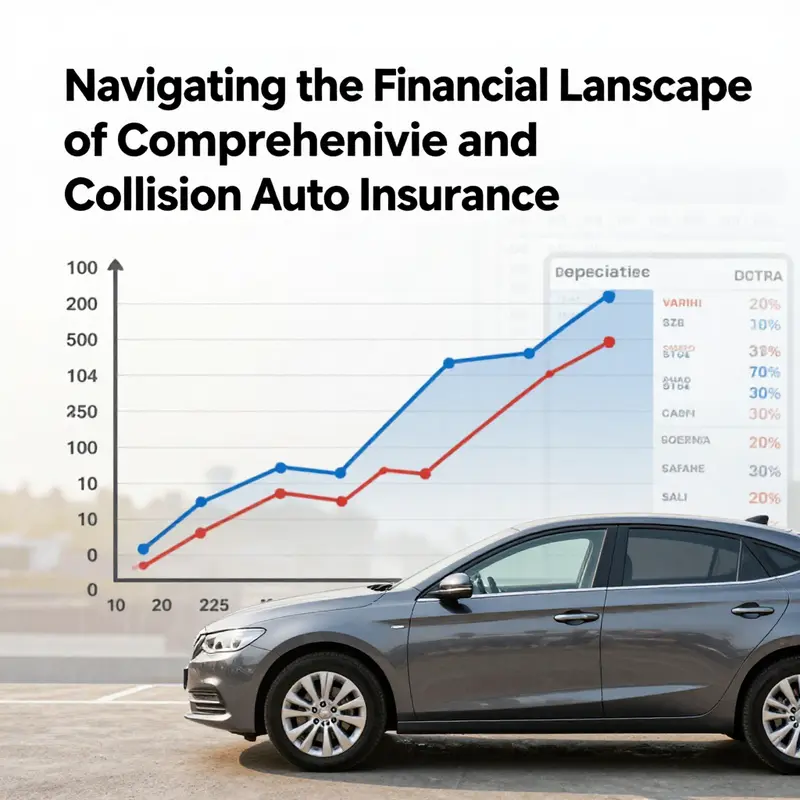
The question of whether buying comprehensive and collision coverage makes financial sense is rarely answered by a single number. It hinges on how much your car is worth today, how fast it’s losing value, your own tolerance for risk, and what could happen if the unexpected occurs. The research results converge on a practical way to frame the decision: treat the choice as a balance between the car’s current value and the cost of protection, rounded out by the realities of your financing arrangement and the risks that exist in your environment. Coverage for non-collision events—like theft, fire, hail, or vandalism—tends to be most valuable in places where such risks are common or unpredictable. Collision coverage, by contrast, acts as a hedge against the financial impact of a crash with another vehicle or a stationary object. Taken together, these coverages form a shield that can prevent a large, sudden expense from wrecking your finances. But shields cost money, and that cost must be weighed against the car’s value and the price of rebuilding your life if a total loss occurs. The calculus becomes more precise when you anchor it to two measurable factors: the current market value of the vehicle and the rate at which that value is eroding with time. When the car sits in a driveway or on a street corner, every mile traveled carries a potential risk of damage, and every year that passes erases a portion of the car’s replacement cost. That erosion matters because the coverage you buy responds to today’s value, not yesterday’s. Collision coverage is typically linked to the actual cash value (ACV) of the car—a market price adjusted for depreciation. If your car is older, its ACV may be surprisingly low, yet the premiums for maintaining full collision and comprehensive protections may remain stubbornly high. For someone facing a steep annual premium relative to the car’s current value, the argument for letting the coverage lapse grows stronger. Conversely, if your car remains expensive to replace or is essential to your daily life, keeping the coverage can be a prudent form of risk management, even if the math is less intuitive in the short term. You can think of it as a balancing act between the predictable, ongoing cost of insurance and the unpredictable, potentially catastrophic event that could topple your finances in a single stroke. The central numbers do most of the heavy lifting here, and they are surprisingly accessible. For a rough gauge, consider the premium you pay for both coverages in a year and compare that to the car’s current value. If the total annual premiums exceed a meaningful portion of the car’s value, the surest path is to rethink the coverage. A commonly cited heuristic among financial planners is to compare annual premiums to a fraction of the vehicle’s current market value. When the premium burden surpasses roughly 10 to 15 percent of that value, the recommendation often shifts toward dropping optional coverages if the vehicle is not financed or leased. This threshold is not a universal law, but it is a practical rule of thumb that translates abstract risk protection into a tangible number you can compare with your budget. The logic behind this rule is straightforward. The money spent on insurance is money that could instead be set aside to self-insure against losses. If a total loss would leave you with no car and substantial debt, the calculus changes in favor of keeping coverage. If a total loss would simply wipe out a vehicle that is already far past its prime, you gain more from saving the premium than from preserving every possible protection. Yet the reality remains dynamic, because insurance isn’t a single decision but a sequence of decisions that unfold over time. One critical dimension of that sequence is the financing status of the vehicle. If you’re still paying off a loan or you’re leasing, the lender’s requirements matter as much as your own preferences. Lenders typically insist on maintaining comprehensive and collision coverage for the term of the loan or lease to protect their asset. In practical terms, even if the math suggests you might be better off dropping one or both coverages, your options may be constrained by the agreement you signed. This constraint underscores an important point: the financial sense of coverage is inseparable from the terms surrounding the car itself. A vehicle financed through a loan is not merely a possession but collateral. When you consider dropping coverage early, you must weigh not only the possibility of a premium reduction but also the risk of breaching the lender’s requirements and the higher cost of financing a total loss out of pocket. If you own the car outright, you gain more flexibility, but you also face a different set of trade-offs. The absence of a loan means you are not obligated to carry comprehensive and collision insurance to protect a lender’s interest. Yet many people choose to retain protection for peace of mind, particularly if they cannot easily replace the vehicle without a cash reserve. In this scenario, a practical approach is to reframe the annual premium as a form of self-insurance against volatility in the vehicle’s value and against an abrupt disruption to daily life. Another dimension to consider is the risk profile of your environment. Comprehensive coverage protects against non-collision perils that are more likely to occur in some regions than others. If you live in an area with high theft rates, frequent natural disasters, or a landscape that encourages wildlife on the roads, the expected loss from these events can be substantial enough to justify the ongoing cost. Likewise, collision coverage is not merely about avoiding a payout; it’s about shielding yourself from the potential fallout of a high-cost accident in dense urban traffic or on busy highways. If you drive in an area with congested roads and a greater likelihood of fender-benders, the case for carrying collision coverage strengthens. In contrast, if your daily driving is minimal, you work from home, and you are rarely on high-speed roads, the collision risk may be lower and the premium may feel less justifiable. The combined calculus, then, is a synthesis of value, risk, and financial resilience. The value side begins with a clear-eyed assessment of the car’s current market price—what a buyer would realistically pay today, not what you owe on the loan or what you paid several years ago. Depreciation is the silent driver here. It reduces the replacement cost of the vehicle while the insurance company computes the payout based on that depreciation. The more a car loses value, the smaller the potential payout in a total-loss scenario. This is where the policy structure meets reality. If the car’s ACV sits far below the total premiums you’ve paid over the years, continuing to insure against every type of loss can feel like paying to insure a risk that is small in absolute dollars. In the same breath, the counterargument is equally compelling. ACV can be an imperfect benchmark for some households. If you rely on the vehicle for your livelihood or if a sudden loss would force you into unstable public insurance options or expensive rental costs, the protection provided by comprehensive and collision becomes less optional and more essential. The decision, then, rests not only on a static snapshot of value but on a forward-looking assessment of risk and resilience. For readers who want a more methodical approach, there is a practical way to anchor the decision. Start with your car’s current market value and the annual premium for comprehensive and collision coverage. Compute the annual premium as a percentage of value. If that percentage exceeds the 10 to 15 percent threshold, you have a stronger case to reduce coverage or drop it, provided you are not obligated by a loan or lease. If it falls below that threshold, you may enjoy meaningful protection at a reasonable cost, especially if the car holds sentimental value or if replacement would be difficult or financially painful. Beyond the numbers, there is also a question of peace of mind. Insurance is a financial instrument that reduces risk in exchange for certainty about future costs. Some drivers value that certainty highly, even when the numbers are near a breakeven point. Others prefer to allocate funds to a separate emergency reserve and to accept the risk of a cash-out for a loss. Both paths are valid, and the best choice depends on personal preferences, the structure of your budget, and your capacity to absorb a large, unexpected expense. One way to balance peace of mind with prudence is to adjust the deductible on your comprehensive and collision coverage. Elevating the deductible reduces annual premiums, which can tilt the cost-benefit analysis in favor of maintaining coverage even on a car with modest value. A higher deductible aligns the insurance payout with a more substantial out-of-pocket cost, but it also increases the risk you bear in a loss. For someone who has a healthy emergency fund and wants to preserve cash for other priorities, a higher deductible can create a sensible compromise. If your goal is to minimize the annual outlay while preserving the protective shield, you can negotiate with yourself: you are not eliminating risk but reallocating it across a broader financial plan. Another practical consideration is the structure of the cost and how it evolves over time. Insurance costs are not constant. They tend to rise with age, driving history, and the addition of new risk factors, while the car’s value continues to erode. If you foresee a future where the car’s value is expected to drop below a critical threshold, a proactive re-evaluation at that point makes sense. This is particularly relevant for households with shifting finances or for younger drivers who may accumulate more driving miles over time, increasing the likelihood of incidents. In such cases, the decision is less about a one-time audit and more about an iterative process that revisits the balance between risk and reward every year or two. It is also helpful to frame the discussion within the broader philosophy of risk management. Insurance is one of several tools designed to manage financial exposure. You may also build resilience by redirecting funds toward a dedicated rainy-day fund, higher liability limits on the policy, safe driving practices, and timely maintenance that lowers the chances of a preventable loss. When you consider these complementary strategies, the decision about comprehensive and collision coverage becomes part of a wider plan to preserve financial stability. To ground these ideas with practical guidance without getting lost in abstractions, think of the car’s depreciation as your compass. If the compass points toward a value where the insurance premiums threaten to eat up more than a fraction of the asset you’d lose, a recalibration makes sense. If, instead, the car remains a reliable instrument for navigating daily life, and the costs of losing it would be severe, then the protection’s value may justify higher annual spending. It helps to remember that the numbers themselves are not the only signal. The phrasing you choose to describe risk—“cushion against a total loss” or “cost of peace of mind”—unlocks a different frame of reference. Some households interpret the premium as a form of savings, especially when the car is newer and the risk of needing a total replacement is higher. Others view those dollars as a hedge against a rare, expensive event that would otherwise derail a carefully planned budget. In either frame, the underlying premise remains consistent: the right level of comprehensive and collision coverage should align with the car’s current value, the expected trajectory of that value, your financing arrangements, and your tolerance for risk. The discussion is not about chasing maximum protection at any cost; it is about aligning protection with the reality of the asset you own and the financial obligations you carry. For readers who want to explore how depreciation interacts with your coverage decisions in greater depth, a broader resource on financial planning and insurance logic is available on the knowledge hub. That resource offers a structured way to weigh values, risks, and costs in everyday terms and can help you translate the numbers into a practical plan you can live with. Finally, while numbers and thresholds provide a helpful scaffold, the best path is one that reflects your personal context. If you own the car outright and have enough savings to replace it if needed, you may lean toward reducing coverage and saving the premium. If you still owe money or rely on the vehicle for work, keeping comprehensive and collision coverage is often the safer bet. The choice, in the end, is a careful blend of quantitative assessment and qualitative judgment—an approach that keeps your finances sturdy even when the road ahead remains uncertain. For readers who want to verify policy considerations or dive deeper into depreciation and risk calculations, consult authoritative resources on insurance regulation and consumer guidance, such as the National Association of Insurance Commissioners at https://www.naic.org.
When Debt Shapes Duty: Navigating Lender Mandates for Comprehensive and Collision Insurance
Financing a car changes the insurance calculus. When you sign a loan or lease, a lender has a financial interest in the vehicle and may require you to maintain comprehensive and collision coverage for the term of the agreement. This protects the lender by ensuring the asset can be repaired or replaced after a loss and helps secure the remaining debt. If you owe money, you are often bound by contractual obligations, and lenders may impose forced-placed insurance if you lapse. As payoff approaches or if the car’s value exceeds the loan balance, you gain more flexibility to tailor coverage to your needs, deductibles, and budget. A practical approach is to compare annual premiums to the vehicle’s current value and consider a break-even point, commonly around 10-15% of value, to decide whether to keep, adjust, or drop coverage. Deductible choices can shift the economics, and shopping around for quotes helps align protection with risk and finances. For newer or high-value cars in high-risk environments, keeping both coverages may be prudent; for older or low-value cars, reducing coverage or self-insuring smaller risks can make more sense. Regardless, review loan terms, clarify whether flexible coverage levels are acceptable, and be aware of forced-placed insurance costs if a lapse occurs. The goal is a balanced decision that preserves protection while staying affordable over the life of the loan or ownership.
null
null
Final thoughts
Ultimately, the decision to purchase comprehensive and collision auto insurance hinges on personal circumstances, from the age and value of the vehicle to the potential risks associated with driving in specific areas. It is crucial for individuals and businesses alike to conduct a careful assessment of their own situations before making this critical decision. Understanding the financial ramifications can save policyholders from unnecessary expenditures while ensuring they are covered in the event of an unforeseen incident. Wise insurance choices balance coverage benefits against costs and lead to sound financial health.