
The automotive sector is facing an unprecedented downturn, reminiscent of the financial crises experienced over a decade ago. This article will explore the multifaceted impacts of a potential financial-crisis-style crash in auto sales, focusing on households, dealerships, and small businesses. The decline in auto sales is a consequence of various economic pressures, including rising interest rates, declining consumer confidence, and escalating costs. By examining the economic impacts, the role of consumer confidence, interest rate trends, and a comparative analysis with previous crises, we will elucidate the current climate surrounding auto sales and provide insights for stakeholders to navigate these turbulent times effectively.
The Slow Descent of Auto Slump: How a Financial-Crisis-Style Crash Is Reshaping Household Fortunes
A financial-crisis-style crash in auto sales does not merely scar a single industry; it ripples through the days and plans of households, rewriting budgets, futures, and the very sense of financial security. When the pace of new-car sales falters under the weight of higher financing costs, chipped consumer confidence, and a tightening credit environment, the impact is felt first in the balance sheets of ordinary families and then in the broader drumbeat of the economy. The data from late 2025 lay bare the mechanism: real personal consumption expenditures on vehicles sagging 3.4 percent year over year in the fourth quarter, the steepest decline since the long and painful stretch of 2008 to 2009. That drop is more than a statistic; it is a signal that households have begun to recalibrate which purchases count as essential, and the choice to replace or upgrade a vehicle moves from a routine decision to a strategic negotiation with the imperfect balance between needs, debt, and the future. When a family sits down to map out the coming year, the car loan terms—now usually above 7 percent and often stretching into longer tenures—factor into a cascade of choices about housing, education, and savings, because every dollar tied up in a car payment is a dollar unavailable for other goals. This reallocation of scarce resources shifts demand away from durable goods and toward maintaining the basics of living, and the effects echo across neighborhoods and towns where the car is not only a means of mobility but a critical asset in a household’s credit profile and ability to weather economic shocks.
The contraction in vehicle purchases, as the BEA data indicates, is not an isolated blip but a reflection of a larger tightening of monetary conditions that has retuned risk to the balance sheets of everyday households. When financing costs rise, households face an affordability hurdle that changes how they think about the cost of owning, maintaining, and using a vehicle. In many families, the decision to defer a replacement is not about preference but about survival: delaying a new purchase extends the life of an existing asset, but it also puts more strain on maintenance budgets, accelerates the risk of breakages, and increases reliance on a transport system that may not meet evolving needs. The consequence is a slower pace of consumption that extends beyond the showroom and into the kitchen table, where discretionary spending becomes a lower priority and where the household saving rate, already under pressure from inflation, is further pressured by the need to service debt, keep up with rising insurance costs, and absorb any disruptions in income. This is the carriage that pulls the cart of consumer demand, and when it slows, the entire economy retrenches. For readers seeking broader context on how such knowledge fits into ongoing financial education and planning, the Knowledge hub offers a concise repository of historical patterns and practical insights that help translate macro movements into personal strategies. Knowledge
The immediate economic effects unfold in a recognizable loop: a decline in household income and wealth leads to reduced spending on durable goods, which then depresses production in the auto sector and deters investment in related industries. The Deloitte Insights study on the automotive sector’s financial crisis, cited in the detailed research materials, underscores how a downturn in demand can become self-reinforcing. When credit conditions tighten and the cost of money rises, sellers respond not only by cutting back on inventory but also by re-narrowing the pool of prospective buyers through tighter lending standards and more stringent debt-to-income checks. The result is a cycle of weaker sales, lower profitability for carmakers and dealers, and diminished employment opportunities across the supply chain. The household effects are not merely theoretical: they materialize as fewer hours, more unpredictable schedules, and a demand for greater financial resilience. As families feel the squeeze, they adjust their consumption patterns, prioritizing essential needs and postponing larger purchases that previously seemed routine. The psychology of risk evolves from a belief that economic improvement is around the corner to a cautious, sometimes defensive stance that seeks to preserve liquidity and minimize exposure to future shocks.
Within this larger macroeconomic frame, the labor market in and around the auto sector experiences a pronounced strain that intensifies the shock to households. The auto industry supports millions of jobs directly and indirectly across a complex network of manufacturing plants, suppliers, dealerships, service centers, and logistics operations. A sustained downturn in auto sales translates into fewer production runs, delayed investments in equipment, and slower hiring. The 2007–2009 experience left a stark imprint: a pronounced contraction in employment across the supply chain, followed by a prolonged period before labor markets absorbed the losses. Today, the fear is not merely about temporary layoffs but about a deeper, more structural rebalancing that could redraw the composition of regional economies reliant on auto-related activity. Even as the economy gradually heals, the sector’s share of GDP remains markedly lower than its late-1960s peak, signaling a long-run shift that affects the trajectory of household income for a generation. This structural shift compounds the immediate pain of a cyclical downturn by shaping long-term earnings prospects, career opportunities, and the sense of financial security that families carry into adulthood for themselves and their children.
Credit remains a pivotal channel through which the auto market influences household resilience. The vulnerability of consumer credit, highlighted in the chapter’s research results, becomes most acute when interest rates hold at elevated levels for an extended period. Auto loan delinquency rising to 6.1 percent in December 2025 marks a warning sign: as the share of borrowers who struggle to keep up with payments grows, so too does the risk of broader financial instability. Delinquency is not simply a personal setback; it signals stress in the credit market that can spill into mortgage approvals, refinancing options, and even the affordability of home upgrades or relocation. When defaults rise, lenders recalibrate their appetite for risk, tightening lending standards, mandating higher down payments, or extending the time horizon over which a loan is evaluated. These frictions increasingly complicate major life milestones such as buying a home or funding education, dragging household aspirations into the reallocation of scarce resources toward debt servicing and basic necessities. In turn, families become more cautious about housing decisions, family formation timelines, and retirement planning, recognizing that the same four-wheel asset that supports mobility can also become a constraint if debt burdens grow too heavy to bear.
The interplay of debt, income, and asset values shapes not only current consumption but future financial stability. As households adjust to the new cost of capital, the value of vehicles—as assets and as collateral—begins to shift in important ways. When vehicle values soften in a tight credit environment, households with limited equity find themselves exposed to negative equity risk if they need to trade in a vehicle earlier than planned. The combination of higher interest rates, rising maintenance costs for aging vehicles, and tighter credit constraints alters the calculus of decisions that people make when they think about housing. For some, the car becomes a bridge to opportunity—a means of keeping a job, pursuing a distant school or career opportunity, or accessing work in a different city. For others, the car becomes a liability, tying up cash that could be put toward a more stable living situation, a down payment on a home, or an emergency fund. The differentiator is usually the household’s prior financial buffer: families with healthier savings, more diversified income streams, and lower debt service burdens can weather the storm more effectively, while those already living near the edge find the smallest perturbation can precipitate a cascade of financial stress.
Beyond the immediate and midterm effects, the long-run consequences threaten to alter the trajectory of household stability and mobility. When auto demand collapses in a system that relies heavily on consumer credit, the consequences ripple into the housing market through a dual channel: lower household discretionary income and tighter access to credit can slow home purchases, reduce the willingness of lenders to finance mortgage loans, and depress the demand for new construction in communities historically tied to auto manufacturing and its supporting industries. In such a climate, families reassess how they allocate resources to housing versus other essential needs. They may delay downgrades to more affordable housing, avoid moving to higher-cost regions, or opt for smaller, more energy-efficient homes that reduce ongoing costs. But the same money diverted away from housing can impede broader causes of economic mobility, such as the accumulation of wealth through homeownership, the creation of equity through home improvements, and the long-run stability that comes with owning a durable, appreciating asset. The risk is that a persistent decline in auto-related income can lead to a slower rate of wealth accumulation across generations, reinforcing cycles of economic strain that are difficult to escape without broader policy and market adjustments.
The story thus reads as a cautionary tale about the fragility and interconnectedness of modern household finances. A crash in auto sales does not exist in a vacuum; it unfurls across the income distribution differently, with middle- and lower-income households bearing the heaviest burdens. Those families often use vehicles not only for mobility but as essential conduits for employment opportunities, child care arrangements, and access to services that sustain daily life. When the supply of affordable credit tightens and the cost of debt rises, the relative affordability of maintaining or upgrading a vehicle declines. The rise in loan delinquency rates amplifies the risk to households that rely on financing to manage large purchases. It also heightens the fear of loss of mobility for workers who depend on reliable transport to keep a job, creating a precarious feedback loop: reduced income makes debt harder to service, and higher debt costs or tighter lending standards limit the ability to restore income through better employment options.
In the face of such complex dynamics, policy responses and strategic financial planning take on greater importance. Households need clear, accurate information about the true costs and benefits of vehicle ownership in a tightening financial environment and a credible pathway to rebuilding financial resilience. This means prioritizing budgets that differentiate between needs and wants, building liquid savings that can cushion shocks, and exploring alternative arrangements that preserve mobility while reducing exposure to debt risk. It also means recognizing that the auto sector’s difficulties ripple outward to touch other critical areas of household life, including education, retirement security, and housing stability. The slower consumption path invites a recalibration of expectations and a reconfiguration of priorities, one that emphasizes long-term security over the allure of immediate gratification. As families learn to live with higher financing costs and a more selective approach to large expenditures, the outcomes will be shaped not just by the macroeconomic policy environment but by the daily financial decisions that households make under pressure.
Ultimately, the challenge is to translate the macro signal of a financial-crisis-style auto slump into practical, durable strategies for households to preserve livelihood, sustain mobility, and maintain a bridge to future opportunities. The data provide a map of the peril, but the experience of families forms the terrain. By prioritizing emergency savings, careful debt management, and flexible transportation arrangements, households can reduce exposure to the most destabilizing elements of the cycle. And by supporting credit markets and policy frameworks that balance price stability with accessible financing, communities can increase their resilience to the kind of systemic shocks that have historically turned a dip in auto demand into a broader test of economic endurance. The chapter makes clear that the health of households depends not only on the availability of credit or the level of interest rates but on the ongoing effort to align daily choices with a longer-term vision of stability and growth. For researchers and practitioners seeking deeper analysis, the Deloitte Insights study offers a comprehensive examination of how these forces interacted during past automotive downturns and what lessons remain relevant for today. Deloitte Insights
From Confidence to Crunch: How Household Sentiment Is Propelling a Financial-Crisis-Style Slump in Auto Sales
If a consumer mood can be measured in miles per gallon of trust, then today’s national sentiment is running on fumes. The trajectory of auto sales has long depended on more than the price of a car or the strength of a dealer’s financing wing. It has rested on the softer, harder-to-measure pulse of households—their confidence in the immediate future, their expectations about income, job security, and the likelihood that daily life will not be disrupted by yet another financial shock. When confidence retreats, the practical consequences are not distant or abstract; they appear in the parking lot of a showroom as a pause, then a retreat, then a refusal to commit to a large, long-term purchase. This sequence—confidence waning, spending retrenchment, and production adjustments—resembles a financial-crisis-style contraction, but it is unfolding within the framework of a still-fragile recovery, where the policy environment, interest costs, and debt burdens intersect with rising uncertainty about the economy’s path.
The most conspicuous signal guiding this narrative is the data from the BEA on real personal consumption expenditures on vehicles. In Q4 2025, the figure declined by 3.4 percent year over year, marking the steepest drop since the 2008–2009 recession. The mirror image of that decline is the tightening in financing costs that accompanies a higher-rate regime. Average auto loan interest rates have crept above 7.5 percent, up from roughly 4 percent just a few years earlier, amplifying the monthly cost of ownership for new vehicles. For households already juggling tight budgets, even a modest uptick in rate can turn a prospective purchase into a nonstarter. The math becomes unforgiving when you consider that many families do not simply buy a car once and drive away; they service that debt for years, while competing against other essential expenditures—housing, health care, education, and energy bills that have also been affected by inflationary pressures.
Delinquency data from the Federal Reserve Bank of New York’s Consumer Credit Panel adds another layer to the story. Auto loan delinquencies rose to 6.1 percent in December 2025, the highest level in more than a decade. This is not merely a reflection of rising rates; it signals a shift in household balance sheets. When people face higher financing costs and the risk of missed payments, the willingness to take on new debt—especially for big-ticket items like a new car—fades more quickly. The result is not just a slowdown in new-vehicle purchases; it cascades into a preference for extending the life of current vehicles and, where possible, replacements with more affordable, used options. The market response to this shift is a double-edged dynamic: used cars become more attractive, yet supply constraints and inflation in used-vehicle prices complicate affordability, creating a sort of jumbled equilibrium that further dampens demand for new models.
The heart of the current downturn, however, lies not only in price and rate mechanics but in the sentiment that governs daily consumer calculus. The University of Michigan’s Consumer Sentiment Survey has consistently shown that current confidence levels are lower than those recorded during the 2008 crisis. This is not a modest setback in mood; it represents a deepening pessimism about household finances and the economy’s trajectory. When people doubt their ability to maintain or improve their standard of living, large discretionary purchases are among the first casualties. The connection between sentiment and spending is not merely correlative; it is, in many cases, causal. Confidence is a leading indicator, but it also acts as a self-fulfilling prophecy: lower confidence suppresses spending, which then weakens growth, which further erodes confidence. In this sense, sentiment becomes both a diagnostic tool and a propulsion system for the downturn in auto sales.
The link between sentiment and auto demand is intensified by the broader market environment and its feedback loop on household expectations. In periods of heightened financial market volatility, uncertainty rises, and fear of job loss or wage stagnation feels more tangible. Stock-market gyrations and headline risk creep into household decision-making, shaping how families allocate their budgets for the near term. When households anticipate more expensive financing or a fragile income outlook, the calculus around a new car purchase—an item that is both essential for mobility and a symbol of household status and convenience—tilts toward postponement or foregone purchase altogether. The co-movement between sentiment and credit conditions is a critical channel through which the macro financial environment starts to seep into everyday consumer behavior.
In this intricate web, the car is more than a commodity; it is a gateway to mobility, labor market participation, and social participation. For many households, a car is the primary means of reaching a job, a child’s school, or a health appointment. When confidence sags, the perceived value of that mobility is weighed against the near-term risk of debt service and the longer-term risk of a depreciating asset. The result is a cautious stance that favors preserving cash flow and maintaining liquidity over making a large, financed commitment. This is a rational response under stress, yet it has the unintended consequence of muting demand in a sector that relies heavily on credit to push sales. The automotive industry has become particularly vulnerable to shifts in sentiment because its sales model is intimately tied to the availability of affordable financing and the willingness of lenders to extend credit in a climate of risk reassessment.
The dynamic is further complicated by the substitution effect that households pursue when new-car affordability falls. When buyers retreat from new models, dealers and manufacturers adjust production timelines and inventories, a chain reaction that echoes across supply chains. The prospect of reduced demand leads to lower production volumes, which in turn affects employment and wages in the broader ecosystem—parts suppliers, service networks, logistics workers, and the hours available for dealership staff. The economy’s quiet gears begin to grind in a way that mirrors the slow tightening of a vise: a little pressure around interest costs, a little pressure around expectations, and the overall effect is a cooling of consumption in a sector that is often a bellwether of broader consumer health.
Against this backdrop, the choice to extend the life of an existing vehicle gains practical significance. When a family’s budget is stretched, extending the vehicle’s life—keeping it on the road longer, delaying a replacement—is a rational, sometimes prudent, decision. This prolongation has a dual effect: it alleviates immediate cash outlays and contributes to continued distress in the used-vehicle market, where aging fleets and rising maintenance costs can erode consumer confidence further. The used-car market, while offering more affordable price points than new cars, is not immune to the same inflationary pressures that have beset new-vehicle pricing. It too faces supply constraints, and price volatility can surprise households that believed a used car would provide a reliable, lower-cost alternative. The net effect is a market where affordability improves superficially but remains tethered to a fragile macro-financial backdrop.
From the household perspective, the credit environment is a critical determinant of willingness to engage in auto purchases. As interest rates stay elevated to combat inflation, financing costs remain a heavy line item in household budgets. For a family contemplating a new purchase, the monthly payment, total cost of ownership, and the risk of rising rates in the future all matter. The human dimension behind the numbers—fear of job loss, concern about wage growth, and anxiety about the durability of the current economic expansion—takes up residence in every decision to buy, lease, or postpone. Consumers are not merely reacting to price tags; they are weighing personal narratives about the future, narratives that are shaped by local job markets, regional cost of living, and the perceived stability of households’ income streams.
Within this frame, one practical thread for households is to seek guidance on managing auto-related finances amid tighter credit conditions. Resources that help families map out how to optimize debt service, budget for maintenance, and plan for possible disruptions can be an anchor in a storm. A relevant, accessible resource is available through familiar channels that address broader financial management; for example, Managing Truck Ownership Finances offers a lens into keeping heavy-vehicle costs sustainable when rates rise and cash flow tightens. While focused on trucks, the core principles—prioritizing essential payments, avoiding new debt when risk is elevated, and creating contingency plans for income disruption—translate well to the household auto context. The idea is not to replace professional financial advice but to provide a practical framework for households to hold steady when the horizon looks uncertain.
The broader policy and macroeconomic backdrop also shapes the sentiment-actual spend dynamic. The Federal Reserve’s persistence with higher interest rates to curb inflation has kept borrowing costs elevated, especially for big-ticket purchases where credit risk is a central consideration for lenders. In such an environment, lenders tighten underwriting standards, and buyers with marginal debt capacity face stiffer screening and higher rates. The result is a self-reinforcing cycle: households see higher financing costs, anticipate tighter credit, adjust expectations downward, and delay purchases; lenders observe the softened demand, adjust risk models, and tighten limits further. The cycle is slow to unwind because the policy framework is tuned to resilience against inflation, not to propel a rapid rebound in discretionary purchases. In other words, the current configuration of policy and market conditions is more likely to dampen recovery speed than to ignite a sudden surge in demand, at least in the near term.
The historical parallel that often surfaces in analyses of today’s auto sales slump is the 2007–2009 period. Then, as now, consumer confidence collapsed, credit markets contracted, and vehicle sales fell sharply. Yet even with those similarities, there are important differences that deserve emphasis. The financial system’s structure has evolved; lenders currently benefit from better risk-aware underwriting in many segments, and households have, in some cases, improved liquidity buffers, partly due to earlier retrenchment during the pandemic era. Still, the essential dynamic—psychological and financial stress tightening the leash on consumer spending—remains. When confidence drains away, households reduce not only big-ticket purchases but also the ancillary expenditures that accompany car ownership: maintenance, insurance, and peripheral upgrades to the vehicle that signal a sense of vitality in spending. Dealers and manufacturers, exposed to cyclical demand, become visible barometers of the mood in the economy as they respond with adjusted production plans, altered promotions, and a recalibration of their own employment footprints.
The current chapter thus does not offer a single fix or a silver-bullet policy prescription. Rather, it maps a complex, evolving landscape where sentiment, credit conditions, and price dynamics interact to produce a pattern of behavior that feels both familiar and new. The persistence of high rates, the stickiness of inflation in related goods and services, and the uneven distribution of income gains across households all inform how auto purchasing decisions are likely to unfold in the near term. The expectation that the downturn will be brief understates the risk that sentiment remains fragile for longer than anticipated, particularly if labor markets show signs of softening or if inflation proves more stubborn in the services sector than expected. In such a scenario, the auto sector may continue to experience a period of subdued demand, with occasional relief rallies that fail to translate into durable, sustainable gains.
A broader takeaway from the current moment is that consumer confidence thrives on a sense of forward-looking security. When households believe their income prospects are robust and that the economy will deliver wage growth, affordable financing, and predictable prices, a degree of willingness to engage in large purchases returns. Conversely, when confidence slides beneath the thresholds observed during past crises, households adopt a more conservative posture that reverberates through auto markets and beyond. This is not merely about the psychology of fear; it is about the economics of risk assessment and the allocation of scarce resources under uncertainty. The auto sector’s vulnerability to sentiment underscores a deeper truth about contemporary consumer economies: the health of households and the vitality of credit are inextricably linked, and sales are as much a function of mood as of model year changes or incentive programs.
As the chapter turns to the next part of the analysis, it is important to keep sight of the macro-financial canvas and the micro-decisions that households must navigate. The data point to a critical juncture where better information, prudent financial planning, and policies that encourage affordable credit could help cushion the downturn. But any relief will likely come gradually, contingent on improvements in job security, wage prospects, and the trajectory of inflation. In the meantime, the narrative remains anchored in how confidence, more than any single price or rate, determines the fate of auto sales and, by extension, the financial well-being of households. The road ahead will test the resilience of families, the adaptability of the auto ecosystem, and the capacity of policymakers to align monetary conditions with the practical needs of consumers who rely on mobility as a pillar of economic participation.
External resource: https://www.sca.isr.umich.edu/
Rising Rates, Falling Car Sales: The Household Toll of a Financial-Crisis-Style Auto Slowdown
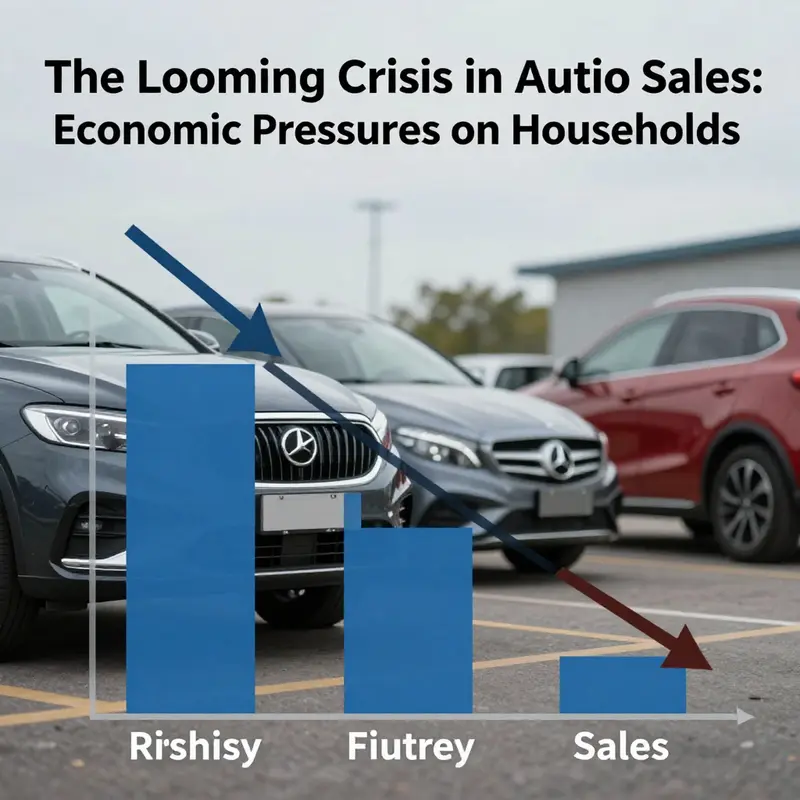
Across the United States, the tremors from higher borrowing costs have not stayed confined to banks or corporate balance sheets. They have moved straight into driveways and garages, shaping a consumer landscape that behaves less like a confident buyer and more like a cautious saver. The latest data from the BEA show real personal consumption expenditures on vehicles fell by 3.4 percent year over year in the fourth quarter of 2025. It is the steepest drop since the depths of the great recession years, and it sits atop a broader pattern of restraint that stretches beyond a single quarter. The air in the auto market has shifted. Financing has become more expensive, and the households that once bought new cars with a shrug now calculate every mile and every payment. When interest rates rise, the cost of funding a new car becomes a gatekeeper—an added line item that tilts the calculus from desire to necessity. The average auto loan rate, now above 7.5 percent, contrasts sharply with roughly 4 percent in 2021. For many families, that delta translates into a far less affordable purchase and a decision to stretch a vehicle’s life rather than upgrade. The effect is not simply a pause in demand; it is a reweighing of priorities, a structural constraint that redefines how households allocate scarce dollars between shelter, food, health, and mobility. Mobility is a necessity, but the means of securing it is increasingly fraught with risk, and that risk shows up in the numbers where delinquency and default begin to climb. The Federal Reserve Bank of New York’s Consumer Credit Panel has tracked auto loan delinquencies up to 6.1 percent in December 2025, the highest level in more than a decade. That uptick is not a mere statistic; it is a signal about the strain on balance sheets, a signal that reverberates into consumer confidence and the willingness to trade up or trade in. The cycle is illuminating in its simplicity: higher rates raise monthly payments, and higher payments tighten budgets, which lowers demand for high-ticket items, which slows production, which can trigger layoffs and further dampen confidence. The result is a feedback loop that tightens the screws on households and makes the car market a more fragile engine than it was a few years ago. The downturn has distinct echoes of past crises, yet it differs in important ways because the macroeconomic landscape is both older in its memory and newer in its mechanics. In 2007–2009, the credit crunch came with a bursting of housing-related wealth and a global fear that flowed through every wage earner. Today, the frame is different but the risk is not. The same core tension exists: when borrowing costs rise, buyers pull back on big-ticket purchases, and the supply side—manufacturers, lenders, dealers—must recalibrate in real time. The household, not the company, becomes the pivot around which the entire automotive ecosystem rotates.
A central channel of this recalibration is financing, which has long been the backbone of auto demand in the United States. The financing system was built to absorb cyclical swings, but the current environment is squeezing lenders as delinquencies rise and the cost of funds remains elevated. The delinquency rate is not merely a personal misfortune; it reflects a broader exposure of households to interest rate shocks and inflationary pressure. When a family faces a 2–3 percentage point higher rate on a new loan, the monthly obligation can rise by hundreds of dollars depending on the term and the amount financed. For buyers in the middle and lower end of the income spectrum, that rise can be the difference between a new car and a hand-me-down vehicle that is more economical to operate. In that sense, the rate environment is not just a financial variable; it is a behavioral influencer. It nudges households toward utilitarian choices—reliability, efficiency, and cost containment—over novelty and status, and it tilts the market toward used cars, which, even as they present a more affordable option, still carry a premium in the form of higher financing costs and limited supply.
The shift in consumer behavior is not happening in a vacuum. It corresponds with a more cautious mood, and it is reinforced by the practical realities of the times. Wages have not kept pace with the cost of essentials, and while employment has remained relatively resilient, the margin for discretionary purchases is thinner. When households face higher credit costs, they become frugal with big-ticket items, especially when there is uncertainty about future income, taxes, health expenses, or the potential need to fund a child’s education or a home improvement project. Cars are durable goods, and they sit at the intersection of finance and daily life. A car can be a lifeline in a sprawling suburb or a crucial work instrument in a dense rural area. The importance of that instrument, however, does not erase the simple arithmetic of payments. A vehicle loan is not a one-time purchase; it is a monthly commitment that stretches over years. In a rate environment where payments swell, the long-run affordability of a new car becomes an ongoing negotiation within households. And when the negotiation fails to yield a favorable outcome, households seek alternatives—reliable used vehicles, repurposed family cars, or even more cost-effective mobility options such as car-sharing or public transit. These alternatives, though practical, signal the cooling demand that translates into softer sales and tighter margins for automakers and dealers alike.
The structural vulnerability embedded in auto lending becomes more pronounced when framed against the broader macroeconomic backdrop. The inflation fight remains unresolved in many regions, and the Federal Reserve’s policy stance suggests that rate normalization, if it occurs at all, will be gradual. That prognosis locks in a period of elevated borrowing costs, which, in turn, sustains the pressure on auto financing. The longer the high-rate regime persists, the deeper the drag on new-vehicle demand. In the meantime, dealers and lenders find themselves navigating a landscape where credit risk rises even as competition for market share intensifies. Open lines of credit for consumers and the emergence of nontraditional lenders—all designed to reach potential buyers where traditional financing falls short—add complexity to the credit cycle. This is not a tidy one-way decline; it is a multi-layered adjustment that reshapes who can buy a car, what kind of car they buy, and how they finance that purchase. It also alters the dynamics of residual values, lease profitability, and inventory management for manufacturers and dealers, creating a broader ripple effect that touches the entire ecosystem of households and communities.
Historical memory offers a useful, if imperfect, lens. The Chrysler bailout in 1979 stands as a stark reminder of how macroeconomic discomfort can reshape consumer choices. Back then, fuel costs and tight budgets drove buyers away from large, fuel-inefficient vehicles toward smaller, efficient models offered by foreign competitors. The parallel to today lies less in the specifics of the models favored and more in the underlying impulse: when money is tight, buyers optimize for fuel efficiency, long-term reliability, and total cost of ownership rather than brand prestige or flash. Yet the present shift is tempered by new technologies, a different mix of incentives, and the presence of a more layered financial market. Modern lending involves credit scoring dynamics, income verification, and a broader set of financing options, including fintech platforms that claim to be able to tailor forms of credit more precisely to individual consumer profiles. In a high-rate environment, these mechanisms can either help borrowers access funds or, if mispriced, push them toward fragile terms that risk future delinquency. The equilibrium is delicate, and the risk—if mismanaged—could accumulate over time, altering consumer confidence and the velocity of demand across durable goods, not just cars.
To appreciate the current moment, it is essential to consider the behavioral side of risk. Consumers are weighing not only monthly payments but opportunity costs and the security of future earnings. There is a growing awareness that a new car is not merely a personal upgrade; it is a financial decision that echoes through a household’s budgeting for years. The used-car market, while more affordable at the point of sale, faces its own constraints. Price increases persist, driven by supply frictions in both new and used segments, and buyers who previously would have treated a vehicle as a depreciating asset now face the reality that even used options carry visible price tags that reflect broader cost pressures. This combination of higher prices and higher financing costs creates a double-barreled effect: fewer buyers in the showroom and, when buyers do appear, more conservative requests around down payments, loan terms, and warranty protections. The result is a slower turnover of inventory and tighter margins for dealers who must balance the risk of standing inventory against the pressure to maintain market presence. The industry’s response tendencies—improving efficiency, expanding financing terms, or curbing incentives—play out against the household backdrop of caution, debt, and rising essential costs.
Financing disruption adds another layer to the story. Historically, auto lending proved resilient through many cycles, but the current moment is characterized by a confluence of risk factors that open the door to new entrants and more diverse financing models. Banks remain conservative, while nonbank lenders and fintech platforms experiment with models that blend speed, accessibility, and risk management. On the one hand, these innovations can expand access to buyers who previously faced denial or high-cost terms. On the other hand, they introduce new forms of risk for lenders and new kinds of repayment paths that may become unstable under stress. The interplay between rising delinquencies and the persistence of elevated rates implies a cautionary environment for the entire market. For households, this translates into greater scrutiny when signing a loan agreement and more careful consideration of the long-term costs of ownership. For lenders, it means tightening underwriting, requiring stronger documentation, and balancing the desire to grow market share with the need to protect capital. The overall effect is a market that moves with slower momentum and greater sensitivity to shifts in inflation, employment, and policy expectations.
What does this mean for households and for the broader economy? It means a period of adjustment that could endure longer than typical downturns, shaped by the unique combination of monetary policy persistence, financial fragility in consumer balance sheets, and evolving consumer preferences. It also means that the auto sector’s fortunes are tightly interwoven with the health of households. When families delay a purchase, it affects not only carmakers and dealers but the manufacturing supply chain, the workshop jobs, the dealerships’ sales staff, and the local tax base that depends on vehicle-related revenues. It affects the dashboards of households more broadly, altering credit utilization, savings behavior, and the pace at which families rebuild resilience after shocks to income or expenses. The driving logic remains straightforward: when the cost of capital for a major purchase rises and confidence wanes, the friction in the purchase decision intensifies. A car becomes a decision that must be justified against a crowded field of competing needs, and too often the scale tips toward postponement.
In looking ahead, several scenarios are plausible. If rates stabilize or gently decline, there could be a modest reacceleration in auto sales, particularly as the supply chain adapts and as used-car markets normalize from current price pressures. If rates stay high or rise further, the drag on new-vehicle demand could intensify, with knock-on effects on employment in the sector, dealership profitability, and consumer sentiment. In either case, the household channel remains the critical path through which the macro constraints translate into real-world outcomes. The data suggest that households will continue to reallocate expenditures in ways that preserve mobility while preserving essential cash flows for debt service, housing costs, and other necessities. The path of auto demand, in this sense, is not a stand-alone variable but a mirror of the broader health of the middle- and lower-income households who carry a disproportionate share of the burden when interest costs rise and incomes face pressure. The challenge for policymakers, lenders, and industry players is to recognize that a sustained downturn in auto sales does not occur in isolation. It reconfigures household behavior, reshapes expectations, and eventually influences the pace at which the economy returns to a more normal rhythm of growth and consumption.
For readers seeking a broader perspective on how rising interest rates are influencing auto financing and consumer behavior, a recent industry analysis highlights the persistence of delinquencies and the likelihood that rates will remain elevated in the near term. This context underscores the importance of balance sheets, not just in the abstract, but in the daily choices households make about mobility, debt, and long-term financial security. The rising cost of credit that accompanies inflation-fighting efforts is a story with wide reach—from the car lot to the kitchen table—and the arc of that story will be written in the decisions households make about what to buy, when to buy, and how to finance what they buy. If you want to explore more about practical financial decision-making in this environment, the knowledge hub at Davis Financial Advisors offers resources and guidance on household budgeting, debt management, and planning for durable goods purchases. Knowledge hub
External resource: For a deeper examination of how rising interest rates are impacting auto financing and consumer behavior, see the latest industry analysis on auto loan delinquencies. External resource: Experian’s report on auto loan delinquencies
Rumbling Automotive Winds, Household Currents: Reading the Quiet Crisis in Auto Sales and Its Toll on Homes
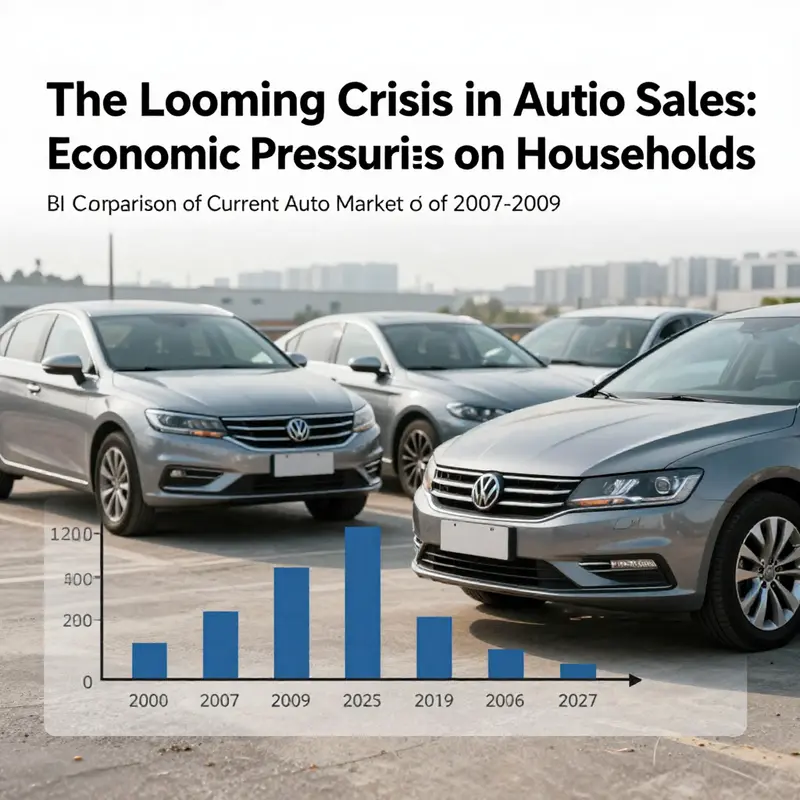
The sound of the economy changes first in the lungs of households—their ability to breathe life into everyday decisions. In the auto market, the overt tremor of a crisis is not a sudden collapse but a slow, deliberate deceleration: cars are still sold, but the pace is uneven, the financing more expensive, and the confidence that once carried families into new purchases has taken on a wary, protective stance. The imagery this chapter follows is not of a sudden, binary crash, but of a creeping, financial-crisis-style drift that appears to be descending on households through a cascade of interlocking pressures: higher borrowing costs, stretched budgets, and the underlying stress that comes with inflation’s persistence. What makes this moment distinct is the way those forces distribute themselves through the household ledger. The auto market remains sensitive to money, and money is in a new, tighter orbit around all big-ticket purchases. While the arc may feel familiar to readers who know the playbook of past downturns, the terrain today is shaped by different instruments, different incentives, and a banking system that, while more stable than in the 2007–2009 era, still tests household resilience through rates, terms, and expectations that influence every kitchen-table calculation about transportation, mobility, and future plans.
In this environment, the BEA’s latest signal that real personal consumption expenditures on vehicles declined by 3.4 percent year over year in Q4 2025 matters not as a stand-alone statistic but as a pointer to a broader household experience. It suggests that the urgency households once felt to upgrade or replace vehicles has weakened, even as the need for reliable transportation remains. The explanation is not simply that people suddenly decided they had no use for a car; rather, it is that the cost of access to new cars—once cushioned by lower financing costs and generous credit terms—has become materially higher. The average auto loan interest rate has crept above 7.5 percent, up from roughly 4 percent in 2021, and this shift in credit pricing does not affect everyone equally. For many middle- and lower-income households, the elevated borrowing costs translate into higher monthly payments, longer terms, or both. The result is a quieter market for new vehicles and a more deliberate, sometimes deferred, approach to buying a car that can stretch across months and even years.
The narrative of rising financing costs is not merely a feature of the credit market; it is a behavioral shift that reshapes consumer expectations. When households face higher APRs, the total cost of ownership becomes more salient. A family that might have thought of a five-year loan as a routine financial decision suddenly sees the total interest tally as a meaningful burden. In many cases, this recalibration nudges people toward longer loan terms that reduce monthly outlays in the short term but increase the risk of negative equity if vehicle values decline or if resale markets shift. It also elevates the deterrent effect of any fresh debt; households may choose to extend the life of their current vehicle rather than take on new debt that would bite into savings, education funds, or retirement contributions. The data on delinquency—6.1 percent in December 2025, the highest in more than a decade—underscores a growing fragility in the debt ladder even as the broader economy remains relatively resilient in other respects. Delinquency is not a herald of systemic collapse; it is a signal of strain, especially among borrowers who carry multiple obligations and face rising costs for essentials.
What complicates the picture is the supply side’s response to the demand side’s new hesitancies. Used-car prices, which surged post-pandemic amid supply shocks and robust demand, have stabilized but remain above historical averages. The stabilization is not a return to lightness but a plateau where buyers and sellers negotiate around constraints—limited new-vehicle production, ongoing supply chain frictions, and the persistent inflation that has reshaped consumer expectations for value. In this environment, many households gravitate toward used vehicles as a more affordable route to mobility, even as the price discipline in the used market remains tighter than in the boom years of the prior decade. The result is a complex ecosystem in which demand for dependable, lower-cost transportation persists, but affordability is no longer a given; it is a negotiated outcome that hinges on financing terms, vehicle age and condition, maintenance costs, and the risk tolerance of buyers who must also fund daily needs like housing, food, and healthcare.
The current portrait of the auto market thus diverges in meaningful ways from the 2007–2009 crisis pictures. The 2007–2009 period was defined by a global financial meltdown that cascaded from housing markets into credit markets, then into everyday spending, with the banking system itself faltering under liquidity pressures. Credit markets contracted with a ferocity that erased the ease of financing for households, businesses, and households’ willingness to take on risk. The economy reeled under a deep recession, with GDP falling about 3.1 percent in 2009, and the social fabric of households frayed as unemployment rose and balance sheets buckled under housing and financial stress. In that era, auto sales did not merely slow; they reflectively mirrored the broader collapse of confidence and access to capital.
Today, the mechanics feel different, even as the shadow of that crisis informs the lens through which we interpret present conditions. First, consumer demand for reliable transportation remains robust in many segments of the population. The need for mobility is foundational; people still require vehicles for work, caregiving, and daily routines. The persistence of demand, even in a high-rate environment, points to a structural need for transportation that cannot be postponed indefinitely. Second, the supply side—especially in the used-vehicle market—has found a degree of equilibrium, albeit within a price range that still carries inflationary pressures. This is a marked departure from the 2008–2009 period, when credit availability itself was a nearly universal constraint and the macroeconomic instability was amplifying even routine purchases. Third, policy tools unleashed during this cycle—most notably EV incentives with up to $7,500 in tax credits—inject a different kind of market dynamism than was present in 2007. These subsidies act as a counterweight to the price and rate increases by creating an alternative financial calculus that can tilt some households toward electrified options or at least into broader market participation, a form of governmental scaffolding that did not exist in the same way a decade and a half ago. The banking sector, in this moment, shows signs of resilience rather than systemic fragility. Credit continues to flow, albeit at elevated costs. That flow is essential because it preserves the ability of households to access financing for a major purchase without triggering a rout in confidence and liquidity that would threaten consumer spending more broadly.
The contrasts illuminate the flirtation between risk and resilience that now characterizes the household-mobility dynamic. A household facing high debt service relative to income will inevitably weigh the tradeoffs between replacing a vehicle and preserving capital for emergencies, education, and retirement. The prudence in those decisions has a way of seeping into the entire budget: when debt service ratios climb, households may delay nonessential expenses, adjust savings rates, or reallocate funds from discretionary spending to essential needs. The impact of these micro-decisions is not limited to the driveway; it echoes through neighborhoods as new car lots stay relatively quiet, used-car markets temper price surges, and lenders recalibrate risk appetites. In effect, the household becomes a barometer of the economy’s health, reading not just the headline numbers but the lived experience of monthly payments, loan terms, and the intangible but real sense of financial security.
All of this has implications for the way households plan for the longer arc of life. If the current climate of high interest rates persists for longer than households anticipate, the pressure to stretch purchases and to defer can become chronic. This raises the question of how families navigate the tension between mobility, which is a facilitator of opportunity, and the costs that mobility imposes on the household budget. The answer is rarely found in a single choice; it unfolds in a sequence of adjustments. Some families may trade up to a newer, more efficient vehicle that promises long-term savings in fuel and maintenance, but only if the upfront costs and financing terms deliver favorable net present value. Others may opt for a more modest or older model, accepting higher maintenance risk in exchange for lower monthly payments and a smaller total debt burden. A subset of households will combine options, rotating through a cycle of vehicle ownership that prioritizes reliability and affordability over novelty. In each of these paths, the calculus is shaped by broader macro forces: the path of inflation, the trajectory of monetary policy, and the evolving landscape of consumer incentives and support programs.
The social and economic fabric of households is not a passive backdrop in this story; it is the stage where policy, markets, and personal finance converge. The presence of stand-out indicators, such as the delinquency rate among auto loans and the persistence of high vehicle prices, does not by itself predict doom for the broader economy. But it does signal a need for careful attention to household liquidity and to the distributional effects of high rates. The households most affected are often those with limited access to liquidity, constrained credit histories, or two or more dependents that amplify the cost of transportation as a multiplier in the budget. In such settings, the success of policy interventions—whether through targeted incentives, stabilizing credit terms, or broader fiscal measures—depends on their ability to translate into tangible improvements in household resilience. As a result, the current auto market narrative is not a monolithic tale of consumer despair. It is a mosaic of experiences: some households keep driving forward with little disruption, others recalibrate gently, and a few experience sharper financial stress that demands attention, support, and prudent financial navigation.
The role of information, too, matters. Consumers rely on signals from lenders, dealers, and policymakers about what the future holds for rates, vehicle prices, and credits. When those signals are uncertain, households may adopt a wait-and-see posture, which translates into slower turnover in auto markets and a longer horizon for retail activity to recover. This is not a sign of impending catastrophe, but a condition that calls for clarity in policy communication and consistency in credit access. The current environment also invites a broader consideration of how households manage risk. An era of expensive financing underscores the importance of emergency savings, diversified liquidity, and preparedness for unexpected expenses—principles that remain universally relevant regardless of the specific asset class being financed. In practice, this means encouraging financial habits that buffer families against shocks, such as building up reserve funds, prioritizing debt refinancing when favorable terms arise, and maintaining a non-disruptive plan for transportation that can adapt to changes in personal circumstances.
If there is a central thread to pull through these observations, it is the recognition that the household is not merely a passive receiver of macroeconomic tides. It actively negotiates the terms of mobility within the constraints of current credit conditions. The stabilization of the banking sector, the availability of credit at higher but still accessible levels, and the persistent demand for reliable transportation together create a landscape where a crisis-tier decline in auto sales is not a foregone conclusion. Yet the risk is real enough to warrant vigilance: a sustained period of higher rates and delayed purchases could erode the momentum in vehicle-related markets and, by extension, influence household confidence, consumer durable demand, and the broader economic cycle. Read together, the indicators suggest a chapter in which households recalibrate, not retreat, and policy instruments—whether fiscal or monetary—should aim to reinforce that recalibration with transparency and support rather than fear and abrupt shifts.
For readers who want to place this discussion in a wider framework of economic history, the Federal Reserve Bank of St. Louis offers a comprehensive overview of the 2007–2009 financial crisis that can illuminate how similar patterns unfold and why the present environment, while challenging, differs in meaningful ways. This resource underscores the importance of understanding credit dynamics, liquidity, and policy responses when evaluating the health of households and their ability to sustain mobility in tough times: https://www.stlouisfed.org/education-and-outreach/economic-education-resources/financial-crisis-of-2007-2009
In the meantime, readers who are seeking practical guidance on managing these pressures can turn to thoughtful, disciplined financial planning resources. A useful starting point for deeper context is the Knowledge section of a reputable financial advisory platform, which offers frameworks for evaluating debt, budgeting for transportation costs, and planning household cash flow in the face of rate volatility. The link below directs to a resource designed to help readers translate macro-market signals into concrete steps for their own households: Knowledge. This is not a pledge against risk but a reminder that preparation and informed decisions can soften the blow of higher financing costs and keep households moving forward, even when the road ahead is less certain.
As the year unfolds, the auto market’s trajectory will continue to hinge on how swiftly monetary policy adjusts, how long elevated rates persist, and how policy incentives shape buying behavior. The current period offers a window into how households adapt to a higher-cost environment while maintaining mobility and access to opportunity. It is a chapter of resilience, not collapse; of adjustment, not abandonment. The signal to watch is not a single datapoint but the pattern of choices households make when confronted with higher borrowing costs, price strength in used markets, and the evolving calculus around what transportation means for a family’s financial future. When viewed through this lens, the narrative becomes less about a looming disaster and more about the ways households navigate risk, preserve option value, and preserve the essential mobility that underpins their livelihoods and long-term goals.
Final thoughts
The current downturn in auto sales is a multifaceted issue that mirrors past financial crises, driven by economic pressures such as rising interest rates and declining consumer confidence. Households, auto dealerships, and small businesses must adapt to these challenges by re-evaluating financing options, considering the used car market, and understanding market trends. By being proactive and informed, consumers and dealerships can navigate these turbulent times and emerge resilient. Awareness and strategic planning will be crucial for all stakeholders involved in the automotive sector.