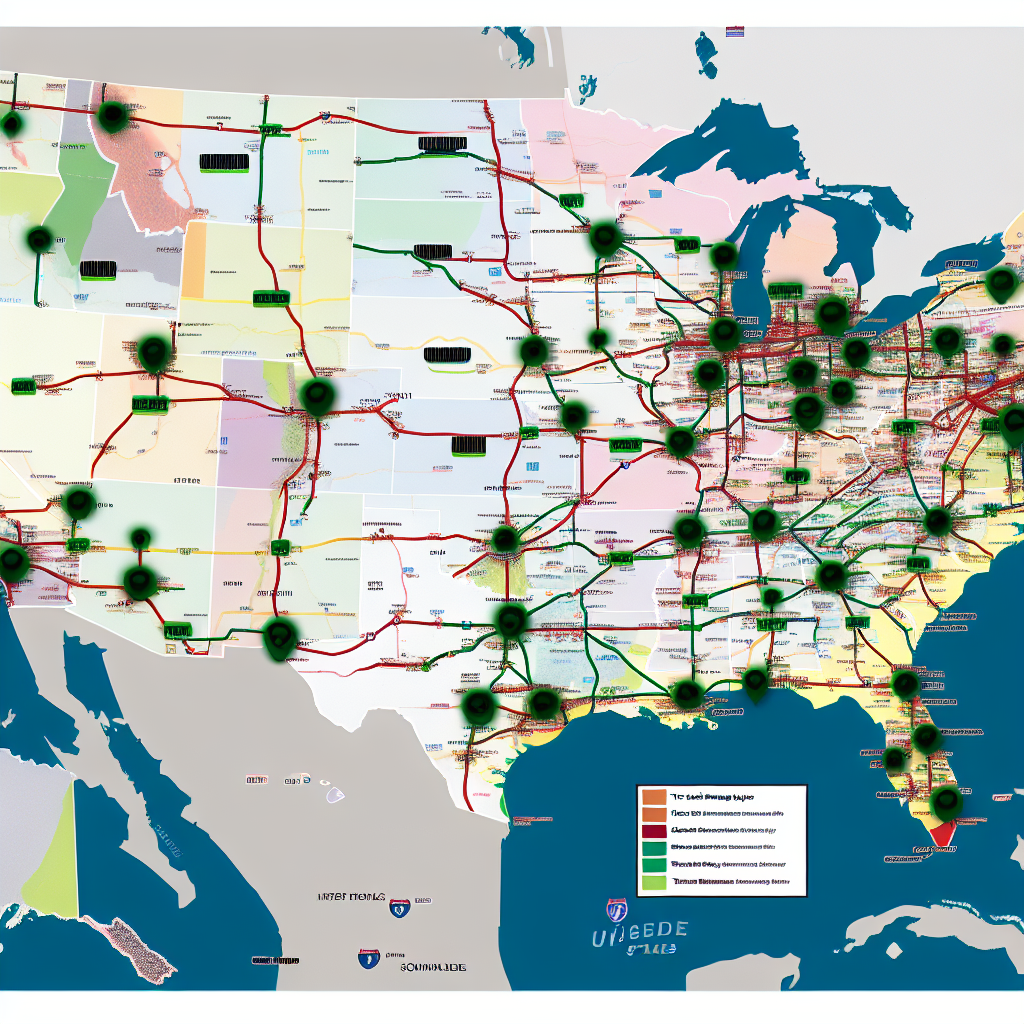

Truck parking shortages have become a significant critical issue in the United States, affecting not only the efficiency of the trucking industry but also the safety and wellbeing of truck drivers everywhere. With limited truck parking spaces available, drivers often face daunting challenges when looking for a place to rest, leading to increased stress, fatigue, and even unsafe driving conditions.
According to a report from the American Transportation Research Institute, parking continues to top the list of driver concerns, underscoring the urgency for effective solutions in this area. The scarcity of truck parking spaces not only impacts the individual drivers but can have ripple effects across the supply chain, ultimately affecting consumers and businesses alike.
To address this pressing issue, the Federal Motor Carrier Safety Administration (FMCSA) is launching a nationwide study aimed at quantifying the economic and safety benefits of creating new truck parking spaces. This comprehensive survey intends to gather data from around 1,000 drivers, providing state and local governments with clearer insights that could inform better decision-making regarding the construction of essential parking facilities.
As the demand for reliable truck parking grows, this FMCSA study represents a proactive approach to alleviating one of the most pressing concerns faced by today’s truck drivers as they navigate an increasingly congested landscape.
The FMCSA survey highlights the critical economic and safety challenges linked to truck parking shortages. An alarming 98% of truck drivers report difficulties in securing safe parking, leading to significant economic implications. On average, drivers experience parking-related delays and wasted fuel expenses of approximately $5,500 annually per driver. With inadequate parking facilities, nearly 60% of drivers find themselves violating hours-of-service regulations, which increases the likelihood of fatigue-related accidents. Studies reveal that locations with sufficient truck parking can reduce crash rates by 32%, underscoring the importance of proper facilities for enhancing highway safety.
Additionally, creating new parking spaces can generate substantial economic activity—up to $750,000 annually for each new space—through improved efficiency and reduced supply chain delays. Adequate parking is essential for driver retention, with 70% of drivers indicating that availability of safe parking significantly influences their job satisfaction. Moreover, improper parking contributes to 15% of interstate truck-involved fatalities, accentuating the pressing need for enhanced infrastructure.
In summary, addressing the trucking industry’s prevalent parking shortages presents a dual opportunity to improve both economic performance and safety outcomes, ultimately benefiting all stakeholders in the supply chain. This initiative is not merely about convenience for drivers; it represents a proactive approach to fostering a safer and more efficient transportation network.

Economic Benefits of Improving Truck Parking
The economic benefits of improving truck parking infrastructure are significant and multifaceted, as highlighted by recent surveys and studies. According to the Federal Motor Carrier Safety Administration (FMCSA), 98% of truck drivers report that they often struggle to find safe parking. This challenge results in substantial economic drawbacks; drivers spend, on average, an additional 56 minutes daily searching for parking, leading to an estimated annual loss of $4,600 in compensation per driver due to parking-related inefficiencies.
Moreover, the American Transportation Research Institute (ATRI) estimates that these parking shortages cost the U.S. economy approximately $5,500 per truck each year in lost productivity and fuel. Through enhancing truck parking availability, not only can we improve driver satisfaction and retention—an essential element in minimizing turnover—but we can also enhance supply chain efficiency. Reports suggest that addressing the parking shortage could save the industry approximately $1.4 billion annually through reduced search times and improved operational efficiencies.
Private parking services have emerged as a viable solution to the constraints posed by inadequate parking. Companies like TruckPark and ParkMyFleet have developed innovative technology platforms that connect drivers to available parking spaces. This synergy not only alleviates the pressures faced by drivers but also generates revenue for property owners, creating a win-win scenario. Case studies indicate that these private services can decrease search times by up to 75%, translating into significant savings and better resource allocation for trucking companies.
Moreover, the USDOT analysis elaborates on how private parking investments contribute over $1 billion annually to the U.S. economy by boosting productivity and supporting just-in-time logistics—a critical component of contemporary supply chains.
Improved truck parking can also have a broader economic impact at a regional level. A case study in Tennessee revealed that a private parking facility yielded a 40% reduction in parking search time, saving drivers about $3,200 per truck annually while generating $1.2 million in proven revenue and creating local jobs. This highlights the potential of private parking services to drive significant regional economic development by streamlining truck logistics and addressing critical infrastructure challenges effectively.
In summary, investing in truck parking not only enhances driver conditions but also leads to substantial economic gains for the trucking industry and the broader economy, reinforcing the importance of this issue in ongoing discussions about transportation infrastructure and policy.

Safety Benefits of Truck Parking
Proper truck parking is crucial for making truck drivers safer, as shown in various studies by the FMCSA and the American Transportation Research Institute. Safety concerns about truck parking are serious. About 98% of truck drivers say they often struggle to find secure parking. This scarcity can lead to dangerous driving behaviors since drivers sometimes park in unsafe or illegal areas, including highways.
One major safety concern is fatigue-related accidents. The lack of adequate parking forces around 60% of drivers to break hours-of-service regulations to find a safe place to rest. This not only increases fatigue but also significantly raises crash risks. Research shows that areas with adequate parking see a reduction in crash rates by as much as 32%.
Moreover, inadequate parking often leads to more crime, like cargo theft. Drivers who park in unsecured areas face theft risks, adding stress to their already dangerous jobs. Providing secure parking can significantly reduce these theft incidents.
The safety benefits of well-planned truck parking spaces go beyond the drivers. By reducing roadside stops and related accidents, we enhance the overall safety for all road users, including passenger vehicles. Addressing parking shortages is not just about convenience for truck drivers. It is a vital step toward ensuring safety on our highways, making the case for better investment in truck parking infrastructure even more urgent.
In summary, proper truck parking is tied to improved safety outcomes. It reduces driver fatigue, prevents illegal parking, and minimizes theft—all vital for maintaining a safe and effective transportation network.
| Parking Type | Pros | Cons |
|---|---|---|
| Public Parking |
|
|
| Private Parking |
|
|
| Roadside Parking |
|
|
The FMCSA study represents a significant step forward in addressing the pervasive truck parking challenges that drivers consistently face. By emphasizing both safety and economic benefits, this nationwide survey aims to illuminate the real-world effects of parking shortages on truck drivers and the broader transportation network. As highlighted, a staggering number of drivers report difficulties finding secure parking, which can lead to fatigue-related accidents and significant economic losses, estimated at over $5,500 per driver annually. These issues underline the urgent necessity for more safe and accessible truck parking spaces.
The safety implications of insufficient parking cannot be overstated. By understanding how adequate facilities reduce crash rates and prevent illegal parking, the FMCSA study provides essential data that can help inform state and local governments’ decisions. This proactive approach is aimed not just at improving conditions for drivers but also at enhancing the overall safety on our roads.
As truck drivers, your experiences and insights are invaluable to this study. By participating in the FMCSA survey, you can contribute to meaningful changes that will not only benefit your day-to-day driving experience but also enhance the safety and efficiency of the trucking industry as a whole. We encourage you to engage with this initiative, sharing your input and experiences to shape a future where secure truck parking is readily available, ensuring safer journeys for everyone on the road.
In conclusion, the FMCSA study represents a significant step forward in addressing the pervasive truck parking challenges that drivers consistently face. By emphasizing both safety and economic benefits, this nationwide survey aims to illuminate the real-world effects of parking shortages on truck drivers and the broader transportation network. As highlighted, a staggering number of drivers report difficulties finding secure parking, which can lead to fatigue-related accidents and significant economic losses, estimated at over $5,500 per driver annually. These issues underline the urgent necessity for more safe and accessible truck parking spaces.
Chris Spear, President of the American Trucking Associations, stated, “The lack of safe and accessible truck parking continues to be a national safety concern. When truck drivers don’t have a designated place to park, they end up parking on the side of the road, on exit ramps, or elsewhere, creating dangerous conditions for themselves and the motoring public. This is why we strongly encourage drivers to participate in the FMCSA survey – their input is critical to developing solutions that address this infrastructure gap.”
User Adoption Insights on Truck Parking Solutions
Current statistics highlight significant structural imbalances in truck parking supply versus demand across the United States. On average, there is only one parking space for every eleven trucks nationwide, which is exacerbated in densely populated or busy freight areas. According to a survey conducted by the I-10 Corridor Coalition in 2020, an alarming 78% of truck drivers reported spending more than 30 minutes each day searching for safe parking. This shortage forces some drivers to park in unsafe locations such as highway shoulders, ramps, or other non-designated areas, violating FMCSA regulations and increasing the risk of accidents.
Despite some state initiatives aimed at expanding infrastructure and technological improvements—such as Arizona’s addition of nearly 100 parking spaces along the I-40 corridor and the introduction of a real-time parking information system covering over 550 spaces—publicly available parking accounts for only about 3% of the national demand. As a result, parking inefficiencies contribute to estimated annual economic losses exceeding $125 billion due to wasted time, extra mileage, and safety incidents arising from inadequate parking options.
Moreover, the integration of private land utilization, advanced information technologies, and real-time data sharing systems have been proposed as viable solutions to enhance parking efficiency. These efforts underscore the critical importance of developing and improving truck parking infrastructure to meet the growing demand and enhance safety for truck drivers and all road users.
| State | Improvement Description | Impact on Parking Availability | Safety Records Impact |
|---|---|---|---|
| New York | JFK Airport to triple truck parking capacity to 150 spaces | Increased capacity reduces illegal parking on streets | Expected reduction in noise and quality-of-life issues |
| Washington | $2.3 million initiative for real-time parking updates along I-5 | Improved occupancy rates, dynamic availability info | 31% decrease in parking-related incidents post funding |
| National Average | 40K+ shortage; 22% reduction in accidents via Jason’s Law programs | Improvement from 1:0.85 to 1:1.02 parking ratios | Notable decline in fatigue-related accidents |
| Various States | $375 million funding leading to 12,000 newly created spaces | Increase in overall capacity, improving driver options | $1.2 billion saved annually due to reduced idle time |
| Participating States | 18% capacity increase through public-private partnerships | Positive ratio changes, ensuring more spaces available | 27% reductions in parking violations, 19% better rest compliance |
Truck parking shortages have become a significant critical issue in the United States, affecting not only the efficiency of the trucking industry but also the safety and wellbeing of truck drivers everywhere. With limited truck parking spaces available, drivers often face daunting challenges when looking for a place to rest, leading to increased stress, fatigue, and even unsafe driving conditions. According to a report from the American Transportation Research Institute, parking continues to top the list of driver concerns, underscoring the urgency for effective solutions in this area. The scarcity of truck parking spaces not only impacts the individual drivers but can have ripple effects across the supply chain, ultimately affecting consumers and businesses alike. To address this pressing issue, the Federal Motor Carrier Safety Administration (FMCSA) is launching a nationwide study aimed at quantifying the economic and safety benefits of creating new truck parking spaces. This comprehensive survey intends to gather data from around 1,000 drivers, providing state and local governments with clearer insights that could inform better decision-making regarding the construction of essential parking facilities. As the demand for reliable truck parking grows, this FMCSA study represents a proactive approach to alleviating one of the most pressing concerns faced by today’s truck drivers as they navigate an increasingly congested landscape.
FMCSA Survey Insights
The FMCSA survey highlights the critical economic and safety challenges linked to truck driver safety and truck parking shortages. An alarming 98% of truck drivers report difficulties in securing safe parking, leading to significant economic implications. On average, drivers experience parking-related delays and wasted fuel expenses of approximately $5,500 annually per driver. With inadequate parking facilities, nearly 60% of drivers find themselves violating hours-of-service regulations, which increases the likelihood of fatigue-related accidents. Studies reveal that locations with sufficient truck parking can reduce crash rates by 32%, underscoring the importance of proper facilities for enhancing highway safety.
Additionally, creating new parking spaces can generate substantial economic activity—up to $750,000 annually for each new space—through improved efficiency and reduced supply chain delays. Adequate parking is essential for driver retention, with 70% of drivers indicating that availability of safe parking significantly influences their job satisfaction. Moreover, improper parking contributes to 15% of interstate truck-involved fatalities, accentuating the pressing need for enhanced infrastructure.
In summary, addressing the trucking industry’s prevalent parking shortages presents a dual opportunity to improve both economic performance and safety outcomes, ultimately benefiting all stakeholders in the supply chain. This initiative is not merely about convenience for drivers; it represents a proactive approach to fostering a safer and more efficient transportation network.
Economic Benefits of Improving Truck Parking
The economic benefits of improving truck parking infrastructure are significant and multifaceted, as highlighted by recent surveys and studies. According to the Federal Motor Carrier Safety Administration (FMCSA), 98% of truck drivers report that they often struggle to find safe parking. This challenge results in substantial economic drawbacks; drivers spend, on average, an additional 56 minutes daily searching for parking, leading to an estimated annual loss of $4,600 in compensation per driver due to parking-related inefficiencies.
Moreover, the American Transportation Research Institute (ATRI) estimates that these parking shortages cost the U.S. economy approximately $5,500 per truck each year in lost productivity and fuel. Through enhancing truck parking availability, not only can we improve driver satisfaction and retention—an essential element in minimizing turnover—but we can also enhance supply chain efficiency. Reports suggest that addressing the parking shortage could save the industry approximately $1.4 billion annually through reduced search times and improved operational efficiencies.
Private parking services have emerged as a viable solution to the constraints posed by inadequate parking. Companies like TruckPark and ParkMyFleet have developed innovative technology platforms that connect drivers to available parking spaces. This synergy not only alleviates the pressures faced by drivers but also generates revenue for property owners, creating a win-win scenario. Case studies indicate that these private services can decrease search times by up to 75%, translating into significant savings and better resource allocation for trucking companies.
Moreover, the USDOT analysis elaborates on how private parking investments contribute over $1 billion annually to the U.S. economy by boosting productivity and supporting just-in-time logistics—a critical component of contemporary supply chains.
Improved truck parking can also have a broader economic impact at a regional level. A case study in Tennessee revealed that a private parking facility yielded a 40% reduction in parking search time, saving drivers about $3,200 per truck annually while generating $1.2 million in proven revenue and creating local jobs. This highlights the potential of private parking services to drive significant regional economic development by streamlining truck logistics and addressing critical infrastructure challenges effectively.
In summary, investing in truck parking not only enhances driver conditions but also leads to substantial economic gains for the trucking industry and the broader economy, reinforcing the importance of this issue in ongoing discussions about transportation infrastructure and policy.
Safety Benefits of Truck Parking
Proper truck parking is crucial for enhancing the safety of truck drivers, as highlighted in various studies and surveys, including those conducted by the FMCSA and the American Transportation Research Institute. Safety concerns surrounding truck parking are increasingly alarming, with approximately 98% of truck drivers reporting that they frequently struggle to find secure parking. The effects of this scarcity can lead to dangerous driving behaviors, as drivers often resort to parking in unsafe, illegal areas or on the roadside.
One major safety concern is the incidence of fatigue-related accidents. The lack of adequate parking facilities forces around 60% of drivers to violate hours-of-service regulations to locate a suitable resting place. This violation not only increases driver fatigue but also significantly elevates the risk of crashes. Research indicates that areas near adequate truck parking see a reduction in crash rates by as much as 32%.
Moreover, inadequate parking often leads to increased crime, including cargo theft. Drivers forced to park in unsecured areas are more vulnerable to theft, adding a layer of concern to their already elevated stress levels. In fact, providing secure parking options can drastically reduce these theft instances.
The safety benefits of well-planned truck parking spaces extend beyond the drivers themselves. By decreasing the frequency of roadside stops and associated accidents, we can enhance overall road safety for all users, including passenger vehicles. It becomes clear that addressing parking shortages is not only a matter of convenience for truck drivers but a pivotal step in ensuring safety on our highways, making the case for prioritized investment in truck parking infrastructure more pressing than ever.
In summary, proper truck parking directly correlates with improved safety outcomes, reducing driver fatigue, preventing illegal parking, and minimizing theft—all vital considerations for sustaining a safe and effective transportation network.
Truck Parking Options Comparison
| Parking Type | Pros | Cons |
|---|---|---|
| Public Parking |
|
|
| Private Parking |
|
|
| Roadside Parking |
|
|
Conclusion
The FMCSA study represents a significant step forward in addressing the pervasive truck parking challenges that drivers consistently face. By emphasizing both safety and economic benefits, this nationwide survey aims to illuminate the real-world effects of parking shortages on truck drivers and the broader transportation network. As highlighted, a staggering number of drivers report difficulties finding secure parking, which can lead to fatigue-related accidents and significant economic losses, estimated at over $5,500 per driver annually. These issues underline the urgent necessity for more safe and accessible truck parking spaces.
The safety implications of insufficient parking cannot be overstated. By understanding how adequate facilities reduce crash rates and prevent illegal parking, the FMCSA study provides essential data that can help inform state and local governments’ decisions. This proactive approach is aimed not just at improving conditions for drivers but also at enhancing the overall safety on our roads.
As truck drivers, your experiences and insights are invaluable to this study. By participating in the FMCSA survey, you can contribute to meaningful changes that will not only benefit your day-to-day driving experience but also enhance the safety and efficiency of the trucking industry as a whole. We encourage you to engage with this initiative, sharing your input and experiences to shape a future where secure truck parking is readily available, ensuring safer journeys for everyone on the road.
Chris Spear, President of the American Trucking Associations, stated, “The lack of safe and accessible truck parking continues to be a national safety concern. When truck drivers don’t have a designated place to park, they end up parking on the side of the road, on exit ramps, or elsewhere, creating dangerous conditions for themselves and the motoring public. This is why we strongly encourage drivers to participate in the FMCSA survey – their input is critical to developing solutions that address this infrastructure gap.”

A visual representation of truck parking statistics across the United States showcasing the distribution of truck parking spaces.