

Auto loan refinancing can significantly enhance financial flexibility for individual car buyers, dealerships, and small business fleet buyers. GM Financial offers a comprehensive program that allows users to refinance auto loans sourced not only from them but also from other lenders, striving to meet diverse financial circumstances. Through this article, insights into available refinancing options, eligibility criteria, interest rates and terms, the application process, and advantages specific to GM Financial services will be thoroughly explored, ensuring a holistic understanding for potential customers.
Refinancing Auto Loans with GM Financial: Crafting a Flexible Path to Lower Payments and Better Terms

Refinancing auto loans is not merely a rate chase; it is a practical rebalancing of debt to fit shifting finances and evolving goals. GM Financial offers refinance options that can apply to vehicles financed through GM Financial itself or through other lenders, creating a usable path for borrowers who want to ease monthly obligations, pursue a lower interest rate, or adjust the loan term to align with current cash flow. The core idea is straightforward: with the right refinancing mix, you can reduce monthly payments, lower the amount of interest paid over the life of the loan, and adapt the repayment schedule to reflect changes in income, priorities, or the pace of your overall financial plan. This approach aims to be accessible and customer-centered, recognizing that life can move in meaningful ways between the moment a loan is signed and the moment it is paid off.
Eligibility centers on the fundamentals of car ownership and loan status. A vehicle in good condition is essential, with no major liens or unresolved title issues that would complicate transferring the loan to a new lender. The borrower’s financial track record also matters: credit history, income stability, and the loan-to-value ratio influence offers. Importantly, the refinance option is available not only to people currently paying through the original lender but also to those with a loan from another institution. This inclusivity broadens access for households that might have found the terms from a different lender more favorable or that have improved their financial picture since the original loan was originated. The practical outcome is clear: a wider set of borrowers can explore options that might lighten monthly costs or shorten the path to ownership.
Turning to the mechanics, refinance terms typically span a broad window—from two years up to seven years. That range is a deliberate design to accommodate both borrowers who want to pay off quickly and those who prefer more manageable payments over a longer horizon. In practice, the exact term you qualify for depends on several variables. A borrower’s current financial standing, reflected in credit scores and income stability, shapes the rate environment. The value of the vehicle relative to the loan amount—often described as the loan-to-value metric—also plays a critical role by helping determine risk and affordability. Vehicle age can influence eligibility and pricing, since newer models often present fewer maintenance concerns and stronger resale confidence. While these factors guide the offers you’ll see, the underlying principle remains consistent: refinancing can tailor the loan to your budget by selecting a term that balances monthly payment with total interest over time.
Interest rates accessible through the refinance option are inherently mixed. They reflect the interplay of creditworthiness, how much of the vehicle’s value you are borrowing, how old the car is, and broader market rates at the moment you apply. For borrowers with strong credit histories, competitive rates can unlock meaningful reductions from existing payments. Yet even with a solid credit profile, the rate you receive is not guaranteed until underwriting is completed. This shifts the decision to refinance from a simple rate comparison to a careful financial judgment. It’s not just about the headline number; it’s about how the new loan interacts with your overall financial trajectory. Lower rates are valuable, but they only translate into real savings if the resulting monthly payment is genuinely easier to manage without compromising long-term goals.
The benefits of refinancing extend beyond the obvious reduction in monthly obligations. A lower interest rate can translate into less interest paid over the life of the loan, a shorter payoff period, and the relief of aligning debt service with current cash flow. For some, shortening the term is the preferred route to savings, even if it raises the monthly amount, because paying off the loan sooner can yield a substantial cumulative benefit. Others might opt for a longer term to preserve liquidity during tighter periods, in which case the immediate burden improves while total interest accumulates more slowly. The decision hinges on your present and anticipated finances, your tolerance for risk, and your plans for the vehicle. The refinancing process is designed to support these personalized choices; it invites a practical assessment rather than a one-size-fits-all prescription, focusing on how a refined loan can harmonize with everyday money management and long-range objectives.
The application path for refinancing is usually straightforward and can often be completed online. Borrowers gather documentation that verifies income, employment, and vehicle details. Commonly requested items include proof of income or pay stubs, identity verification, and current loan information such as the outstanding balance and the current lien status. A key point to remember is that this stage does not automatically commit you to a new loan; many lenders use soft credit inquiries during pre-qualification, allowing you to explore options with minimal impact on your credit score. A full underwriting review will involve a hard inquiry and a formal submission of documents, after which personalized offers emerge. The sequence supports informed comparison shopping, letting you weigh the proposed rate, term, and estimated monthly payment alongside any fees or penalties. Throughout, the emphasis is on transparency and simplicity: clear disclosures, reasonable timelines, and timely communication about what is required and what to expect next.
If you’re considering refinancing, there are practical considerations that help determine whether it makes sense. One of the most important is the break-even point—the moment at which savings from a lower rate or a shorter term offset any closing costs or fees associated with the new loan. This calculation isn’t mysterious; it’s a matter of projecting monthly savings against the up-front costs and annualizing that benefit. It’s also wise to be mindful of any negative equity or “upside-down” loan status, where the vehicle’s current value is less than what remains on the old loan. In such cases, refinancing can still be valuable, especially if it moves the balance to a more affordable structure in the longer term, but it requires careful scrutiny of the total cost of the new arrangement. A routine review of your credit profile, the age of the vehicle, and the expected life of the loan helps reveal how close you are to achieving financial goals such as reduced debt service or earlier ownership.
For readers seeking foundational context, the Knowledge page offers additional background on refinancing concepts and how different factors interact to shape loan terms. Knowledge
Ultimately, the decision to pursue a refinance should align with your larger financial plan. A refinance that reduces monthly cash outlay can free up money for essentials or savings, while a plan to shorten the term can meaningfully cut interest costs and accelerate equity in the vehicle. The real-world implication is straightforward: if the new loan yields a payment you can sustain without sacrificing essential expenses, and it improves or preserves your long-term objective of debt reduction, it is worth considering. The process you follow—assessing current loan terms, comparing offers, preparing documents, and selecting a favorable option—becomes a disciplined exercise in financial stewardship rather than a reactive choice to chase a lower number on a rate sheet.
When you are ready to explore, keep in mind that the refinancing option is designed to be accessible to a broad set of borrowers. It acknowledges that the path through debt and vehicle ownership often needs adaptation: life events, shifts in income, changes in family size, or evolving budgeting needs all influence what form of financing makes the most sense at any given moment. The ability to redefine the loan term, move to a lower rate, or adjust monthly payments can translate into meaningful relief, even as you maintain reliable vehicle usage. In short, refinancing is a tool for recalibrating your financial arrangement with the vehicle and for re-aligning commitments with current reality. The ultimate goal is to enable a smoother road ahead—where monthly obligations fit more comfortably within monthly income, where debt service is more predictable, and where the driver remains in good standing with their financial plan. For up-to-date terms and eligibility, visit the official GM Financial site at https://www.gmfinancial.com.
Qualifying for Manufacturer-Backed Auto Loan Refinancing: A Practical Guide to Eligibility and Financial Fit
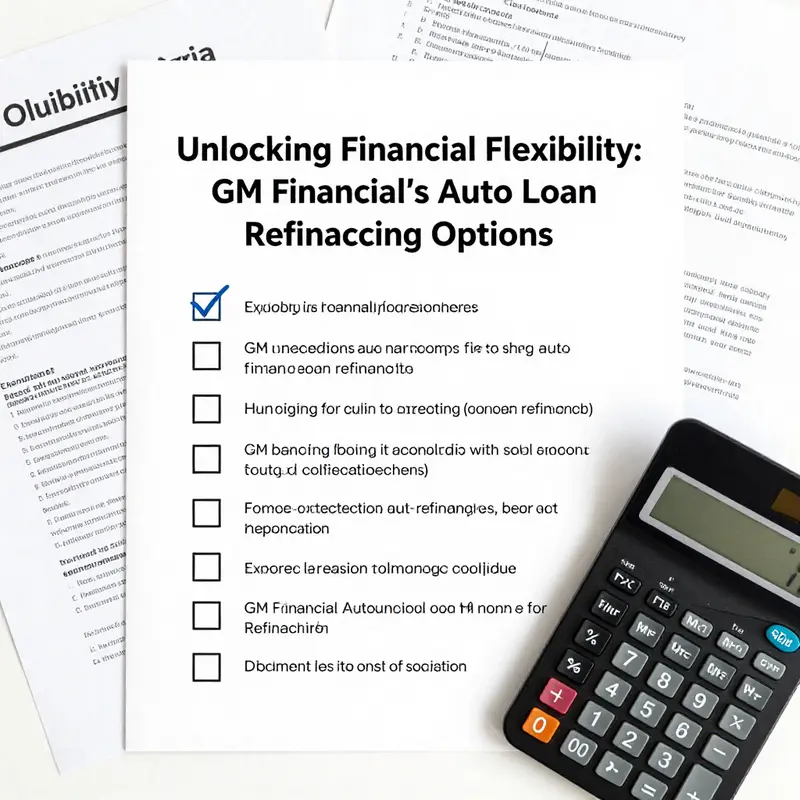
Refinancing an auto loan with a lender affiliated to a major automaker can be a smart move when your finances shift or the loan program itself shifts in your favor. The core idea is straightforward: if you can secure a lower rate, more favorable terms, or a payment that aligns with your current income, you may reduce the total cost of ownership and restore flexibility to your monthly budget. Yet the path to a preapproved refinance hinges on a set of practical criteria that lenders consistently evaluate. Understanding these criteria not only clarifies whether you’re likely to qualify but also helps you prepare in ways that improve your odds. The most dependable truth about eligibility is that it is a holistic judgment, not a single number. Lenders examine a combination of your credit profile, your ability to manage debt, the equity you hold in the vehicle, and the stability of your income. Each element matters, and while thresholds can vary from lender to lender, certain benchmarks tend to influence decisions across the board. By looking at these factors in concert, you can estimate your standing before you apply and identify concrete steps to strengthen it.
First, a borrower’s credit history remains a foundational driver of eligibility. A higher and more stable credit score typically translates into access to lower interest rates, which improves the overall value proposition of refinancing. But score alone rarely tells the whole story. Lenders also consider recent credit activity, patterns in borrowing and repayment, and whether past delinquencies have been resolved or are temporary setbacks. Even if your score isn’t pristine, there are situations where refinancing can still be viable, particularly if you’ve shown consistent payment behavior in recent months and there is a pattern of improvement. The goal is a trajectory that suggests you can meet the new loan terms reliably. Alongside the score, lenders look at how you manage existing debt and whether your overall credit picture demonstrates discipline, predictability, and responsible use of credit.
Debt-to-income ratio, or DTI, is the second pillar in the eligibility framework. This ratio compares your monthly debt obligations to your gross monthly income. A lower DTI generally signals better capacity to handle new debt, including a refinanced loan with different terms. A high DTI does not automatically disqualify you, but it can complicate the process or limit options. To improve your chances, you can consider strategies that shrink monthly debt or stabilize income, such as paying down high-interest balances or waiting for a raise or a more stable income source. Lenders want to see that the new payment will fit within your existing financial envelope without crowding out essential expenses or other obligations.
Equity in the vehicle is a practical, often decisive, factor. Equity is the portion of the car’s value that you own outright, after subtracting the remaining loan balance. When positive equity exists, refinancing becomes more straightforward because the new loan can be secured by the car’s value. In some cases, borrowers with a little negative equity can still refinance, but these deals may carry higher rates, require a larger down payment, or involve special terms. If you owe more than the car’s current value, you might need to explore options that address that gap, such as rolling the negative equity into the new loan or considering a shorter term to accelerate payoff, depending on the lender’s policy. Vehicle equity is dynamic; a quick appraisal of the car’s current market value versus what you owe will give you a realistic sense of where you stand before you apply.
Employment status and income stability form the third essential element. Lenders want confidence that you will continue to earn enough to cover the monthly payments over the life of the new loan. Job changes, reduced hours, or irregular income can influence underwriting decisions. The strength of this factor often rests on two pillars: current income level and predictability. Documentation may include recent pay stubs, tax returns, or evidence of self-employment income. A steady employment history and a track record of income continuity can help reassure lenders that you can handle adjustments in payment schedules if a new term alters the monthly amount.
The age and condition of the vehicle also enter the assessment. Lenders typically impose limits on how old a vehicle can be and how many miles it has accrued when considering refinancing. Older vehicles or those with high mileage can raise concerns about future value retention and reliability, which in turn affect the loan’s risk profile. The practical implication is simple: if the car approaches or exceeds common year and mileage thresholds, the refinancing option may narrow or require more stringent conditions. In some cases, lenders will request a professional inspection or an updated appraisal to verify the car’s condition and to ensure that the collateral remains solid.
Beyond these core criteria, lenders may weigh other factors that refine eligibility. For example, recent payment history on the existing loan, the payoff amount, and the status of any outstanding liens or title issues can influence the decision. A clean payoff plan, where the new loan is clearly structured to replace the old one without gaps, often smooths the underwriting process. Likewise, if you are carrying other high-rate debt, lenders might consider how a refinanced auto loan could impact your overall financial balance. The intention is to ensure that the new loan improves your financial trajectory rather than simply reshapes it.
For those who want to gauge their eligibility without engaging in a full application, many lenders offer a prequalification or quick-quote step. This soft inquiry does not affect your credit score and can provide a snapshot of potential rates, terms, and monthly payments. A prequalification can help you compare options and understand how changes in rate or term might affect your finances before you commit to a formal application.
Preparing for an actual application is a practical exercise in organization. Gather your current loan information, including the payoff amount and the remaining term. Collect documentation that proves income stability, such as recent pay stubs or tax documents, and have your credit report reviewed for errors. Review the vehicle’s value with a trusted appraisal or a reliable online estimator to determine the equity position. Think through how different term lengths would affect your monthly payment and the total interest paid over the life of the loan. Even a modest extension of the term to reduce monthly payments can bring immediate relief, but it may increase the total interest paid. Conversely, shortening the term can save interest but raise monthly costs. The optimal choice depends on your current finances, future expectations, and risk tolerance.
In the end, eligibility is a synthesis of personal finance fundamentals and the specific policies of the lender. The overarching message is practical: the healthier your credit profile, the stronger your income stability, the more positive the equity in your vehicle, and the more favorable the vehicle’s age and condition, the better your odds of a successful refinance. The official lender’s site keeps current information on rates, eligibility thresholds, and the exact steps required to apply, so prospective borrowers should consult that resource to understand the latest criteria and timelines. For broader context on how refinancing intersects with responsible auto ownership and financial planning, you can explore the Knowledge hub for general insights into responsible lending and planning around vehicle debt. Knowledge hub
As you consider whether refinancing makes sense, remember that the choice to pursue a new loan is about balance. It’s not just about landing a lower rate; it’s about ensuring that the new terms align with your income prospects, your willingness to manage debt, and your long-term financial goals. If you move from a higher-interest, shorter-term arrangement to a longer-term plan, do the math to confirm that the monthly savings actually translate into a net benefit over the life of the loan. If, on the other hand, you secure a lower rate but keep the term tight, you may comfortably reduce both the monthly outlay and the total interest. Either way, the decision should be grounded in a clear projection of cash flow, risk tolerance, and the car’s reliability outlook. The refinancing journey thus becomes not just about the instantaneous monthly figure but about reshaping debt in a way that preserves mobility and financial certainty for the road ahead.
External resource: https://www.gmfinancial.com
Rewriting Your Auto Loan: How GM Financial Refinancing Rates and Terms Can Shape Your Financial Roadmap
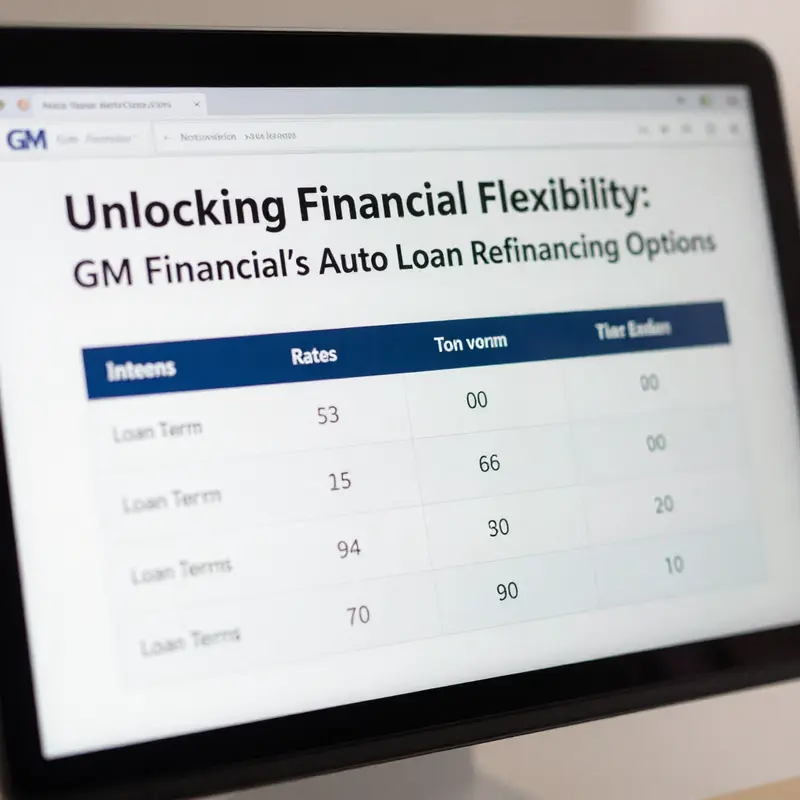
GM Financial’s refinancing option is designed to help borrowers breathe easier under a new, potentially lower, cost of credit. The core idea is simple: swap an existing auto loan for a new loan with different terms and a different interest rate, ideally resulting in a lower monthly payment or a shorter path to debt-free ownership. The possibility that a borrower can refinance whether the loan originated with GM Financial or with another lender broadens the pool of eligible customers and introduces a level of flexibility that can be especially valuable in periods of shifting budgets or improving credit. The practical path to refinancing begins with understanding the rate and term framework that GM Financial typically offers. As of the most recent information, refinance rates can be competitive, with rates starting around 3.99% APR for qualified borrowers. It is important to emphasize that this is a benchmark that reflects general market positioning and the influence of individual credit profiles, loan sizes, vehicle specifics, and term choices. The actual rate any given borrower receives will be tailored to their unique financial picture, and could be higher or lower than this starting point depending on several interacting factors. The term options—usually ranging from 24 to 72 months—provide a spectrum that helps borrowers calibrate their repayment horizon to fit monthly budget constraints and long-term goals. Shorter terms typically carry higher monthly payments but lower total interest, while longer terms reduce monthly burden at the cost of more cumulative interest over the life of the loan. For many households, the decision comes down to a balance between affordability today and total cost over the life of the loan, with the sweet spot often lying somewhere in the middle of the term spectrum that best matches income stability and future financial plans.
In practice, the specific terms you’ll hear from GM Financial depend on a few essential inputs. Credit score remains a central determinant; borrowers with stronger credit histories generally qualify for lower rates and more favorable terms. The loan amount, which is partly a function of the vehicle’s payoff balance and any refinancing fees or prepayments, also shapes the rate and term offered. The age and value of the vehicle are not mere background details; they can materially influence both eligibility and the likelihood of a favorable loan-to-value ratio. A newer vehicle or one with solid remaining value can yield a more advantageous refinance package, while an older model or one with substantial depreciation remaining could tighten the available options. This interplay is why personalized quotes matter so much in the refinancing process. Rather than relying on generic advertisements, prospective borrowers are encouraged to engage directly with GM Financial representatives or the official site to obtain a precise quote tailored to their situation. The process typically involves a straightforward assessment, followed by a clear presentation of the available refinance products and the associated payment schedules.
One of the practical considerations many borrowers weigh is whether refinancing will genuinely deliver a lower monthly payment. A favorable rate is only part of the equation. If a borrower extends the loan term in the pursuit of a lower payment, the total interest paid over the life of the loan can grow even as the monthly cost becomes more affordable. Conversely, keeping or shortening the term while securing a lower rate can reduce both monthly payments and total interest, provided the borrower’s budget can accommodate the higher monthly figure that often accompanies shorter terms. The decision is thus a balancing act between current cash flow needs and longer-term financial discipline. It is also worth noting that refinancing is not a universal panacea for every financial hurdle. Some vehicles may not meet the lender’s terms due to mileage, condition, or market value thresholds, and there can be costs associated with processing the new loan, including potential origination fees or prepayment penalties on the old loan depending on the existing agreement. Borrowers should review all disclosures carefully, model a few scenarios, and compare the new terms against the existing loan to compute the actual benefit.
The practical steps to embark on GM Financial refinancing typically begin with a self-assessment of your current financial landscape. Consider whether your credit score has improved since you first obtained the loan, whether your household income has become more stable, and whether your existing loan’s monthly payment strains the budget. If any of these factors lean in a favorable direction, refinance could offer tangible improvements. It is advisable to gather essential documentation in advance: proof of income, current loan details, proof of vehicle ownership and insurance, and information about the vehicle itself, including make, model, year, mileage, and current payoff amount. With these inputs, you can request a personalized quote through GM Financial’s platform or connect with a representative who can walk you through the options. The process is designed to be customer-focused, with the aim of delivering clarity about whether refinancing serves your short-term needs and long-term financial objectives. The broader goal is to empower borrowers to take command of their debt, shaping a repayment plan that aligns with life’s evolving priorities.
As you explore the possibility of refinancing, it can be helpful to augment your understanding with trusted financial resources and guidance. The internal knowledge base of a respected consumer-finance community offers useful context on how refinancing strategies fit into a wider debt-management plan. For readers seeking accessible context on refinancing concepts and their relevance to ongoing financial planning, the linked knowledge hub can provide a useful starting point: Davis Financial Advisors knowledge hub. This resource complements the direct information from GM Financial by outlining how rates, terms, and loan-to-value considerations typically interact in a refinancing decision.
In parallel with these considerations, it is essential to keep pace with the latest details from the source itself. GM Financial emphasizes visiting its official site for the most current rates, terms, and program specifics, as these figures can change with market conditions and policy updates. A direct engagement with the lender often yields the most accurate and timely guidance, including any program nuances that might affect eligibility, required documentation, or the availability of certain term lengths for particular vehicle profiles. This layered approach—combining up-to-date official information with personalized quotes and a grounded understanding of refinancing mechanics—helps borrowers make informed choices anchored in their actual financial position rather than a generic forecast.
For readers ready to take the next step, the decision to refinance should be tethered to a careful comparison of the new loan’s total cost relative to the existing loan. If the numbers align in a way that reduces the monthly burden while avoiding unnecessary increases in total interest, refinancing can be a strategically sound move. If not, it may be wiser to maintain the current loan terms and revisit refinancing later when circumstances have shifted in your favor. In all cases, the goal remains clear: to create a payment plan that supports responsible driving and prudent financial stewardship over time. For definitive, current details, consult the official GM Financial site and consider discussing options with a financing professional who can translate the numbers into a practical, month-by-month budget that reflects your real-life spending and saving priorities.
External reference: https://www.gmfinancial.com/
The Refinancing Roadmap: Navigating an Auto-Loan Refinance with a Major Lender
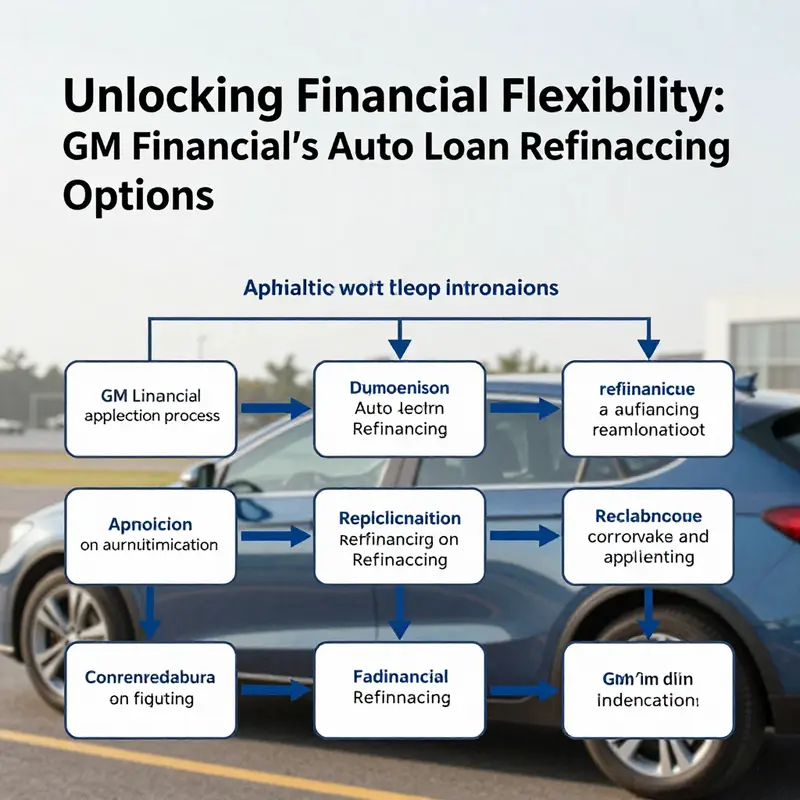
Financing a vehicle can start as a fixed agreement and end up feeling like a rolling opportunity for financial tune-ups. When a borrower considers refinancing an auto loan, the aim is simple in concept—lower the cost of borrowing, reduce monthly outlays, or adjust the term to fit a changing budget. The process is designed to be accessible whether the current loan was originated directly with a lender or through a third party, so long as the vehicle and the borrower meet certain criteria. A major lender’s refinancing program typically opens the door to these possibilities, offering a pathway to recalibrate a loan that no longer aligns with today’s financial picture. The value of this route lies not only in potential savings but in the flexibility to tailor terms to a shifting life cadence—new job, tightened expenses, or altered plans for the vehicle’s tenure. For anyone exploring this option, the first stop is understanding what’s involved and how the steps flow into a smoother, more predictable payoff schedule. A helpful starting point is to think of the process as a structured conversation with a lender, one that translates a borrower’s current reality into options that can be weighed with care and clarity. To ground the conversation in proven paths, prospective refinancers can tap into a knowledge resource that distills the fundamentals of personal finance in relation to automotive debt. Knowledge provides a broad context for how refinancing fits within broader financial planning and strategy.
Every refinancing journey begins with an eligibility screen. Lenders typically look for a blend of factors that signal stability and reliability: a solid credit history, steady income, and a track record of keeping existing payments current. While these criteria can vary by lender and by market conditions, most programs expect a borrower to have demonstrated the ability to manage debt responsibly for a set period. In addition, there is often a practical threshold tied to vehicle ownership duration. The car itself must also meet certain conditions—age, mileage, and lien status can influence whether the vehicle is eligible for a new loan. This initial assessment serves as a bridge between aspiration and reality, letting applicants understand early on whether refinanced terms might be within reach.
Once eligibility is established, gathering the right documentation becomes the practical bridge to formal consideration. Prospective borrowers should assemble proof of income, such as recent pay stubs or tax returns, the current loan statement, and precise vehicle information—VIN, make, model, year. Identification is required to verify identity and to ensure the right borrower signs the new agreement. With these documents in hand, it’s easier to move through the next phase with confidence, because the lender has a clear view of the borrower’s financial position and the loan’s current status. The process often benefits from a preliminary, no-obligation step that can be completed online. Many lenders provide an online refinancing tool that allows applicants to input essential data, receive a preview of potential terms, and check a pre-qualification status. This step tends to yield an instant decision based on the borrower’s credit profile, offering a helpful sense of where things stand before committing to a full application. The transparency of an online pre-qualification helps borrowers compare options without unnecessary delays, framing expectations for what the final offer might look like.
With pre-qualification in hand, the next move is to submit a full online application. Accuracy matters here, because the details of the borrower’s income, employment, current loan, and vehicle information directly shape the underwriting outcome. The application form asks for precise personal and financial data, including the existing loan’s payoff amount and the desired refinancing terms. Borrowers who enter accurate information can avoid back-and-forth requests for clarification, shortening the journey from submission to approval. It’s common for lenders to perform a hard credit pull at this stage, which can impact the credit score slightly; the impact varies by individual and by the number of inquiries within a short window. Still, a well-prepared application stands a better chance of translating pre-qualification into a formal loan offer.
When the underwriting phase resolves, the lender presents a loan offer that includes a new interest rate, monthly payment, and loan term. The offer may also include details about any remaining fees or costs associated with the refinance. Borrowers should review these terms carefully, not just for the headline rate but for the total cost of the loan over its life. A longer term can lower monthly payments, but it often increases total interest paid, while a shorter term may raise monthly obligations while reducing overall cost. This moral of the careful review is simple: the best refinancing decision aligns the numbers with current priorities, whether that means freeing up cash each month or minimizing the amount paid over time. Electronic signing makes the agreement efficient, and once the new loan is signed, the lender coordinates with the current lender to pay off the old loan and to manage title and lien transfers. In most cases, this payoff and title transfer happens within a few business days, but timing can vary with the involved institutions and the payoff schedule of the prior lender.
Even as the new loan comes into focus, there are practical considerations to keep in mind. Borrowers should evaluate how refinancing affects the vehicle’s equity position. If there is a substantial amount of negative equity—where the loan balance exceeds the car’s value—refinancing might still be possible, but it could require a larger down payment or a roll-in of some remaining balance. Understanding the total cost of the new loan is critical, including any potential fees, the payoff timeline, and how early repayment might affect terms. The credit implications of applying for refinancing should also be weighed; even a well-timed inquiry can be momentarily disruptive, so plan applications with a sense of timing that minimizes multiple pulls within a short period. Beyond the mechanics, borrowers should align the refinancing decision with personal financial goals—whether it’s reducing monthly obligations, shortening the loan life to minimize interest, or enabling a more flexible budget for other priorities.
Throughout this journey, staying informed is key. Official details, eligibility nuances, current rates, and the precise steps can shift with market dynamics and policy adjustments. The online tool and the application portal are valuable resources, but they work best when complemented by direct information from the lender’s official site and a careful review of terms before signing. If the goal is to evaluate refinancing as a strategic move, the path outlined here provides a coherent framework that can be adapted to many lenders offering auto loan refinances. For readers seeking broader context on how refinancing interacts with personal finance planning, the linked knowledge resource offers foundational guidance and practical considerations that can illuminate the larger picture beyond any single loan. External resources from the lender’s site can also be consulted to verify current terms and processes. External resource: https://www.gmfinancial.com/refinance/auto-loan-refinancing
Rethinking Auto Debt: How Refinancing with GM Financial Can Reshape Your Payments and Financial Outlook

Refinancing an auto loan is more than a credit move; it is a strategic step in realigning your finances with where you are today. For many car owners, the original loan was signed during a different stage of life or under less favorable rates. Since then, income, obligations, and even market conditions can shift, creating an opportunity to reassess how your vehicle debt fits into your broader financial picture. When you consider refinancing with a major lender that services both new and existing auto loans, you open the door to terms that better reflect your current reliability and goals. The potential payoff is not merely a smaller monthly payment, though that can be a meaningful relief; it extends to your overall cost of borrowing, your long-term budgeting, and the ability to plan for future purchases or savings with more confidence. The process itself is designed to be straightforward enough for someone who wants to make a thoughtful, informed change without disrupting daily life. You can learn details about eligibility, current rates, and the application steps by visiting the lender’s official site, but the guiding principle remains clear: refinancing should be pursued when it aligns with a clearer, more sustainable financial path. If you are evaluating whether this option fits you, it helps to start from what you want to achieve—lower monthly costs, a shorter path to ownership, or a simpler debt load—and then measure those aims against the realities of your credit history, your current income, and the term remaining on your loan. In this context, the option to refinance with a lender that already handles your financing, whether that loan originated with the same company or with a different lender, becomes an appealing route to more favorable terms without the friction of changing ownership or vehicle. It is a practical reminder that refinancing is not an edit to the car itself, but an adjustment to how the cost of that car is distributed over time. The goal is to maintain reliability while improving the way you manage debt day to day, month to month, and year by year. That balance between flexibility and stability is central to understanding why many borrowers pursue refinacing under the right conditions.
A core benefit, often the most immediate, is the prospect of a lower interest rate. If your credit profile has improved since you first financed the vehicle, or if prevailing rates have fallen, a refinanced loan can reduce the amount of interest accruing each month and over the life of the loan. A lower rate translates into smaller monthly payments and a noticeably lighter overall burden when the term remains the same. Even a modest rate decrease can accumulate into real savings, especially for borrowers who carry the loan for a number of years. This is not merely about keeping more cash in your pocket; it is about redistributing dollars in a way that makes it easier to meet other financial priorities, whether that means rebuilding savings, addressing a remaining debt, or preparing for a significant purchase.
Beyond a reduced rate, refinancing can lower monthly payments by extending the loan term. Extending the term can be a practical answer for households prioritizing liquidity and monthly cash flow. It is essential, though, to recognize that while a longer term can ease the monthly obligation, it often increases the total interest paid over the life of the loan. The decision then hinges on your current financial rhythm and longer-term goals. If you are navigating variable income, irregular expenses, or an upcoming financial milestone, a lighter monthly commitment can be a meaningful buffer against uncertainty. In this sense, refinancing becomes a strategic adjustment rather than a permanent restructure, offering temporary relief while you stabilize other parts of your financial life.
Another compelling reason to consider refinancing is the potential for better loan terms overall. Depending on your circumstances, you might switch from a shorter-term loan to a longer one, or move in the opposite direction if your budget supports it. A shorter term can help you pay off the loan faster and save on total interest, while a longer term reduces monthly obligations and makes budgeting more predictable. Either path should be chosen with a clear sense of trade-offs and a plan to avoid burying yourself in debt. A well-matched term can align payment discipline with life goals, whether you want to accelerate equity in the vehicle, preserve cash for emergencies, or free up funds for education or a home purchase.
Additionally, refinancing offers the possibility of consolidating debt under a single loan. If you carry multiple auto loans or a combination of auto-related debts, moving to one streamlined loan through a single lender can simplify your monthly life and your finances. Consolidation reduces the confusion of balancing several due dates and interest rates, helping you monitor progress more cleanly and reduce the likelihood of missed payments. With one monthly payment, you can gain a clearer sense of your overall debt trajectory, making it easier to build momentum toward other financial objectives.
The journey toward refinancing can also support credit score dynamics. Making timely, consistent payments on a refinanced loan can, over time, contribute positively to your credit profile. For those who have faced earlier challenges, the act of establishing a reliable payment track with a new loan can demonstrate improved debt management. The confidence you build through regular on-time payments can become a practical factor in future lending decisions, potentially broadening access to favorable terms on other forms of credit. The refinanced loan acts as a vehicle for healthy credit behavior, provided the new terms remain sustainable within your budget.
Beyond the numbers, there is a human dimension to this option. As a borrower working with a lender that offers refinancing programs, you gain access to dedicated customer support and digital tools designed to help you stay on track. Online dashboards, payment reminders, and straightforward access to account information can demystify the process and reduce the anxiety that often accompanies debt management. For those who value personal assistance, the ability to discuss options with a representative who understands your car loan history and financial goals can make the refinancing journey feel more like a collaboration than a transaction. In some cases, lenders offer additional programs or loyalty considerations that may enhance overall value, such as protective plans or rewards tied to vehicle ownership and brand ecosystems. While these programs are not universal, understanding their availability can influence how you assess the total package provided by the refinancing arrangement.
To make an informed decision, it is important to gather a landscape view of your eligibility, current rates, and the application process. You will typically need documentation that confirms income, existing debt, and details about your vehicle and current loan. The exact requirements can vary, so checking the lender’s official page is essential for the latest criteria and rate quotes. The process itself is designed to be straightforward, with guidance available to help you compare the refinanced offer against your current loan so you can decide whether the potential savings outweigh the costs in the long run. If you want to orient yourself with practical resources before taking the next step, you can explore our knowledge section, which provides guidance on evaluating financing options and preparing income and expense data for a loan review. knowledge section.
In the end, the question is less about whether refinancing is possible and more about whether it makes sense given your current financial arc. If you have experienced a windfall of improved credit, a drop in interest rates, or a life change that changes your repayment capacity, refinancing can unlock better terms that align more closely with your day-to-day reality. It is a decision that invites a careful calculation of the short-term relief against the longer-term ownership timeline, the emotional relief of simpler budgeting against the potential costs of extended debt, and the practical need for a smoother financial plan that supports ongoing stability. The process invites you to compare offers, run the numbers, and consider how a refreshed loan can integrate with your broader plan for savings, investments, and major life goals. For the most current information on eligibility, rates, and application steps, you should consult the lender’s official site. External resources can provide additional perspectives, but the core value remains in selecting terms that let you stay on track while maintaining the flexibility you want for your future. External resource: https://www.gmfinancial.com
Final thoughts
Refinancing an auto loan with GM Financial opens doors to myriad financial benefits including lower interest rates, flexible terms, and tailored solutions for diverse customer needs. Whether you are an individual buyer, a dealership, or a small business fleet buyer, GM Financial’s refinancing options can help streamline your financial commitments and enhance overall satisfaction. By understanding eligibility criteria, interest rates, and the application process, you can take insightful steps toward better financial management.