
In a competitive and fast-evolving automotive market, the importance of maintaining accurate financial records cannot be understated. For individual car buyers, auto dealerships, and small business fleet buyers, the complexity of transactions can lead to significant challenges in financial management. Automated transaction reconciliation software emerges as a game changer, offering seamless integration of financial data from multiple sources. This article delves into the various financial software that helps to auto reconcile transactions, focusing on their features, benefits, and implementation challenges. By exploring these key areas, this discussion aims to equip readers with the knowledge necessary to streamline financial processes effectively.
Harmonizing the Ledger: The Power and Practice of Auto-Reconciliation in Modern Finance
Auto-reconciliation software sits at the intersection of data integrity and process efficiency, a quiet force inside the modern finance function that turns sprawling streams of transactions into a coherent story. The magic isn’t merely in matching numbers; it is in turning disparate sources into a single, auditable narrative that supports the close, reinforces controls, and frees finance professionals to focus on analysis rather than rework. When organizations adopt these systems, they move from late nights and spreadsheet gymnastics to a continuous, near real-time validation of what actually happened in the business. The result is not just a faster close but a clearer picture of the company’s financial health, backed by a trail of evidence that stands up to scrutiny from internal stakeholders and external auditors alike. The core premise is simple in theory, but the execution requires a thoughtful blend of data architecture, governance, and practical workflow design. At its heart lies a fusion of automation, intelligent matching rules, and adaptive workflows that together reduce manual effort without compromising accuracy or compliance.
In practice, the reconciliation engine orchestrates data from a constellation of sources. Banks feed daily statements through feeds that connect to the general ledger; payment processors push settlement records that reconcile to invoices and remittances; and the enterprise resource planning system provides the ledger balance, cost centers, and project allocations. In multi-entity operations, intercompany activity adds another layer of complexity, as balances must be reconciled across subsidiaries with automatic balancing where possible. The software navigates these waters by applying a set of configurable matching rules. These rules establish how aggressively the system should pair items, what constitutes a match, and how to handle partial or timing-based discrepancies. They can range from strict one-to-one mappings to layered, multi-source comparisons where a sequence of attributes—date, amount, reference, customer or vendor identifiers, and reconciliation type—creates a composite confidence score. The smarter implementations use machine learning components to refine these rules over time, learning from past variances which patterns most often signal true reconciliation needs and which are false positives fueled by data quirks.
One of the defining strengths of automated reconciliation is its ability to normalize data. In the real world, data comes in with a dozen naming conventions, different date formats, and occasional missing fields. A robust platform standardizes this information before attempting a match, aligning transaction identifiers, currencies, and accounting periods. Normalization is not cosmetic; it is the bedrock that prevents mismatches from cascading into false variances. Once data is harmonized, the engine performs intelligent matching, using rule sets and, where appropriate, probabilistic techniques to associate bank rows with ledger entries, while respecting tolerances for minor discrepancies that might occur in the processing chain. When a perfect or near-perfect match is found, the system can automatically clear the item, or it can generate a suggested journal entry to address a variance, capturing the rationale and the data sources involved for auditability. In many modern deployments, this capability to auto-resolve variances translates into meaningful time savings, as accountants no longer chase down every discrepancy manually.
While automation handles routine cases with impressive speed, real organizations inevitably encounter exceptions. A well-designed auto-reconciliation platform treats exceptions as first-class citizens in a controlled workflow. It surfaces variances that fail to meet the established matching criteria and routes them to the right person or team for review. The exception workflow is not an afterthought; it is integrated into the reconciliation lifecycle with clear ownership, due dates, and escalation paths. Notifications help teams stay aligned, ensuring nothing slips through the cracks when shifts change, when a new payment channel is introduced, or when a system upgrade temporarily alters data formats. The system maintains a complete audit trail that records when a reconciliation was created, who signed off, what changes were made, and why. This is crucial for both governance and regulatory readiness, as it provides a transparent record of the reconciliation process from initial capture to final close.
Real-time or near real-time synchronization is another pillar of effective auto reconciliation. Rather than batch processing overnight, modern platforms push data updates continuously or at high-frequency intervals. This enables the finance team to monitor the status of reconciliations as they evolve, track aging variances, and perform root-cause analyses with up-to-date information. Real-time views provide a sense of control over the closing process and help identify bottlenecks early. For entities operating across multiple currencies or time zones, real-time capabilities also support accurate currency remeasurement and hedging accounting, reducing the cognitive load associated with reconciling foreign transactions across periods.
Automatic journal entries are a particularly powerful feature when a variance is identified and supported by a reliable data foundation. Instead of introducing manual entries that may be inconsistent or incomplete, the reconciliation engine can generate journal entries that address the variance—explaining the debit or credit, the sources used, and the reasons for the adjustment. This not only speeds up the close but also improves consistency and auditability. Journal generation is governed by control configurations that codify who is permitted to approve or modify the entries, what thresholds trigger a manual review, and how the entries relate to the underlying source documents. In this way, the system acts as a capable co-pilot for the close, handling routine, rule-based adjustments while ensuring that any deviations are scrutinized with appropriate rigor.
Intercompany reconciliation rises to a new level of sophistication in platforms designed to handle multi-entity ecosystems. Intercompany balancing is inherently complex because it involves offsetting entries across subsidiaries that may have distinct currencies, reporting deadlines, and local regulatory requirements. An effective auto-reconciliation solution supports automatic intercompany balancing, as well as automated elimination and consolidation workflows. It preserves traceability from the source transaction through the intercompany offset to the consolidated financial statements. In practice, this reduces the typical back-and-forth between corporate finance and regional subsidiaries, leveling the playing field for accurate and timely reporting. When intercompany matches fail or when timing differences create alignment challenges, the system guides the workflow toward resolution with transparency, ensuring that consolidation remains clean and auditable.
Behind these capabilities lies a disciplined approach to data quality and master data governance. The most successful implementations begin with a rigorous data model that defines the key attributes of each transaction, the mappings to general ledger accounts, and the relationships between source systems. Master data such as vendor and customer records, chart of accounts, and cost centers must be accurate and consistent across systems for automation to thrive. Companies often invest in data remediation efforts upfront, followed by ongoing enrichment as part of a broader data governance program. The payoff is substantial: fewer false matches, shorter exception queues, and greater confidence that the automated reconciliations reflect the true state of the business. This approach also supports regulatory compliance by ensuring that the reconciliation logic remains deterministic and auditable, with a clear lineage from data ingestion to the final close.
The human element, far from disappearing, evolves in this environment. Finance professionals transition from routine, repetitive matching tasks to higher-value activities such as variance analysis, control design, and process optimization. The best teams use the automation platform as a springboard for continuous improvement, tracking metrics like cycle time, the rate of auto-cleared items, and the incidence of manual adjustments. They run scenario analyses to anticipate the impact of changes in payment channels, supplier terms, or ERP upgrades, and they embed testing into the deployment cycle to ensure that new data sources or rule changes behave as intended. In this sense, auto reconciliation becomes not just a tool for the close but a catalyst for a more disciplined, analytics-forward finance function.
From an architectural standpoint, successful auto reconciliation deployments strike a balance between centralized governance and local flexibility. A centralized platform provides consistent rules, data hygiene standards, and end-to-end traceability. Yet it must remain adaptable to changing business models, regional requirements, and evolving data sources. The best configurations support modular rule sets that can be tuned for different entities or business units without destabilizing the overall process. They also offer robust security and role-based access controls to protect sensitive financial information, along with integration safeguards that prevent data from bypassing the established validation path. In practice, this translates into a system that is both enforceable and resilient, capable of sustaining accuracy during times of rapid growth or organizational change.
One practical implication of automating reconciliation is its impact on the financial close timetable. By reducing the time spent on manual matching and rework, organizations can shorten the period between transaction activity and close, enabling faster disclosures and more timely management reports. This acceleration does not come at the expense of quality; rather, it is achieved through tighter process controls, smarter data handling, and clearer ownership of every reconciliation item. The result is a more predictable close, with less variance between departments and fewer surprises at the end of the period. At the same time, the enhanced visibility supports better governance, because leaders can observe the health of the reconciliation process in real time and intervene when needed to prevent drift or non-compliance.
As with any transformative technology, implementation requires careful planning. Successful adoption starts with a clear articulation of objectives: what types of reconciliations will be automated, what levels of exception tolerance are acceptable, and how the solution will integrate with existing ERP, bank, and payment systems. Stakeholders across finance, IT, internal audit, and risk management should participate in the design of the data model, the rule framework, and the governance policies that will guide the automation. Data quality assessments should precede configuration, with a remediation plan that addresses identified gaps. Change management is equally critical; users need training on how to interpret automated matches, how to review exceptions efficiently, and how to adjust rules when the business environment shifts. When done well, the implementation becomes a strategic initiative that aligns the reconciliation process with broader objectives such as accuracy, control maturity, and faster financial cycles.
To connect these ideas to practical realities, consider the daily rhythm of a mid to large enterprise. Each morning, the reconciliation engine ingests new data, normalizes it, and evaluates variances against the established rules. Auto-cleared items pop out with green signals, supported by a concise rationale and a trail that can be traced back to the original bank statement line and the corresponding ledger entry. Variances that require attention appear in the exception queue, organized by priority, with links to source documents and notes from prior reviews. The finance team then reviews these items in a streamlined workflow, where approved adjustments travel with proper approvals, and unresolved variances are escalated according to governance policy. This rhythm repeats across currencies, business units, and geographic locations, delivering consistency that is hard to achieve with manual processes alone. It is this consistency—driven by automation, anchored by strong data governance, and sustained by deliberate human oversight—that allows organizations to scale without sacrificing accuracy or control.
For readers seeking a practical touchstone, the broader literature on automated reconciliation emphasizes the same themes: reliable data integration, intelligent matching, auditable change control, and a close that is both fast and defensible. The conversations in this space converge on a shared reality: automation unlocks capacity for analysis, not just speed. Teams that leverage these capabilities report more time for variance analysis and strategic commentary, better alignment with audit and risk management, and a closer alignment between what the books say and what the business knows to be true. The broader lesson is that the future of financial close lies not in longer hours or heavier workloads, but in smarter workflows that couple robust technology with disciplined governance. This is the kind of ecosystem that turns reconciliation from a repetitive chore into a strategic capability, one that enhances credibility with stakeholders and supports sustained organizational performance.
To learn more about how organizations are applying automation to reconciliation in practice and the governance structures that typically accompany it, a deeper look into industry resources and knowledge libraries can be helpful. For readers seeking a broader knowledge base, you can explore the knowledge hub for related insights and case studies. Knowledge hub
External resource for further reading: https://www.oracle.com/cloud/applications/financial-operations/erp/epm-account-reconciliation/
Beyond Spreadsheets: The Art and Science of Auto-Reconciling Transactions in Modern Financial Software
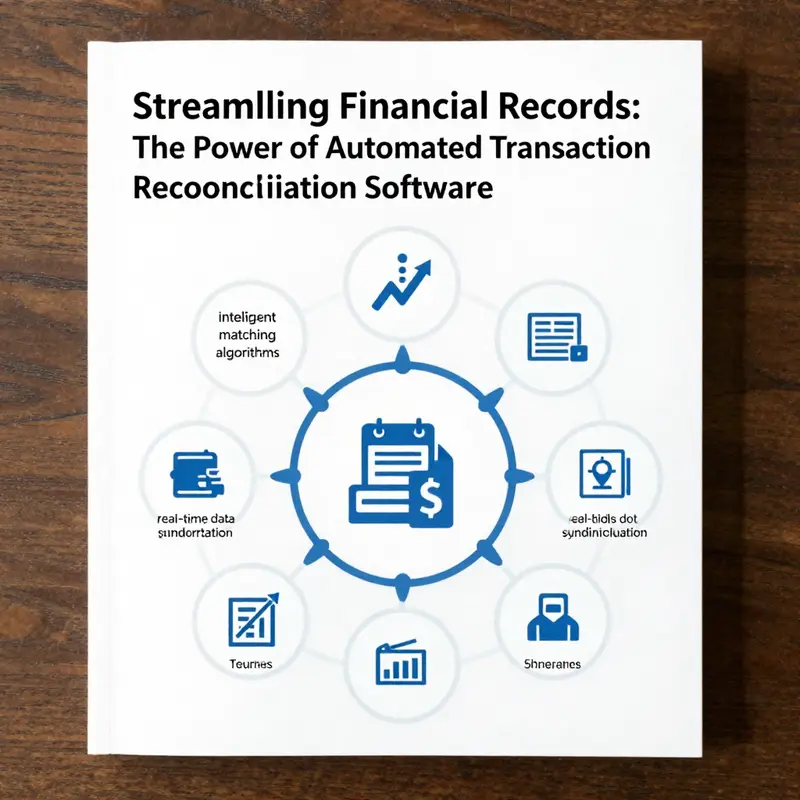
Reconciliation has long sat at the center of financial integrity, yet its traditional form often relied on manual handling, disparate folders, and the tedious matching of rows across ledgers, statements, and reports. In many organizations, the process was not merely a routine task; it was a friction point that absorbed time, incurred human error, and introduced risk when exceptions slipped through the cracks. The shift toward automated reconciliation is not a sudden upheaval but a carefully engineered evolution—one that leverages data from multiple sources, aligns it in real time, and translates it into a narrative that finance teams can trust without laboring over every line item. The promise is clear: automated reconciliation can dramatically reduce manual effort, improve accuracy, and free up finance professionals to focus on analysis, forecasting, and strategic decision-making. Yet to realize that promise, a robust understanding of how the automation works, what features matter most, and how these capabilities fit into a broader financial ecosystem is essential. The chapter that follows threads these ideas into a cohesive picture, showing how modern software reconciles transactions across bank feeds, payment processors, and ERP systems while preserving control, compliance, and visibility across the organization.
At the core of this transformation lies a shift from isolated data silos to a centralized vantage point. Banks, payment processors, and internal ledgers may still produce streams of transactions in different formats and at different cadences. The reconciliation engine, however, ingests these streams, harmonizes them, and applies intelligent rules to identify matches, close gaps, and surface exceptions. Real-time data synchronization keeps the picture fresh, so yesterday’s anomalies aren’t forgotten but are addressed promptly. The effect is not merely speed; it is a qualitative improvement in trust. When an item appears on the bank statement and the ledger, the software can determine with measurable confidence whether it is a true match, a near-match requiring a small adjustment, or an outlier that deserves further investigation. In practice, this translates into a balanced ledger where the reconciliation status is current, auditable, and aligned with policy.
One defining feature of modern auto-reconciliation platforms is their capability to generate and govern automated journal entries. When discrepancies arise—say, a timing difference between a payment posting and the corresponding bank feed or a mismatch in an e-commerce settlement versus internal receivables—these systems do not simply flag the issue. They can automatically propose or even create journal entries that resolve the discrepancy within the General Ledger. This is not a blind correction; it is a guided adjustment that follows predetermined business rules, keeps a clear trail of what was changed and why, and channels the change through the organization’s workflow for review and approval. By automating the most common resolution actions, finance teams reclaim valuable hours that would otherwise be spent duplicating effort across spreadsheets, emails, and approval queues. And because the entries are generated within a controlled framework, there is a reduced likelihood of human error during the correction process.
Beyond the mechanics of matching and entry creation, the credibility of reconciliation rests on accuracy and validation. Modern tools embed robust validation layers that verify data integrity at every step. These validations check for data type conformance, currency consistency, date correctness, and adherence to the organization’s reconciliation rules. They also perform cross-checks against source systems to confirm that the captured transactions truly reflect the underlying activity. When a mismatch occurs, the system does not leave the reviewer guessing. It surfaces a confidence score for each potential match, along with supporting evidence such as the originating source, the posting date, amounts, and any relevant metadata. This level of validation creates a feedback loop that continually improves the reconciliation rules as the business grows, new data sources come online, or processes change. In practice, teams experience fewer false positives and more reliable exception pools, enabling faster investigation when exceptions do appear and more predictable month-end close cycles.
A centralized data store is another pillar of effective auto-reconciliation. Rather than distributing data across file cabinets, shared drives, and isolated internal systems, a modern platform brings the entire transactional universe into a single, searchable repository. This centralization not only reduces physical storage and the clutter of disparate archives but also enhances data governance. With a unified data model, financial information from bank statements, payment gateways, e-commerce platforms, and internal ledgers can be aligned and accessed consistently. Analysts gain a coherent view of reconciled items, outstanding reconciling items, and the historical context of both. A centralized repository also supports advanced analytics, trend detection, and scenario testing, because the data is already normalized and cataloged for cross-domain queries. When auditors arrive, the path from source to conclusion is straightforward to trace, which strengthens internal controls and reduces audit friction.
The integration dimension ties the reconciliation process into the broader financial ecosystem. Central reconciliation is not an isolated bolt-on function; it lives in concert with core modules such as the General Ledger, Accounts Receivable, and Accounts Payable. When a reconciliation touches AR, for example, the system can automatically reflect customer payments, issue write-offs for unapplied cash, or correct unapplied cash balances that would otherwise linger as reconciling items. Similarly, AP data—vendor invoices, payment runs, and cash disbursements—can be reconciled against bank feeds to verify that disbursements align with recorded obligations. This tight integration ensures consistency across the financial cycle, preserves the integrity of intercompany and interdepartmental transactions, and minimizes the likelihood of reconciliation drift. The end result is a single source of truth where every ledger line has a clear lineage to the source event, and every adjustment follows a transparent, pre-approved workflow.
Compliance and auditability are not afterthoughts in a mature auto-reconciliation solution. They are foundational. Effective software maintains a comprehensive audit trail of every action taken during the reconciliation process: data ingested, matches made, entries proposed or created, adjustments posted, and the final close status. Each step is time-stamped and attributed to the responsible user or automated process, with the ability to filter and review by period, account, or source. This level of traceability supports internal controls and satisfies external audits without requiring the manual re-aggregation of information after the fact. In regulated environments, where a single discrepancy can trigger a cascade of compliance checks, a robust audit trail acts as both a shield and a guide, helping teams demonstrate adherence to policy and provide evidence of due diligence.
The design of these systems also anticipates the practical realities of a growing enterprise. In many organizations, reconciliation needs evolve as the business expands across channels, currencies, and regulatory regimes. A good automation platform scales with this evolution by offering configurable workflows and policy-driven controls. Workflows define who approves what, what thresholds trigger manual intervention, and how exceptions transition through the cycle from identification to resolution. Instead of a one-size-fits-all approach, the reconciliation framework becomes adaptive, accommodating new data sources, changing business rules, and evolving risk appetites. This adaptability is crucial for mid-to-large enterprises that grapple with multi-source financial data while striving for uniformity in process and reporting. The ability to tailor validation rules, matching criteria, and journal entry logic without resorting to expensive customization is what separates a good system from a resilient, future-proof solution.
Viewed in this light, the promise of automated reconciliation extends beyond closing the books more quickly. It reorganizes the finance function around reliability and foresight. When data flows are clean, when matches are confident, and when exceptions are few, finance teams can redirect attention from routine reconciliation busywork toward higher-value activities: forecasting, cash management, liquidity planning, and strategic risk assessment. The workflow becomes a collaborator rather than a bottleneck. Analysts can run what-if scenarios with confidence, knowing the underlying data is coherent and auditable. Controllers can present reconciled metrics with assurance that the numbers align with source systems and with policy. In such an environment, the reconciliation process does not simply check boxes; it informs decisions and strengthens the organization’s financial discipline.
For teams seeking practical guidance on implementing and refining auto-reconciliation, the literature and case studies that illuminate how these capabilities are realized in real-world settings can be instrumental. Our Knowledge hub offers curated insights, practical checklists, and real-world scenarios that help practitioners translate theory into action. The hub serves as a living repository where users can compare data models, observe how validation rules play out across different accounts, and learn from peers who have navigated similar reconciliations at scale. Access to these resources helps teams avoid common missteps and accelerates the journey from manual to automated reconciliation. Knowledge hub
As organizations chart their path toward fully automated reconciliation, they also face the question of how these capabilities fit within broader technology ecosystems and standards. The architecture is increasingly modular, with data ingestion, matching, journal entry generation, validation, and workflow management treated as distinct but interoperable components. This modularity makes it easier to adopt a staged approach: begin with ingesting data from core sources, implement a robust matching and validation layer, extend into automated journal entries for routine discrepancies, and finally integrate deeply with GL, AR, and AP to close the loop. In many cases, this staged approach reduces risk and allows finance teams to demonstrate early value while gradually expanding scope. The end state is a reconciled, auditable, compliant, and connected financial fabric—one that supports accurate reporting, efficient close processes, and a transparent trail from source data to financial outcomes.
Finally, the broader implications of auto-reconciliation extend into governance and data strategy. A centralized, validated, and auditable transactional fabric underpins better risk management, stronger internal controls, and more reliable performance reporting. It also aligns with the growing expectations of regulators and investors for transparency and accountability in financial reporting. The automation does not eliminate the need for skilled judgment; it enhances it by removing repetitive tasks and surfacing high-quality information that informs decisions. When teams are empowered by good data and robust processes, they can devote more energy to interpretation, scenario planning, and strategic insight. In this sense, auto-reconciliation is not a replacement for financial stewardship but a powerful ally in its pursuit.
For readers seeking a concrete starting point, consider how the five core features discussed—Automated Journal Entries, Enhanced Accuracy and Validation, Centralized Data Management, Integration with Core Modules, and Compliance and Audit Trail—can be mapped to your current environment. Begin with data ingestion from your most critical sources, establish a baseline set of validation rules, and define a clear workflow for exception handling and approvals. As you expand, you will likely discover that the most compelling outcomes come from weaving these capabilities into a coherent governance model that amplifies both control and insight. The result is not merely faster reconciliation; it is a more intelligent, auditable, and strategic financial process that supports confident decision-making across the organization.
External resource: https://www.oracle.com/cloud/applications/erp/financial-operations/.
From Mismatches to Momentum: How Auto-Reconciliation Redraws the Map of Financial Control
In the ledger of modern finance, the act of reconciliation has long stood as both a vital control and a stubborn bottleneck. The work of matching transactions across bank statements, payment processors, ERP systems, and internal ledgers has historically demanded time, vigilance, and diligent scrutiny. Auto-reconciliation reframes this challenge as a capability rather than a chore. When a financial software suite can continually and intelligently align data from multiple sources, the result is not merely fewer manual keystrokes; it is a fundamental shift in how finance teams operate. The core promise is simple at heart: let machines do the repetitive, rule-bound matching while humans concentrate on interpretation, governance, and strategy. Yet the impact runs deeper than time savings. It changes the quality of decisions, enhances risk management, and provides a clearer window into the company’s financial health. This chapter traces why automated reconciliation has moved from a nice-to-have feature to a strategic capability that underpins accuracy, speed, and insight in contemporary finance—without naming a single product, and by focusing on the outcomes that matter to organizations navigating growth and complexity.
At the center of auto-reconciliation lies a carefully choreographed system of data orchestration. Source systems push or feed transaction data in near real time. Bank feeds provide the inflows and outflows that appear in the cash ledger; ERP modules export general ledger postings and payment details; and e-commerce or payment processor feeds reveal the day’s sales and settlement activity. A reconciliation engine then applies intelligent matching algorithms to identify correlations, reconcile figures, and surface exceptions for human review when rules aren’t enough. The strength of this approach is not merely the automation of a single step but the creation of a continuous feedback loop. Data quality improves as it is validated at the source and enriched during the matching process. Discrepancies that would once linger unseen become visible, tracked, and addressable across the organization. This is reconciliation as a living, observable process rather than a once-a-month checklist.
The most immediate benefit that teams notice is improved accuracy. Automated reconciliation dramatically reduces the risk of human error—typos, duplicate entries, misapplied credits, and misrouted payments. When a system learns how different data sources align, it can enforce consistent treatment of similar transactions and apply currency conversions, fees, and charges in a uniform manner. The result is a stronger alignment between bank statements and internal ledgers. Financial statements reflect a truer picture of position and performance, which in turn supports more reliable planning, forecasting, and compliance reporting. The reliability of the numbers is not merely comforting; it is the backbone of governance. When auditors review a chain of reconciliations, the ability to demonstrate an unbroken, auditable trail becomes a concrete competitive advantage. In this sense, automation is not about eliminating human oversight but about elevating the quality of oversight through disciplined, repeatable processes.
Time savings emerge as a natural derivative of accuracy and automation, yet they deserve emphasis in their own right. For organizations dealing with high-volume transactions—whether in retail operations, manufacturing finance, or multi-entity organizations—the manual approach can consume substantial portions of the workweek. Auto-reconciliation accelerates the matching process by stitching together diverse data feeds and applying predefined criteria to determine where items belong. Transactions that would have required hours of manual investigation can be reconciled in minutes, freeing finance professionals to reallocate effort toward analytics, budgeting, and strategic performance reviews. The time freed is not simply a reduction in drudgery; it is a catalyst for better decision-making. When teams are not overwhelmed by routine checks, they can explore anomalies with greater curiosity, test scenarios, and push insights into the planning cycle when they matter most.
Yet speed without accuracy is insufficient. The reliability of faster reconciliation hinges on the system’s ability to provide transparent, traceable processes. That is where enhanced operational transparency comes into play. Automated reconciliation frameworks generate comprehensive logs for every matched and unmatched item. They document data provenance, the specific matching rules applied, the entities involved, and the timestamps of each decision. This level of visibility supports root-cause analysis for discrepancies and strengthens internal controls. When a dispute arises with a vendor or a bank, teams can quickly reconstruct what happened, where it started, and how it was resolved. The audit trail becomes not a burden but a navigational map that guides governance efforts and supports regulatory readiness. The ability to produce consistent, reproducible reconciliation evidence reduces the friction of audits and examinations, enabling smoother, faster verifications and a clearer demonstration of internal controls.
Real-time or near-real-time reconciliation is another pillar of modern automation. In an environment where cash flows shift rapidly and payments arrive in various channels, continuous monitoring enables organizations to detect anomalies promptly. Real-time insights allow teams to identify payment reversals, chargebacks, or settlement timing issues the moment they occur, not days or weeks later. Early detection strengthens fraud risk management by enabling quicker investigation and containment. It also supports cash flow visibility, a critical factor for working capital optimization. When data streams are synchronized in real time, treasury and accounting functions gain a shared, up-to-the-minute view of liquidity. Decisions about financing, supplier payments, or collections timing can be informed by the freshest data rather than a delayed snapshot. This is where automation intersects with strategic finance, turning reconciliations from a historical audit activity into a forward-looking capability that guides action.
Scalability is the natural partner to these benefits. As a business grows—more customers, more channels, more currencies—the volume and complexity of transactions multiply. Manual reconciliation scales poorly, demanding proportional increases in staff and often sacrificing accuracy or timeliness. An automated framework is designed to grow with the enterprise. It absorbs higher data volumes, extends beyond traditional bank versus ledger matching, and accommodates additional sources such as multi-currency settlements, intercompany transfers, and third-party settlement services. Customizable workflows support diverse organizational needs: different teams can apply distinct reconciliation rules or tolerance thresholds, while the central finance function retains governance and consistency. The scalable architecture ensures that the system remains effective not because it is faster in isolation, but because it is capable of maintaining reliability and control as complexity increases. This scalability is especially valuable for mid-to-large enterprises navigating rapid expansion, seasonal peaks, or new market launches.
Implementation considerations are crucial for realizing these advantages. The success of auto-reconciliation rests on data quality, source system compatibility, and well-designed rules. Data quality begins with the accuracy and completeness of incoming data. If bank feeds or ERP exports are incomplete or inconsistent, the system’s matching logic will struggle, and exceptions will proliferate. Organizations must invest in data cleansing, normalization, and standardization so that the engine can apply its matching criteria effectively. Source system compatibility matters too. The reconciliation layer must be able to ingest diverse formats and schemas, map fields reliably, and handle edge cases such as split payments, refunds, or partial settlements. A robust governance framework helps ensure that reconciliation rules stay aligned with policy, regulatory requirements, and evolving business practices. This includes change control for rule updates, defined roles for approvers of exceptions, and regular reviews of tolerance limits and exception handling procedures. Finally, security is non-negotiable. Reconciliation touches sensitive financial data, and the architecture must protect data in transit and at rest, enforce role-based access, and provide auditable actions for every adjustment or note added by users.
The integration of auto-reconciliation with broader financial workflows further enhances its value. When this capability is embedded in a larger platform that coordinates accounts payable, accounts receivable, and cash management, organizations realize a seamless end-to-end control environment. Automated matching feeds into dashboards that reveal aging, cash positions, and variance trends. Exceptions become opportunities to investigate process gaps, vendor disputes, or system integration issues. In such ecosystems, finance teams can standardize procedures for reconciliation cycles, determine which items require management approval, and schedule reviews that align with monthly close calendars. The result is not only faster closes but a more disciplined close process, with fewer last-minute surprises and stronger alignment between cash activity and reported performance.
As teams adopt this capability, they often discover ancillary benefits that extend beyond the finance function. Accurate and timely reconciliation improves vendor relationships by reducing disputes and accelerating settlement processing. It also enhances compliance with internal control frameworks and external regulatory requirements. The clarity and traceability of the reconciliation process support stronger risk management and governance. In organizations where transparency across the board is valued, the ability to demonstrate precise cash activity and robust controls becomes a strategic differentiator. A finance function that can explain variances, defend the numbers, and point to the exact source data and rules used in reconciliation earns credibility with executives, auditors, and stakeholders alike. In this sense, auto-reconciliation is not a solitary tool; it is a foundational capability that elevates the entire financial operating model.
For readers seeking a more structured overview of the benefits and practical applications of automated reconciliation, a reputable industry resource offers a concise synthesis of these advantages. It emphasizes how automation raises accuracy, speeds processes, and strengthens governance through auditable, repeatable workflows. In addition to the strengths discussed here, the resource highlights real-time insights and scalability as core drivers of value. This broader perspective helps connect the daily mechanics of reconciliation to strategic outcomes such as better working capital management, reduced audit risk, and improved confidence in financial reporting. To explore these insights further, you can refer to the following external resource: https://www.finextra.com/insight/27134/benefits-of-automated-reconciliation.
This chapter also recognizes that the journey to auto-reconciliation is not a one-size-fits-all endeavor. Each organization begins with its own data landscape, risk profile, and regulatory obligations. A phased approach often yields the best outcomes: start with high-volume, high-impact reconciliation scenarios, establish core matching rules and exception pathways, and then expand to cover additional sources and currencies. Over time, the system learns from adjustments and user feedback, refining its accuracy and reducing manual review even further. The longer a company operates in this more integrated and automated mode, the more pronounced the gains become in consistency, speed, and resilience. The narrative of reconciliation thus shifts from a back-office task to a strategic capability that informs liquidity planning, supplier negotiations, and capital allocation.
Embedded within this narrative is a practical invitation to continuous improvement. Auto-reconciliation is most effective when it is paired with ongoing data governance, periodic rule audits, and regular training for finance staff. Teams should cultivate a culture that views exceptions not as failures but as signals to improve data quality, process design, and cross-functional collaboration. With the right governance, the powerful combination of real-time data, intelligent matching, and customizable workflows creates a feedback-rich environment where accuracy feeds confidence, and confidence fuels proactive management of cash, risk, and performance. In this light, automation is not an endpoint but a dynamic capability that grows more capable as it expands across sources, currencies, and business units.
To close the loop on practical application, consider the value as a continuum rather than a single moment of efficiency. The initial return on investment often appears in the near term as faster closes and lower manual effort. As teams gain experience, the accuracy uplift compounds, audits become easier, and leadership gains a clearer view of working capital dynamics. The organization grows more resilient to disruption because the reconciliation process itself becomes robust against data quality fluctuations, system changes, or process reorganizations. In other words, automation amplifies the business’s ability to operate with discipline and clarity, even as transaction volumes, channels, and regulatory expectations evolve.
For those exploring how these concepts translate into concrete finance workflows, the knowledge base at the Davis Financial Advisors hub offers practical insights and real-world perspectives. Learn more about governance, data quality, and implementation strategies by visiting the Knowledge hub. Knowledge hub
Automated Reconciliation at Scale: Navigating Data Quality, System Integration, and Change
Automated reconciliation holds the promise of turning a laborious, error-prone routine into a streamlined, auditable process. When a financial system can automatically align transactions across bank feeds, payment processors, e-commerce platforms, and internal ledgers, the result is not merely time saved. It is the ability to close books faster, answer questions with confidence, and provide an auditable trail that satisfies both regulators and executives. Yet the leap from a pilot to an enterprise-wide program is rarely a simple upgrade. It requires more than a clever matching algorithm and real-time data feeds. It demands an orchestrated focus on data quality, system architecture, and the human elements that sustain the process over months and years. The journey is not a single solution but a carefully choreographed ecosystem where data enters, is transformed, and re-emerges in a form that is trustworthy enough to stand up in an automated review. In practice, this means recognizing that the magic of automation lives at the intersection of clean inputs, thoughtful integration, and disciplined governance. When these dimensions align, auto reconciliation becomes a strategic capability rather than a one-off technology project.
The most immediate prize is speed, a virtue born from the reduction of manual matching chores. Intelligent matching algorithms can compare transactions from diverse sources, identify probable matches, and surface exceptions that truly require human judgment. In a mature environment, real-time data synchronization ensures that the latest bank postings, card payments, and ERP ledger entries are available for reconciliation as part of a closed-loop workflow. This velocity, however, can be deceptive if it rests on brittle data or fragile integrations. The confidence users place in automated results depends on the transparency of the process— visibility into how matches are made, what rules govern them, and how discrepancies are investigated. This is where audit trails, versioned rules, and clear reconciliation statuses become not just nice-to-haves but essential safeguards that differentiate a cost-reduction project from a resilient, scalable capability. To reap the full benefits, organizations must embed clear governance around data ownership, rule management, and exception handling, ensuring that automation does not become a black box but a trustworthy, explainable process.
Data quality and consistency stand as the first line of defense for any auto-reconciliation initiative. The adage that garbage in yields garbage out is especially true here because automated systems depend on clean, standardized inputs. Financial data arrives from a mosaic of sources: bank statements in various formats, point-of-sale feeds, e-commerce settlements, and the ERP’s own ledgers. Each source has its quirks—fields with inconsistent definitions, dates recorded differently, duplicate records, or missing values. If the ETL (Extraction, Transformation, and Loading) steps introduce errors, those errors propagate through the reconciliation logic, creating false positives, missed matches, or misclassifications that undermine trust in the entire workflow. The ETL process, then, becomes the make-or-break moment for automation. A robust ETL design emphasizes data quality checks at every stage, preserves data lineage so traceability is possible, and imposes guardrails that prevent bad data from entering the data warehouse or the reconciliation engine. Beyond technical safeguards, data governance plays a pivotal role. Clean input data is not simply a technical requirement but a governance outcome—clear ownership of data sources, defined data stewards, and documented standards for formats, codes, and value ranges. When input data is standardized, validated, and reconciled against trusted master data, automated matching gains precision and resilience. For those who wrestle with data pipelines and ETL intricacies, our knowledge resources offer practical perspectives on how to structure data flows so that auto reconciliation can perform as intended. knowledge resources
But even with pristine data, system integration presents a labyrinth of challenges. Auto reconciliation thrives when it can pull data from multiple domains, harmonize formats, and apply consistent business rules across departments and geographies. In practice, however, organizations encounter a spectrum of integration hurdles. Some systems still rely on legacy APIs that lack modern features, while others operate with batch schedules that do not align across sources. The lack of standardization in data formats, taxonomy, and event timing makes it difficult to design a single, universal reconciliation model. Flexibility becomes a key design criterion: the reconciliation tool must accommodate varying data schemas, different transaction volumes, and diverse business rules without requiring a full rearchitecture for each new source. Architectural planning thus becomes a strategic activity, not a mere implementation task. The solution must support modular adapters, scalable data processing, and a governance layer that can adapt as the business evolves—new payment channels, new partners, or new regulatory requirements—without destabilizing the core reconciliation process. In this light, integration is less about connecting systems and more about constructing an ecosystem that preserves data integrity as it passes through multiple transformations. The end state is a unified, reliable view of each transaction across all sources, with exceptions prioritized for timely human review.
The human dimension—change management and user adoption—often determines whether the most sophisticated automation remains a strategic asset or becomes a neglected tool. Resistance is natural when teams have built decades of muscle memory around manual reconciliation. People fear loss of control, job displacement, or a steep learning curve for unfamiliar workflows. The antidotes are thoughtful design, broad involvement, and transparent communication that links automation benefits to concrete daily outcomes: fewer tedious manual checks, more time for analysis, and improved accuracy that reduces error-driven revisits during closing cycles. Successful adoption hinges on early stakeholder involvement in shaping the reconciliation rules, exception handling procedures, and workflow configurations. This collaborative design helps ensure the system respects the practical realities of each department—accounts payable, treasury, tax, and compliance—while delivering consistent results. Training must be ongoing rather than a one-time event, with accessible documentation, hands-on practice environments, and clear paths for escalating ambiguous cases. Most importantly, transparency breeds trust. Real-time reconciliation status dashboards, visible audit trails, and explainable matching logic reassure users that automation is augmenting their work rather than replacing it. In a mature program, governance feeds the automation with feedback from the users, and the users’ experience, in turn, refines the governance. The loop is iterative, with each cycle improving both the technology and the human practices that sustain it. For teams seeking pragmatic guidance on data pipelines and ETL practices, our knowledge resources provide detailed perspectives and case-informed recommendations. knowledge resources
Ongoing maintenance and monitoring complete the lifecycle of automated reconciliation. Automation reduces human error, but it introduces a dependence on continuous oversight to adapt to changing business rules, new data sources, and evolving regulatory environments. A sustainable auto-reconciliation program requires a dedicated monitoring capability, even if the initial scope is modest. This does not mean a full-time army of engineers—though in larger enterprises that is common—but it does require a clearly defined owner, supported by a small, focused team that tracks reconciliation outcomes, investigates persistent exceptions, and iterates on the underlying logic. Regular reviews of rule performance, exception categories, and data quality metrics ensure the system continues to deliver reliable matches as volumes scale and as business processes change. The monitoring practice should extend beyond technical health checks to include control-oriented metrics: how many postings align automatically, how many exceptions require manual intervention, and the cadence of closing cycles achieved with the automated workflow. In addition, there must be a plan for updates in response to regulatory changes, new payment channels, or shifts in vendor data formats. The idea is to treat automation as a strategic capability whose value grows with disciplined maintenance. Without this ongoing stewardship, even a well-designed auto-reconciliation engine can drift from accuracy, producing gaps or misclassifications that undermine confidence and erode the return on investment.
A mature approach also embeds governance and controls into the automation fabric. Auditability remains non-negotiable in financial operations. The reconciliation engine should produce traceable data lineage, from the original source records to the final matched set and any manual adjustments. Access controls and role-based permissions must enforce separation of duties so that no single user can both approve a high-value adjustment and alter the underlying data without oversight. The reconciliation workflow should accommodate configurable thresholds for automated approvals, while preserving an escape hatch for manual review when exceptions exceed defined limits. These governance features do not simply satisfy compliance obligations; they are the practical instruments that prevent automation from becoming a source of systemic risk. The governance framework also helps organizations evaluate return on investment more precisely. By measuring precision and recall of matches, pool of exceptions, time saved per close, and the rate of error reduction, finance leaders can quantify the tangible benefits of automation and justify continued investment. As these discussions unfold, it becomes clear that auto reconciliation is not a one-time technology purchase but a governance-informed capability that scales with the business.
From a practical standpoint, organizations must also weigh the financial and operational implications of a broad deployment. The upfront costs of data cleansing, integration work, and rule design are real, but so is the long tail of maintenance, monitoring, and governance. The true ROI emerges when the automation scales across multiple ledgers and geographies, supports diverse business models, and remains resilient in the face of data quality fluctuations and system upgrades. In many cases, the most critical early investments are not in the software itself but in building the data foundation, establishing robust data governance, and defining clear operating models for how the reconciliation process will be run, who will own it, and how exceptions will be resolved. When these elements are in place, automation becomes a reliable engine that drives not just efficiency but also clarity and strategic insight. It enables leadership to observe, in near real time, the health of financial processes and to act with confidence on anomalies before they escalate into compliance concerns or cash-flow disruptions.
For readers seeking additional technical context about the benefits, use cases, and practical implementations of automated reconciliation, a detailed external reference offers in-depth analysis and examples: https://www.information-management.com/articles/automated-reconciliation-benefits-use-cases-10234-1.html
Final thoughts
Automating transaction reconciliation through specialized financial software represents a critical advancement for individual car buyers, dealerships, and small business fleet buyers. By understanding the overview of available solutions, their key features, and the benefits they offer, stakeholders can make informed decisions that enhance operational efficiency and reduce errors in financial transactions. It’s essential, however, to consider potential challenges in implementation to ensure a smooth transition to automated systems. Embracing this technology can lead to remarkable improvements in financial accuracy and time management, ultimately paving the way for better business outcomes.