

Ally Financial’s recent struggles in the auto loan sector have generated significant concern among individual car buyers, auto dealerships, and small business fleet buyers. With increasing issues related to borrower credit quality and rising loan losses, many stakeholders are questioning the stability and reliability of Ally Financial as a lending partner. This article presents a detailed exploration of these critical challenges through four chapters that dissect the deteriorating credit quality affecting customers, the rising loan losses from these shifts, how these issues impact Ally’s profitability, and the market’s response to this evolving situation. Each chapter not only elaborates on the individual components of the issue but also underscores their interconnected nature and the solutions available for affected parties.
Wheels of Risk: Tracing the Erosion of Auto Credit Quality in Ally Financial’s Lending Portfolio

The auto loan market sits at a crossroads where macro shocks meet household hesitation, and the result is a strain that travels from the borrower’s wallet to the lender’s ledgers. In the latter part of 2024 and into 2025, a once-steady engine of consumer credit began to cough under the weight of inflation, higher living costs, and a nervier employment backdrop. The chapter that follows traces the chain of effects through Ally Financial’s auto loan portfolio, not to cast blame but to illuminate how deteriorating credit quality unfolds in a real, numbers-driven way. It is a story of levers and thresholds—the points at which rising delinquencies and net charge-offs reconfigure profitability, investor sentiment, and the broader lending environment. The core thread is simple: when borrowers are stretched, loan performance deteriorates, and the consequences ripple through earnings, risk management, and strategic choices. The precise outcomes depend on timing, portfolio mix, and the resilience of the lender’s capital and provisioning framework. Yet the trajectory in late 2024 was clear enough to set off alarms across markets and among those watching consumer credit with a wary eye.
A first, undeniable signal came from the borrower side of the ledger. In September 2024, a company executive, the chief financial officer, acknowledged that the credit challenges facing customers were intensifying. Inflation had cooled from its peak but remained uncomfortably high for many households. Living costs—housing, utilities, transportation, and food—had endured sticky upward pressure, and wages, while improving in some pockets of the labor market, were not always keeping pace with expenses. What mattered for auto lending was not just the aggregate level of debt but its distribution across credit quality bands. As more borrowers found themselves juggling higher spreads and tighter budgets, the risk profile of new and existing loans shifted toward the higher end of risk. The consequence was a higher propensity for late payments and, crucially, for defaults that lingered beyond typical cure periods. This lived experience of pressure at the household level translated into a less forgiving performance for a portfolio that had, for years, benefited from relatively stable consumer credit metrics compared with other segments of lending.
The narrative on the borrower side was reinforced by the next layer of the data: delinquencies and net charge-offs, the two metrics lenders watch most closely for early warning. During the late spring and summer of 2024, indicators suggested that the deterioration was more pronounced than prior cycles would have signaled. Delinquency rates on retail auto loans began to move higher, and the subsequent reporting periods showed that the losses embedded in the portfolio—net charge-offs—were tracking above the company’s expectations. In practical terms, the mix of loans and the timing of defaults pushed management to revise upward the anticipated losses for the year. The pattern echoed a broader macro story—consumers with variable-rate debt, sensitive to interest-rate movements, faced higher debt service costs as rates rose and remained sticky. When borrowers stretch their finances in this way, even a small percentage change in default rates becomes material for a lender whose earnings depend on the pace of loan repayment and recoveries after default.
What does this mean for profitability? Analysts are quick to translate credit quality into earnings potential, and the link is direct. If delinquencies climb and NCOs rise, reserves for loan losses expand, and earnings per share are pressured. In this instance, BofA Securities and other observers flagged that the worsened retail auto credit quality could shave roughly 10% to 15% off projected 2025 EPS. Those figures are not forecasts of a catastrophe but a sober recalibration—an acknowledgment that the income engines built around consumer auto finance run less smoothly when the borrower base becomes more vulnerable. A few careful distinctions matter here. First, not all delinquencies translate immediately into losses; some borrowers cure, some assets recover, and the timing of charge-offs can vary with portfolio seasoning and regional economic variation. Second, a lender’s response—how aggressively to price risk, how to adjust loan terms, and how to manage the balance sheet—can alter the ultimate impact on reported results. Yet the underlying impulse remains clear: credit quality matters, and when it deteriorates, it becomes a direct channel through which profitability is affected.
The market’s reaction to this evolving credit picture was swift and stark. A single-day decline of more than 17% in the lender’s stock in September 2024 underscored investor sensitivity to credit metrics in the auto lending space. The sell-off captured a collective concern: that the auto loan segment, long considered a stable pillar of consumer finance, faced a material risk if borrowers continued to experience financial strain amid persistent macro headwinds. The decline also signaled that equity markets had begun to price in a more cautious view of future earnings as the cycle of adverse credit conditions lengthened. In response, management signaled a willingness to re-rate risk, including the possibility of higher loan loss provisions. The logic was straightforward: to absorb higher expected losses and to preserve capital and liquidity in the face of a more uncertain environment. In parallel, the company initiated a portfolio-management move—selling a portion of its loan portfolio to Synchrony Financial. The strategic purpose was to reduce concentration risk and the volatility that comes with loan losses, a move that reflected prudent risk management even as the core issue—credit quality in the auto book—remained unresolved at the consumer level.
The decision to adjust the portfolio through asset sales was not merely a balance-sheet maneuver; it was a recognition that the dynamics affecting auto credit quality were not isolated to a single lender or a single region. The conditions that elevated delinquencies and NCOs—high inflation, evolving consumer budgets, and an employment landscape that was not uniformly robust—had implications for the demand side as well. If households anticipate tighter credit conditions and higher borrowing costs, demand for auto financing can soften even before lenders push harder on underwriting criteria. In a tightening credit environment, lenders must balance the dual imperatives of maintaining access to financing for creditworthy borrowers and protecting the balance sheet from an elevated risk of loss. The ambition is not simply to optimize today’s earnings but to preserve the long-run viability of the auto lending book amid cyclical and structural pressures.
Within this context, the historical backdrop provides a reminder of how quickly credit quality can deteriorate in this space. An October 2022 report underscored that Ally Financial’s credit picture had deteriorated at a pace that outstripped many large traditional banks, even as the business initially appeared “squeaky clean.” The early signs of stress were masked by a favorable economic moment, including tariff-related tailwinds in 2025, which offered near-term gains in some parts of the market. Yet the broad macro headwinds—softening consumer demand, rising rates, and the risk of labor-market softening—loomed as meaningful countervailing forces. In other words, the near-term dynamics could obscure longer-term risks. The WSJ’s follow-up analysis of Ally’s credit performance, highlighted in the official analysis, reinforces this view: a portfolio that benefited from certain tailwinds could quickly transition to a liability if the fundamentals of borrower credit began to deteriorate. The juxtaposition of temporary boosts and enduring risk illustrates the complexity lenders face when evaluating the safety and profitability of auto finance in a changing economy.
As the cycle of risk evolved, the lender’s response became a focal point. Management highlighted a willingness to review and potentially increase loan loss provisions, signaling a proactive stance toward risk management rather than a passive wait-and-see approach. This posture aligns with a broader industry pattern: when default signals intensify, firms recalibrate reserves to reflect more pessimistic scenarios. The policy choice—how aggressively to reserve, how to price in potential recoveries, and how to structure securitizations or sales—varies by institution, but the shared logic is consistent: protect capital and maintain a survivable earnings trajectory, even if that means accepting lower near-term earnings as the market stabilizes.
The conversation around tariffs in 2025 adds another layer of nuance. While near-term tariff benefits may have supported some segments of the value chain, they do not guarantee sustainable strength in consumer auto lending. Tariffs act as a temporary wind at the back, potentially improving certain supply-side dynamics or producer margins, but they do not resolve the core challenges of household balance sheets or the fundamental economics of auto financing. Consumers facing high interest rates and tighter budgets may still defer purchases or opt for longer loan tenors with higher total interest costs. For a lender, this translates into a more complicated mix: some borrowers may still qualify at the edges of risk tolerance, but the overall quality of the loan book could remain under pressure if consumer financial resilience does not improve.
In considering the long arc, it is important to note the broader risk environment in which auto lending operates. The deterioration in credit quality is not solely a function of loan underwriting or internal portfolio management. It reflects a macro consumer credit cycle that can be triggered by multiple forces—higher financing costs, softening job security in certain sectors, elevated debt burdens, and a consumer preference shift toward liquidity in the face of economic uncertainty. When combined, these factors shape both demand for new financing and the performance of existing loans. The result is a portfolio that becomes more sensitive to macro shocks and more challenging to manage through conventional underwriting alone. The question lenders confront is how to sustain credit access for reliable borrowers while managing the risk that accompanies reduced credit quality across a growing swath of the borrower base.
From a strategic viewpoint, the emphasis on risk management becomes a central narrative. The firm’s response—scaling back exposure where risk rises and rebalancing the mix to mitigate volatility—aligns with a prudent framework for capital preservation. It also reflects a shift in how managers interpret credit quality signals. Delinquencies do not move in a straight line, and recovery profiles can vary across regions and borrower segments. The nuanced timing of these movements matters for earnings attribution and for the capital reserves that backstop loss expectations. In this light, the sell-off of a portion of the loan portfolio can be seen as a preemptive measure to lower the sensitivity of earnings to a weaker consumer credit backdrop, while the core book remains subject to the same structural pressures that elevate risk. The challenge, then, is to sustain growth without compromising the integrity of the balance sheet—a balance that becomes more delicate as the credit cycle broadens and the macro environment remains uncertain.
For readers curious about how households navigate an economy that tightens around them, a relevant Connecticut-style lens can be found in resources on household financing strategies—particularly those that discuss vehicle ownership under stress. See managing-truck-ownership-finances for a broader discussion about how families balance transportation costs, credit, and liquidity during uncertain times. While the focus here is on the lender’s credit quality, the consumer-side story remains central: the more fragile the borrower, the greater the risk that a car loan becomes another bolt in the economy’s wider wheel.
The persistent question that threads through all of this is how the industry—as a whole—navigates a period of higher defaults and elevated loss estimates without sacrificing the ability of consumers to access credit for essential transportation. The evidence from late 2024 and early 2025 suggests that this period requires vigilance: higher loss provisions, disciplined underwriting on new originations, and a cautious but not punitive approach to portfolio management. The challenge is not to eliminate risk entirely—an impossible task in a cyclical market—but to manage it so that the auto financing ecosystem remains functional, transparent, and capable of supporting consumer mobility when the macro winds shift again. The balance between risk and access will continue to shape earnings, capital allocation, and strategic moves in the months to come. Investors, policymakers, and industry participants will be watching the interplay of delinquencies, NCOs, reserve levels, and the pace of loan growth closely, as these signals collectively determine whether the industry can weather a tougher climate while preserving the core promise of affordable credit for everyday transportation needs.
External context remains critical for interpretation. The Wall Street Journal has highlighted how credit performance can diverge from headline market performance, reminding readers that a stock’s trajectory does not always align with the health of its underlying loan book. For a fuller look at the period’s credit performance, see the external analysis linked to the official report: https://www.wsj.com/articles/ally-financial-stock-plunge-after-delinquency-spike-11a3d8e7. This external perspective underscores the multifaceted nature of credit risk in auto finance: one part borrower quality, one part market sentiment, and one part the policy and macro backdrop that shapes both. In sum, the era captured here is a reminder that auto credit quality, far from being a simple constant, is a dynamic variable that tests risk management, capital discipline, and the broader resilience of the consumer lending framework.
Rising Loss Provisions and the Auto Credit Crosswinds: What Ally Financial’s Struggles Reveal About the Broader Auto Lending Landscape
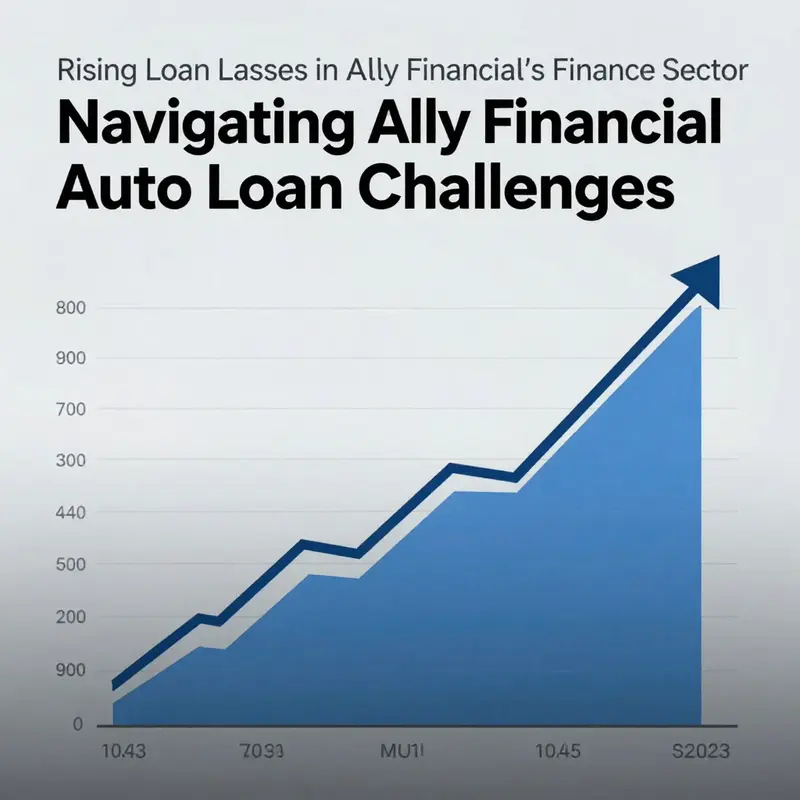
Ally Financial has long been recognized as a key conduit of credit for American vehicle buyers, a digital-native lender with a portfolio that tracks the pulse of consumer demand and economic mood. In the current chapter of the auto finance story, the narrative has shifted from growth metrics to risk metrics, from the glow of market share to the gravity of credit losses. The chapter we are following is not merely a ledger of numbers; it is a window into how macroeconomics, underwriting discipline, and portfolio management collide when borrowers confront the combined pressures of inflation, higher living costs, and a job market that has shown signs of strain. The consequences travel through the balance sheet in a way that is both concrete and nuanced: higher delinquencies, larger loan loss provisions, thinner profit margins, and, ultimately, a reshaping of strategy for institutions that rely heavily on auto financing and related protections. This is not a story of a single quarter’s misstep but a recognition that the auto credit cycle is sensitive to the same forces that shape consumer confidence, household budgets, and the availability of affordable credit. The broader lens makes Ally’s experience a useful case study for readers seeking to understand how rising loan losses echo across earnings, capital adequacy, and the willingness of lenders to extend credit to a sector that is already cyclical in nature.
The first thread to follow is deteriorating credit quality among borrowers. As macro conditions tightened through 2024, the risk profile of auto loan customers began to shift. Inflation, which had eaten into real incomes, and the escalating cost of essential goods created a tighter budget for many households. In September 2024, Ally’s own Chief Financial Officer, Russ Hutchinson, acknowledged that the company was facing intensifying credit challenges driven by these conditions, with employment softness compounding the stress. This acknowledgement was more than a casual admission; it signaled a strategic recalibration within Ally’s risk function. When incomes struggle and job security feels less certain, the probability of missed payments rises, and with it the default risk embedded in a large, seasoned auto portfolio. The consequence is not a sudden collapse in performance but a persistent higher baseline of borrowers grappling with financial balance. The market, keen to parse every phrase from management, watched these comments closely, interpreting them as a warning that the portfolio’s quality would not remain immune to the macro headwinds that have buffeted many consumer segments.
This change in borrower quality translated into a broader risk metric that lenders worldwide monitor: delinquencies and net charge-offs (NCOs). The data points available from mid-2024 show a troubling trend. Delinquency rates moved higher as payment fatigue set in, and charge-offs began to surface at levels that exceeded early expectations. Analysts and investors did not require a crystal ball to sense that rising delinquencies would eventually compel higher loss provisions. In practice, this means Ally would need to set aside more reserves to cover potential defaults. The logic is straightforward: as more loans slip into delinquency, the likelihood that some portion of those loans will default increases, and the reserve must reflect that probability. The company’s leadership signaled an intention to be proactive—reviewing and potentially increasing loss provisions to reflect the updated risk landscape. This proactive stance is critical because the size of the loss reserve directly shapes reported earnings and can influence future lending capacity. If reserves grow, the true profitability of new lending can appear diminished, even if transitional collections efforts improve cash inflows. The balance between provisioning for risk and maintaining growth capacity is a delicate, ongoing negotiation for any auto lender, but it becomes especially acute when the revenue engine of the business is sensitive to interest rates, loan pricing, and consumer credit quality.
From the perspective of financial performance, the shifting risk profile has produced a cautionary chorus among analysts. The deterioration in retail auto credit quality has the potential to undermine consensus forecasts for earnings growth. In the view of several research teams, including those at prominent banks, the scenario could imply a meaningful downgrade to 2025 earnings per share (EPS) estimates, with some forecasts suggesting a downside range in the double-digit percent brackets. A near-term worry is that higher loss provisions, even if shaped by improved collections later, will compress net income and, by extension, return on equity. For investors, the question is not only about the size of losses but about how well the lender uses risk-adjusted pricing, underwriting discipline, and proactive portfolio management to absorb those losses while continuing to fund new loans at reasonable cost. The cautious tone among market participants reflected a broader sentiment: the auto financing segment, long viewed as a robust pillar of consumer credit, could see volatility expand if the macro environment remains unsettled and if late-stage delinquencies persist.
The market reaction in September 2024 underscored the emotional nature of credit risk in the sector. Ally’s shares declined sharply, with a single-day drop surpassing 17%—the steepest fall since the disruption of 2020—a vivid reminder that the market perceives rising loan losses as a direct threat to the sustainability of the business and to the reliability of its earnings narrative. In response, management did not retreat to a defensive posture. Instead, it signaled a willingness to take steps to mitigate risk: an active review of loan loss provisions, and a strategic decision to monetize a portion of the portfolio by selling it to Synchrony Financial. The rationale behind this move is straightforward. By reducing the size of the risk-laden book, Ally could shore up capital, improve the focus of its risk management framework, and perhaps free up liquidity for higher-quality originations in a more uncertain environment. Yet even with this portfolio action, the underlying issue—credit conditions among auto borrowers—remains intact. It is a structural risk rather than a one-off incident. The sale represents a tactical response, not a substitute for the long arc of risk management the company must navigate as macro conditions evolve.
To understand the structural implications, it is useful to connect the dots between risk metrics and the day-to-day realities of running an auto lender. The core of the issue lies in the “allowance for loan losses”—the reserve that absorbs expected defaults over time. If delinquencies rise, the reserve must grow. The challenge comes when the reserve—despite being prudent—begins to erode the reported earnings power of the business. A larger reserve dampens net income in the short term, but it also strengthens the balance sheet by reducing the risk of a surprise write-down later. The interplay between reserve levels and earnings resilience is nuanced. It affects the company’s reported profitability, its capital ratios, and its confidence to extend more credit in cycles where rates and consumer credit quality could both deteriorate. In this sense, a lender’s ability to manage credit risk is not simply about stopping losses but about preserving the capacity to lend responsibly while maintaining an adequate return on capital.
What makes Ally’s situation particularly instructive is that it sits at the intersection of an industry-wide risk cycle and a company-specific risk profile. The auto lending market had been showing signs of strain as early as 2018, when aggressive lending conditions in the sector began to show fragility. The 2018 context serves as a historical reminder that the sector’s strength can be cyclical and vulnerable to shifts in underwriting standards, consumer leverage, and broader financial conditions. By 2023, market chatter suggested that the auto loan market was showing signs of unraveling, a precursor to the more explicit concerns that would surface in 2024. The combination of high interest rates, slower wage growth, and elevated debt service costs creates a crucible in which even previously well-performing portfolios can become stressed. Ally’s business model—a portfolio heavy on auto financing and complementary protections—exposes it not only to loan performance and pricing dynamics but also to the sensitivity of the consumer to the overall cost of credit and the willingness of lenders to absorb risk as they calibrate pricing with risk. In effect, the credit quality of auto borrowers becomes a proxy for the health of the consumer economy itself.
As investors and analysts consider these dynamics, a key area of focus becomes the lagging and leading indicators of risk. The lagging indicators—non-performing loans, realized losses, and explicit charge-offs—tell the story of what has already happened. The leading indicators—delinquency rates on newly originated loans, the pace of collections, and the trajectory of loss provisions—offer a sense of what might unfold next. Monitoring these metrics over successive quarters is essential because it helps distinguish temporary volatility from a genuine shift in portfolio direction. The literature around auto finance emphasizes that, even in robust times, delinquencies can creep up in the aftermath of economic shocks or policy changes. What makes Ally’s case instructive is the speed and scale of the adjustment that seems to be occurring in response to current conditions. In practical terms, if the delinquency rate remains elevated and the loss rate trends higher, Ally will need to reconcile its growth aspirations with a tighter underwriting posture and more conservative pricing that adequately compensates for risk. Such a recalibration often involves a disciplined approach to new originations, a more rigorous assessment of borrower affordability, and enhanced collections strategies that can recover value without sacrificing customer relationships.
The interplay between risk management and growth is the underlying tension in Ally’s story. A lender’s instinct is to expand originations when the cycle appears favorable, yet prudent management requires tempering growth when credit quality is deteriorating. The company’s decision to trim risk exposure through portfolio sales is consistent with an intent to preserve overall risk-adjusted returns, even if it comes at the cost of shorter-term volume. The broader implication for the sector is that credit quality will continue to be a central determinant of competitive dynamics. Institutions that execute tighter underwriting with disciplined price optimization, robust collections, and transparent disclosures may emerge with stronger capital positions, while those that tolerate higher risk to chase market share could end up bearing larger losses when the cycle turns.
From an investor’s vantage point, the critical questions extend beyond the quarterly EPS print to the longer arc of risk-adjusted profitability and capital resilience. How quickly can Ally adapt its underwriting and collections to a higher-risk environment without sacrificing the ability to serve credit-worthy borrowers? How will the firm balance the need to maintain liquidity and capital buffers with the desire to deploy capital into new, creditworthy originations? These questions do not have simple answers, but they do shape the strategic terrain that lenders must traverse as macroeconomic conditions ebbs and flows. The answers depend on a suite of capabilities: precise risk modeling that can incorporate evolving behavioral patterns; dynamic pricing that reflects the true cost of risk; efficient servicing that maximizes recoveries from late-stage delinquency; and a portfolio strategy that hedges or reallocates risk to maintain resilience. Ally’s reported actions—reassessing loss provisions and engaging in selective portfolio sales—signal a recognition that credit quality is the primary determinant of earnings stability. They also reflect a broader trend in auto finance where risk management is increasingly integral to strategic planning rather than a supplementary compliance function.
For readers seeking a bridge to practical resources that discuss how macro drivers shape auto credit more broadly, a concise primer is available in the knowledge domain of a popular financial advisory resource. This knowledge base offers context on how inflation, wage dynamics, and interest rates filter through to consumer credit performance, as well as case studies illustrating how lenders adapt to shifting cycles. Knowledge base provides a starting point for readers who want to connect the dots between micro-level borrower behavior and macro-level credit outcomes. While the specifics of Ally’s portfolio are unique, the fundamental mechanics—credit risk, loss provisioning, and capital management—are widely relevant across lenders that rely on consumer finance tied to durable goods. The chapter in focus makes tangible how those mechanics transform a company’s earnings trajectory when the credit environment shifts, and it invites readers to consider how risk management, financing strategy, and portfolio optimization must evolve in tandem to maintain financial health in a cyclical business.
The path ahead for Ally remains contingent on how well it can calibrate its risk framework and how effectively it can translate risk signals into disciplined capital deployment. If delinquencies persist at elevated levels, the company will likely face a decision matrix: tighten underwriting further, adjust pricing to reflect risk, accelerate collections through more aggressive recovery programs, or accept a slower growth trajectory while maintaining prudent reserves. Each choice carries trade-offs between short-term earnings volatility and long-term portfolio quality. The auto lending landscape is not static, and the forces shaping it—monetary policy, consumer balance sheets, and the pace of vehicle demand—will continue to mold outcomes. The broader implication for readers tracking this space is that rising loan losses are not merely a problem of one lender; they reflect a structural sensitivity of consumer finance to the macro environment. In that sense, Ally’s experience becomes a case study in how risk, capital, and growth must be managed in a delicate balance, particularly when the economic weather is unsettled and the road ahead is uncertain.
External perspectives help frame the stakes as well. Analyses that connect the quarterly results to sector-wide signals suggest that rising credit concerns in Ally’s auto portfolio could reverberate through related segments of consumer finance and even into perceptions of collateral value in the used-vehicle market. As the industry absorbs these insights, investors and practitioners alike will be watching for signs of stabilization in delinquency trends, improvements in loss provisioning efficiency, and a credible path to sustainable profitability—even as headwinds in the macro backdrop persist. While Ally’s immediate actions are focused on risk management and balance-sheet resilience, the longer-term question remains: can lenders sustain healthy lending momentum in auto finance if the consumer remains under pressure from inflation and higher financing costs? The answer will hinge on the effectiveness of risk controls, the adaptability of pricing models, and the capacity to deliver value to customers who require credit to acquire vehicles in a fluctuating economic climate.
For readers who want to explore broader interpretations of these dynamics, the literature notes a recurring theme: in markets where credit quality is deteriorating and rates stay elevated, the liquidity and supply of credit become sensitive to reserve levels and risk appetite. Analysts often monitor not only the current year’s reporting but also the trajectory of loan-loss allowances and the velocity of charge-offs under different macro scenarios. The lessons from Ally’s experience may extend beyond auto finance to other credit-intensive sectors that ride the same macro wave. If the future demands even more rigorous underwriting discipline and proactive portfolio pruning, lenders that couple strong risk analytics with disciplined capital management will likely emerge with greater resilience in the face of cyclical stress.
In sum, Ally’s rising loan losses in its auto finance sector illuminate a broader set of questions about how lenders navigate credit deterioration without sacrificing the ability to serve credit-worthy customers. The company’s response—enhanced loss provisions, strategic portfolio actions, and a relentless focus on risk management—reflects a mature, if challenging, approach to preserving financial health in a fragile economic environment. The chapter of Ally’s story thus becomes a lens on the auto lending ecosystem at a moment when risk and opportunity coexist in a delicate balance. As data continues to emerge through quarterly disclosures, the industry will benefit from watching how this balance unfolds—whether risk controls tighten in time to prevent a more material earnings setback, or whether the market rewards a more aggressive reshaping of risk and growth that sustains lending vitality despite elevated cost of credit.
External resource: https://www.nasdaq.com/articles/why-ally-financials-lousy-q2-could-signal-a-problem-for-carvana
Credit Headwinds and the Profit Toll: Tracing Auto-Lending Challenges Through Ally Financial’s Lens
Credit Headwinds and the Profit Toll unfolds in a marketplace where macroeconomic stressors ripple through consumer balance sheets and then cascade into the risk and return models that banks rely on to price, underwrite, and provision for auto loans. This chapter follows the arc of deteriorating borrower credit quality, the ensuing lift in losses, and the way those dynamics shape Ally Financial’s profitability. It traces not merely a sequence of numbers, but a story of how a once-steady engine—auto finance—can wobble when the beachhead of consumer finances begins to crack. The backdrop is a period when inflation remained stubborn, living costs climbed, and the labor market showed fragility. In such an environment, millions of borrowers found themselves straining under higher monthly payments, tighter budgets, and an ongoing uncertainty about future income. It is in this context that the health of Ally’s auto loan portfolio became a focal point for investors, analysts, and, crucially, the company’s own management team, which bore the task of translating risk signals into strategic moves that could preserve profitability without compromising credit discipline.
The core of the issue rests with credit quality. In the late-2024 to early-2025 window, Ally’s executives acknowledged what many lenders observed in real time: a shift in borrower credit quality that reflected broader macroeconomic headwinds. High inflation and rising everyday costs squeezed what households could allocate to auto payments. Simultaneously, a softer job market undermined confidence about future earnings and the ability to sustain debt payments. These conditions did not erase auto demand, but they did change the risk calculus. When customers who could scarcely afford a car loan already faced principal and interest burdens, the probability of delinquency increased; the probability of default, while still bounded by underwriting standards, also rose. The result was a deterioration in the mix of risk across the portfolio, with a disproportionate impact on subprime and near-prime borrowers who dominate the auto-financing segment during a period of consumer stress. The CFO’s public acknowledgment of intensifying credit challenges reflects not only a routine financial reporting concern but also a strategic recognition that loan performance would become the leading determinant of profitability in the near term.
From this shifting credit quality emerges a second pillar of impact: rising net charge-offs (NCOs). As delinquencies accumulate and borrowers slide further into distress, write-offs or net charge-offs—after recoveries—move higher than expected. In Ally’s context, data from the mid- to late summer of 2024 indicated an uptick in NCOs that exceeded earlier expectations. Although the exact percentage increase in NCOs was not disclosed in full detail, the direction was clear: the auto book was absorbing more losses than under the prior forecast. The significance of this development cannot be overstated. Net charge-offs are the most direct signal of credit performance and carry with them the gravity of affecting earnings. They erode profitability not only through the costs of losses themselves but also by compressing the net interest income available to cover operating expenses and maintain growth in other financing activities. When a lender experiences higher NCOs, the immediate reaction is to re-evaluate the soundness of the credit strategy and to re-run scenarios under more adverse macro assumptions. In Ally’s narrative, those revisions to expectations became visible in subsequent earnings discussions and guided the management’s decision to bolster loan loss provisions in anticipation of ongoing pressure.
This path of escalating losses intersects with the company’s broader financial performance, creating a feedback loop that tightens profit expectations. Analysts, including those from BofA Securities, signaled that the increasing credit risk in the retail auto portfolio could translate into a meaningful erosion of earnings per share (EPS) in 2025. The contemplated range—roughly a 10% to 15% haircut to projected EPS—captured a sense of how fragile profitability could be when the engine of loan performance underperforms. What makes this scenario particularly instructive is that it does not arise from a collapse in financing revenue or a switch in business mix alone; rather, it flows directly from the deterioration in the borrowers’ ability to service debt while the institution sustains a disciplined underwriting framework. The tension between growth and prudent risk control becomes most visible in such moments, when lenders must balance the desire to extend credit with the imperative to protect capital and maintain a prudent loss-coverage buffer.
The practical consequence of rising NCOs and a tighter credit environment is a compression of the net interest margin (NIM). Ally’s reported experience reflects a move away from the robust margin achieved earlier in the cycle toward a narrower band that still supported profitability but left less room for error. In the second quarter of 2024, adjusted EPS rose to a level that suggested resilience despite growing risk. Yet as the year progressed, management signaled an outlook that included potential margins compression as a consequence of credit losses and a changed income mix. NIM, which had hovered near 3.3%, was described as moving to approximately 3.31% by the third quarter of 2024. Although that precise figure is numerically modest, the implication is meaningful: any sustained pressure on funding costs, asset yields, or the composition of interest income would translate into a lower baseline for profitability. The equation grows more complex when one factors in changes in income mix—such as a reduction in lease income that shaved several basis points off NIM—and the drag from lower other comprehensive income after tax, which the company quantified as a multi-hundred-million-dollar impact. These elements together help to explain why the path to healthy profitability became less certain, even as the underlying business model remained intact and disciplined.
In the face of these credit hurdles, Ally did not stand still. Management took deliberate actions that reflected a practical, risk-adjusted response to a clouded credit environment. One notable move was the deliberate recalibration of loan loss provisions. Rather than waiting for adverse outcomes to manifest in quarterly results, Ally chose to be proactive about the buffer against expected losses. This proactive stance is a classic risk-management response to an uncertain macro backdrop. Additionally, the company embarked on a strategic portfolio adjustment by selling a portion of its auto loan exposures to Synchrony Financial. The sale was designed to reduce the concentration of potential losses and to shift some credit risk off the balance sheet, thereby moderating the net impact on earnings. These steps—bolstering reserves and selectively trimming exposure—reflect a careful management approach to navigate through a period of credit stress without abandoning the core growth narrative that has characterized the auto book in stronger times.
The investor community registered these developments with notable intensity. The market reaction in September 2024—an equity decline of more than 17% in a single trading session—was the steepest drop since 2020 and signaled a broad reassessment of risk around the auto lending segment. The sell-off underscored concerns that the deteriorating credit outlook could erode profitability and that the earnings trajectory might not keep pace with expectations. In this context, Ally’s leadership emphasized that the credit environment remains manageable, but that it requires ongoing vigilance and adjustments to risk controls. The stance from the leadership that the macro-driven credit cycle could be temporary and contained resonated with some analysts, while others argued for greater caution and a more conservative profit forecast. The divergence in views highlighted a broader market debate about the duration and severity of credit stress in consumer finance, particularly as the economy moves through cycles of inflation, wage growth, and employment dynamics.
Within the professional community, views about the sustainability of profitability in auto lending remained nuanced. A notable anchor in the conversation was the assertion that the fundamental profitability drivers—strong digital channels, disciplined underwriting, and a diversified fee income stream—continue to be intact. RBC Capital Markets, for instance, re-engaged coverage with an outperform stance, arguing that the credit issues were manageable and temporary. The bank contended that the core resilience of Ally’s business model and the longer-term opportunities in the consumer finance space remained persuasive. Yet even among optimists there was acceptance that near-term earnings would be constrained by the credit cycle. The tension between near-term pain and longer-term prospects is a recurring theme in the analysis of lenders with substantial auto loan operations, as the cycle tends to be episodic rather than structural, even though the depth of the downturn can vary with macro conditions. The silence or emphasis on guiding principles—risk discipline, balance-sheet strength, and the quality of asset origination—points to the enduring logic that the institution’s earnings power is a function of credit quality as much as it is of volume or funding costs.
What does all of this suggest for the trajectory of profitability in Ally’s auto portfolio? The immediate takeaway is that the business remains profitable, but the margin of safety is thinner than it appeared in the peak of the cycle. The NCO sensitivity analysis—suggesting a 10-basis-point rise in auto NCO rate or a 5-basis-point fall in NIM could lead to a 7% EPS reduction—offers a sober lens through which to view earnings risk. It is a reminder that even modest shifts in the credit environment can translate into outsized effects on earnings per share because they propagate through both the top-line financing revenue and the bottom-line losses and reserves. In practice, that means the company’s reported profits will continue to depend heavily on the credit performance of its borrowers, the stability of the job market, and the pace at which inflation abates. The second half of 2024 and the beginning of 2025 would likely be dominated by how well the portfolio absorbs shocks and how effectively the risk management framework translates credit realities into provisioning strategies that preserve capital and sustain earnings growth over time.
A broader reflection on the future of profitability in this setting points to several nuances. First, the credit cycle tends to operate with a lag, so even if macro conditions improve, the auto book may still experience residual losses as earlier vintages default in a delayed pattern. Second, the competitive landscape in auto finance means that lenders are continually testing pricing, terms, and credit enhancements to maintain growth while containing risk. In this environment, disciplined underwriting—tuned to evolving risk signals—remains a core differentiator. Third, the income mix shifts induced by macro conditions—such as the relative weight of lease income or other fee streams—can magnify or dampen the effect of credit losses on profitability. A combined effect is that even as the base business generates financing revenue, the incremental losses and reserve builds can substantially pressure earnings, especially if the market fails to expand originations quickly enough to compensate for weaker credit performance.
All these strands converge to illuminate a central theme: the profitability of auto lending is inseparable from the health of borrowers’ finances and the macro context in which they operate. Ally’s experience during this period demonstrates both the fragility of profitability under stress and the adaptability of risk controls in a cyclical environment. The firm’s proactive reserve management and selective portfolio actions reflect a proactive stance that seeks to preserve capital while maintaining a credible growth trajectory. The narrative also underscores a broader lesson for lenders and investors: when credit quality shifts, the most valuable assets are the institutions that respond with disciplined risk governance, transparent communication, and strategic portfolio management rather than with a purely opportunistic chase of growth. In this sense, profitability is not a static target but an evolving outcome shaped by credit cycles, margin dynamics, and the effectiveness of management’s response to a shifting risk landscape.
For readers seeking a broader view of how such dynamics interact with shifts in transport financing and asset management more generally, this chapter can be seen as part of a larger conversation about the resilience of consumer credit in a changing economy. It ties into ongoing discussions about governance, risk, and the allocation of capital within financial institutions that rely heavily on consumer lending portfolios. The practical takeaway for industry observers is straightforward: as credit quality weakens, lenders must reinforce loss-absorption capacity, remain disciplined in underwriting, and stay agile in portfolio management. The balance sheet becomes the main stage where the war against credit losses is fought, and profitability becomes the outcome that results from how effectively that battle is waged across the cycle.
If you are exploring how risk management translates into real-world strategy across sectors connected to mobility and financing, consider this: the underlying principles—careful credit assessment, resilience to macro shocks, and deliberate provisioning—apply beyond auto lending. They echo in related domains where capital is deployed against consumer or business credit risk, and they reinforce the value of a prudent, data-driven approach to risk governance. For readers interested in deeper lenses on transport financing, you can visit the knowledge hub for related discussions that anchor these ideas in a broader financial advisory framework. Davis Financial Advisors Knowledge Hub offers additional perspectives on risk, governance, and portfolio management, complementing the chapters that follow.
External resource for further context on earnings dynamics amid credit stress in consumer finance:
https://www.investing.com/news/stock-market-news/ally-financial-profit-rises-on-financing-revenue-growth-3285947
When Markets Weigh Auto Credit: Reactions, Risks, and Realities Behind Ally Financial’s Auto Loan Struggles
Every chapter in the credit cycle ends up being a test of resilience for lenders whose fortunes rise and fall with the health of the borrowers they finance. In late 2024 and into 2025, the auto lending unit of a major financial institution faced that test in a very public way. The macro backdrop—persistent inflation, rising living costs, and a softening job market—translated into a more fragile borrower base. It was a moment when the market began to prize not a lender’s growth story, but the durability of its risk controls and capital buffers. The chief financial officer’s candid acknowledgement that borrower credit quality was deteriorating did more than reflect a quarterly reality. It articulated a shift in the risk calculus that investors, regulators, and the company’s own management would have to navigate in tandem. The challenge was not solely the magnitude of delinquencies but the persistence of the forces fueling them: high service costs, tighter household budgets, and the inevitable lag between deteriorating income quality and the recognition of losses in the loan book. In such an environment, the market’s first response is often diagnostic rather than prescriptive. It reads the evolving mix of borrowers, the timing of loss recognition, and the potential need for more aggressive reserving as a warning signal that the curve of profitability could bend for longer than expected.
From that diagnostic point, the narrative widened into a more granular assessment of the lending portfolio. Where once the line between credit quality and earnings seemed stable, it became clear that the deterioration in consumer credit health would not remain a peripheral concern. Delinquencies rose, and net charge-offs began to show a trend that surpassed early forecasts. The July and August 2024 data framed a reality in which the company found itself revising bad-debt loss expectations higher for the year. The numbers did not exist in isolation; they reflected a broader risk environment marked by the confluence of weaker employment prospects and elevated living costs. The market, accustomed to the stability it had enjoyed in previous cycles, read these updates as a harbinger of a more cautious earnings trajectory. Analysts did not simply adjust models; they recalibrated the probabilities attached to future cash flows from the auto loan portfolio. In a period where rate dynamics were also shifting, the resulting tension between credit quality and profitability intensified the focus on reserving levels and the potential for ever-tightening credit discipline. “Deteriorating credit quality” is not merely a phrase to be checked off in a quarterly filing. It is a descriptor of borrowers whose ability to manage debt service has become more fragile as the environment compresses both income and discretionary spending.
The consequences of rising credit risk extended beyond the recognition of losses. They touched the central performance metric that governs the health of any lender with an entrenched auto financing book: net interest income and its cousin, the net interest margin. In this case, the research results point toward a contraction in NIM in the third quarter, a reversal from prior expectations of expansion. The premature tilt toward a weaker margin reflected anticipated Fed rate cuts, which would have ordinarily compressed funding costs or broadened asset yields; yet the macro reality and competitive funding dynamics produced a more complex outcome. For investors, a shrinking NIM is not merely a line item in a forecast; it signals the pressure on profitability if loan growth remains resilient but credit losses begin to erode returns. The second-quarter performance, despite this backdrop, showed a snapshot of resilience: revenue surged by 15% year over year and adjusted earnings per share rose to $0.97. That juxtaposition—the strength of core demand against the growing specter of credit deterioration—captured the market’s ambivalence. It is a reminder that a lender’s core business model in auto finance can still deliver near-term momentum even as the risk profile shifts beneath the surface. The strong top line does not erase the reality that higher delinquencies and NCOs can undercut earnings power, particularly when a tightening credit cycle measures its impact in quarterly deltas rather than in annual averages.
What makes the market’s reaction so instructive is the speed and breadth of the response. The stock’s plunge of more than 17% in a single day during September 2024 stands as a stark reminder that investors were not simply adjusting to a weaker short-term forecast. They were re-evaluating the durability of the auto lending franchise under a regime of higher risk and uncertain policy. The management’s proactive response—review and potential increase of loan loss provisions—aligned with a conservative reassessment of risk, but it could not fully shield the equity story from the broader reassessment of the cycle. In parallel, the decision to divest a portion of the loan portfolio to a partner lender served as a practical step toward risk diversification and balance-sheet protection. The core difficulty remained unchanged, however: the fundamental quality of the borrowers’ finances was deteriorating, and the rate at which that deterioration would translate into realized losses was not entirely within management’s control. The market’s interpretation of these actions underscored a key truth about modern credit markets: risk management is a dynamic discipline that responds to evolving data rather than awaiting a single, perfect forecast.
A few strands of the financial narrative reinforced the cautious mood among investors. The company’s capital position remained a bright spot in the mix, with a common equity tier 1 ratio around 10%. While this level does not eliminate risk, it does provide a cushion against reserve strengthening and potential earnings volatility. Several analysts framed this strength as a partial counterweight to the credit headwinds. On the rating side, some big-name firms carried a cautiously optimistic stance, with one major institution noting that the current credit issues appeared manageable and possibly temporary as macro pressures eased. Yet the chorus was not universally sanguine. The broader context—tariffs that could offer short-term demand support in some sectors but threaten consumer spending in others—implied a further potential channel through which macro shifts could ripple into loan demand and, ultimately, credit quality. The tension between near-term upside from external demand and longer-term risk from consumer balance sheet stress created a market environment that favored disciplined underwriting and selective reserve management over ambitious top-line expansion.
In the more granular parts of the narrative, the link between macro indicators and portfolio performance becomes clearer. The external signals—inflation persistence, job-market softness, and consumer confidence—translate into observable outcomes in delinquencies, recoveries, and new-credit originations. If unemployment remains stubbornly elevated and wage growth decelerates, even a modest increase in loan losses can disproportionately affect earnings, given the fixed costs of funding, servicing, and capital. In such a framework, the sensitivity analysis that maps loss dynamics to earnings, such as the idea that every 10 basis-point rise in NCOs could shave roughly 7% from earnings, or that a 5 basis-point decline in NIM can produce a similar hit, becomes a powerful tool for investors and risk managers alike. It reframes the discussion from a single-quarter forecast to a probabilistic outlook in which the trajectory of credit metrics matters as much as the level of profits. The market’s response, then, reflects not only the numbers in the current report but also the path it implies for the next several quarters.
Looking ahead, the market’s mixed but generally cautious stance reflects confidence in the lender’s structural position—its digital focus and its robust capital framework—while simultaneously recognizing that the growth story must contend with a tougher credit regime. The emphasis on digital channels suggests a strategic pivot toward efficiency and customer reach that could help sustain volume even as margins contract. But such growth in originations can also pose risks if credit discipline tightens too slowly or if pricing power cannot fully offset higher losses. The capital cushion supports a more aggressive provisioning approach, yet it cannot fully immunize earnings from the macro forces that weigh on consumer credit. The dynamic is a reminder that in auto lending, the price of risk is borne by both the income statement and the balance sheet, and investors assess risk in a holistic way that weighs near-term results against the resilience of the credit underwriting framework.
As of the end of January 2026, the stock price narrative added another layer to the discussion. A closing price of roughly $42.28, accompanied by a modest daily decline, underscored ongoing volatility and the continuing relevance of macro-driven risk in shaping investor sentiment. The year-to-date gain, while meaningful, did not erase questions about the pace of earnings growth under tightening credit conditions. This price action did not occur in a vacuum; it reflected competing forces: a credible capital buffer and a strategic emphasis on core lending operations on one hand, and a fragile consumer environment and potential policy-driven headwinds on the other. The balance of these forces would, in the months ahead, determine whether the stock’s value would be driven by stabilization in credit quality, further improvements in the underwriting environment, or by external factors that could widen the tail risk around the portfolio. In practice, this translates into a persistent market calibration: investors will be watching credit metrics just as intently as they watch the top-line trajectory, and any sign that losses could worsen or that demand could falter may shift the narrative toward a more cautious stance.
Within this evolving context, it helps to anchor the discussion with a broader view of where risk management meets strategic execution. The firm’s response—rationalizing risk through reserve actions, rebalancing the loan mix, and focusing on digital-enabled efficiency—illustrates a disciplined approach to navigating a cycle that looks more like a marathon than a sprint. The macro factors in play, including inflation trajectories, employment trends, and even tariff-driven cycles in related segments, point to a world where the auto loan book can perform well in pockets while underperforming in others. This patchwork is precisely what makes market reactions so informative: they reveal where investors expect resilience and where they fear fragility. The dialogue between risk, pricing, and demand continues to shape the market’s verdict on the sector as a whole and on the organization in focus.
For readers seeking a broader context on risk and financing in the transportation sector, there are resources that illuminate how macro shifts translate into credit outcomes across related domains. You can explore the Knowledge resources for a primer on how financing landscapes adapt to changing conditions, which helps ground the interpretation of a lender’s credit metrics in a wider framework. Knowledge Resources provide background that complements this discussion by connecting lending dynamics to practical risk-management principles in the broader transportation ecosystem. This is not a detour but a bridge to understanding how risk appetite and capital discipline interact when ecosystem pressures mount.
The arc of this story remains tied to both micro and macro forces. On one hand, a lender with a strong capital base and a dedicated focus on core lending operations can weather a period of higher losses and tighter margins. On the other hand, the durability of earnings will hinge on how quickly credit quality improves as the economy stabilizes, or whether structural shifts in consumer finances persist longer than anticipated. In this context, market reactions will continue to serve as a barometer for the collective judgment on risk. The dialogue between borrowers’ financial health, credit underwriting, and investors’ expectations will likely continue to evolve as new data arrives and as policy signals emerge. The next chapters will extend this analysis by examining how these dynamics intersect with lending practices, funding strategies, and the evolving role of digital channels in risk management across the sector.
External reference to market data can provide real-time perspective on how these narratives translate into price movements and risk assessments. For a current snapshot and historical trends, see the market data source at Yahoo Finance: https://finance.yahoo.com/quote/ALLY/
Final thoughts
As stakeholders evaluate Ally Financial’s shifting landscape in the auto loan sector, the overarching themes of credit deterioration, rising losses, and adverse market reactions provide critical insights. Individual car buyers, auto dealerships, and fleet buyers can acknowledge that understanding these challenges is essential for navigating the current financial landscape. While uncertainty looms, strategies exist for both consumers and dealers to mitigate risks associated with financing cars through Ally. By staying informed and proactive, they can better position themselves to capitalize on opportunities while minimizing potential drawbacks.