
Choosing the right auto insurance is a pivotal decision for individual car buyers, small business fleet owners, and auto dealerships. With insurance options ranging from basic to standard, understanding the differences in financial protection becomes crucial. Standard auto insurance generally offers better coverage, higher limits, and lower deductibles compared to basic auto insurance, which merely meets legal requirements. This exploration will delve into the nuances of each option, examining how standard insurance shields your assets while addressing various coverage aspects and financial implications. By the end of this analysis, readers will grasp the substantial advantages of standard auto insurance, providing them with informed choices tailored to their unique circumstances.
From Minimum to Maximum: The Financial Shield of Standard Auto Insurance
When you hear about auto insurance, the dollars you pay in premiums often feel like a simple math trade-off: spend more for more coverage, or save cash and hope that what you have suffices. Yet the story behind protection is not just about monthly costs. It is about a shield that stands between your bank account and the expensive, sometimes devastating, financial consequences of accidents, injuries, and vehicle damage. In this chapter, we move beyond the surface distinctions of price and dive into what standard auto insurance promises to protect—not just the car, but your assets, your income, and your peace of mind. The distinction between standard and basic coverage hinges on breadth and depth of protection, and that difference can determine how financially exposed you are when a crash happens or a storm damages your wheels. At the core lies a simple truth: standard coverage is designed to address a broader spectrum of risks, with higher limits and more comprehensive protection, while basic coverage meets the minimum legal requirement but leaves larger gaps that can drain savings in moments you can least afford to lose them. This isn’t a debate about mere policy features; it is a conversation about the financial scaffolding that supports everyday life. The standard policy typically folds together several pillars of protection: liability, which takes care of other people’s damages when you are at fault; collision, which repairs or replaces your own vehicle after a collision; comprehensive, which covers non-collision events such as theft, vandalism, or weather-related damage; and medical protections like PIP or MedPay, which help cover medical expenses for you and your passengers after an accident. Together, these components create a protective envelope that can absorb shocks without forcing you to liquidate assets or delay essential care. The practical effect is straightforward: higher limits and lower deductibles reduce the out-of-pocket burden when a claim is filed. You are less likely to face a sudden, unwelcome bill that could ripple through your finances for years—mortgage, retirement contributions, or college savings all at stake. The logic is not merely theoretical. Consider the way claims unfold: liability coverage pays for the damages you cause to others, which can be substantial in serious accidents. Collision coverage keeps you from paying the full replacement or repair bill for your own vehicle after a crash, regardless of fault. Comprehensive protection provides a safety net when non-accident events threaten your investment, from a stolen car to a fallen tree. PIP or MedPay offers a cushion for medical expenses that standard policies are typically structured to address as part of a broader financial shield. These protections are especially valuable if you drive a newer car, carry a heavier financial load through a mortgage or student loans, or simply live in an area where the costs of medical treatment are high. When a policy offers higher limits, it means you can recover more of the true costs of an loss, reducing the likelihood that you will be left paying money out of pocket beyond what you can easily spare. And with lower deductibles, you reach coverage quickly, paying less before the insurer steps in to help. The total protective effect is cumulative: you are not just insuring a vehicle; you are buffering your net worth against a cascade of potential financial pressures that can follow an accident. In contrast, basic or state-minimum coverage is grounded in compliance rather than comprehensive risk management. It is crafted to meet legal requirements, not to anticipate the typical costs of a car crash in the middle of a busy week. The limitations are explicit and consequential: the liability limits are often low, leaving you exposed if injuries or property damages exceed those thresholds. There is typically no collision or comprehensive coverage, so damage to your own vehicle—whether it is a newer model or a modest, aging car—can become a direct financial burden. Medical expenses for you and your passengers may be partially covered or not covered at all, depending on the policy structure and state rules, which means a medical bill can become a source of financial stress long after the crash site has been cleared. The net effect is a policy that meets a legal requirement but leaves you vulnerable to a sizable bill when real-world costs surge beyond what the minimum protects. The difference between protection and exposure is not simply a matter of predicting risk; it is a matter of aligning protection with your life situation. A driver who owns a newer or high-value vehicle, carries significant assets, or spends a substantial amount of time on crowded highways has a different risk picture than a driver with an older, low-value car who uses the vehicle mainly for short trips. The first scenario creates a clear case for standard coverage because the potential costs—replacement of a luxury vehicle, medical expenses, liability claims—could exceed the affordability of paying out of pocket. The latter scenario might tempt some into basic coverage as a cost-saving move, particularly if the vehicle has already depreciated to a point where replacement would not be as financially punitive. Yet the temptation to save on premiums can mask a brittle financial spine: a serious accident or a costly repair can erode earnings, savings, and retirement plans in ways that are hard to recover from. The choice between standard and basic coverage thus sits at the intersection of affordability, risk tolerance, and long-term financial health. It becomes a question not only of what is legally required, but of what is prudent in relation to your overall finances. The dynamic nature of risk—driving conditions, car value, health considerations, and earning potential—means that the optimal choice may evolve over time. A young driver with a modest car and limited assets may justify tighter coverage in some circumstances, but as assets accumulate or as driving patterns change, upgrading to standard coverage often proves to be a wise and protective adjustment. The financial protection provided by standard auto insurance extends beyond the immediate costs of repair or medical bills. It embodies a broader financial strategy: safeguarding assets that would otherwise be exposed to loss claims, protecting future income from disruption due to injury, and preserving the liquidity needed to handle life’s other obligations. In this sense, insurance becomes less about a single event and more about a safety net that steadies households against the unpredictable swings of risk that accompany modern life. Reading the nuances that differentiate standard from basic coverage is essential for any driver who seeks not just compliance but confidence. A practical way to approach this is to weigh the costs of higher limits and broader protections against the potential costs of under-insurance. A helpful way to deepen understanding is to consult practical resources that break down policy mechanics and risk management strategies. For those seeking a structured overview from an accessible knowledge base, a concise guide is available here: Davis Financial Advisors Knowledge. This resource can help readers translate policy language into real-world impact, clarifying how each component contributes to the overall shield around assets. Of course, every state has its own requirements, and policy terms can vary widely. The key takeaway remains consistent: standard auto insurance is more than a higher price tag; it is a more complete financial shield. It aligns coverage with the realities of car ownership—maintenance costs, medical bills, liability risks, and the potential for long-term financial consequences after an accident. The protection is not merely about replacing what you own; it is about preserving the financial stability that allows you to recover, rebuild, and resume daily life without being toppled by a single incident. When thinking about cost-management strategies within this framework, it is natural to consider how to balance premium outlays with the value of protection. Maintaining a clean driving record continues to be one of the most effective ways to keep premiums manageable, as insurers view safe driving as a proxy for lower risk. Exploring discounts for bundling policies, installing safety features, or taking defensive driving courses can also yield meaningful savings without sacrificing protection. In the end, choosing between standard and basic coverage is not a one-time decision but a dynamic assessment aligned with evolving circumstances. It invites a thoughtful synthesis of asset level, risk tolerance, and budget, always with the aim of preserving financial security in the face of uncertainty. For readers who want to widen their lens on how insurance structures relate to broader financial planning, Investopedia’s accessible explanation of the mechanics of auto insurance provides useful context and examples: https://www.investopedia.com/articles/personal-finance/112015/mechanics-auto-insurance.asp. This external resource complements the local and state-level considerations discussed here and can help readers connect policy details to a broader financial strategy.
The Reliable Shield: How Standard Auto Insurance Delivers Superior Financial Protection
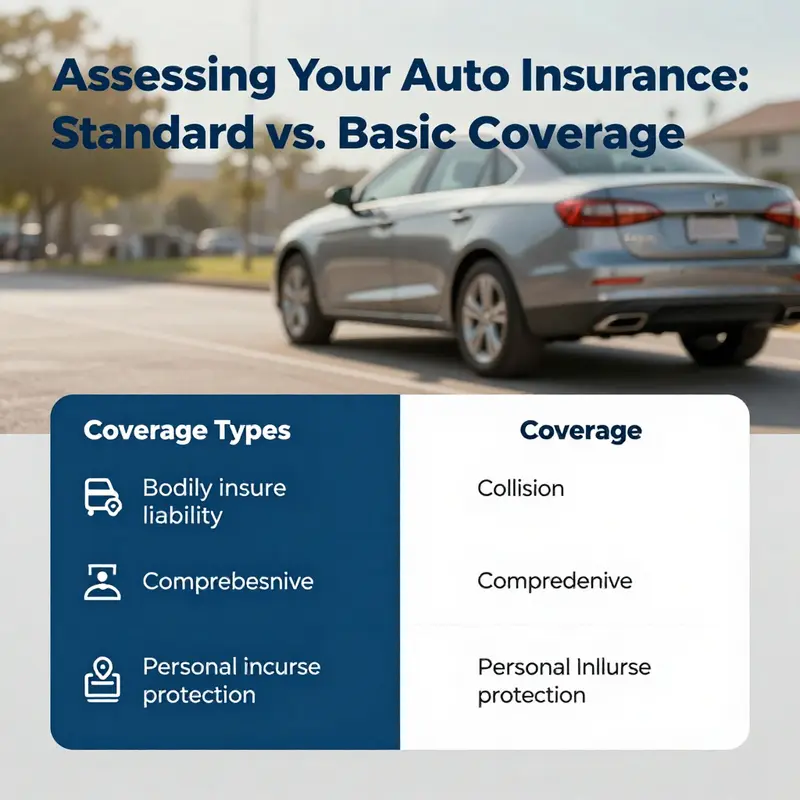
When people weigh standard auto insurance against basic or minimum coverage, the choice often comes down to what kind of financial shield they want over the long haul. The question isn’t merely about price or the monthly premium. It is about how well a policy cushions you from the economic jolt of an accident, a theft, or a sudden breakdown that could strain savings, future plans, and even daily living costs. In this light, standard auto insurance emerges as a more robust form of protection, built to guard not only the vehicle you drive but also the assets you’ve worked hard to accumulate. The difference becomes especially meaningful once you consider what each policy typically covers and how those coverages translate into real-world outcomes after a loss.
Standard auto insurance is designed for drivers who maintain a relatively clean driving record and who fall into a predictable risk category. This predictability matters because insurers price risk with a careful eye on history, vehicle type, location, and a handful of other factors. The standard policy bundles a broad set of protections that work together to create a comprehensive financial safety net. At the core are liability coverage for bodily injury and property damage, which protects you from the costs that you might owe others in an accident. Then there is collision coverage, which steps in to repair or replace your own vehicle after a collision, regardless of fault, and comprehensive coverage, which absorbs losses from theft, vandalism, fire, weather-related damage, and other non-collision events. In many cases, standard policies also include uninsured/underinsured motorist protection, which acts like a financial umbrella if the at-fault driver lacks sufficient coverage. And for many drivers, Personal Injury Protection (PIP) or Medical Payments (MedPay) adds a layer of medical expense coverage for you and your passengers, reducing the risk of medical bills undermining financial security after an accident.
Those elements do more than pay bills after a wreck. They shape a driver’s total exposure to out-of-pocket costs. Standard policies often come with higher coverage limits and lower deductibles compared to nonstandard or basic plans. A higher limit means you have more protection before the policy reaches its cap, and a lower deductible means you begin benefitting from coverage sooner, with less money required from you at the moment you file a claim. The practical effect is a stronger, steadier balance sheet in the aftermath of a loss. When a serious incident occurs, this difference between a few hundred versus several thousand dollars in deductible can matter a great deal, especially if there are medical expenses, extended vehicle downtime, or liability claims that could otherwise erode savings or force costly compromises in budget planning.
The beauty of standard coverage lies not only in the breadth of protection but in the predictability of the policy structure. Standard auto insurers price premiums based on a transparent set of factors—driving history, credit considerations in many states, vehicle type, and geographic location—creating a pricing model that is more stable and easier to understand than those tailored to higher-risk drivers. The trade-off for that stability is a higher baseline premium than the bare minimum, but the long-run value emerges in the form of fewer unexpected outlays and better alignment with a driver’s financial goals. For someone who has significant assets to protect or a family dependent on a stable household budget, that predictability is a form of wealth protection that can be easy to underestimate until a loss occurs.
Equally important is the concept of legal compliance. States require minimum levels of insurance, and failing to meet those minimums carries serious consequences—license suspensions, fines, or even jail time on repeat offenses in some jurisdictions. A standard policy helps ensure ongoing compliance, which in turn shields you from potentially devastating legal and financial penalties. The peace of mind that comes with staying within the law is, in itself, a financial benefit. It reduces the risk of compounding costs caused by lapses in coverage, such as penalties and the inability to drive legally, which can derail long-range financial plans and threaten employment that depends on vehicle access.
Beyond the core coverages, standard auto policies often offer additional tools and protections that extend the shield further. Roadside assistance, rental reimbursement, and even usage-based programs that reward safe driving can be part of the standard package or available as value-added options. These features translate into practical financial relief during the inevitable contingencies that follow a claim: a tow to a trusted shop, a rental car while repairs are underway, or a discount for demonstrated safe driving that reduces future premiums. In a broader sense, they help minimize the inconvenience and financial disruption that accidents can cause, preserving both liquidity and long-term financial momentum.
The question, then, becomes how to weigh these protections against the realities of one’s life course. A policy that seems affordable at purchase can become a precarious choice if it leaves large gaps in the event of a serious incident. Basic or minimum coverage typically provides liability protection only up to legally required limits, with little or no protection for your own vehicle, and often excludes comprehensive damage to your own car from non-collision events. This combination leaves you vulnerable to a wide spectrum of costs that can exceed the policy’s cap or even exceed your savings. In the event of a serious accident, the medical bills, vehicle replacement, and property damage costs can quickly surpass the limits of minimum coverage, forcing you to cover the shortfall out of pocket. For a household with student loans, mortgage payments, or retirement savings, absorbing those losses can be a heavy blow.
Another critical dimension is the way standard coverage supports long-term financial health. A stable premium structure, predictable claim experiences, and the sense that you are moving toward risk mitigation rather than chasing inexpensive but thin protection all align with prudent financial planning. When you view auto insurance through the lens of asset protection, you’re not just buying a policy; you are buying a mechanism that helps preserve your earnings power and your ability to meet future commitments. It is the quiet assurance that a major setback won’t derail your life goals, whether that means saving for a child’s education, building a retirement fund, or maintaining the liquidity needed to handle healthcare costs that can arise after a serious accident.
Of course, there is room to tailor a standard policy to fit different life stages and risk tolerances. Some drivers find value in higher liability limits, others in additional coverages like collision and comprehensive on older or high-value vehicles, or in smaller riders like rental reimbursement that helps manage cash flow during repairs. Even within the standard framework, insurers often provide tools and options designed to integrate auto protection into broader financial planning. These can resemble, in spirit, long-term planning tools that holistically address security for assets and income without necessarily stepping into more complex arrangements. The essential point remains: standard auto insurance, with its broader protections and more stable pricing, tends to offer a more reliable and comprehensive financial shield than basic coverage, which is bound by low limits and narrower protections.
In considering whether this shield is right for a given driver, the decision often hinges on asset level, risk exposure, and personal priorities. Someone who relies on a vehicle for daily commutes, who owns a home with significant equity, or who carries family health responsibilities will typically benefit from the sturdier protection of a standard policy. The target should be a policy that not only meets legal requirements but also aligns with one’s capacity to absorb shocks without undermining long-term financial goals. This alignment means stepping beyond the lowest-cost option and asking practical questions: What would be the out-of-pocket amount if a multi-car collision involved medical costs and property damage? How quickly would a damaged vehicle disrupt daily routines or income streams? How would a medical bill impact debt levels, savings, or retirement plans? The answers guide whether the broader protection and higher limits of a standard policy translate into real financial resilience.
For readers who want to explore these ideas within a broader financial framework, there is value in treating auto insurance as part of a holistic risk management approach. An organized plan that considers liability, asset protection, and liquidity can help you set appropriate coverage levels and deductibles that balance cost with risk. It also invites you to consider how auto protection can interact with other protections in a household, such as life, health, and disability coverage, toward a unified strategy for maintaining financial stability. If you’re curious about how insurance decisions fit into a wider financial health plan, you can start by visiting the knowledge hub linked here as a practical resource for deeper exploration: Knowledge Center.
Ultimately, the case for standard auto insurance as a superior form of financial protection rests on three pillars. First is breadth: the policy’s ability to cover a broad array of risks—from liability to damage to your own vehicle and medical costs—reducing the chance that a single event leaves you exposed. Second is depth: higher limits and lower deductibles translate into more reliable protection and less immediate financial strain when a loss occurs. Third is predictability: a pricing structure based on transparent factors offers steadier premiums and easier budgeting, especially valuable for households that prioritize long-term financial health. When taken together, these elements form a coherent argument that standard auto insurance provides a sturdier financial shield than basic coverage, particularly for drivers who value asset protection and steadiness as their financial north star.
External reference: For a broader breakdown of standard auto insurance coverage and its implications, see https://www.insurance.com/insurance-101/standard-auto-insurance/
Guardrails for Your Wallet: Understanding the Financial Safeguards of Standard Auto Insurance
When you think about auto insurance, the sticker price of the monthly premium often grabs the spotlight. Yet the real protection in a standard policy is not just what it pays out after a crash; it’s how its built-in financial safeguards—limits and deductibles—shape the risk you carry and the money you finally owe. In standard auto insurance, limits set the ceiling on what the insurer will cover, while deductibles determine the share of the cost you must shoulder before the insurer begins to pay. Together, they create a framework that can either cushion a financial blow or leave you exposed to costs that could threaten your finances after a serious incident. Understanding these elements is essential because they translate directly into how much protection you have for you, your passengers, and your assets, should luck or misfortune put you in a claim situation.
Delving into limits first helps illuminate the core idea: insurance isn’t a blank check but a contract that caps the insurer’s liability for certain kinds of losses in a single accident. Most standard policies break these limits into three main categories. Bodily Injury Per Person is the maximum the insurer will pay for medical expenses and related costs for any one person injured in an accident. Bodily Injury Per Accident is the total cap for all injuries resulting from a single crash. Property Damage Per Accident covers harm to another person’s property—think other cars, fences, or storefronts—resulting from one incident. These limits matter not just for the intrinsics of coverage but for your ongoing financial well-being. If damages exceed your policy limits, you become personally responsible for the excess, which can be catastrophic if, for example, a high-cost hospital stay or extensive property repairs are involved. Insurance professionals emphasize that while liability coverage is a legal requirement in many places, its real value lies in protecting your assets and your ability to maintain driving privileges in the wake of a serious accident.
Choosing the right limits is a balancing act. Higher limits reduce your risk of exposure if you’re at fault in a major crash, but they typically come with higher premiums. The key is to calibrate these limits to your financial reality. If you have substantial assets—home equity, investments, or a high income—you’ll want limits that can withstand a multi-million-dollar claim without depleting retirement funds or triggering a lien on your property. Conversely, for someone with fewer assets or a modest income, a carefully chosen set of limits that still avoids catastrophic out-of-pocket costs can be a prudent compromise. It’s about aligning protection with your capacity to absorb risk, rather than chasing the highest possible numbers in search of blanket security.
Deductibles operate on the other side of the coin. They are the amount you pay out of pocket before the insurance coverage springs into action. If you have a $500 deductible and repair costs total $2,000, you would pay $500 and the insurer would cover the remaining $1,500. The basic calculus here involves premium vs. out-of-pocket cost at the moment of a claim. Higher deductibles typically yield lower monthly premiums, which can be appealing if you rarely file claims and have a cash buffer to cover the deductible when you do. On the other hand, a lower deductible reduces the immediate financial hit after an accident but raises your ongoing cost. The choice becomes a question of liquidity and risk tolerance. If you keep a comfortable emergency fund and drive conservatively in favorable conditions, a higher deductible can be a smart way to lower costs over time. If your finances are tighter or your driving environment is riskier, a lower deductible offers peace of mind by limiting the amount you must reach for in a pinch.
These two components do not exist in isolation; they interact to determine your overall protection. Consider a scenario where a crash results in $18,000 in total damages to others and a damaged vehicle of your own. If your liability limits are set to $100,000 per person and $300,000 per accident, you’re well within the ceiling for bodily injuries and property damage to others, provided the costs don’t exceed those caps. But what if the claim also involves your own vehicle’s repair or replacement costs, which standard policies may cover under collision or comprehensive provisions? Here, your chosen deductibles become pivotal. A deductible of $250 or $500 might keep premium costs low, but it translates into more out-of-pocket cash when you repair your own car. If you opted for a $1,000 deductible, your stress lessens at the repair shop, yet you lock in a higher monthly premium. The math is a personal spectrum: the right balance depends on how much you can comfortably pay out of pocket in the event of a claim and how often you expect to file a claim. There is no universal perfect fit; the goal is to secure a level of protection that protects your assets while remaining affordable over time.
Beyond the mechanics of limits and deductibles, the broader landscape of standard auto insurance includes additional safeguards that amplify financial resilience. Comprehensive coverage, for example, cushions you against non-collision losses such as theft, vandalism, fire, natural disasters, and animal strikes. Collision coverage protects your own vehicle in the event of a crash, regardless of fault, which is crucial when you’ve invested in a newer or more valuable car. Personal Injury Protection (PIP) or Medical Payments (MedPay) coverage helps cover medical expenses for you and your passengers after an accident, which can be a lifeline in the acute aftermath when medical bills start piling up. These protections collectively reduce the likelihood that a single incident will cascade into long-term financial strain, a risk that often runs higher with basic, minimum-coverage policies that omit or limit such protections.
The decision to pursue standard insurance versus sticking with minimums hinges on several practical considerations. First, the relationship between your assets and your potential liability exposure matters greatly. If a liability judgment could imperil your home, retirement funds, or business interests, stronger liability limits become a prudent safeguard. Second, your vehicle’s value plays a role. A newer or higher-valued vehicle deserves collision and comprehensive coverage to avoid depreciation losses that can outpace premium savings from lower deductibles. Third, your risk tolerance is a personal metric. Some drivers prefer the financial predictability of higher premiums and lower risk of large out-of-pocket costs, while others aim to minimize costs in the aggregate and are comfortable absorbing more risk in exchange for cheaper coverage. Finally, the legal framework in your state and the specifics of your lender or lease agreement may shape the minimums or additional coverages you must carry, which further informs how you structure limits and deductibles.
To translate these concepts into lived reality, consider how they operate in everyday decision-making. When you sit down to review or renew a policy, you can test how different combinations affect your monthly budget and your exposure in a claim. If you have a healthy cushion and a relatively low-risk driving profile, you might opt for a higher deductible on both collision and comprehensive coverage to reduce costs. If you commute long distances, drive in heavy traffic, or park in a high-theft area, you might favor a lower deductible and higher limits to protect against the odds of a loss that could be financially painful. And if you carry comprehensive coverage, you should weigh the value of insuring your own vehicle against the premium cost, particularly if the car has depreciated or you plan to replace it soon. In practical terms, the process often involves calculations that weigh the probability and potential cost of incidents against the certainty of predictable premium payments over time. It also means recognizing that the “best” policy is not merely the one with the most coverage, but the one that aligns protection with your financial reality, risk tolerance, and future plans.
For readers who want to explore risk management concepts beyond car insurance, there is value in consulting broader knowledge resources that discuss how households think about risk, premiums, and coverage choices. A concise, practical resource can illuminate how to translate these policy mechanics into concrete budgeting and planning steps. To broaden your understanding, you can explore the knowledge hub for additional context and tools that help translate coverage concepts into everyday financial decisions. knowledge.
As we return to the central question of whether standard or basic auto insurance offers better financial protection, the answer becomes clearer when you look through the lenses of limits and deductibles. Basic, or state minimum, coverage is designed to meet the law rather than to protect your assets in the fullness of a serious crash. It often leaves gaps in liability coverage, excludes protection for your own vehicle, and provides little cushion against medical costs. Standard auto insurance, by contrast, deliberately expands the safety net: higher liability limits guard your assets from large judgments; collision and comprehensive coverages address the realities of owning and operating a vehicle, and more robust PIP/MedPay provisions help prevent hospital bills from becoming a personal financial crisis. The practical effect is a more predictable financial trajectory in the wake of an incident, reducing the odds that an accident will derail your finances. This is not to say price takes a back seat; rather, it is to underscore that a thoughtful, well-structured standard policy translates premium payments into meaningful protection that can outlast the moment of a claim.
To support this perspective with a broader sense of responsibility and knowledge, readers can consult external resources that detail how these policy components work in practice. The National Association of Insurance Commissioners offers guidance on understanding deductibles and coverage limits, helping consumers interpret policy terms and make informed choices. For those seeking a concise, authoritative explainer, the NAIC resource provides a clear framework for thinking through liability limits, deductibles, and the implications of choosing different protection levels. This outside reference serves as a solid backdrop to the more personalized guidance discussed here and reinforces the message that robust protection begins with understanding the financial safeguards embedded in standard auto insurance.
In sum, the distinction between standard and basic auto insurance is less about the label and more about the protection envelope. Limits define the ceiling of protection for others and for property, while deductibles determine your own financial doorway into the claim process. Together, they shape the level of risk you bear when an accident occurs and the way that risk translates into real costs. When you choose standard auto insurance with thoughtfully set limits and deductible levels, you’re not simply buying coverage—you’re building a shield that aligns with your assets, income, and tolerance for risk. That alignment is what ultimately yields stronger financial protection and greater peace of mind on the road.
External resource: National Association of Insurance Commissioners. https://www.naic.org/
Beyond the Bare Minimum: How Standard Auto Insurance Fortifies Your Finances Against Major RoadRisks
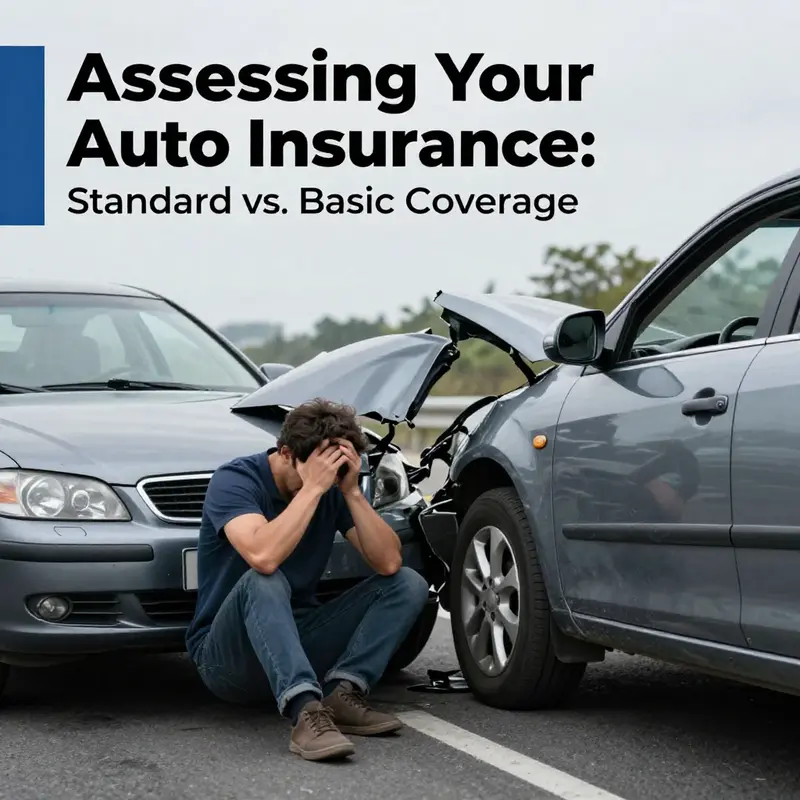
When you pull into a driveway after a routine drive, the idea of needing more than the bare minimum often feels abstract. Yet the financial consequences of a crash can arrive in concrete, painful ways. The central question this chapter tackles is not how much a policy costs, but how well it shields your savings, income, and future. In comparing standard auto insurance with basic auto insurance, the deeper truth becomes clear: standard protection typically offers a sturdier financial shield because it covers a broader set of risks, carries higher limits, and minimizes the out-of-pocket exposure that can derail a family’s finances after an accident. To understand why, it helps to look beyond the headline numbers and examine the real costs that accidents can unleash, and how each type of policy responds to them. The discussion here follows the logic that policy design is a map of risk, and the map that standard auto insurance draws tends to cover more terrain than the minimum requirements. This is not just a matter of more coverage for its own sake; it is a matter of aligning protection with the financial realities most drivers face when the unexpected happens. Basic auto insurance, often described as the minimum or state-required level of coverage, is crafted to meet a legal threshold. It ensures you can be held responsible for damages you cause to others, but it provides little to no protection for your own expenses. In practical terms, a basic policy typically includes bodily injury and property damage liability to others, but excludes coverage for your own medical bills, for the repair or replacement of your own vehicle, and often for lost wages if you are unable to work. The result can be a jarring gap between the costs of an accident and the protection your policy offers. If you are ever involved in a serious collision, those gaps translate directly into out-of-pocket bills that can overwhelm even careful budgeting. Consider the day-to-day reality of medical care in the United States, where expenses for injuries can accumulate quickly. Basic coverage does not provide for your own medical expenses or lost income, leaving you to shoulder the bills if your medical needs extend beyond the liability limits. The car you drive is a substantial asset, and when it is damaged in a crash, basic insurance generally does not cover the cost of repairs or replacement for your own vehicle. This means paying out of pocket for a vehicle you still need to get around, possibly while you’re dealing with the aftermath of injuries. The financial exposure does not stop there. If you are found at fault in an accident, you remain liable for any costs that exceed your policy limits. If the other party sustains significant injuries or the property damage is extensive, those excess costs can be catastrophic. In many states, the legal and financial consequences of driving without sufficient coverage extend beyond medical bills; drivers risk license suspensions, fines, and even, in extreme cases, jail time for serious violations. The risk is magnified for those who do not have substantial savings or other assets to draw from in the wake of a crash. Basic insurance, by its very design, acknowledges a limited scope of protection. It emphasizes satisfying the legal minimum rather than providing a comprehensive safety net for most drivers. This is not to suggest that minimum coverage lacks any value. It does, in a narrow sense, reduce the risk of fines and legal penalties for driving uninsured. Yet the price of that compliance comes at the cost of real financial vulnerability when the accident does not fit neatly within those bare minimum limits. When the topic shifts from compliance to protection, standard auto insurance steps in as a broader, more robust framework. A standard policy is built to address a wider range of scenarios that typically involve higher stakes. It includes liability coverage with higher limits, which helps protect your assets if you are found responsible for an accident that causes serious injuries or substantial property damage to others. Higher liability limits serve as a personal safety net, reducing the chance that you will ultimately pay for someone else’s medical expenses or property repairs out of your own pocket. Beyond liability, standard policies usually offer collision coverage, which pays to repair or replace your own vehicle after an accident, regardless of fault in the incident. This is a fundamental shift from basic coverage, where the policyholder bears much of the repair cost for their own vehicle. Collision protection can be crucial for maintaining mobility and financial stability during a repair period, especially if your car is a primary means of earning an income or supporting a family’s day-to-day responsibilities. Comprehensive coverage is another hallmark of standard auto insurance. It expands protection to non-collision events such as theft, vandalism, fire, natural disasters, and even animal collisions. In many situations, these are costs that can derail a budget or threaten the ability to continue driving to work or school. By covering a broad spectrum of non-collision risks, standard policies help drivers avoid scenarios where the overall expense of an incident would otherwise undermine their financial stability. In addition to these core coverages, standard policies frequently include Personal Injury Protection (PIP) or MedPay, which pay for medical expenses for you and your passengers after an accident, regardless of fault. This component is especially valuable in the early stages after a crash, when medical bills begin to mount and the health status of those involved is uncertain. The inclusion of underinsured or uninsured motorist coverage (UM/UIM) in many standard policies further strengthens financial protection. If you are involved in an accident with a driver who lacks sufficient insurance, UM/UIM can help cover medical costs and other damages that exceed the at-fault party’s policy. The practical impact of these features becomes clearer when you consider a few plausible scenarios. A moderate crash with injuries could involve medical costs that reach into tens of thousands of dollars, along with vehicle repair or replacement expenses. A basic policy may leave you paying a substantial portion of those costs personally, while a standard policy, with higher liability limits and optional coverages, spreads or absorbs much of that risk. The value of higher limits should not be underestimated. When your policy limits are substantially higher than the minimum, your exposure to out-of-pocket costs decreases dramatically. This is especially relevant for drivers who own valuable assets, have dependents with ongoing financial needs, or rely on a vehicle for work. It is also worth noting that standard policies often come with lower deductibles compared to basic plans. A lower deductible means you pay less upfront before the insurance coverage kicks in, reducing the immediate financial strain after an incident. The result is not merely a larger check from the insurer but a more predictable financial path through the crisis that follows a crash. The robust protection offered by standard auto insurance aligns with the realities many households face, including medical expenses that can outpace wage growth, car replacement costs in a market with fluctuating prices, and the risk that an accident can disrupt income streams for weeks or months. The ultimate test, of course, lies in personal circumstances. A driver with a clean driving record, a modest vehicle, and substantial savings might still be comfortable with a basic policy, if premium costs are a pressing concern and the individual is willing to assume greater risk. For most people, however, the trade-off favors standard protection because it not only covers the repairs to a vehicle but also guards personal finances against the cascade of costs that can follow a crash. The decision becomes clearer when you consider long-term financial health. Basic coverage may minimize monthly outlays, but it can accumulate hidden costs in the form of medical debt, lost wages, or the income volatility that comes with an injury. Standard coverage, by contrast, tends to stabilize a household’s financial trajectory after an accident. It reduces the likelihood that a single incident will erode savings, threaten credit, or jeopardize housing or education plans. To support readers seeking clarity on how coverage works in practice, a concise overview can be found in dedicated insurance resources that summarize common policy features. For those who want a broader context on how coverage interacts with personal finances and asset protection, the knowledge hub offers helpful explanations and scenarios you can explore at your own pace. knowledge hub.
Another essential aspect of the protection gap is financial resilience in the face of underinsurance. When a driver carries only the minimum required by law, the potential liability you face in an accident can surpass what you have set aside. If you own a home, have dependents, or carry sizable debt, the consequence can be a chain reaction: higher insurance costs in the future due to risk profile, reduced credit standing from medical or repair bills, and the emotional strain of balancing health and finances after a crash. Basic coverage does not readily address these realities, and the consequence is that many drivers experience temporary or even long-term financial hardship simply because their policy does not match life’s financial footprint. The protective value of standard auto insurance is not about fear-based certainty; it is about aligning protection with the realities of modern costs—medical care, vehicle repair or replacement, and income continuity. PIP or MedPay relief for medical bills, collision coverage for vehicle restoration, and UM/UIM protection for scenarios involving underinsured others are pieces of a cohesive system designed to prevent one accident from turning into a financial catastrophe. Even so, choosing the level of protection should be a deliberate process, grounded in an honest assessment of assets, earning potential, health considerations, and risk tolerance. If you drive a high-value vehicle or have significant financial responsibilities, upgrading from basic to standard coverage is a prudent step toward preserving long-term financial stability. If your priority is to maximize monthly affordability, you may still want to consider a staged approach: start with a basic plan to meet legal requirements, then layer in essential protections such as higher liability limits, collision, and comprehensive coverage as circumstances or budget allow. The goal is to strike a balance that minimizes risk without compromising essential financial security. In this balance, the broader coverage offered by standard auto insurance stands out as a cornerstone of financial protection. It acknowledges that the costs of an accident often extend beyond property damage and immediate injuries. It includes the potential for ongoing medical care, rehabilitation, missed work, and the need to maintain mobility during recovery. By incorporating higher limits and a wider array of coverage, standard policies reduce the likelihood that an accident will derail a family’s finances and, more importantly, preserve the financial freedom to recover and move forward. For readers seeking concrete guidance tailored to their situation, reviewing a few practical considerations can help. Start with your assets and monthly expenses, then map them against potential accident costs, including medical bills, vehicle replacement, and income disruption. Consider the value of your vehicle, your health status, and your job’s dependence on reliable transportation. If these factors point toward substantial risk, the benefits of standard protection become more compelling. A second, practical step is to examine the available endorsements that commonly accompany standard policies. Optional protections—such as higher liability limits, rental reimbursement, roadside assistance, and medical payments coverage—often address gaps left by basic coverage without dramatically increasing premiums. The goal is to craft a protection package that aligns with real-world needs rather than theoretical risk. Finally, remember that the landscape of auto insurance is not static. It changes with changes in income, asset accumulation, and life stage. Regularly revisiting your policy in the context of your evolving financial picture can prevent coverage gaps from emerging just as costs rise. In pursuing this recalibration, it can be helpful to consult authoritative resources that summarize policy features and how they translate into real-world protection. For a broad overview of how coverage works and the implications of underinsurance, the U.S. Department of Transportation provides guidance on the insurance landscape and the consequences of insufficient coverage, which can complement insights from consumer-focused resources. External resource: https://www.transportation.gov/insurance
null
null
Final thoughts
In conclusion, navigating the complexities of auto insurance necessitates a clear understanding of the differences between standard and basic policies. While basic auto insurance may satisfy legal requirements, it often leaves drivers exposed in high-stakes situations. In contrast, standard auto insurance provides comprehensive coverage, higher limits, and lower deductibles—crucial elements for those looking to protect their financial well-being. Whether you are an individual car buyer, a fleet manager, or an auto dealership, opting for standard coverage can offer you peace of mind and significantly reduce your financial risk in the event of an accident.