

Understanding Tier 1 credit in auto financing is essential for individual car buyers, auto dealerships, and small business fleet buyers alike. Tier 1 credit represents a classification of prime creditworthiness, typically characterized by high FICO scores and impeccable credit histories. This classification not only enhances approval odds for auto loans but also significantly affects the terms and interest rates available to borrowers. Each chapter will delve into different aspects of Tier 1 credit, illustrating its impact in the world of auto financing, from its fundamental importance in loan applications to the benefits it provides in terms of favorable financing solutions. We will also compare Tier 1 credit against other credit tiers and analyze its influence on interest rates and overall loan terms. By the end, readers will fully grasp the value of maintaining a strong credit rating in securing the best possible terms for their auto financing needs.
Tier 1 Credit Unlocked: How Excellent Credit Powers the Best Auto Financing
Tier 1 credit in auto financing is a label that signals a borrower has exceptional financial standing, not a line on a manufacturing chart. The name often causes a moment of confusion because Tier 1 also appears in supply chain talk, referring to top suppliers. In lending, however, Tier 1 marks the gold standard of creditworthiness. It describes a profile lenders view as low risk, with a proven ability to repay and a minimal likelihood of disruptive financial events. This distinction matters because the difference between Tier 1 and a lower tier is not simply a score on a page; it translates into real, tangible benefits when a buyer sits down to negotiate terms for a vehicle.
What counts as Tier 1 can vary slightly from one lender to the next, but the backbone is consistent. A Tier 1 borrower typically carries a high credit score, often 750 or above on the FICO scale, along with a clean payment history and a history that suggests stability. Debt levels relative to income, or the debt-to-income ratio, also play a role, as does the length of time an individual has held steady employment and the amount of time accounts have been open. In practice, Tier 1 is a composite view: a borrower who rarely misses a payment, who uses only a modest portion of available credit, and who presents a stable, predictable financial picture. Lenders rely on automated underwriting systems that pull data from the major credit bureaus to make these judgments quickly and consistently. While the exact thresholds shift by institution, the category is almost universally recognized as the most desirable tier in automotive lending.
For buyers who have earned Tier 1 status, the payoff is not merely psychological. It translates into real cost and flexibility advantages. First, the interest rate is typically the lowest available for new and used vehicles. Even a small difference in rate can matter a lot over a multi-year loan, reducing total interest paid and improving the monthly payment’s affordability. Second, Tier 1 buyers often enjoy better loan terms overall. This can mean longer loan durations, which may stretch payments without increasing monthly costs as sharply as a shorter term would. It can also mean higher loan-to-value allowances, making it easier to finance a more valuable vehicle or to structure favorable down payment scenarios. Third, the approval odds rise substantially. In a competitive market, being in Tier 1 can tilt the balance in favor of approval when demand is high or when a buyer’s profile includes a few near misses, such as a recent credit inquiry or a temporary uptick in utilization. Finally, Tier 1 borrowers may gain access to premium lending programs offered by large banks or credit unions, including promotions that can further reduce the cost of borrowing or provide added conveniences in the financing process.
The mechanics behind this tiered view of credit are straightforward in theory but nuanced in practice. Lenders assess a borrower’s creditworthiness by analyzing a blend of data points from the major credit bureaus—Equifax, Experian, and TransUnion. Score thresholds are a shorthand that underwriting systems translate into risk estimates, but the full picture includes payment history, the mix of credit types, recent credit activity, and how consistently a borrower has managed debt over time. This comprehensive approach is why a high score alone is not a guarantee of Tier 1 status; the history behind the score matters just as much as the number itself. In fact, the most reliable Tier 1 profiles tend to show a long, unblemished track record of on-time payments, minimal derogatories, and a careful balance between available credit and usage. The result is a lender’s confidence that the loan will be repaid without surprises.
Recent data from industry sources helps illuminate the real-world impact of achieving Tier 1. For example, the automotive finance market has shown that borrowers with Tier 1 credit consistently enjoy lower average interest rates than those with lower credit profiles. In practical terms, this means tens of thousands of dollars in savings over the life of a loan when comparing Tier 1 financing to financing for someone with fair or poor credit. While every lender and every loan type can shift slightly, the trend is clear: excellent credit compounds into better pricing and more flexible terms. For readers seeking a broader statistical context, industry reports note that Tier 1 borrowers typically pay less in interest over time, which compounds into significantly lower total payments as the loan progresses. This is not merely a theoretical advantage; it is a measurable difference that can influence decisions about vehicle choice, down payments, and even when to buy.
The practical implications go beyond rate and term. With Tier 1 credit, buyers are often offered a wider array of financing options. Manufacturers and lenders alike compete for the best customers, and premium profiles can access promotions that are not as readily available to other credit tiers. These promotions may include lower down payments, special APR offers, or loyalty programs designed to reward strong credit behavior. In effect, Tier 1 status expands a buyer’s leverage in the dealership negotiation, enabling a more favorable overall package when the goal is to minimize the cost of ownership rather than simply minimize the monthly payment.
If you are working toward Tier 1, there are constructive steps you can take that consistently move the needle. Begin with your credit report. Obtain copies from the major bureaus and review them for inaccuracies. Even small errors, such as a misapplied payment or an old debt that has fallen off, can artificially depress a score. Correcting such issues can yield meaningful gains over weeks or months. Next, be mindful of utilization. Aim to keep revolving balances well below the maximum on all cards. A practical target is to keep utilization under 30 percent, and lower is better, especially on cards that are actively used. Plan major inquiries strategically; hard inquiries can ding a score if they occur close to a loan application. If you are planning a purchase, avoid opening new credit accounts in the months leading up to the loan application. In addition, ensure timely payments across all accounts, since even one late payment can temporarily lower your score and affect your tier placement.
Another pillar is the longevity of credit. Longer, well-managed credit histories tend to convey stability. Consider keeping older accounts open, even if you do not use them frequently, provided they do not incur annual fees or other charges. This helps establish a longer average age of accounts, which many underwriters view positively. Budgeting and income stability matter as well. A steady job history and predictable income streams reduce perceived risk. If you anticipate life changes that could affect your finances, addressing them early with responsible credit management can help preserve Tier 1 status when you apply for financing.
Finally, it is important to recognize that Tier 1 is not a universal guarantee. Lenders set their own thresholds and may adjust them in response to broader economic conditions, delinquencies in the market, or shifts in their own risk models. A buyer who has earned Tier 1 status in one lender’s system might still encounter tighter terms elsewhere, especially if they are applying for a loan at a dealership during a busy period or for a vehicle that carries higher loan-to-value ratios. The key is to maintain strong financial habits over time, not simply chase a score for a single loan application. In parallel, remember that the car shopping process remains a negotiation where loan terms, down payment, vehicle price, and incentives all intersect. Maintaining a high credit standard gives you the strongest negotiating position and a greater chance of securing favorable financing across the board.
For broader context on credit tiers and automotive lending trends, see the Davis Financial Advisors knowledge hub.
External reference: Experian’s State of the Automotive Finance Market, Q4 2025 provides up-to-date benchmarks that illustrate how Tier 1 status translates into lower financing costs in practice. Access the report at https://www.experian.com/blogs/ask-experian/state-of-the-automotive-finance-market-q4-2025/.
Tier 1 Credit Unlocked: How Exceptional Auto Financing Opens Doors to Better Rates, Terms, and Options

When people ask what Tier 1 credit means in auto financing, they are really asking how the quality of their borrowing profile can reshape the entire car-buying journey. Tier 1 is not a label attached to the car itself or to the dealership’s lineup; it is a lens lenders use to gauge risk. In auto lending, Tier 1 credits you as a borrower with the strongest track record and the most predictable financial behavior. It is the kind of credit standing that tends to translate into smoother approvals, lower costs, and more favorable terms. This is why the conversation about Tier 1 credit often feels like a doorway—the moment you step through, the options expand and the friction of the process recedes. Yet this doorway is not a prize for luck; it is a function of credit history, score, and the ongoing discipline of managing debt and payments. For the broader arc of this article, understanding Tier 1 helps readers see why credit quality matters so deeply when a big purchase is on the line, and why a strategic plan to reach that level can make a noticeable difference in the total cost of ownership over the life of the loan.
To be specific, the term Tier 1 in auto financing is a creditworthiness designation lenders apply as they review loan applications. It signals the borrower is among the lowest risk categories. The practical effect is that Tier 1 borrowers encounter fewer hurdles and face less price resistance when a lender evaluates the loan request. It is easy to confuse this with the automotive supply chain’s tiering, where Tier 1 refers to top-tier suppliers. The two worlds share the phrase but diverge entirely in meaning. In lending, Tier 1 is about your financial behavior and history, not about where your car parts come from. This distinction is crucial for anyone who wants to align their financial strategy with the realities of auto credit markets.
A central piece of this puzzle is the score itself. In many lender practices, Tier 1 is anchored by a FICO score in the upper echelons, with thresholds commonly set around the high end of the range—often 780 and above. That said, definitions are not universal. Some lenders treat Tier 1 as a scoring tier starting around 720 or 740, provided the borrower also demonstrates a solid, derogation-free credit history and prudent utilization. The interplay between the score and other factors—payment history, length of credit history, types of credit, and recent credit activity—shapes the final tier designation. The result is that Tier 1 is best viewed as a constellation rather than a single metric: a combination of a high score, a clean record free of major delinquencies, and a stable financial profile. When all or most of these elements align, the borrower sits in the lowest risk bucket a lender can assign, which cascades into tangible benefits when the loan terms are written.
In this context, Tier 1 status affects more than just the odds of loan approval. It reframes what the borrower can expect in terms of interest rates, down payment requirements, loan durations, and the maximum loan amount a lender is willing to finance. A Tier 1 borrower typically negotiates the best available rates, enjoys lower risk-based fees, and might secure more flexible terms, including longer repayment horizons or higher loan amounts without a premium in price. These advantages accumulate over the life of the loan. A few tenths of a percentage point in interest saved each year may translate into thousands of dollars in total interest paid by the time the loan is fully amortized. The practical impact is that Tier 1 credit reduces the financial friction of a vehicle purchase, making it easier to choose a car that fits both the budget and the lifestyle without compromising long-term affordability.
The real-world implications extend beyond rate structures. Tier 1 qualifying borrowers often gain access to financing programs that are either selective or time-limited. Many lenders reserve special promotions—such as reduced down payments, extended terms, or even zero-percent APR offers—for customers who sit at the top of the credit spectrum. These programs can be especially compelling for buyers contemplating new or upgraded features, a longer-term vehicle ownership strategy, or the option to lease with favorable terms when the credit profile aligns with the program’s underwriting criteria. It is worth noting that promotional possibilities are not guaranteed; they depend on market conditions, the lender’s current campaigns, and the borrower’s individual profile. Nevertheless, Tier 1 status consistently broadens the field. It enhances the likelihood of manufacturer incentives, favorable financing arrangements, and access to premium lenders who can offer more competitive and tailored terms than might be available to borrowers with lower tier ratings.
From a planning perspective, achieving Tier 1 credit should be viewed as a strategic financial objective. It is not something that happens by accident. It requires steady, disciplined behavior over time: on-time payments, responsible debt management, and careful monitoring of credit utilization. A strong credit history benefits not only auto lending but the broader spectrum of personal finance. It increases the likelihood of favorable terms across other major purchases, such as mortgages or student loans, and it can cushion the impact of rate fluctuations in a rising-interest environment. Readers who are aiming for Tier 1 status should consider their overall credit strategy as part of a larger financial plan. Checking credit reports for accuracy, disputing errors, and ensuring the reporting reflects a pattern of responsible card use and timely payments are practical steps that move the needle. In this journey, the metrics matter, but so do the habits that underlie those metrics. The borrower’s day-to-day financial discipline becomes the bridge between a current score and the coveted Tier 1 category.
For those who are still building toward Tier 1, the narrative is not simply about chasing a number. It is about shaping a profile that lenders perceive as consistently low risk. The choices that affect this perception—how much of your monthly income you allocate to debt, how regularly you use credit without overextending yourself, and how long you have cultivated a positive borrowing history—are the same choices that improve overall financial resilience. As borrowers approach the threshold, they may notice a shift in the rhythm of the loan process. Approvals may come with fewer questions, the underwriting desk might complete its review more quickly, and the likelihood of meeting or exceeding a lender’s defined criteria rises. These are not magical outcomes; they are the predictable byproducts of responsible credit behavior applied consistently over time.
An important note about how to navigate this landscape is the value of reliable, up-to-date information. The landscape shifts with credit scoring models, lender policies, and market incentives. To verify how a specific lender defines Tier 1, borrowers should ask for the lender’s current tier criteria and any promotional eligibility requirements before they apply. This step avoids surprises and helps borrowers tailor their preparation to what the lender actually values. At the same time, readers can benefit from broader guidance on credit scores and auto lending in reputable, industry-standard resources that explain how scoring translates into loan outcomes. For further context on how credit scores influence auto lending, consider consulting a comprehensive guide such as the Experian resource linked in the references. In the meantime, a practical approach to pursuing Tier 1 remains grounded in developing a consistent pattern of responsible credit usage, minimizing high-risk credit events, and maintaining steady, on-time payments across all accounts.
Those who read these chapters with an eye toward action may also find value in keeping a running assessment of their credit profile. Simple, repeatable habits can keep the path toward Tier 1 clear: track credit utilization, avoid new debts that could temporarily spike usage, and resist the urge to apply for multiple credit lines in a short period, which can trigger hard inquiries and small score dips. When the time comes to purchase a vehicle, readers with Tier 1 credit will likely experience a smoother negotiation and a more favorable loan quote. The process feels less like a test and more like a natural extension of good financial stewardship, a reflection of a long-standing pattern of decisions that prioritize stability and reliability over rapid, impulsive borrowing.
It is natural to wonder what happens if a borrower does not yet meet Tier 1 criteria. In those cases, lenders may still offer financing, but the terms are generally less favorable, and the approval process can be more meticulous. Down payments might be higher to mitigate perceived risk, and interest rates could reflect the borrower’s current risk tier. That reality, however, is not a dead end but a horizon. With strategic steps—such as paying down high-interest balances, correcting any inaccuracies on credit reports, and reinforcing a consistent payment history—the gap can narrow over time. The journey toward Tier 1 is, in effect, a disciplined pathway to lower borrowing costs and more financial flexibility when making a vehicle purchase. It is also a reminder that auto financing sits at the intersection of credit behavior and consumer choice, where every month of timely payment and every responsible utilization decision compounds into a more powerful loan position.
Readers who want a more practical, reader-friendly path to building Tier 1 credit should embrace the idea that knowledge is a tool as important as discipline. Beyond the core habits, it can help to stay informed about how credit scoring works and how lenders interpret risk. This is why a steady stream of trusted resources matters, and why keeping an eye on credible references matters when planning a major purchase. Those who curate a robust credit profile are, in effect, equipping themselves with the leverage to choose among the best financing options, rather than accepting the first available loan terms simply because they fear missing out on a purchase opportunity. The difference between average and Tier 1 is not a single decision but a sustained pattern of habits that, over time, alters credit trajectory and, consequently, the calculus of cost for a vehicle over its lifespan. For readers eager to explore broader credit education, the chapter points toward a curated path that blends practical steps with realistic expectations. The knowledge base can serve as a practical companion on this journey, offering insights that complement the actionable strategies outlined here. knowledge
In closing, Tier 1 credit is best understood as the premium of auto financing. It represents a level of creditworthiness that reduces risk in the eyes of lenders and, in turn, unlocks better rates, more forgiving terms, and a wider suite of financing options. It is a tangible target for readers who want to optimize their car-buying outcomes. The payoff is not limited to monthly payments; it stretches across the total cost of ownership, the flexibility to select vehicles that meet evolving needs, and the confidence that the financing won’t overshadow the practical benefits of a well-chosen investment in a vehicle. The roadmap toward Tier 1 is accessible to many readers, especially those who commit to consistent financial health over time. The reward, when the time comes to purchase, is a smoother financing experience and a more favorable economic outcome that can make the car a true enabler of life rather than a financial burden.
External resource: For a deeper explanation of how credit scores shape auto lending and the practical implications for loan terms, see Experian’s guide on Auto Loans and Credit Scores: https://www.experian.com/blogs/ask-experian/credit-education/auto-loans-and-credit-scores/.
Tier 1 Credit in Auto Financing: How Top Scores Turn Car Buying into a Seamless, Cost-Saving Journey

Tier 1 credit in auto financing is a label that carries real weight in the car buying process, but it is often misunderstood. The term does not describe the hierarchy of suppliers or the quality of parts in a vehicle. Instead, it signals a borrower’s exceptional creditworthiness in the eyes of lenders and credit bureaus. In practice, Tier 1 status means you have established a track record of responsible credit behavior, low risk of default, and financial habits that reassure lenders you will meet repayment obligations. The distinction is important because it marks a clear line between the most favorable financing outcomes and the more challenging terrain faced by buyers with average or imperfect credit. When you walk into a dealership or a bank with Tier 1 credit, you are not just seeking a loan; you are positioning yourself to access the best rates, the most forgiving terms, and options that can make a substantial difference in the total cost of ownership over the life of the loan.
To understand why Tier 1 credit matters, it helps to unpack what lenders look for and how they translate credit behavior into pricing. At the core is a high FICO score, typically 750 or above in many lenders’ minds, though the exact threshold can vary. A strong credit history beyond the score matters as well: a long record of on-time payments, no major derogatory marks, and a history that demonstrates you manage debt prudently. Low credit utilization plays a critical role here too. When your revolving credit balances are well under their limits, it signals that you are not overextended and you have a cushion to absorb any financial shocks. A stable income and a steady employment history often accompany these signals, helping lenders feel confident that the borrower can sustain payments even if life throws a curveball. Because the risk profile is so favorable, lenders are more inclined to treat Tier 1 borrowers as premium customers.
There is an important caveat, however. The phrase Tier 1 credit is not a universal, immutable standard. Definitions vary among lenders and jurisdictions, and some institutions may place more emphasis on recent credit activity than on the length of the credit history. A lender might consider a score in the mid-700s as Tier 1 in one market while reserving that label for scores closer to 780 in another. This variability can feel frustrating to buyers who expect a uniform system, but the practical upshot is simple: you should verify how a prospective lender defines Tier 1 before you apply. The aim is not to chase a single number but to demonstrate consistently strong credit behavior across multiple dimensions—payment history, utilization, and overall credit management.
For buyers, achieving Tier 1 status translates into tangible advantages when financing a vehicle. The most immediate benefit is access to the lowest interest rates. When lenders price risk, Tier 1 credit signals the smallest probability of default. Even a small reduction in the interest rate can lead to thousands of dollars in savings over a typical auto loan term. A borrower with Tier 1 status might see rates that are two to three percentage points lower than someone with fair or average credit. Over a 60-month loan, that differential compounds into a meaningful reduction in both monthly payments and the total amount paid over the life of the loan, making a higher monthly payment at the outset less daunting and the overall cost of ownership more affordable.
Beyond the rate, Tier 1 borrowers enjoy higher approval odds. Lenders are more willing to approve larger loan amounts or less common vehicle types because their risk assessment is confident in the borrower’s ability to repay. This means less time spent in back-and-forth negotiations or the frustration of loan denial, and more time focusing on the vehicle that best fits your needs rather than on whether you will be approved at all. In practice, higher approval rates can also translate to simpler application experiences. With a solid credit footprint, the underwriting process tends to be faster, smoother, and less dependent on extensive documentation. In many cases, you’ll encounter quicker turnarounds and fewer manual reviews, which can be a relief when you’re eager to move from test drive to ownership.
The leverage of Tier 1 status extends to the terms you are offered. Borrowers with top credit scores often secure longer loan terms that still feel affordable because the interest rate is favorable. A longer term can reduce monthly payments, broadening the pool of vehicles you can consider without straining your monthly budget. It also opens up the possibility of financing a more valuable vehicle or adding options you had not initially considered, all while keeping payments within a comfortable range. There is a temptation to interpret longer terms as a simple win, but responsible buyers balance monthly payments with total cost and depreciation. A Tier 1 borrower can negotiate these terms with confidence, knowing the lender has already valued them as a low-risk client.
Down payment requirements are another area where Tier 1 status matters. Some lenders are willing to finance a larger share of the vehicle’s cost when risk is perceived as minimal, effectively reducing the upfront cash needed. For those who prefer to preserve cash for other priorities, this can be a meaningful advantage. It is not a universal rule, and some lenders still encourage a conventional down payment; nonetheless, the possibility exists that excellent credit provides greater flexibility in structuring the deal. The result is a smoother path to ownership for buyers who may be balancing competing financial goals.
A more subtle, but equally valuable, benefit is access to premium financing options. High-credit borrowers often gain entry to specialized programs, including incentives tied to lender relationships or manufacturer promotions that reserve favorable terms for top-tier clients. These options may feature very low APRs or unique financing structures designed to reward responsible credit behavior. While these programs do require careful consideration and comparison, the door is more likely to open for Tier 1 borrowers than for those with weaker credit profiles. In other words, top-tier credit creates a wider and more attractive set of financing possibilities, not just a marginally better rate.
The practical implications of faster processing cannot be overstated, especially in a market where supply constraints and quick decisions are common. When your creditworthiness is well established, the loan approval process tends to move more efficiently. There is less need for extensive manual underwriting, fewer delays due to gaps in documentation, and a greater likelihood that a dealer and lender can coordinate quickly on the best possible terms. This speed is valuable not only for securing a favorable offer but also for navigating the buying timeline that often includes a trade-in, negotiations, and the logistics of vehicle pickup or delivery.
All of these advantages—lower rates, higher approval odds, better terms, lower or more flexible down payments, access to premium financing programs, and faster processing—coalesce into a simple, powerful message. Tier 1 credit is a financial asset that can dramatically alter the economics of buying a car. It shifts the balance of power from the lender toward the borrower, giving you leverage to shop around, compare offers, and negotiate with confidence. At the same time, it is a signal of responsibly managed finances, a reminder that your future borrowing needs will be conditioned by the same discipline that earned you Tier 1 status in the first place.
For readers seeking a compact overview of credit fundamentals as they relate to financing decisions, a concise foundation is available in the Davis Financial Advisors Knowledge Center. The resource emphasizes how credit scores, utilization, and payment history interact to shape loan offers, offering practical pointers for readers aiming to build and maintain a Tier 1 profile while still pursuing a vehicle purchase. Davis Financial Advisors Knowledge Center.
Beyond the practical mechanics, achieving Tier 1 credit invites a broader mindset about how you manage money. It is not simply about chasing a number on a report; it is about building a durable financial habit that supports major life purchases without compromising other priorities. Consistency matters. Timely payments, measured credit utilization, and a stable, predictable income stream all contribute to a credit profile that remains resilient in the face of economic shifts. The more you integrate prudent financial management into everyday life, the more durable your Tier 1 status becomes, even as the lending landscape evolves.
As you approach the financing stage, remember that your goal is not to secure the absolute lowest rate at the moment alone but to secure a sustainable package that serves you over the life of the loan. Tier 1 credit makes that package accessible, but it does not guarantee that the cheapest option is the best option for your circumstances. For example, a very low advertised rate may be offset by a longer loan term that costs more in depreciation or by conditions attached to the loan that reduce flexibility. The best path blends a solid, low-risk profile with careful comparison shopping, thoughtful negotiation, and a clear understanding of how each term choice affects total cost over time. In other words, Tier 1 credit is a doorway and a decision framework—a way to enter negotiations prepared and with the confidence that your creditworthiness deserves favorable consideration.
External reference for credit scoring and auto financing considerations, providing additional context on how scoring translates to lending behavior can be found here: https://www.consumerfinance.gov/consumer-tools/credit-scores/.
Tier 1 Credit in Auto Financing: How Top-Tier Scores Unlock Better Terms and Bigger Opportunities
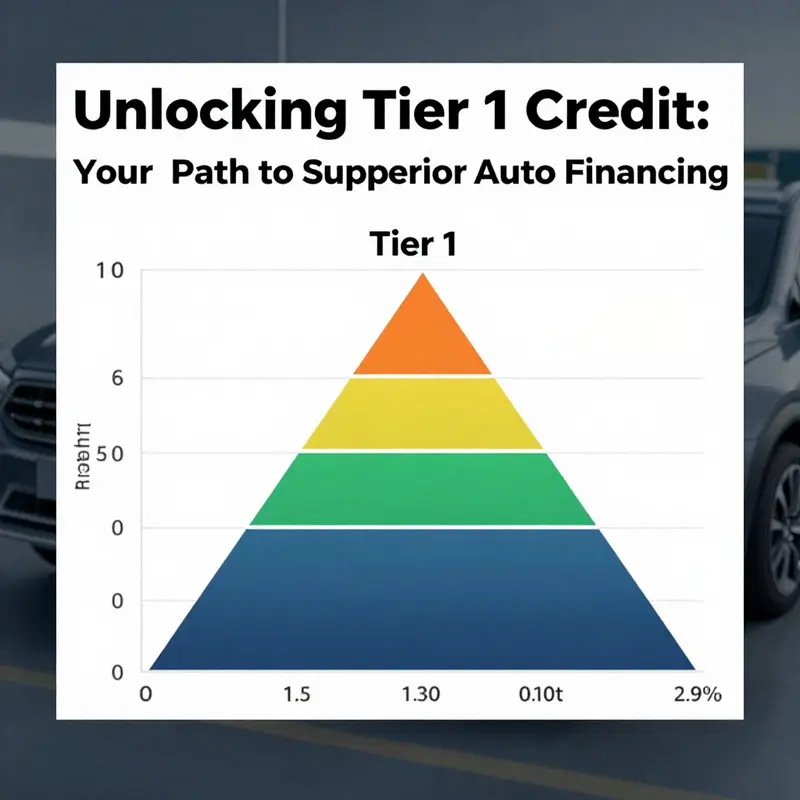
In the quiet math of car shopping, a single number can tilt the balance between wading through pages of terms and gliding into a favorable agreement. That number is your credit score, and when lenders label you as Tier 1, you are signaling a level of creditworthiness that changes the entire tone of a financing conversation. It is important to distinguish what Tier 1 means in auto lending from the similarly named tiers in the automotive supply chain. Tier 1 credit is a financial classification lenders use to describe the risk you present as a borrower. It is not a reference to the hierarchy of suppliers or parts. In practice, Tier 1 status translates into a smoother, more economical loan experience, with lower interest rates, more forgiving terms, and a wider menu of financing options. Yet the path to Tier 1 is not a single shortcut; it is a reflection of reliable financial behavior over time and a confluence of factors that lenders weigh when they price risk.
At its core, Tier 1 credit is the seal of confidence a lender assigns to a borrower. The most common benchmark is a high FICO score, a numeric shorthand that aggregates your payment history, current obligations, length of credit history, new credit inquiries, and the variety of credit accounts you manage. In many lender guidelines, Tier 1 is associated with excellent credit—scores typically in the upper ranges. A widely cited threshold in this context is 750 and above, though the exact cutoffs vary by lender and program. Some lenders may still reserve Tier 1 for 720 or higher, especially in markets where credit scoring models are nuanced or where promotional offers tilt toward the very top of the scale. The key point is not a single number, but the overall portrait of a borrower who has demonstrated consistent, reliable repayment behavior with minimal negative marks.
That portrait matters because auto financing sits at the intersection of risk and price. When a borrower is deemed Tier 1, the lender sees a very low likelihood of missed payments or default. That perceived low risk directly translates into tangible advantages. The most obvious is the interest rate: Tier 1 borrowers typically qualify for the lowest rates available in the lender’s menu. Even a small reduction in the rate can substantially reduce the total cost of the loan over its term, especially when the loan spans several years. Consider a scenario where two buyers with the same car and the same loan amount approach a lender. If one borrower carries Tier 1 credit while the other sits in a lower tier, the difference in pricing can run into hundreds, even thousands, of dollars over the life of the loan. The math is straightforward: lower rates compound into smaller monthly payments or extended terms without a dramatically higher total payment. Either outcome preserves money that can be redirected toward other financial priorities or future vehicle purchases.
The security a Tier 1 designation provides also nudges lenders toward greater flexibility. Approval odds rise as risk declines, and the approval process itself can feel less onerous. Some lenders extend more favorable loan terms to Tier 1 borrowers, such as longer repayment horizons that reduce monthly obligations or higher maximum loan amounts that enable buyers to finance more capable vehicles without demanding outsized down payments. There is also a tendency for better access to exclusive financing programs, including manufacturer incentives or promotions that are designed to reward prime borrowers. In practical terms, Tier 1 status can broaden the spectrum of options available at the dealership, from loan structures to term lengths and down payment requirements, while maintaining favorable pricing. It is not a guarantee of success in every case, but it does tilt the odds toward a smoother, more economical financing experience.
This favorable positioning, however, rests on the fidelity of your financial picture. Tier 1 is not a status you earn once and keep forever; it is earned anew with each credit check, each new account, and each payment cycle. Delinquencies, collections, bankruptcies, or a spike in credit utilization can erode Tier 1 standing quickly. A single late payment may not necessarily drop you out of Tier 1, but a pattern of late payments and a high balance relative to your limit can. Lenders also consider the breadth and depth of your credit history. A long history with on-time payments across different types of credit—installment loans, revolving credit, and perhaps a mortgage or auto loan—carries more weight than a short history with few accounts. The goal for potential Tier 1 aspirants is to build a track record that demonstrates consistency under varied circumstances, not just in a single moment of financial success.
The dialogue around Tier 1 often triggers questions about how to reach and maintain that level. It begins with credit score; but it also requires disciplined financial habits. Paying bills on time is fundamental; it is the most reliable signal a lender uses to forecast future behavior. Keeping credit utilization low—ideally well under 30 percent of available limits—indicates you are not overextended and can manage additional obligations without sacrificing existing commitments. A diverse, well-managed mix of credit accounts over a long period can further strengthen your profile, as it demonstrates the ability to handle different types of credit responsibly. Yet balance is essential. Opening too many new accounts in a short period can create hard inquiries and temporarily depress scores, potentially undermining Tier 1 status even for otherwise strong borrowers.
Beyond the mechanics of score and utilization, Tier 1 status is also about stability. Lenders look for predictable income and a stable employment history, as these reduce the risk of default due to income shocks. A consistent work history, steady earnings, and reasonable debt levels relative to income all buttress the case for Tier 1. The car loan itself should fit into a sustainable budget: the monthly payment should comfortably align with take-home pay after essential expenses and other debt service. When a borrower speaks the language of stability—steady job, predictable cash flow, responsible credit behavior—lenders hear a message of long-run creditworthiness that fits neatly into Tier 1 pricing and terms.
An important dimension of this topic is the variability across lenders and programs. The same borrower can be Tier 1 with one institution and only Tier 2 with another, depending on the lender’s risk appetite, the specific loan program, and the parameters of the offer. This is where the nuance becomes actionable. Prospective buyers should not assume a universal standard. Instead, they should shop around, compare offers, and read the fine print of rate quotes and promotional terms. It is also prudent to factor in how a given lender handles down payments, loan-to-value ratios, and prepayment options. A higher credit tier can sometimes be offset by a higher price tag on the car itself or by a promotional rate that applies only under certain conditions, such as financing through a specific program or meeting a minimum down payment threshold. The practical takeaway is simple: your credit tier opens doors, but you still need to negotiate the overall economics of the loan and the vehicle to achieve the best total cost.
For readers seeking a primer on how credit scores feed into auto loan pricing, one helpful resource is the overview from a leading credit bureau that explains how scores translate into lending decisions and pricing. This external perspective provides context for why Tier 1 matters and how different score bands influence lender behavior. While your experience will vary by lender and market, the underlying principle remains consistent: higher scores correlate with lower risk and better financing terms. Understanding this relationship can empower borrowers to target concrete actions that move them toward Tier 1 without waiting for a perfect score to appear overnight.
If you want a concise, accessible entry point on the topic, you can start with a deeper dive into the basics of credit scores and auto loans through the knowledge resources offered by the wider finance community. For readers who prefer a structured, step-by-step exploration of how to improve and protect Tier 1 status, consider exploring the knowledge hub that consolidates practical strategies and planning tips. It is a useful companion as you map out a plan to optimize your credit profile and your car financing options over time. Davis Financial Advisors knowledge hub.
As you navigate your options, remember that tier designations are a guide, not a guarantee. They reflect the lender’s current assessment of risk and price, which can shift with changes in your financial behavior, market conditions, and the specific terms of a loan program. The odds bend in your favor when you approach the process with clarity and a long-term view: keep payments punctual, manage debt prudently, and maintain a stable income picture. In the end, Tier 1 is not just a score; it is a story about reliability, balance, and the ability to translate fiscal responsibility into tangible benefits at the dealership and beyond. It is the alignment of your past behavior with your future borrowing needs, and it is the reason so many borrowers who reach Tier 1 notice a meaningful difference in the terms they can secure when financing a vehicle.
External resource: https://www.experian.com/blogs/ask-experian/credit-scores-and-auto-loans/
Tier 1 Credit Unlocked: How the Highest Auto Loan Scores Shape Rates, Terms, and Options
Tier 1 credit is a term that travels with the car loan market, yet many buyers misinterpret it as something to do with vehicle brands or the dealership network. In truth, Tier 1 is a financial classification. It describes a borrower’s creditworthiness from the lender’s point of view. It is not about the automotive supply chain or who makes your brakes; it is about risk. When you hear that someone has Tier 1 credit, think of a highly favorable blend of a solid score, a clean payment history, and a stable financial footprint. This is the kind of profile lenders see as the least risky, the profile that makes the lending equation tilt in the borrower’s favor. The practical effect is that Tier 1 status opens a corridor of options and advantages that simply aren’t available to borrowers with weaker credit.
The most common shorthand for Tier 1 in auto financing is a very high FICO score, often cited as 780 or higher, though the exact cutoff can vary from lender to lender. The research behind this chapter notes that some lenders may classify Tier 1 as 720 or above, depending on their internal models and the competitive landscape. Beyond the number on the scorecard, Tier 1 is anchored in a track record: on-time payments, a long enough history with credit, and a balance between different kinds of credit that shows you can manage debt responsibly. A low credit utilization ratio and a stable income stream are part of the picture as well. Put simply, Tier 1 is a composite judgment: you have earned a reputation for reliability in the eyes of lenders.
Because Tier 1 borrowers are seen as low risk, lenders extend the most favorable financing conditions to them. The most tangible impact is on interest rates. Rates for Tier 1 borrowers are typically meaningfully lower than those offered to borrowers at the other end of the credit spectrum. The difference can be described as several percentage points, which translates into lighter monthly payments and a smaller amount of interest paid over the life of the loan. In practical terms, that means a Tier 1 buyer can manage a higher vehicle price while still keeping monthly obligations within a comfortable range, or secure a more affordable car with a lower total cost of ownership. The math is straightforward: a lower rate reduces both the monthly outlay and the total finance charges across the term of the loan.
Loan terms themselves tend to respond to Tier 1 status as well. Lenders often extend more flexible terms to high-score borrowers. You may see longer repayment horizons offered without the same perceived risk penalty that someone with lower credit would face. A common pattern is the availability of longer loan durations, such as 72 months or even 84 months, for Tier 1 customers. The upside is clear: lower monthly payments can make a more expensive vehicle affordable in the short term. The flip side is that the longer the term, the more interest accrues over time, even if the rate is minimal. This is not a paradox so much as a reminder that more favorable rates do not automatically erase the cost implications of extending a loan.
Down payment requirements also tend to relax for Tier 1 borrowers. With strong credit, lenders may be more comfortable offering smaller down payments or even waiving some upfront costs, especially when the borrower has a robust debt-to-income profile and a stable employment history. The willingness to provide generous terms sometimes extends to other financing conveniences, such as manufacturer incentives or promotions that are reserved for top-tier credit customers. These perks are not guaranteed but represent the kind of preferential treatment that high-scoring buyers can reasonably expect in a competitive market. It is important to recognize that such incentives are often tied to specific loan products, model years, or dealership programs, and they may require meeting certain criteria beyond the credit score alone.
The lender’s confidence that a Tier 1 borrower will repay on time translates into more than lower rates and longer terms. It can also show up as reduced or waived origination fees, better rewards or loyalty programs tied to the loan, and a smoother path through the underwriting process. In a market where every basis point and every fee matters, those small savings compound over the life of the loan. The cumulative effect can be substantial, particularly for first-time buyers or customers who are financing a more expensive vehicle.
Yet it would be naive to suggest that Tier 1 status guarantees the best possible deal in every situation. The research notes that while Tier 1 borrowers consistently secure favorable terms, other factors still weigh in. The price of the car, the loan-to-value ratio, the desired term, and the borrower’s overall financial picture all interact with credit tier. A very high score can be overshadowed by a high purchase price relative to the vehicle’s expected value, or by excessive overall debt. Similarly, promotional rates labeled as “special” or “distressed offers” may require meeting conditions that can offset the apparent benefit of a low rate. In practice, Tier 1 is a solid foundation, but it does not replace the need to compare offers, read the fine print, and consider the total cost of financing rather than the monthly payment alone.
Understanding how Tier 1 interacts with the rest of the auto loan landscape helps demystify the financing process. It also clarifies why you should not chase a Tier 1 designation at the expense of other important factors, such as loan term length, total interest, and the vehicle’s price. A lower rate for a longer term can sometimes result in a higher overall cost than a shorter-term loan with a modest rate. The key is to run the numbers for your specific situation, ideally with a few different scenarios. A prequalification or a soft pull can give you a sense of where you stand without affecting your credit score, and it can reveal the relative benefits of different term lengths and down payment levels.
For readers who want to root their decisions in reliable guidance, it helps to keep the bigger picture in view. Tier 1 is a signal of low risk from the lender’s perspective. It does not exist in a vacuum; it interacts with the car price, the loan structure, and any lender-specific programs. It also interacts with your broader financial behavior. On-time payments on existing debt, modest new credit activity, and sustained utilization within healthy bounds signal that you can maintain Tier 1 status even as you take on a new loan. Conversely, incurring new debt or missing payments can erode the advantages before you even finalize a car purchase. The journey to Tier 1 status, and the maintenance of it, is a discipline that extends beyond a single loan decision.
The practical takeaway for readers is simple but powerful: if you can qualify for Tier 1 credit, you gain a credible advantage in auto financing that can translate into more affordable monthly costs, greater flexibility in selecting a vehicle, and access to promotional opportunities that align with high credit quality. But you should approach the process with vigilance and a clear sense of your total cost of ownership. Focus on the full loan equation, not just the headline rates. This means evaluating the car’s price, the length of the loan, any down payment, trade-in value, interest charges, and potential fees. It also means comparing offers from multiple lenders to identify the terms that truly suit your financial priorities.
If you want to deepen your understanding of how auto lending works in practice, you can explore a centralized resource that aggregates financial knowledge and insights. Knowledge offers context on the broader financial decisions that accompany vehicle ownership and loan planning. This broader perspective is especially helpful when you are weighing whether to push for Tier 1 status or balance other considerations such as budgeting for insurance, maintenance, and future upgrades.
As you navigate the decision to pursue Tier 1 credit or to capitalize on it if you already have it, remember that the landscape is nuanced. The same score can yield different deals in different markets and with different lenders. The core truths remain consistent: Tier 1 credit signals low risk, which in turn makes the cost of borrowing lower and the path to favorable loan terms smoother. Yet the path is not a guarantee, and a disciplined, informed approach—grounded in careful comparison and mindful budgeting—remains essential.
For readers seeking authoritative guidance on consumer protections around auto lending, consult the Consumer Financial Protection Bureau’s resources on auto loans. You will find a framework for understanding the disclosures, protections, and consumer rights that apply to financing a vehicle. External resource: https://www.consumerfinance.gov/owning-a-home/auto-loans/.
Final thoughts
Securing Tier 1 credit in auto financing is a vital component for individual car buyers, dealerships, and fleet buyers wanting to achieve financial success in their vehicle purchases. By understanding the nuances of Tier 1 credit and its advantages, borrowers can position themselves to take full advantage of lower interest rates, improved loan terms, and enhanced financing options. Maintaining a strong credit profile not only benefits individual buyers but also aids dealerships in structuring competitive financing offers, creating a win-win scenario in the marketplace. As the auto financing landscape continues to evolve, the importance of Tier 1 credit will undoubtedly remain a key factor in achieving favorable outcomes.