
When considering auto loans, OneMain Financial stands out as a viable option, especially for individual car buyers with less-than-perfect credit scores. Serving not just individuals, but also auto dealerships, franchises, and small business fleet buyers, OneMain offers various loan products designed to meet diverse financial situations. This article delves into the essentials of OneMain Financial’s auto loans, covering key features, eligibility requirements, and the application process. Furthermore, we will compare OneMain’s offerings with other lending institutions, allowing potential borrowers to make informed decisions by understanding their options comprehensively.
Auto Financing with Imperfect Credit: How OneMain Financial Shapes Access, Terms, and Trade-offs
Automotive lending sits at a crossroads where affordability, access, and risk intersect. For many buyers who carry marks of past credit challenges, the road to financing a car can feel blocked by the walls of traditional lenders. In this landscape, OneMain Financial occupies a distinct lane. It positions itself as a lender willing to extend auto credit to borrowers who may not meet the strict thresholds of larger banks or prime credit unions. The result is an option that can turn a vehicle purchase into a feasible plan, even when credit histories are less than pristine. Yet the route comes with its own set of dynamics—terms that reflect risk, a price tag that can be higher than the market norm, and a service model that emphasizes in-person interaction as much as speed. Understanding how OneMain operates within this space helps borrowers evaluate whether its auto loans align with their financial realities and long-term goals.
At the core of OneMain’s auto loan offering is a straightforward premise: extend fixed-rate, direct loans for consumers who want to buy a new or a used vehicle, including those whose credit histories look imperfect to other lenders. The loans themselves are non-revolving. In practical terms, once a borrower signs up, the debt is owed as a fixed agreement with a single, unchanging rate for the entire term. This structure provides a rare degree of predictability in a space where monthly payments can otherwise fluctuate with variable-rate offers. The fixed-rate nature matters not just for budgeting but also for the psychological ease of knowing that the monthly obligation won’t morph with market tides. In many OneMain cases, the original principal balance comes in around the mid-teens in thousands of dollars. The approximate average original balance—about fifteen thousand dollars—offers insight into typical car purchases financed through OneMain: not a luxury purchase, often not a brand-new fleet vehicle, but a solid, reliable transport solution that becomes the borrower’s personal asset and a platform for rebuilding credit over time.
Terms for these loans reflect a balance between the borrower’s needs and the lender’s risk calculus. OneMain typically extends fixed original terms in a broad range—from roughly two years up to six years, or 24 to 72 months. This spread provides flexibility for borrowers who want smaller monthly obligations and those who can tolerate a longer commitment to reduce their monthly payments. The fixed term also helps in organizing a repayment plan that aligns with a borrower’s income cycle, seasonal earnings, or other financial pressures. Because the loan is fixed, the schedule is clear: a borrower knows when each installment is due, without surprises from rate resets or payment recalculations tied to broader rate movements. Yet the borrowing cost is not just about the payment size. The interest rate attached to OneMain auto loans tends to be higher than the rates offered by many traditional banks or credit unions. This is not an arbitrary choice but a reflection of the higher credit risk presented by borrowers who have weaker credit scores or more challenging credit histories. In the eyes of lenders, risk is priced into the rate, and the resulting APR, while higher, is meant to compensate for the risk of default. For prospective borrowers, this underscores the importance of a careful affordability assessment before committing to a loan that will shape household finances for years to come.
Another dimension to OneMain’s auto lending is accessibility. OneMain has built a network of physical branches across the United States. This branch-based model is more than a convenience; it is a channel that allows applicants to engage in person, obtain immediate pre-approval decisions, and navigate the closing process with a human touch. For individuals who are not comfortable with online lending portals or who prefer face-to-face interactions to discuss questions about terms, collateral, or the finer points of the loan contract, the in-person experience can reduce anxiety and demystify the paperwork. The availability of an in-branch interaction can translate into faster decisions, a sense of accountability, and a pathway to understand all the nuances of the agreement in a structured setting. And in practice, many borrowers report being able to move from application to approval and into the vehicle purchase stage within a shorter timeline than they might expect from online-only lenders. The immediacy of some approvals makes OneMain an attractive option for buyers facing a tight vehicle delivery window or those who need to secure financing quickly to close a deal.
That said, a clear caveat accompanies the in-person approach: the pricing and terms reflect the lender’s underwriting assessment of risk. Compared with prime lenders, the interest rates and potential costs can be higher. Borrowers should not only compare the monthly payment but also understand the total cost of the loan over its life. The sticker price of a loan does not end at the monthly obligation; it includes interest accrual, any processing or administrative costs that may appear in the contract, and any fees that the lender may apply to the loan. OneMain does not advertise explicit origination fees for auto loans on its public-facing materials, which can ease some concerns about upfront costs. However, the absence of a stated origination fee does not guarantee that the loan is fee-free. The contract should be read with care to identify any up-front or ongoing charges and to verify that the terms you see are truly the terms you will be bound to for the life of the loan. The practice of highlighting fixed rates, straightforward repayment timelines, and a dense emphasis on accessibility through branch locations must be balanced with a careful review of the contract details to avoid surprises after approval.
In weighing this option, it helps to place OneMain’s auto loans in the broader ecosystem of auto financing. Traditional banks and credit unions often target borrowers with stronger credit profiles, offering lower rates and, in some cases, lower fees. Vehicle buyers with good credit may prefer those lenders for the better balance of rate and total cost, plus potential incentives or loyalty programs. For borrowers whose credit is less than ideal—perhaps a past late payment, a few collection accounts, or a score that sits in the subprime range—OneMain’s value proposition can be compelling when speed, accessibility, and the possibility of building a track record of repayment are prioritized. The decision often hinges on two intertwined considerations: the borrower’s capacity to manage higher monthly payments within their budget and the long-term goal of improving credit health through disciplined, timely payments. It is not merely about obtaining a loan but about choosing a financing partner that can align with a caller’s life circumstances and future improvement trajectory.
The practical implications of these terms come into sharper relief when a borrower sits down with a calculator. A loan estimate becomes more than an abstract set of numbers; it translates into real monthly commitments that must fit within rent or mortgage payments, utility bills, insurance, fuel, maintenance, and other recurring expenses. When one compares OneMain’s offers with other options, it is prudent to compute different scenarios. A longer term may lower the monthly payment, but it increases the total interest paid over the life of the loan. A shorter term raises the monthly payment but often lowers the total cost. The borrower’s income stability plays a pivotal role in choosing between these trajectories. The lender’s fixed-rate structure helps prevent payment surprises, but it does not shield the borrower from the consequences of a miss or a late payment, which can have a lasting impact on credit health and the ability to qualify for favorable financing in the future.
OneMain’s positioning as a lender for borrowers with imperfect credit has a broader social and economic dimension. It serves a segment of the market that might otherwise be left without access to vehicle financing, and in many cases, the vehicle becomes a credible mechanism to maintain employment, commute to work, or transport dependents to school and activities. In such contexts, owning a vehicle is not merely about convenience; it is a practical necessity that can enable steady income and daily functioning. The presence of a lender that can offer direct auto loans with fixed terms and an in-person application process can be a meaningful bridge to stability. Yet this bridge comes with caveats: higher prices to reflect risk, and a repayment commitment that borrowers should approach with a robust budgeting framework and a candid assessment of how a potential economic shock—such as a layoff or a medical emergency—could affect the ability to meet monthly payments consistently.
For readers who want to anchor their decision in a broader financial literacy framework, it can be useful to explore resources that discuss how to evaluate lending options in a structured way. A reliable starting point is a general knowledge hub that compiles insights on budgeting, credit health, and responsible borrowing. The chapter on this topic offers readers a way to connect the practicalities of loan terms with the larger aim of financial resilience. You can explore that resource here: knowledge hub.
The cautionary frame is essential. Borrowers should not approach OneMain or any lender with the expectation that a loan is a quick fix for underlying cash-flow problems. Auto financing, even when accessible, should be paired with a realistic plan for ongoing expenses, a maintained vehicle, and a strategy for addressing any credit concerns that could affect future financing. A high-rate loan can be a temporary solution if it is paired with stable income, a plan to reduce debt, and a path toward improving credit scores through timely repayments. In contrast, if the loan becomes a source of repeated financial stress, the risk of missed payments increases, which can trigger more expensive debt cycles and further credit deterioration. The balance between borrowing to secure reliable transportation and ensuring long-term financial health is delicate and requires vigilance and discipline.
From a borrower’s perspective, the decision to pursue OneMain auto financing becomes part of a broader personal finance philosophy: how to obtain the necessary asset with a price that can be managed across fluctuating incomes, and how to protect future affordability by building a repayment history that supports better terms down the road. This philosophy includes questions about whether a new or used vehicle better serves needs, how long the vehicle is expected to stay in service, and what maintenance costs are likely to arise as the vehicle ages. OneMain’s model, with its fixed-rate approach and branch-based support, offers a sense of security in the process, especially for individuals who value direct human interaction, clear terms, and the reassurance of a structured repayment path. It also forces a careful calculation of all costs involved, including interest, potential fees, and the total cost of ownership over the life of the loan.
For those seeking practical guidance beyond the mechanics of the loan itself, the broader context of auto financing includes understanding how lenders assess risk and how that assessment translates into real-world terms. Credit scores, debt-to-income ratios, employment stability, and other financial indicators all influence the decision-making process. OneMain, by design, seeks to translate these indicators into a loan offer that is feasible and realistic for a borrower who may be rebuilding credit. The emphasis on fixed payments and a predictable amortization schedule gives borrowers a reliable framework within which to operate. It also means that the borrower’s ability to maintain consistent income becomes a central pillar of the loan’s viability. In this sense, the loan is not merely a contract to purchase a vehicle; it is a financial instrument that interacts with the borrower’s entire income and expenditure ecosystem.
From the perspective of the broader market, OneMain’s approach reflects a pragmatic recognition that not all borrowers fit the mold of prime lending. In a world where transportation is often essential to employment, access to financing becomes a matter of social mobility. The lender’s willingness to work with imperfect credit profiles helps preserve access to mobility for a segment of the population that might otherwise be excluded. Yet with that access comes responsibility: borrowers must be prepared to manage higher borrowing costs and to maintain a disciplined repayment plan. This balance—access to meaningful financing coupled with clear terms and a call to mindful budgeting—defines OneMain’s niche in auto lending and frames the practical realities for anyone considering its offers.
For readers who want to ground their understanding in a concrete reference, it’s helpful to review current offerings and terms directly from the source. Detailed information about rates, eligibility, and specific product features can change over time, so consulting the lender’s official pages is part of prudent decision-making. If you wish to explore the latest policy details and loan conditions, you can visit the official auto loan information page. This external resource provides the most up-to-date treatment of rate structures, term lengths, and eligibility criteria, helping readers form a current, apples-to-apples comparison with other lenders. https://www.onemain.com/loans/auto-loans
Riding the Edge of Credit: How Auto Loans from OneMain Financial Shape Access, Costs, and Confidence for Borrowers with Imperfect Histories
Riding the Edge of Credit: How Auto Loans from OneMain Financial Shape Access, Costs, and Confidence for Borrowers with Imperfect Histories
Enter the world of auto lending where the traditional gates of big banks and pristine credit scores swing a little wider for people who carry a less-than-perfect credit history. The landscape can feel uneven, yet it is navigable with the right lender, the right terms, and a clear sense of what one is willing to trade off for speed, flexibility, and the opportunity to drive away in a vehicle that meets daily needs. OneMain Financial sits squarely in this space, offering auto loans that acknowledge the realities of imperfect credit while attempting to open doors that might otherwise stay closed. The story of what it means to borrow from this lender, and how the process unfolds from eligibility to the final signature, is a useful case study for readers weighing their options when a vehicle is not a luxury but a necessity.
At the core, OneMain Financial does auto loans with a distinctive emphasis. The lender has framed its products around borrowers who may not qualify for the best terms at traditional banks or credit unions. In practical terms, this means loans that can help someone purchase a new or used vehicle when other financing options are out of reach or require a longer wait. The loans arrive with a mix of practical advantages—relatively quick decisions, flexibility in repayment, and a willingness to work with customers who have a limited or blemished credit history. The core trade-off is intuitive: access can be easier, but the price of that access tends to be higher in terms of interest rates and fees. This dynamic, while common in specialty lenders, is worth unpacking with care, so borrowers can weigh the total cost of ownership—the sum of monthly payments, interest, and any additional charges—against the immediate value of getting on the road sooner.
The structure of OneMain’s auto loans reflects a practical balance between accessibility and accountability. Loan amounts typically span from a few thousand dollars to tens of thousands, designed to cover a wide range of vehicle choices—from modest commuters to family vehicles with more durable long-term needs. Both new and used vehicles are eligible, which broadens the scope for buyers who may be shopping with limited down payment options or a preference for a loan that aligns with the car’s expected life. For many buyers, that flexibility is a crucial advantage, especially when a vehicle’s condition or the timing of a purchase aligns imperfectly with other financing timelines. The ability to secure financing for a non-commercial vehicle—whether it’s a sedan, a crossover, or a pickup intended for everyday life rather than business use—ensures that the loan product remains relevant to a broad spectrum of borrowers rather than a narrow subset of car shoppers.
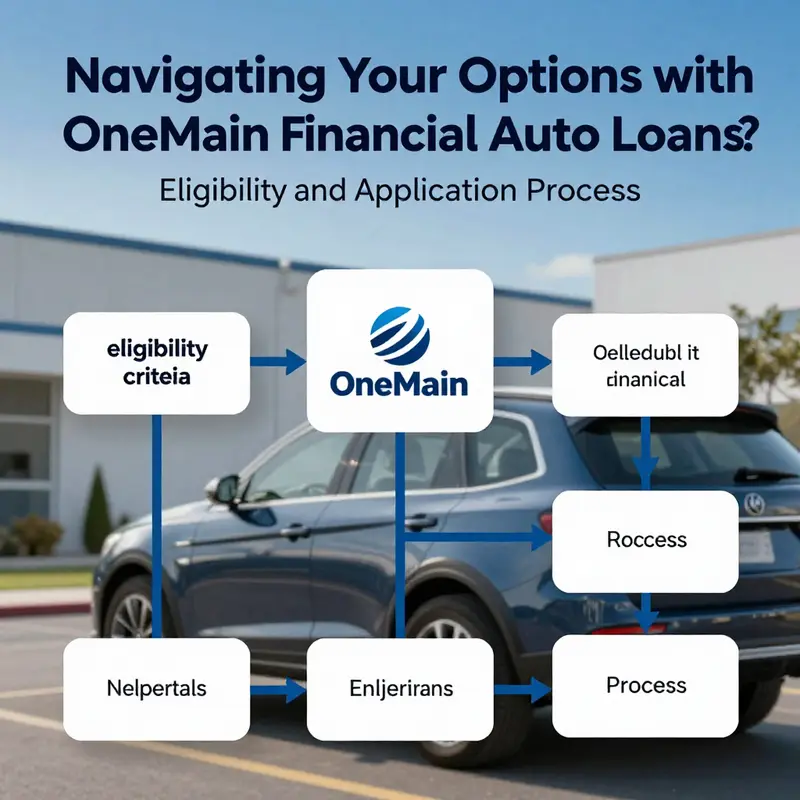
A distinctive advantage of OneMain’s approach is the accessibility of the application process. The chain of steps—from locating a nearby branch to the moment of signing a loan agreement—has been designed to minimize friction for applicants who may be balancing precarious incomes or fluctuating cash flows. The journey begins with a practical first step: find a local OneMain location using the company’s locator tool. The in-person application is not an afterthought; it is the standard path, and that in-person aspect can be a comfort to applicants who prefer to bring documents directly, ask questions in real time, and see the process through with a loan officer who has a clear view of the local lending environment. The required documentation typically includes identification, proof of income, and basic details about the vehicle—its make, model, year, and mileage. While the exact documents can vary by location, the general pattern remains consistent: proof of reliable income, valid identification, and information about the vehicle shape the early assessment.
OneMain also distinguishes itself by offering a pre-qualification step that does not trigger a hard credit inquiry. This non-intrusive pre-qualification service is a crucial feature for many borrowers who want to estimate potential rates and terms without affecting their credit score. The value here is twofold. First, it provides a realistic sense of what the borrower might be offered if they choose to proceed with a full application. Second, it avoids a false sense of certainty; pre-qualification is not a guaranteed approval, but it sets expectations and allows a shopper to compare options and plan a budget before committing to a formal decision. The gradual, transparent progression from pre-qualification to loan offer reflects a lending philosophy that respects the borrower’s time and financial realities, while still upholding the lender’s risk controls.
The eligibility landscape, while welcoming to those with challenging credit histories, is not a blanket invitation. The numbers that guide approval decisions are anchored in credit history, income stability, and the practicalities of repayment capacity. A key threshold often cited in the broader context of this lender’s auto loans is a credit history profile that accommodates scores in the vicinity of 619 or lower. This operational focus is intentionally inclusive, but it carries a clear consequence: borrowers with weaker credit can expect a different pricing structure than those with stronger credit data. Interest rates—or APRs—tend to be higher on these loans, reflecting the increased risk that accompanies lending to borrowers with limited or blemished credit. Fees may also be higher than those charged by many mainstream lenders. An upfront cost can range up to a significant portion of the loan, with sums like 10% or a flat fee near $500 cited in various jurisdictions as possible. Such figures are not universal absolutes; they shift with state regulations and the precise terms of the loan, but they signal a reality that prospective applicants should scrutinize closely.
Proof of income is another pillar in the eligibility framework. Lenders want to see that the borrower has a dependable stream of revenue that supports monthly payments over the life of the loan. Pay stubs, tax returns, bank statements, or other verifiable income sources can satisfy this criterion. The emphasis on steady income aligns with a broader underwriting principle: loan servicing is more sustainable when the borrower’s cash inflow is predictable. Valid driver’s licenses are a non-negotiable requirement, since the loan is inseparably linked to vehicle ownership and the legal ability to operate the vehicle on public roads. Vehicle information—make, model, year, and mileage—serves as a practical anchor for the loan size, interest rate, and the loan-to-value relationship. A vehicle’s age and condition feed into risk assessment, and the lender uses this data to calibrate coverage levels, residual values, and anticipated maintenance costs that could impact a borrower’s capacity to meet monthly obligations.
The application process, while straightforward in its core steps, warrants careful attention to the sequence and expectations. After identifying a local branch, the applicant completes the in-branch application, providing the necessary documents and the vehicle details. The next step is the pre-qualification, a soft inquiry that helps determine potential rates and terms without penalizing the borrower’s credit score. If the borrower and the lender reach alignment on price, terms, and vehicle choice, the loan offer follows. An approved loan offer lays out the essential terms: the loan amount, the interest rate, and the repayment period. It is here that the borrower can evaluate the financial fit—the monthly payment, the total cost of the loan over its full term, and how the amortization schedule aligns with other debt obligations and long-term financial goals. Upon accepting the offer, the borrower completes the purchase and proceeds either with a dealer or a private seller, depending on the buying path chosen and the contingencies of the vehicle purchase process.
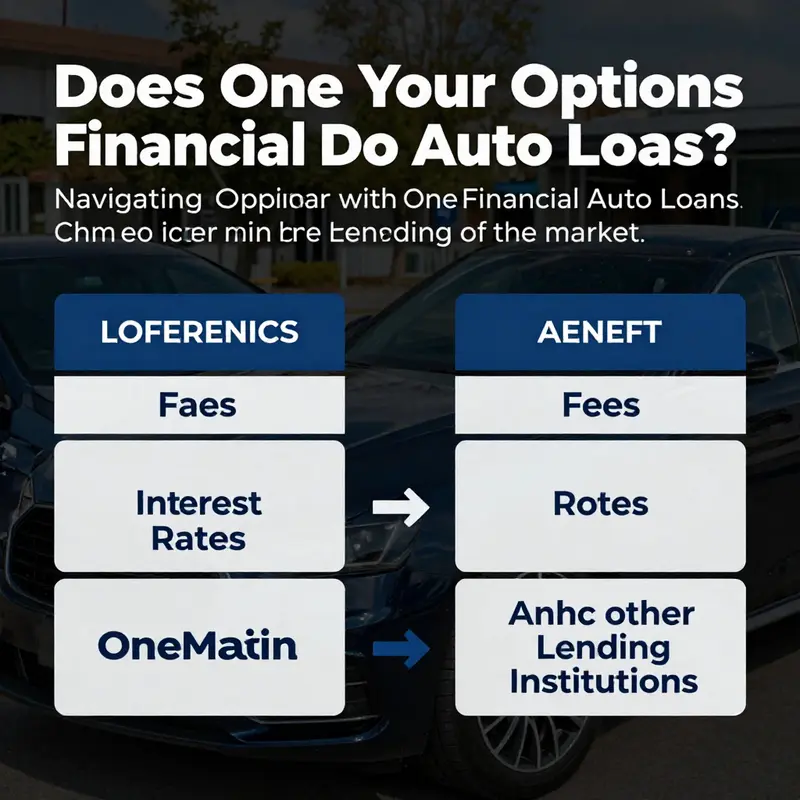
There is a practical calculus embedded in this journey that borrowers should perform before signing. The opportunity to move quickly—sometimes achieving a same-day approval—must be weighed against the total cost of financing. APRs for borrowers with weaker credit histories tend to be higher than the market average. That isn’t a shortcoming so much as a reality of risk-based pricing: the lender is compensating for higher credit risk, and that compensation manifests as higher interest and possibly higher upfront charges. The trade-off is tangible: you gain speed, accessibility, and a streamlined process for getting into a vehicle you need now, but you also accept higher long-run costs. The disciplined borrower will engage in a careful cost-benefit analysis, comparing the OneMain offer with other financing avenues—credit unions, traditional banks, and even dealer financing—to determine which combination of rate, term, and total outlay yields the most sustainable path for their situation.
A broader perspective helps illuminate why a lender with this profile remains relevant. For many buyers, the ability to obtain financing without waiting weeks or months is not mere convenience; it is a matter of daily necessity. Transportation is a lifeline for work, childcare logistics, and community participation. When credit history is imperfect, the risk of being priced out of the market altogether becomes real. A lender that can bridge access, while offering a clear process and transparent terms, can be powerful for borrowers who want to repair or rebuild credit through positive repayment experiences, assuming they approach the loan with a well-structured plan. It is not a universal solution, and it requires vigilance: you must evaluate whether the vehicle you intend to purchase and the loan you are offered align with your actual capacity to pay, both now and in the months ahead.
To place this discussion in a richer context, consider how consumer finance resources frame the decision-making process. A broader knowledge base of finance topics—found in accessible, practical formats—can offer shoppers perspectives on budgeting, debt management, and risk mitigation. Readers who want to explore these wider topics can consult resources that summarize the fundamentals of credit, budgeting for transportation, and planning for future financial health. For a concise primer on related concepts and practical tips, you can explore the Knowledge hub, which aggregates insights on money management and personal finance. Access: Knowledge hub.
The chapter thus far has focused on the mechanics and implications of obtaining an auto loan through a lender that serves a niche of borrowers who may face higher hurdles in traditional markets. The nuance lies not merely in the existence of an option but in recognizing the conditions under which that option makes sense. The borrower must assess the cost trajectory across the life of the loan, consider the vehicle’s total ownership costs, and align the financing with a realistic plan for income stability and debt management. In practical terms, this means running numbers that extend beyond the monthly payment. It means accounting for insurance, maintenance, fuel, potential increases in interest rates over time, and the possibility of refinancing if circumstances improve. The goal is not to secure the fastest financing possible but to secure a payment that fits within a sustainable budget while enabling the essential outcome—a reliable vehicle and a pathway to stronger credit standing over time.
The decision to pursue an auto loan through a lender with a credit-focused audience should also be understood in the broader arc of personal finance strategy. For some borrowers, the loan can be a stepping stone toward credit repair: consistent, on-time payments over a period can provide positive historical data that improves future lending prospects. For others, it might be a pragmatic bridge—allowing them to replace a failing vehicle or to seize an opportunity presented by low down payment, favorable dealer incentives, or an urgent transportation need. In every case, the borrower should approach the process with a clear plan for repayment, a realistic appraisal of what the vehicle will cost in total, and a readiness to adjust the plan if life circumstances shift.
The initial research results that ground this discussion highlight a key truth about auto financing in the modern era: the market offers a spectrum of options, each calibrated to different credit realities and different life situations. A lender that specializes in auto loans for borrowers with imperfect credit does not promise a perfect bargain. It promises access, speed, and a structure that can accommodate a range of credit profiles, balanced by a careful reminder that higher costs accompany higher risk. The decision to apply, pre-qualify, or proceed to a formal loan agreement should be a deliberate one—an intentional choice shaped by a candid assessment of the borrower’s budget, goals, and tolerance for financial variability over the loan term.
As you close the loop on this narrative, you may find it useful to consult broader financial literacy resources that illuminate the underpinnings of credit, debt, and vehicle ownership. The goal is not to prescribe a single path but to illuminate the choices and consequences in a way that helps borrowers approach auto financing with clarity and confidence. The journey through eligibility, application steps, and eventual loan terms reveals a pragmatic truth: when credit is imperfect, strategic choices—and a willingness to invest time in understanding the terms—can empower a borrower to secure a vehicle and lay groundwork for future financial resilience. In this sense, OneMain’s auto loans represent a practical tool within a wider toolkit for navigating credit repair, debt management, and everyday transportation needs.
For readers who want to explore related themes beyond auto loans, the knowledge hub mentioned earlier can serve as a useful starting point for broader consumer finance discussions. The hub aggregates guidance on budgeting, prioritizing debt repayment, and evaluating financing options in a way that complements the concrete facts about a specific lender’s offerings. By balancing the concrete details of eligibility and process with the broader narrative of personal finance health, readers gain a more holistic sense of how a decision about auto financing can fit into larger financial goals.
External resources can provide additional confirmation and nuance. For a comprehensive overview of auto loan offerings, terms, and eligibility considerations, you can review the official auto loans information provided by the lender’s site. This external reference helps situate the discussion within the lender’s own framework and updates. External resource: https://www.onemainfinancial.com/auto-loans/ .
null
null
Final thoughts
In summation, OneMain Financial presents a unique approach to auto lending, particularly catering to individuals and small businesses that may face challenges with traditional lending avenues. By offering flexible repayment terms and a straightforward application process, OneMain serves as a competent partner for those seeking to finance a vehicle. However, potential borrowers should take into consideration the higher rates and fees associated with their loans. Evaluating all options and understanding the terms is critical in making an informed choice that aligns with one’s financial goals.