

Understanding auto finance is crucial for anyone looking to purchase a vehicle, whether as an individual buyer, a dealership, or a small business in need of a fleet. This article unravels how auto finance streamlines the car buying process, making it accessible and efficient. Each chapter explores key aspects—from the core mechanisms that drive consumer purchases to the latest innovations supporting electric vehicles, as well as the regulatory landscape that ensures financial stability. Delving into each area provides insight into how auto finance serves as an integral pillar in the automotive industry, establishing pathways that enhance sales efficiency and reduce barriers to vehicle ownership.
Chapter 1: Fueling Access to Cars—The Core Mechanisms of Auto Finance in Consumer Purchases

Auto finance stands behind most modern car purchases, acting as the connective tissue between a consumer’s aspiration for mobility and the actual acquisition of a vehicle. It is not merely a set of lending practices but a holistic system that aligns the cash realities of households with the energy and flexibility of contemporary transportation. When a consumer eyes a car, the price tag is only part of the equation. The ability to convert that price into a sustainable payment plan determines whether ownership becomes a practical possibility or remains a distant goal. In this sense, auto finance is a market engineer, shaping demand by translating vehicles from high-upfront investments into accessible, affordable installments, and, increasingly, into new forms of access that reflect changing urban lifestyles. The core mechanisms—installment loans, leasing agreements, and a spectrum of credit products tailored to different financial profiles—work in concert to reduce the barrier to entry while preserving the structure that lenders require for risk management. The result is a dynamic ecosystem in which consumer choice, dealer viability, and the broader auto industry can move in tandem rather than at cross purposes. Themodern consumer increasingly expects both speed and customization from any financial interaction. Digital tools have accelerated the pace at which applications are evaluated and decisions issued, transforming what used to be a lengthy, paper-heavy process into a streamlined experience. Yet beneath the convenience lies a careful balancing act: lenders must reconcile flexible consumer options with disciplined underwriting, ensuring that monthly payments fit a household budget and that risk remains manageable for the financial system as a whole. In this chapter, we explore how the core mechanisms function as the backbone of consumer auto procurement, while also hinting at how these mechanisms are evolving in response to broader shifts toward sustainability, digital innovation, and inclusive finance. The upfront cost barrier is not simply about a price tag; it is about aligning a vehicle’s economic lifetime with a buyer’s income flow, future earnings, and risk tolerance. When this alignment is achieved, ownership becomes not a burden but a platform for mobility, opportunity, and social participation. The consumer’s journey starts with a choice among financing pathways, each with its own rhythm and expectations. A straightforward purchase with cash remains the benchmark of financial certainty, but it is increasingly rare for many households. The installment loan, which spreads the purchase price over a fixed term with a regular monthly payment, is the most familiar path. The consumer benefits from predictable budgeting, while the lender gains from a structured amortization schedule and the ability to price risk through interest rates that reflect creditworthiness, term length, and down payment. The length of the term matters: longer terms reduce monthly payments but increase total interest, so the decision becomes a negotiation between affordability and cost. In contrast, leasing offers access without ownership, typically for a fixed term and mileage cap. The lessee pays for use rather than ownership, with the option to renew, upgrade, or return the vehicle at the end of the term. For some consumers, leasing can align with shorter planning horizons, higher monthly reliability in maintenance, or a preference for newer models on a regular cycle. The trade-offs are nuanced: mileage restrictions, potential penalties for excess wear, and the absence of residual value accrual can influence long-run cost comparison. Between these two poles, a range of credit products can be structured to address different situations. Some packages blend down payments, trade-in values, and tiered interest structures to accommodate first-time buyers with thin credit histories, while others offer tailored payment schedules that align with irregular income streams or seasonal earnings. The variety exists because consumer life is diverse. The role of specialized institutions—auto finance companies and finance houses—extends beyond merely extending credit for vehicle purchases. These entities often extend credit for associated expenditures, such as electronics, durable goods, or even property-related lending within broader financial portfolios. Their expertise in structuring long-term financing solutions, through extended-term loans or more sophisticated securitization approaches, helps stabilize liquidity in the auto finance ecosystem and supports the dependable repayment schedules that families rely on. The existence of these specialized lenders enables a smoother flow of capital through the automotive value chain. Dealers can move inventory with greater confidence, knowing there are financing options that can match a customer’s affordability. Banks and non-bank lenders can diversify their asset mix and manage risk through diversified product structures. Yet the environment is not purely formal. In many regions, informal credit channels still play a recognizable role in expanding access to mobility, especially where formal institutions have limited reach. Informal credit markets can step in to bridge gaps when individuals face barriers to traditional financing, providing small and flexible lines of credit to smooth seasonal income or to fund essential purchases when formal channels are slow. This reality underscores a critical design principle for auto finance: inclusion. A robust auto finance framework recognizes and integrates the reality that households live with a mix of formal and informal resources and seeks to channel as much as possible into safe, regulated channels that enhance financial resilience rather than undermine it. The North Star guiding policy and practice here is risk control. Financial regulators and industry players are continually refining the architecture that guards against mis-selling, fraud, and default spikes. Transparent disclosures, responsible lending standards, and robust data analytics form the backbone of this protective layer. The arc of auto finance over the last decade has also been shaped by digital transformation. Online applications, instant decisions, and digital verification processes reduce friction, but they also heighten the importance of data quality, privacy, and cybersecurity. The consumer experience is richer when applicants can complete an entire financing journey on a mobile device, receiving prompt funding decisions and then moving quickly into vehicle selection and purchase. At the same time, lenders must balance speed with due diligence to avoid misrepresentation and fraud. Beyond speed, digital tools enable more sophisticated risk assessment. Alternative data, telematics, and behavioral analytics can illuminate repayment capacity in ways that traditional credit scoring alone cannot. These innovations are especially relevant for younger buyers or those with limited formal credit histories, who might demonstrate consistency in earnings through digital footprints or rental and utility payment histories. The industry is also responding to environmental imperatives. Financing models are adapting to the rise of electric vehicles, battery leasing arrangements, and the broader push toward sustainability. Some consumers benefit from models that separate the cost of the car from the battery, or from flexible battery plans that reduce the up-front hurdle for high-tech vehicles. Such arrangements expand the pool of potential buyers and shift the risk profile for lenders, who must now assess longer-term battery performance, resale values, and grid-related incentives. The evolving landscape invites a broader reimagining of what auto finance can be: not merely a mechanism to defer payment but a strategic framework for mobility, ownership, and ecosystem resilience. In this sense, auto finance becomes a platform that aligns individual financial well-being with collective industry health and urban mobility goals. The consumer’s path is not linear but a set of interlocking choices influenced by down payments, term lengths, mileage expectations, and the anticipated evolution of transportation technology. A well-designed financing structure helps households absorb price volatility, ride out economic shocks, and maintain access to reliable transportation. It also enables dealers to operate with greater efficiency, freeing working capital and shortening inventory cycles, which in turn drives greater competition and improved consumer outcomes. The end result is a transportation system that balances affordability with quality, enabling more people to participate in mobility markets without compromising financial stability. For readers seeking deeper background on how these mechanisms integrate with broader financial planning for mobility, explore the Knowledge Center linked here: davisfinancialadvisors.net/knowledge. External perspectives on the future of auto finance point toward continued digitization, risk-aware product design, and sustainability-linked financing strategies. For further reading, see The Future of Auto Finance by KPMG. External reading: https://home.kpmg/xx/en/home/insights/2026/02/the-future-of-auto-finance.html
Chapter 2: Historical Developments in Auto Finance and Its Impact on the Automotive Industry
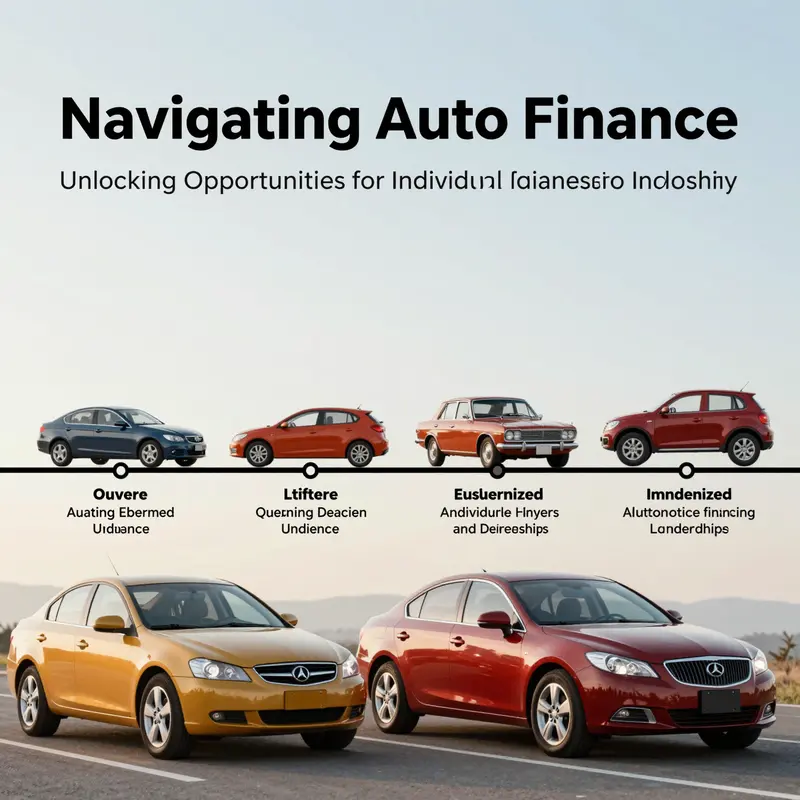
The evolution of auto finance is inseparable from the car itself. It began as a practical response to a growing demand for mobility and transformed into a sophisticated ecosystem that underpins the automotive market. In the United States, the early 20th century marked a turning point when manufacturers recognized that selling cars as cash-only items limited scale and social reach. General Motors and other pioneers introduced installment payment models that allowed a broader slice of the public to finance a vehicle over time. This shift changed the purchase calculus from a single, large outlay to a manageable stream of payments, altering consumer behavior, dealer strategies, and the structure of the supply chain. It did more than open access to cars; it laid the groundwork for a modern financial industry that could align vehicle lifecycles with consumer income cycles. Car ownership, once a prestige or cash-based transaction, began to resemble other major consumer credit decisions, embedding credit risk, interest economics, and financing institutions into everyday mobility.
The Chinese auto finance journey began later, but its arc mirrors the global pattern of adaptation and expansion. In 1993, Beijing’s Northern Military Industry Automobile Trade Company initiated car installment payments to foster a stagnant domestic market. The experiment faced teething difficulties: an immature financial infrastructure and limited risk management capability produced a fragile pilot phase. When the People’s Bank of China suspended the practice in 1996, the industry paused. Yet the pause proved instructional. By 1998, policy makers issued the Interim Measures for Car Consumption Loans, providing a formal framework and enabling pilot programs to resume within four major state-owned banks. This policy moment constituted the true birth of auto finance in China, signaling a transition from informal arrangements to regulated, scalable financing. In the years that followed, the Chinese market absorbed lessons from the West while adapting to its own economic rhythms, regulatory environment, and consumer expectations.
From 2000 to 2003, the auto finance market in China entered a pronounced boom phase. The market size leapt from roughly 29 billion RMB in 1999 to nearly 2 trillion RMB by 2003. Banks–armed with broad branch networks and established lending practices–dominated the landscape, and their scale enabled rapid penetration into both urban and increasingly aspirational rural segments. Yet the rapid expansion exposed structural weaknesses. A heavy reliance on insurance-backed loan products fostered a loosening of underwriting standards, inviting a wave of non-performing loans that drew the attention of regulators and practitioners alike. The crisis-like period became a turning point, pushing the industry toward more disciplined risk management and professionalization rather than sheer growth. It was in this tension between growth and risk that the next major structural shift was imagined: the move from general banking to specialized auto finance entities.
In 2004, the Chinese government formalized professionalization with the Regulations on the Administration of Auto Finance Companies and the establishment of the first dedicated auto finance company, a landmark moment that reoriented the market’s trajectory. The model evolved from a bank-centric approach to one that supported specialized institutions with defined governance, capital adequacy, and risk controls. This professionalization enabled automakers to align financing with their product strategies more closely, encouraging a concerted effort to manage dealer inventories, optimize credit policies, and ensure a more predictable capital cycle. Over the subsequent years, many automakers followed suit, setting up their own finance arms to support customers through the lifecycle of purchase, ownership, and eventual resale. The market matured into a more resilient ecosystem where banks, finance companies, dealers, and manufacturers interacted under clearer rules and shared risk management frameworks.
Today, the Chinese auto finance market stands as a multi-faceted ecosystem. By 2024, the total scale surpassed 2.5 trillion RMB, encompassing traditional consumer lending, dealer inventory financing, leasing, and insured-backed arrangements, as well as new digitally enabled services. The rise of new energy vehicles fueled new forms of financing battery leasing, battery swaps, and direct-to-consumer sales finance, but the core logic remained constant: finance reduces friction, accelerates turnover, and supports consumer confidence in ever more sophisticated products. The industry has also embraced digital finance capabilities, enabling seamless online applications, instant credit decisions, and integration with sales platforms. The frontier now lies in fully integrated, real-time data exchange between banks and automakers – an approach often described as a total-to-total or B2B collaboration model. System integration makes it possible to reflect policy changes, credit criteria, and pricing in real time, delivering a smoother, more predictable customer journey and reducing the time to funding from application to vehicle handover. In practice, this means a customer can negotiate a price, obtain approval, and secure financing with minimal offline friction, a shift that supports rapid inventory turnover and stronger dealer performance.
The historical arc from simple installment plans to intricate, data-driven financing arrangements has reshaped the competitive landscape. Auto finance has moved from a niche service into a core strategic lever for manufacturers’ competitiveness. It influences not only sales volumes but also brand loyalty and product lifecycle decisions. Financing strategies affect which models are promoted, how quickly a brand can refresh its lineup, and how dealerships optimize their pricing and incentives. The industry has also extended into complementary services—auto insurance, post-sales service networks, training programs, and even consumer clubs—creating a broader ecosystem designed to lock in customers across the ownership journey. These ancillary services are not mere add-ons; they reinforce the value of financing by reducing total ownership costs, offering predictable maintenance budgeting, and enhancing the overall ownership experience.
The continuation of this historical trend points toward three converging forces. First, the relentless push toward digitalization will make financing wholly transparent and automated, integrated directly into sales platforms. Second, the expansion into new service models will extend financing beyond the initial purchase, covering after-sales financing, used-car finance, and flexible ownership options that respond to evolving consumer preferences. Third, risk management will remain central. As credit markets grow more sophisticated, lenders must balance convenience with prudence, applying stronger underwriting standards, robust data analytics, and comprehensive fraud prevention. The overall effect is to sustain accessible car ownership while maintaining financial system resilience.
For readers tracing these developments and pondering how they shape todays auto finance landscape, a deeper, continuously updated knowledge base serves as a practical compass. It is worth exploring the broader literature and practitioner insights available in the Knowledge Hub, which offers historical context and evolving industry perspectives. This historical frame helps connect past innovations with current digital transitions, underscoring how policy, market structure, and technology co-evolve to sustain a vibrant automotive sector. External references provide a lens for validating the trajectory of auto finance and its market implications, offering complementary viewpoints that enrich the understanding of how financing arrangements influence consumer behavior, dealer performance, and manufacturer strategy. For those who want to probe further into the financial mechanics behind these developments, consider following the knowledge resources linked above and examining the ways digital platforms are reshaping access to credit and vehicle ownership. External references: https://davisfinancialadvisors.net/knowledge/
Financing the Electric Shift: How Auto Finance Is Paving the Road to Greener Mobility

The ascent of electric vehicles has become a defining current of modern mobility, and with it, auto finance is undergoing a quiet but profound reengineering. Financiers are learning to speak the language of electricity, battery life, and charging infrastructure as fluently as they once spoke about engine torque, depreciation curves, and loan-to-value ratios. What emerges is not merely a catalog of new loan products, but a rethinking of ownership itself. The financial architecture surrounding EVs is evolving to address the paradox at the heart of electrification: features that are technologically simpler can be financially more intricate, given battery costs, warranty horizons, and the pace of technological change. In this context, the financing ecosystem moves beyond traditional credit considerations and merges with digital platforms, policy signals, and consumer behavior shaped by environmental awareness and long-term cost judgments. The result is a financing landscape that lowers upfront barriers, aligns risk more tightly with long-term vehicle utilization, and expands access to clean mobility across urban and rural spaces alike.
Dedicated EV financing products have emerged as a cornerstone of this transformation. Banks and non-bank lenders are crafting loan and lease programs specifically tailored to the unique economics of electric propulsion. These offerings often feature lower interest rates, longer repayment terms, and more flexible down payment options compared with conventional auto loans. The strategic purpose is clear: EVs carry higher upfront costs due to specialized batteries and powertrain components, but their total cost of ownership can be favorable over time when operated with efficiency, charging at home, and taking advantage of fuel savings. As market analyses suggest, these targeted packages are increasingly decisive for buyers who are weighing the affordability of electrified travel. The shifts in 2025—characterized by declining interest rates, expanding EV adoption, and rapid technological advancement—have sharpened the appeal of such products. Consumers who previously faced a higher hurdle to entry can now access financing terms that mirror or even tilt in favor of the long-term financial benefits of EV ownership. In practice, this translates into monthly payments that reflect longer amortization periods, improved residual values at the end of the term, and more predictable maintenance budgeting as manufacturers and service networks align with a growing EV ecosystem.
But the story does not end with loan terms. The financing playbook for EVs increasingly incorporates fintech-enabled experiences that streamline the customer journey from inquiry to approval to receipt of funds. Digital lending platforms and online application processes have become the new normal, reducing paperwork and shortening decision times. The impact is especially pronounced in markets that historically lagged in traditional banking penetration, including emerging regions and Tier-3 cities where consumers stand to gain the most from a faster, more transparent financing process. Online platforms enable a credit assessment that integrates telematics data, energy usage patterns, and even charging behavior when accessible and appropriate. The result is a more nuanced risk assessment that can, in some cases, lower perceived risk for responsible borrowers and open doors for first-time buyers who lack an extensive credit history. The silent revolution here is not merely about speed; it is about widening the door to clean mobility and making the path to ownership less intimidating for a broader spectrum of households.
From an economic standpoint, the calculus for households is shifting in ways that favor electrification, particularly when financing is part of a broader cost-of-ownership narrative. Studies that analyze millions of auto loan observations show that the total cost of ownership for EVs—when factoring in financing, maintenance, fuel (or electricity) costs, and potential government incentives—can be lower than that of internal combustion engine vehicles over a typical ownership horizon. This is not just a matter of sticker price or monthly payment; it is about the entire ecosystem surrounding EVs becoming more supportive. Government incentives, tax credits where applicable, and investments in charging infrastructure all contribute to a holistic appeal. In major markets, especially those with robust charging networks and predictable electricity pricing, the economic logic of EV ownership becomes more compelling. Even within the constraints of higher upfront costs, the downshift in financing costs, coupled with predictable fueling expenses and reduced maintenance complexity, can tilt the affordability equation in favor of electrification for a larger share of households.
China’s EV ecosystem offers a particularly vivid illustration of how policy, infrastructure, and finance can converge to accelerate adoption. The synergy between favorable financing terms and a rapidly expanding charging grid creates a feedback loop: easier access to affordable credit lowers the barrier to EV purchases, while expanding charging infrastructure reduces range anxiety and reinforces the value proposition of electrified mobility. This dynamic is not isolated to one region; it resonates globally whenever a country combines supportive fiscal policy with sound lending frameworks and a credible, expanding charging network. In such environments, financiers gain confidence to extend credit with terms that reflect long-term ownership costs rather than short-term novelty. The result is a more resilient financing market for EVs that can absorb fluctuations in energy prices, technological upgrades, and evolving consumer preferences while continuing to promote sustainable transport.
Perhaps the most consequential change, however, is how the financing ecosystem is integrating with the broader mobility and energy transition. EVs are not standalone products; they are nodes in a larger network that includes charging infrastructure, home energy management, and vehicle-to-grid interactions in some markets. Financiers are increasingly considering these broader interactions when structuring products. For instance, lease and loan agreements may be paired with optional battery leasing arrangements or with warranties and service packages that align with battery degradation trajectories. While the specifics can vary, the underlying principle remains consistent: the financing framework should reflect the realities of owning and operating an EV over its life cycle. This means recognizing that battery health, residual value, and potential vehicle software updates influence both risk and value. It also means embracing flexibility—allowing customers to adapt their financing plans as technology evolves, or as their own energy consumption patterns shift with time. In practice, this flexibility can manifest as adjustable payment options, trade-in allowances that account for battery aging, or bundled services that integrate insurance, maintenance, and charging access into a single, coherent product.
The broader ecosystem of auto finance for EVs also encompasses new service models and partnerships that extend beyond traditional lending. Financial institutions are collaborating with charging networks, energy providers, and even campus or corporate fleets to create bundled financing options that recognize the role EVs play in a connected, sustainable energy ecosystem. Such collaborations aim to deliver a seamless experience: a single point of contact for financing, charging access, maintenance, and driver education. This approach lowers friction for the consumer and fosters a level of trust that can translate into higher take-up rates and lower default risks over time. While these arrangements may involve more complex risk-sharing and regulatory considerations, they also promise healthier growth for the sector by embedding EV ownership within an broader, value-added service suite.
For readers seeking a deeper exploration of how financing cost differentials influence household decisions toward electric mobility, broader studies offer compelling evidence about the long-run economics of EV ownership. These analyses underscore that while upfront costs remain a challenge, the total cost of ownership often justifies electrification when financing structures are optimized, incentives are leveraged, and charging infrastructure is accessible. Taken together, the innovations in auto finance services for EVs represent a holistic ecosystem of product development, digital transformation, and economic modeling. They illustrate how financial systems can support not only individual purchases but also social and environmental goals by making clean mobility more affordable, accessible, and predictable. The work of lenders, policy designers, and technology platforms in this space is shaping a future where EV ownership is less a leap of faith and more a rational, well-supported financial decision.
To explore further insights and practical resources that complement this discussion, readers can visit our Knowledge hub for a structured overview of auto finance concepts and ongoing developments in the field. Knowledge resources
External research corroborates this narrative of cost dynamics and consumer choice in the EV transition. For a detailed analytical perspective, see Auto Finance in the Electric Vehicle Transition. https://www.semanticscholar.org/paper/Auto-Finance-in-the-Electric-Vehicle-Transition-61a8c3d4e79b05b7b6a149f1d918554e2d398a48
From Car Loans to a Living Auto-Finance Ecosystem: Harnessing Intelligence, Data, and Global Reach
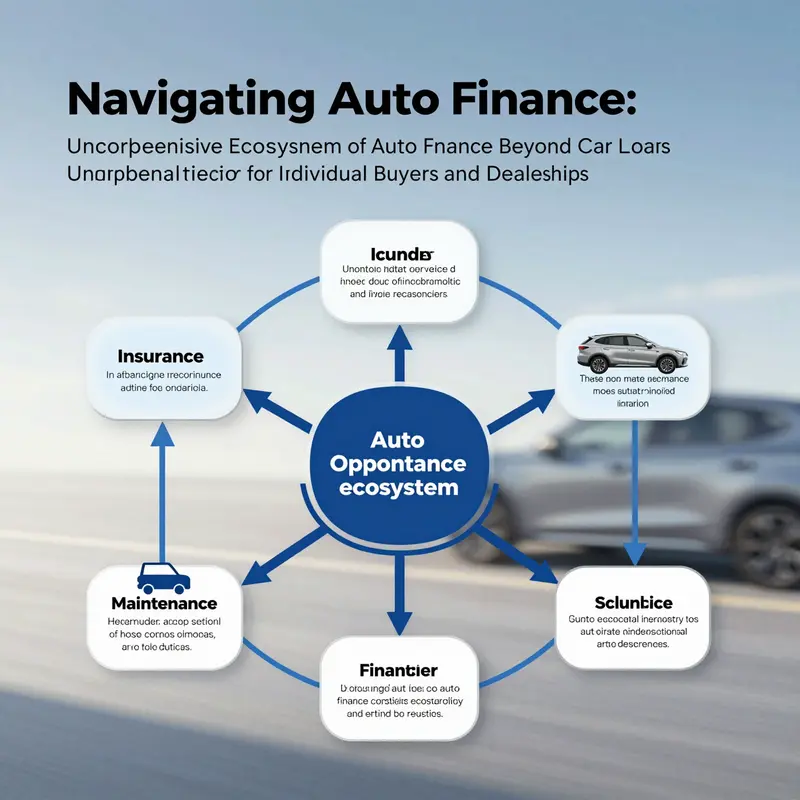
The modern auto finance landscape has grown beyond the simple act of underwriting a loan or arranging a payment plan. It has matured into a living ecosystem that stretches across the entire ownership lifecycle and into adjacent mobility opportunities. In this expanded view, financing is less about a single transaction and more about a coordinated network of services, platforms, and partnerships designed to reduce friction, manage risk, and create value at every touchpoint. This shift is powered by digital platforms, data flows, and a willingness to blend traditional lending with new sources of revenue. What begins as a loan can evolve into a continuous stream of financial and nonfinancial services that support consumers, dealerships, manufacturers, and even new mobility concepts in a cohesive, intelligent system.
At the core of this transformation is the strategic integration of digital channels and sophisticated data analytics. Financing firms no longer rely on a one-off credit decision; they cultivate an ongoing relationship with customers that is informed by real-time signals from a broad data landscape. This enables more accurate risk assessment, more personalized pricing, and a smoother buyer journey—from initial interest to vehicle ownership and beyond. Revenue, too, expands beyond interest income. Media services, lead generation, and online marketplaces powered by data-driven insights create additional, complementary streams. The aim, as one industry vision suggests, is to become the world’s largest intelligent automotive ecosystem, covering all stages of ownership life cycle. Such a shift reframes the enterprise from a pure lender to a holistic mobility facilitator, where financing is one of many touchpoints in a seamless, value-rich experience.
The ecosystem’s expanding footprint reaches into high-growth frontiers that are redefining what mobility means. Electric vertical take-off and landing (eVTOL) concepts, humanoid robotics, and a thriving used-vehicle market are no longer distant speculate-they are part of a strategic forward look. Financing tools must adapt to these new contexts: valuations that account for rapid depreciation, risk models that consider evolving residual value in non-traditional assets, and inventory management systems capable of handling diverse asset classes. This evolution requires finance platforms to be more agile, with the capacity to reprice, reallocate, and reallocate risk in real time as market signals shift. Such agility is increasingly enabled by advanced analytics and agentic AI, which give specialized agents the ability to support underwriting, customer engagement, and risk assessment with unprecedented precision.
Yet the growth of an integrated auto-finance ecosystem hinges on robust financial infrastructure—both domestically and across borders. In certain markets, ambitious manufacturers and distributors face constraints when attempting to offer truly global financing solutions. Regulators and central banks in some regions maintain conservative stances, which can limit the extent to which overseas clients receive integrated financing packages. This contrasts with more mature markets where captive finance arms and broad banking collaborations support a full spectrum of activities—from consumer credit to supply-chain financing. The gap is both a challenge and an opportunity: it invites innovative, cross-border solutions that respect regulatory boundaries while expanding the ecosystem’s geographic reach. Bridging this gap requires clear governance, standardized data practices, and trust-based partnerships that can scale across different regulatory environments.
To meet these demands, technology is less a driver of novelty and more a facilitator of resilience. Agentic AI—where generative AI-powered agents assist with underwriting, client interactions, and risk forecasting—emerges as a powerful enabler. Rather than replacing humans, these agents augment judgment, enabling more nuanced risk assessments and more personalized experiences at scale. They can monitor market conditions, adjust pricing in near real time, and tailor loan offers to individual circumstances, all while maintaining compliance with evolving rules. This data-driven agility reduces cycle times for approvals and enhances the precision of credit decisions, which in turn supports more competitive financing options for consumers and more efficient capital deployment for lenders.
A broader ecosystem perspective also acknowledges the nonlending services that sustain and enrich the customer journey. Insurance, after-market services, maintenance networks, and even mobility-related training or club communities become part of an integrated value proposition. Each service line reinforces others: protections and maintenance plans help preserve asset value and reduce default risk; vehicle-related education builds loyalty and improves usage patterns; and community programs deepen engagement, turning a one-time loan into a long-term relationship. This networked approach often amplifies revenue through cross-selling while spreading risk across diversified streams. For consumers, the result is a smoother, more transparent experience that mirrors the way today’s technology-enabled platforms manage many facets of daily life.
Within this expansive view, the customer journey itself evolves. Pre-purchase research becomes a data-informed exploration where digital advisement helps buyers understand options, estimate total cost of ownership, and compare financing pathways. Post-purchase support expands into proactive risk management and lifecycle optimization. The once-fee-bound loan is replaced by a portfolio of services that help owners manage depreciation, insurance considerations, and maintenance, with predictive analytics guiding when to refresh or restructure financing. This end-to-end orchestration relies on a culture of continuous data sharing, secure interoperability, and customer-centric product design. It also invites a closer look at ecosystem partnerships: alliances with dealers, lenders, tech platforms, and service providers that together can deliver a coherent, end-to-end experience. As the ecosystem matures, these partnerships become the backbone of a scalable, customer-focused platform rather than a series of discrete transactions.
For practitioners seeking a broader perspective, the knowledge hub at Davis Financial Advisors offers deeper context on finance and mobility—an accessible resource that helps align strategy with evolving consumer needs and regulatory landscapes. Knowledge hub
The global dimension of this ecosystem is both promising and nuanced. On one hand, rising exports by automakers in some regions demonstrate the demand for cross-border financial solutions. On the other hand, cross-border expansion exposes gaps in the availability of overseas financial services, highlighting the need for standardized data, interoperable systems, and adaptable regulatory playbooks. The path forward lies in scalable architectures that accommodate multiple currencies, risk models, and credit cultures without sacrificing speed or compliance. This is where a truly comprehensive ecosystem proves its worth: by linking local capabilities into an interoperable network, the industry can deliver consistent experiences for buyers, regardless of where they purchase or reside. The aim is not merely to export financing knowledge but to codify a modular, globally recognizeable framework that supports both consumer empowerment and sustainable credit growth.
In practice, building such a framework requires disciplined data governance, robust cyber security, and transparent risk communications. It calls for standardized data models so that a lender in one country can reliably assess a vehicle’s residual value or a consumer’s repayment profile when faced with a different regulatory regime. It also invites a reexamination of liquidity strategies. The broader ecosystem tends to benefit from diversified funding sources, including capital markets access and cross-institution partnerships, which together improve resilience against rate volatility and cyclicality in auto demand. As the ecosystem grows, it also becomes a proving ground for governance and ethics in AI-assisted decision-making. The challenge is to balance speed and personalization with fairness and explainability in lending and pricing decisions—an equilibrium essential to sustainable, scalable growth.
Ultimately, the evolution from a narrow car-loan focus to a comprehensive auto-finance ecosystem is a story of leverage. It leverages technology to unlock new value, data to reveal insights previously hidden, and partnerships to spread risk and create new revenue streams. It leverages customers’ needs for clarity, efficiency, and ongoing support. And it leverages a global gaze that seeks to connect local practices into a harmonized, intelligent platform capable of nurturing mobility in its many forms—from conventional vehicles to emerging urban-air and automated systems—without losing sight of sound risk management and responsible lending. This is the new frontier of auto finance: an integrated, intelligent, globally oriented ecosystem where financing is deeply embedded in the broader experience of owning and using a vehicle, and where the economics of lending and the economics of mobility align to propel growth for all stakeholders. For readers who want to explore these ideas further, the external resource on agentic AI and value in auto finance provides a rigorous, industry-grounded perspective on how intelligent agents can reshape underwriting, pricing, and customer journeys in real time.
External reading: https://www.mckinsey.com/industries/automotive-and-assembly/our-insights/agentic-ai-a-new-path-to-value-in-the-auto-finance-industry
Chapter 5: Navigating Regulatory Currents and Building a Resilient Auto Finance Risk Framework
Auto finance stands at a pivotal juncture where consumer aspiration, dealer velocity, and lender discipline converge. In many markets it has evolved from a convenience layer to a core mechanism that underpins the speed and scale of vehicle adoption. Yet the engines of progress operate within a rules-based landscape: regulations, supervisory expectations, and risk controls that shape every credit decision, every disclosure, and every operational process. This chapter treats regulation not as a constraint alone but as a framework that, when understood and implemented with discipline, sustains trust, stabilizes portfolios, and enables innovation to flourish in tandem with consumer needs. To appreciate the full arc, one must move beyond compliance checklists and toward a performance-oriented interpretation of risk and resilience in auto finance. The story is global in scope, yet the underlying logic is universal: clear standards, vigilant risk management, and adaptive governance are the three pillars that support sustainable lending in a rapidly evolving mobility economy.
Across continents, regulators have been recalibrating their approach to financial services in ways that ripple into auto financing. In mature markets, the emphasis on transparency and consumer protection often translates into clearer disclosures, standardized underwriting criteria, and enhanced data reporting. These shifts are not merely bureaucratic; they redefine how lending risk is quantified and how borrowers understand the true cost of credit. In parallel, supervisory bodies increasingly insist on robust governance and risk management cultures within lending institutions. The goal is not to curb the availability of credit but to prevent systemic stress that follows mispricing, fraud, or liquidity squeezes. As a result, auto finance providers must weave regulatory expectations into day-to-day decision making—into credit policy design, portfolio monitoring, and incident response plans—so that compliance becomes an enabler of steadier growth rather than a brake on innovation.
The regulatory narrative is also deeply influenced by technology. Digital platforms have accelerated loan origination, credit scoring, and collateral management, but they have introduced new vectors of risk. Data security and privacy have moved from back-office concerns to the center of risk governance. Algorithmic lending models promise efficiency and inclusivity, yet they carry the risk of bias and unintended discrimination if not properly tested and monitored. Regulators are responding with real-time or near-real-time supervisory capabilities, cross-border information sharing, and requirements for resilience against cyber threats and operational disruptions. The automotive finance ecosystem now requires a forward-looking supervisory model that can detect emerging patterns of vulnerability across product lines, geographic footprints, and partner networks. This means lenders must invest in robust data governance, model risk management, and incident-readiness exercises that can stand up to scrutiny during audits or crisis tests.
A global perspective reveals the variegated but converging paths that regulators take. In some jurisdictions, the reform agenda centers on formalizing the auto financing company’s operations through clearer licensing standards, more explicit risk-control expectations, and stronger capital adequacy or liquidity cushions appropriate to portfolio size and risk profile. In others, the emphasis is on closing gaps between consumer credit rules and the realities of fintech-enabled lending, ensuring that new channels do not escape basic protections or undermine portfolio quality. The Dodd-Frank era in the United States, for instance, seeded a regulatory architecture that places discipline on disclosures, underwriting standards, and risk containment. The net effect across markets is a shared aim: to minimize credit deterioration, protect borrowers from predatory practices, and maintain the health of the broader financial system in the face of shocks and transitions. The literature to date emphasizes a move from microprudential focus—watching individual lenders and products—to macroprudential awareness—seeing how portfolio concentrations, credit cycles, and climate-related shifts could combine to affect systemic stability.
As climate considerations sharpen, the auto finance sector cannot remain insulated from the long arc toward a greener economy. Regulators are increasingly incorporating environmental risk into supervisory frameworks. This includes recognizing carbon-intense lending as a potential long-tail risk to portfolio resilience, integrating climate scenario analysis into risk appetite, and prompting lenders to pursue portfolios that are adaptable to the energy transition. The implications for auto financing are multifaceted. Lenders may need to adjust pricing and credit criteria to reflect the longer-term risk of stranded assets in certain vehicle segments; they may also be encouraged to support clients in a manner that aligns with sustainable mobility objectives, such as funding for efficient fleets or compliant, low-emission vehicles where appropriate. The result is a regulatory environment that incentivizes prudent risk-taking while guiding capital toward outcomes that align with societal climate goals.
From a portfolio management standpoint, risk management in auto finance has to contend with both traditional risk factors and the novel dimensions introduced by digital capability and regulatory breadth. Credit risk remains central: lenders must maintain robust underwriting, validate the relevance of data inputs, and stress-test portfolios against adverse scenarios that reflect wage volatility, economic slowdowns, or shifts in consumer sentiment toward vehicle ownership. Fraud risk remains a persistent concern, especially as the speed of online origination creates opportunities for misrepresentation or synthetic identities. Operational risk—ranging from system outages to governance failures—also demands continuous attention, given the interconnectedness of origination platforms, dealer channels, and securitization or funding facilities. The emergence of cross-border activity adds another layer of complexity, requiring harmonized data standards, coherent disclosures, and cooperative supervision to manage the shared risks of integrated supply chains and multi-jurisdictional funding.
In practical terms, building a resilient auto finance risk framework means embedding risk discipline into every stage of the lending lifecycle. It starts with risk-aware product design and underwriting that balance accessibility with prudence. It continues with ongoing, dynamic portfolio monitoring that uses real-time data to identify emerging stress signals, enabling rapid adjustment of risk appetite, credit criteria, or pricing bands. It includes governance arrangements that align board oversight, risk management units, and front-line decision-makers around a single, coherent risk culture. And it entails an explicit plan for resilience: documented incident response, cyber defense readiness, and continuity plans that assure service to borrowers even under adverse conditions. In this sense, regulation is not merely an external constraint but a compass that helps lenders navigate uncertainty with greater confidence and accountability.
For practitioners seeking practical guidance anchored in a broader regulatory context, consider how these principles translate into everyday decisions. When assessing new markets or partner networks, demand not only profitability but also the strength of the regulatory framework, the robustness of consumer protections, and the capacity for supervisory cooperation. When testing new digital channels, require rigorous model validation, data integrity controls, and transparent disclosures that illuminate the true cost and risk of credit. When managing a fleet portfolio, align financing strategies with operational realities and long-term sustainability considerations, balancing liquidity, risk, and service quality. For hands-on insights on aligning corporate fleet finance with regulatory expectations and risk controls, see the resource on managing truck ownership finances. It offers a practitioner-oriented perspective on how regulatory considerations interface with daily financial decisions and fleet management.
Researchers and policymakers alike underscore the importance of adaptive, resilient supervisory models. Such models emphasize real-time monitoring, cross-border cooperation, and a proactive rather than reactive stance to systemic risk. In practice, this translates to investment in data infrastructure, clear governance protocols, and continuous learning loops that keep policies aligned with technological change and market evolution. The dynamic nature of auto finance—where risk profiles shift with macroeconomic cycles, vehicle technologies, and consumer behavior—requires a governance architecture that can learn and adjust without compromising stability or consumer protections. The overarching objective remains clear: maintain a balance between fostering access to credit and safeguarding the integrity of the financial system, all while supporting the mobility needs that drive economic activity.
For further reading on how financial regulation is evolving to shape the future of financial services—including auto finance—see the broader overview of financial regulation, which situates these changes within macroprudential considerations, climate risk integration, and resilient supervisory models. This external perspective helps connect the micro-level decisions of lenders and regulators with the wider dynamics shaping the financial landscape today and tomorrow.
Final thoughts
Auto finance represents a crucial dimension of vehicle ownership that empowers individuals and businesses alike. With a century of historical evolution and continuous innovations related to electric vehicles and comprehensive services, it supports not just the immediate purchasing process but enriches the entire automotive ecosystem. As regulatory frameworks advance to mitigate risks, it becomes imperative for all stakeholders to stay informed. The multifaceted nature of auto finance enhances market access, solidifying its role as a pivotal element in today’s automotive landscape.