
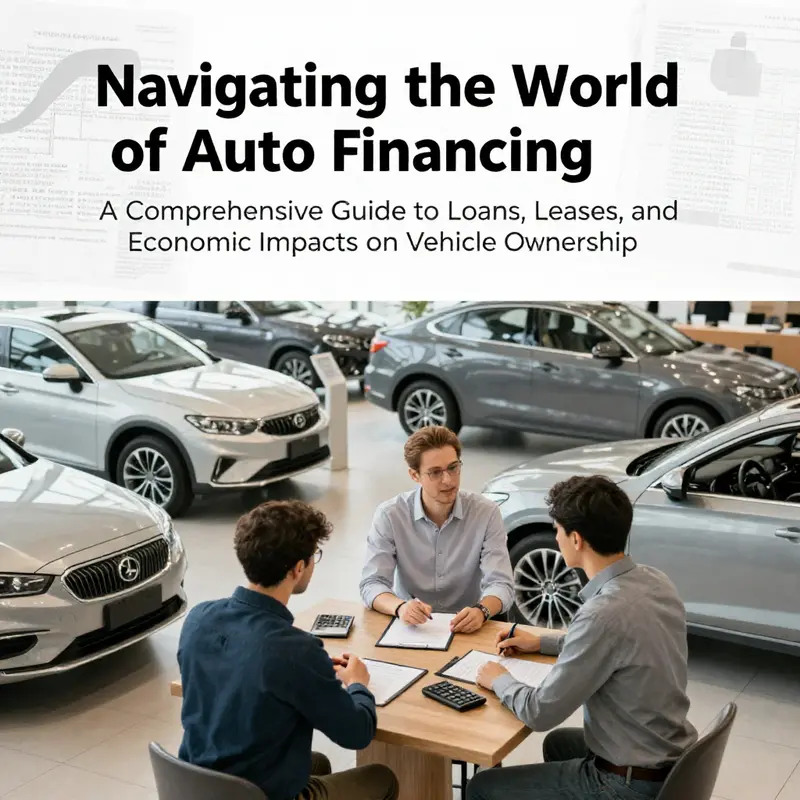
Auto financing plays a pivotal role in enabling individuals and businesses to acquire vehicles without the burden of upfront costs. Understanding the fundamentals of auto financing—encompassing loans and leases—can empower buyers to make informed decisions and secure favorable terms. The importance of credit scores in shaping financial options is critical, impacting not only eligibility but also rates and conditions. Additionally, the broader economic landscape influences auto financing, affecting interest rates and lending availability. This guide will delve into each aspect of auto financing, equipping individual car buyers, auto dealerships, franchises, and small business fleet buyers with essential insights and strategies for effective vehicle acquisition.
From Down Payment to Driveaway: Demystifying Auto Financing, Loans, and Leases

Choosing a car is rarely just about the color or the features on the window sticker. For most buyers, the decision to swap keys for a new set or a used ride hinges on the financing path they choose. Auto financing, at its core, is a structured agreement that makes a large purchase affordable over time. It involves a lender, a borrower, and a vehicle as the asset that collateralizes the loan or the lease. The choices can feel technical, but they map onto everyday tradeoffs: how much you pay each month, how long you will be paying, and what happens if your circumstances change. Understanding the two most common routes—auto loans and leases—changes the way you shop, negotiate, and plan for the road ahead. On the surface, both options offer a route to driving a car without paying the full price up front, but their paths diverge in important ways that ripple through monthly budgets, total ownership costs, and long-term mobility.
Auto loans are straightforward in intent: you borrow money to purchase the vehicle and repay the principal plus interest over a fixed term. The loan converts the car into your property only after you have fulfilled every payment, and until that moment, the lender retains a lien on the vehicle. This means the lender holds the title or lien for the duration of the loan, and only when you complete the payments do you gain full ownership and the freedom to resell, trade in, or modify your car as you wish. The amortization schedule—how the payments are split between principal and interest—tells the story of your journey from loan initiation to ownership. In most markets, terms range from about 24 to 84 months. Shorter terms typically carry higher monthly payments but lower overall interest, while longer terms reduce monthly obligations but can inflate the total cost due to interest accrual over time.
A key feature of auto loans is equity. As you make payments, you accumulate equity in the vehicle, which is the portion of the car that you own outright. Equity grows with every payment and, if the car holds its value reasonably well, it can become a substantial asset once the loan is paid off. That equity matters not only for personal balance sheets but also for decisions about trading in or refinancing in the future. If you drive a car for many years and maintain it well, you can end up with a strong equity position, effectively paying little to nothing out-of-pocket once the loan is complete. However, equity is not guaranteed. Cars depreciate quickly, and early in the life of a loan the vehicle’s value may lag behind the outstanding balance, a situation often described as being upside down on a loan. Strategic decisions—such as a larger down payment, choosing a shorter loan term, or selecting a vehicle with slower depreciation—can mitigate this risk.
Credit plays a central role in loan terms. Lenders assess creditworthiness with a lens that balances risk and flexibility for the borrower. A higher credit score generally unlocks more favorable interest rates, meaning you pay less in interest over the life of the loan. Conversely, a lower score can result in higher rates or, in some cases, denial of financing. The math is simple but real: a higher rate increases your total outlay, which also widens the gap between the car’s value and what you owe. Beyond the credit score, lenders consider income stability, employment, and the debt-to-income ratio. These factors illuminate how comfortably you can service the loan while meeting other financial obligations. A pre-approval or pre-qualification can be a useful first step. It gives you a sense of the price range you can realistically finance, strengthens bargaining power at the showroom, and frames the options you should consider before you fall in love with a particular model—because the financing terms you secure can limit or expand your choices.
Leasing, by contrast, is a distinctive approach that foregrounds usage rather than ownership. When you lease, you’re essentially renting the vehicle for a defined period—commonly two to four years—with the understanding that you will return the car at the end of the term unless you choose to buy it at a predetermined residual value. Monthly lease payments are typically lower than loan payments because you’re paying only for the vehicle’s projected depreciation during the term, plus finance charges and fees. The appeal is clear for drivers who relish the opportunity to drive a new car every few years, enjoy the latest technology, and prefer lower monthly obligations, all while avoiding the task of selling or trading in a car at a potentially unfavorable time. Yet leases come with constraints: mileage limits, wear-and-tear guidelines, and no equity buildup. If you exceed the mileage cap or if the car sustains costlier wear, you face fees that can creep up quickly. If you truly want ownership at the end of a period, a lease offers a buyout option at the lease’s end, but this typically comes with a residual value and may require a significant payment beyond your ongoing monthly commitment.
The decision between loan and lease is not merely a financial calculation; it reflects a personality and lifestyle choice about how you want to relate to your car. Some people want the certainty of ownership and the ability to shape the vehicle to their tastes over years, while others value the predictable monthly cost and the flexibility to upgrade with the changing pace of life or technology. In parallel with these personal preferences, the structure of each option clarifies what you pay beyond the monthly installment. With a loan, you incur interest and fees that accumulate over time, and you will likely face maintenance costs as the vehicle ages, especially after the warranty expires. With a lease, the predictable monthly payment is offset by mileage restrictions and potential end-of-lease charges, and you never truly own the car unless you decide to buy it at the end. In both routes, the total cost of ownership is a function of more than just the monthly payment. It includes taxes, registration, depreciation, insurance, maintenance, fuel, and, for leases, the residual value that defines the buyout price at term end.
The landscape of financing also intersects with broader financial ecosystems. In many markets, lenders and dealers collaborate to offer financing that aligns with consumer needs and dealership inventory. For instance, specialized auto finance entities, banks, and credit unions may all participate in the funding ecosystem, each with their own underwriting standards and incentives. In some regions, financial services firms focus on integrated solutions for retail car purchases, dealership inventory financing, and financial leasing. This kind of integration aims to streamline the path from selecting a vehicle to securing funding and taking delivery, an ecosystem that can reduce friction for buyers and help dealers manage their balance sheets and turnover more efficiently. The mechanisms behind this integration are a reminder that auto financing is not a standalone service; it sits at the intersection of consumer credit, vehicle depreciation, retail sales, and the broader financial market.
A particular nuance worth noting is how the title works in a loan versus a lease. In a loan, the borrower earns full ownership only after the last payment is made, and the title typically transfers to the borrower at that point. This transfer marks the moment when the car ceases to be collateral in the lender’s hands and becomes a fully owned asset. In a lease, the title remains with the leasing company throughout the term, and ownership does not transfer until you exercise a buyout option, if you choose to purchase at the end. This distinction is more than administrative—it influences risk, equity, and the decision-making framework for people who expect to keep or upgrade their vehicle soon after the end of a term.
Beyond the mechanics of loans and leases, the effect on a household budget is rooted in the everyday realities of cost and risk. The down payment acts as a shield that reduces the loan amount and, consequently, the monthly payment and total interest charges. A larger down payment lowers the lender’s risk and can help borrowers secure more favorable terms, while a smaller down payment preserves cash for other needs but may raise the monthly obligations and the interest rate. The term length of the loan also matters: a longer term often means lower monthly payments, but it comes with a trade-off of paying more interest over time and potentially facing negative equity if depreciation outpaces the remaining loan balance. Conversely, a shorter term increases monthly costs but shortens the period of debt and reduces the total interest paid. In leasing, the residual value—the estimated value of the car at the end of the term—drives the monthly payment. A higher residual reduces monthly payments, but it also raises the potential buyout price if you decide to keep the car. If you envision driving the same car for a long time, a loan with a manageable term and a reasonable down payment may yield more predictable ownership and potential long-term savings. If you prefer frequent upgrades and lower monthly costs, a well-structured lease becomes attractive, provided you can stay within mileage and wear-and-tear limits.
The journey from choosing a vehicle to signing a financing contract is a practical exercise in comparison shopping and arithmetic. After selecting a vehicle, many buyers encounter the financing process with a mix of curiosity and anxiety. The lender’s evaluation typically begins with a review of the applicant’s credit history, followed by an assessment of income and employment stability. The goal is to gauge the borrower’s ability to meet monthly payments while fulfilling other financial obligations. A lender calculates a debt-to-income ratio to ensure that debt commitments, including the new auto payment, fit within an acceptable portion of monthly income. A strong profile—high income, low debt, and a solid credit history—often yields the best terms, including lower interest rates and greater flexibility on the loan amount and duration. The pre-approval or pre-qualification that often accompanies this stage helps establish a financing framework and sets expectations for the bargaining process.
As the terms crystallize, the contract becomes the map of the road ahead. The loan agreement will specify the loan amount, the interest rate, the repayment period, and the monthly payment. It will also itemize any fees—origination fees, document fees, and often taxes—so the buyer can understand the true cost of financing. The lease agreement mirrors this structure but emphasizes the lease-end options, such as the residual value, mileage allowances, and potential end-of-lease charges. In either case, a careful reader will assess the total cost over the term. A calculator can illuminate how differences in down payment, rate, and term translate into thousands of dollars in total payments. This is where the concept of the total cost of ownership becomes more than a headline; it becomes a practical tool for planning. Insurance costs, maintenance, fuel efficiency, and expected depreciation all enter the equation, reminding buyers that the car is not just a monthly payment but a long-term financial commitment.
The financing landscape is also a stage for strategic advice and professional services. In markets where automotive finance partners collaborate with banks and specialized lenders, the process can extend beyond the individual loan to include inventory financing for dealerships and broader fleet solutions. For businesses that rely on vehicles for operations, such as commercial fleets or extended service networks, financing strategies can include lines of credit, equipment leasing, and structured financing that aligns with cash flows, tax considerations, and asset management. Even within consumer-focused channels, the backdrop of integrated services can provide smoother experiences—faster approvals, clearer disclosures, and access to tools that help buyers compare scenarios side by side. In such ecosystems, the borrower is not navigating financing in isolation but tapping into a network designed to support mobility at different scales.
For those who want to ground their understanding in a practical resource, a knowledge-centric approach can be valuable. The Knowledge Center at a trusted financial advisory resource offers foundational explanations of how auto loans and leases work, along with calculators and scenarios that enable readers to model their own purchases. This kind of resource can be especially helpful when you’re comparing offers from multiple lenders or when you’re trying to reconcile promotional incentives with the true cost of financing. If you’re looking to dive deeper into the basics and then build toward more sophisticated financial planning around vehicle ownership, explore this reference point: Knowledge.
Beyond individual decisions, the world of auto financing is influenced by regional practices and the availability of financing products that fit different markets. In some countries, the financing ecosystem includes a strong emphasis on leasing as a primary vehicle for access to transportation, supported by tax incentives or regulatory frameworks that favor indicated depreciation schedules. In others, ownership remains the default preference, and lenders tailor terms to accommodate the higher upfront cost of new vehicles and the longer expected use period. In any market, a responsible approach to auto financing starts with awareness—knowing what you want from the car, being honest about your budget, and using reputable sources to compare terms, total costs, and the long-run implications of your choice.
As markets evolve, so do the tools and services that support auto financing. The integration of retail car purchases, dealership inventory financing, and financial leasing is becoming more common, aiming to reduce friction for buyers and provide dealerships with stable financing channels. This integrated approach can help align incentives and streamline the lifecycle of vehicle sales, from the showroom to the road. It also reinforces the idea that auto financing is not a one-off decision but part of a broader financial strategy—one that considers cash flow, risk management, and the flexible use of vehicles in personal and professional life. In a world where mobility underpins both personal independence and business operations, a solid understanding of loans and leases becomes less about jargon and more about empowerment—the power to choose a path that preserves financial flexibility while keeping you moving forward.
For readers who want to anchor their understanding with an external explainer, Bankrate’s overview of auto loans provides a practical, reader-friendly breakdown of how auto loans work, including repayment structures and interest calculations. This resource can complement the more narrative exploration above by offering concrete formulas and examples that illustrate how small changes in rate, term, or down payment ripple through monthly payments and total costs: https://www.bankrate.com/loans/auto-loan/what-is-an-auto-loan-and-how-does-it-work/ .
Credit Scores as Gatekeepers: How Your Financial History Shapes Auto Financing

A car is more than transportation; it is a financial commitment with a history. In auto financing, your credit score acts as a steady judge, shaping the process in subtle yet meaningful ways. It is not the only factor lenders consider, but it often sets the tone for loan accessibility, terms, and what you can reasonably afford. The score converts a long record of past behavior into a single signal about timely debt service. When the signal is strong, financing options widen; when it is weak, the path to ownership narrows or borrowing costs rise.\n\nHigh credit scores tend to unlock favorable terms: lower interest rates, larger loan amounts, and longer repayment periods. The result is lower monthly payments and greater flexibility in vehicle choice. A strong history also supports easier access to credit in the future, creating a positive feedback loop. This pattern is observed across markets and aligns with risk-based pricing practices that link repayment history to cost of credit.\n\nBut the relationship is not binary. Debt-to-income ratio (DTI) and employment stability matter too. Many lenders prefer a DTI around or below 50 percent, though some flexibility exists with strong compensating factors. Stable income and verifiable employment reduce risk, while assets can act as a cushion in difficult times. The scoring model examines on-time payments, credit utilization, history length, and recent activity, but lenders still interpret scores in the context of the loan size and purpose. Inaccuracies on credit reports can unjustly depress scores, so monitoring reports and disputing errors can yield tangible benefits over weeks or months.\n\nIn practice, a high score translates into more favorable pricing and broader vehicle options, while a low score may mean higher rates or tighter terms. The goal for buyers is to manage credit health before and during the financing journey: make timely payments, avoid new debt surprises, and verify report accuracy. A well-managed credit history can expand choice and reduce borrowing costs over the life of the loan or lease. For organizations, the same logic applies to fleets and dealer financing: strong credit footprints enable better terms and more predictable budgeting.\n\nReaders seeking practical guidance can start with foundational knowledge of credit scoring and how it influences auto lending, then build toward budgeting and planning tools. External resources can complement this journey, helping translate score signals into confident decision making.
Financing the Open Road: Auto Loans as a Catalyst in the Economic Landscape
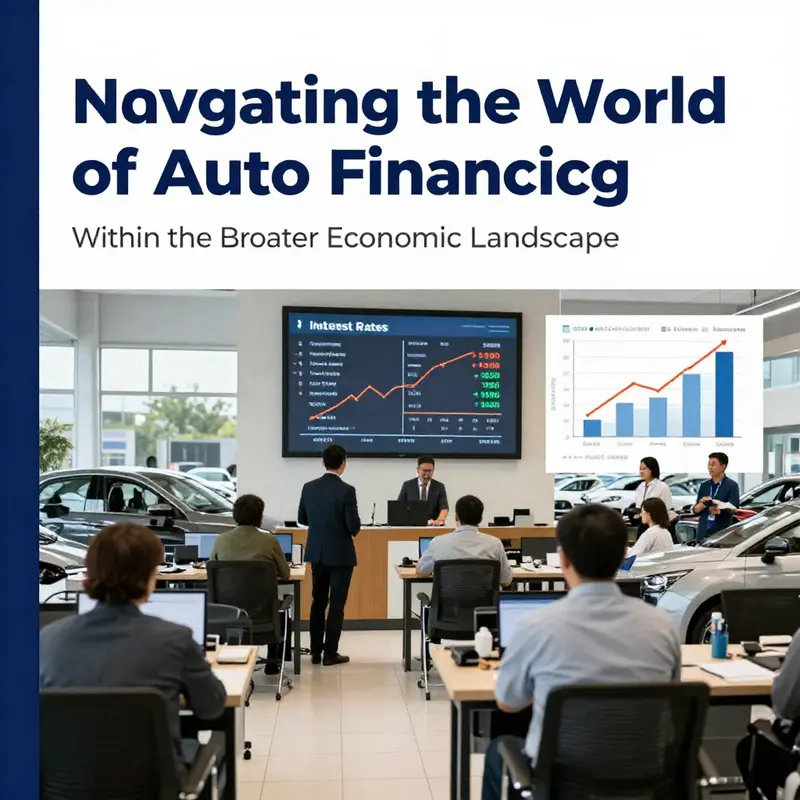
Auto financing is more than a receipt for a loan; it is a mechanism that links individual aspirations for mobility to the broader rhythms of the economy. When a buyer signs on a loan or a lease, they are not merely agreeing to a monthly payment; they are entering a partnership with a financial intermediary that transforms a large, upfront price into a manageable stream of obligations over years. The structure of that obligation—down payment, interest rate, repayment term, and the distinct paths of ownership or use—shapes the consumer’s financial footprint and, by extension, the pattern of demand across manufacturers, dealerships, insurers, and service providers. In practice, most borrowers begin with a down payment that reduces the amount financed and signals a level of commitment to the purchase. The remaining balance is then financed through a loan or, in many markets, a lease that spreads the cost of use over a specified term. The terms of that agreement are more than numbers on a sheet; they encode expectations about depreciation, maintenance, and the likelihood of continued employment or income to meet obligations. The interest rate, determined by the lender’s assessment of risk and the cost of funding, adds a price of capital onto the base vehicle price, transforming a one-time purchase into a long-term financial relationship. The typical repayment window—ranging from roughly two to seven years—frames how quickly the vehicle’s ownership asset is acquired or how rapidly a user can switch to a newer model. These mechanics, seemingly narrow in scope, ripple outward into consumer budgeting, credit scores, and decision-making under uncertainty, all of which influence how households allocate resources among essentials, discretionary goods, and debt service.
Yet the significance of auto financing extends well beyond individual households. When borrowers can access credit at affordable prices, demand for both new and used vehicles tends to rise. Dealers see a steadier stream of qualified buyers, which supports production schedules, inventory management, and the geographic distribution of dealership networks. Automakers can plan with greater confidence when financing options are plentiful, allowing the industry to align more closely with consumer preferences for features, trims, and technology packages. The infrastructure that supports these transactions—lenders, car dealers, title offices, insurers, and maintenance networks—also experiences a boost in activity. The result is a more integrated marketplace where financing is not an obstacle but a facilitator of mobility, reinforcing a cycle of consumption that stretches into insurance, parts, and service, as well as new hires and investment in related services across the supply chain.
Behind every loan or lease is a careful calculation of risk. Lenders evaluate a borrower’s credit history, income stability, and debt-to-income ratio to determine eligibility and price. These factors are evaluated through the lens of a borrower’s capacity to repay over the term, given changing economic conditions. A borrower’s credit score, income verification, and employment status influence not only the availability of financing but the cost of it. The process often begins at the dealership or with an online application, where the vehicle is selected and the financial package is assembled in parallel with the purchase. Lenders use standardized models to predict default risk and to price the loan accordingly. These models weigh past performance against forward-looking indicators such as expected wage growth and macroeconomic trends, creating a dynamic pricing environment where small shifts in unemployment or inflation can alter the affordability of a payment for many households. The delicate balance between risk and accessibility is central to how broad a segment of the population can participate in vehicle ownership or use, and it feeds into policy considerations about consumer credit and systemic resilience.
The distinction between loan financing and leasing is more than a legal formality. A loan buys ownership—albeit with the lender holding a lien until the debt is repaid—while a lease is a contract for use, often with a purchase option at the end. Ownership transfers only after final payment in a conventional loan, whereas a lease transfers none of the depreciation risk to the lessee, who pays for the right to drive over a defined period. This difference has meaningful consequences for individuals and fleets alike. For a consumer, the decision hinges on anticipated mileage, lifestyle changes, and how strongly they value ownership versus flexibility. For a business, the choice influences fleet management strategies, residual value assumptions, and depreciation schedules for tax and accounting purposes. Leasing can offer lower monthly payments and access to newer models, appealing to those who prefer frequent upgrades or who drive within predictable ranges. A loan, by contrast, can provide greater financial certainty for those who intend to keep a vehicle beyond the term or who see depreciation as a manageable risk that aligns with long-term financial planning. In both cases, the lifecycle costs—maintenance, insurance, taxes, and depreciation—are embedded in the contract and carry implications for household budgets and corporate cash flows alike.
The broader economic fabric within which auto financing operates is both dynamic and interconnected. Financing acts as a conduit that channels household savings and bank liquidity into consumer purchases, which in turn stimulate production and jobs across multiple industries. When financing is accessible and affordable, households feel more confident about discretionary spending, and that confidence translates into higher retail activity. Auto-related expenditure does not occur in a vacuum; it touches insurance markets, maintenance providers, and aftermarket suppliers, all of which benefit from the sustained demand. This cascading effect helps to sustain employment in manufacturing hubs, logistics networks, and regional service centers, reinforcing the economic multiplier associated with durable goods purchases. The relationship between financing and demand is not static. It shifts with the ebb and flow of monetary policy, inflation expectations, and employment conditions. In periods of rising interest rates or higher inflation, the cost of borrowing climbs, dampening a portion of potential demand. In such times, households and businesses might delay purchases or seek smaller, more affordable vehicles, which can alter the composition of demand toward used vehicles or downtraded options. Conversely, when rates stabilize or fall and incomes rise, financing becomes more attractive, stimulating a broader segment of buyers to participate in the market. This sensitivity underscores why auto financing is often considered a bellwether for consumer credit conditions and for the health of the broader economy.
From the perspective of market participants, the financing landscape is evolving beyond traditional banks and credit unions. Specialized auto finance companies, fintech lenders, and integrated service platforms are shaping who funds vehicles, how risk is priced, and how quickly a consumer can move from selection to driving. In many markets, a technology-forward financial services firm connects banks, dealerships, insurers, and manufacturers to provide a cohesive financing experience. These ecosystems focus on streamlining credit checks, automating underwriting, and delivering real-time approval decisions that shorten the journey from showroom to road. The benefits extend to inventory management for dealers, who can optimize stock levels with more predictable financing demand, and to lenders, who gain access to larger pools of data and more sophisticated analytical tools for risk assessment. In practical terms, this means quicker approvals, more tailored financing terms, and a more transparent experience for buyers. The rise of such integrated platforms illustrates how financing has become a strategic lever for the entire mobility economy, rather than a discreet financial product confined to a borrower and a lender.
In discussing the macro outlook, it is essential to consider the numbers that economists and industry researchers point to when describing the scale and trajectory of auto financing. Recent market analyses place the global automotive financing market in the hundreds of billions of dollars, with projections indicating continued expansion. For instance, estimates show a value of roughly 350 billion U.S. dollars in 2026, with a compound annual growth rate around 7.6 percent, signaling a steady expansion that could push market size toward roughly 500 billion dollars by the early 2030s. These figures, while subject to revision, reflect a long-run trend: financing remains a durable channel through which households acquire mobility and through which financial markets allocate capital to a high-value asset class. The implications for policy and regulation are meaningful as well. A growing financing market invites attention to consumer protection, credit underwriting standards, and the risk management practices of lenders and securitization markets. All of these elements intersect with broader financial stability objectives and with consumer welfare considerations, reminding observers that auto finance sits at the nexus of personal finance and macroeconomic stewardship.
The growth in auto financing is also tightly linked to the evolving landscape of personal wealth and household balance sheets. Individuals increasingly view a vehicle as a durable good that supports work and family life, yet it remains a significant financial commitment. As the cost of capital shifts, consumers may adjust the mix of payment structures they pursue—opting for longer terms to reduce monthly payments, or seeking incentives and down payment assistance to keep total interest costs manageable. Businesses, on the other hand, approach financing as a tool for operational efficiency. Fleet procurement, maintenance planning, and resale value are all shaped by how financing arrangements are structured. A company may favor finance solutions that synchronize depreciation with usage patterns, align with tax planning, and provide flexibility to adjust fleet size in response to demand fluctuations. In both cases, the ability to access credit under favorable terms broadens the pool of potential buyers and lessees, supporting the overall health of the industry while also imposing new considerations for risk management and capital allocation.
The interconnectedness of auto financing with other sectors underscores the idea that mobility is not simply a personal asset but a driver of economic ecosystems. Insurance demand tends to rise in proportion to vehicle ownership and utilization, while maintenance and aftermarket parts industries experience more stable demand when vehicle turnover is steady and when financing sustains consumer purchasing power. For businesses, the financing of fleets influences logistics efficiency, driver recruitment, and capital budgeting. It also shapes the incentives that fleets have to adopt newer technologies, such as telematics, alternative fuel strategies, and advanced driver assistance systems, all of which can affect long-term operating costs and reliability. In this sense, auto financing serves as a financial accelerator for productivity, enabling more efficient movement of people and goods, which in turn contributes to regional growth, rural access, and urban mobility.
In discussing the future, it is important to acknowledge how technology will continue to transform the financing process itself. Digital onboarding, real-time underwriting, and data-driven pricing will further reduce friction and expand access to credit across diverse populations. At the same time, lenders will need to balance innovation with responsible lending practices, incorporating broader data sources and improving the transparency of terms to ensure consumer understanding. The availability of alternative data—such as employment stability, rent payment history, and other non-traditional credits—could help expand access for individuals with thin traditional credit files, promoting financial inclusion without compromising risk controls. As this evolution unfolds, the collaborative potential among banks, specialized finance providers, and the broader ecosystem will become increasingly important. A technology-enabled network can align incentives among dealers, manufacturers, lenders, and insurers, creating a more resilient and responsive market that can weather cyclical downturns and respond to shifting consumer preferences for vehicle ownership or use.
In the end, the conversation about auto financing within the broader economic landscape centers on choice, risk, and opportunity. For millions of households, financing unlocks mobility that supports employment, education, and social participation. For businesses, it enables efficient fleet operations, strategic procurement, and scale. For lenders and policymakers, it is a signal of credit conditions, consumer confidence, and financial stability. The equilibrium among these forces is delicate, evolving with interest rates, inflation expectations, and labor market developments. Yet the thread that runs through it all is clear: access to thoughtfully structured auto financing reshapes not only what people drive, but how economies grow, how communities connect, and how the future of mobility takes shape. Readers seeking practical strategies to navigate this landscape can explore resources in the knowledge hub linked here, which offers guidance on aligning mobility goals with prudent financial planning. Knowledge hub
For a broader understanding of market dynamics and forecasts referenced in industry analyses, see the external resource that surveys the scale and trajectory of automotive financing on a global level: Global Automotive Financing Market Size, Growth, Trends & Industry Report.
Final thoughts
Understanding how auto financing works is essential for anyone looking to purchase a vehicle, whether for personal use or business operations. Buyers should consider the dynamics of loans and leases, recognize the significant influence of credit scores, and remain aware of the broader economic conditions that impact financing options. By being informed choices, stakeholders can navigate the auto financing process with confidence and achieve both affordability and flexibility in their vehicle purchases.