

Securing auto financing with a credit score below 600, especially around the 500 mark, can be fraught with challenges. Many potential car buyers find themselves in a difficult position where traditional lenders often view them as high-risk borrowers. This reality not only complicates the loan approval process but also leads to unfavorable interest rates. In this comprehensive guide, we will explore the unique obstacles faced by those with a 500 credit score, providing a thorough understanding of the interest rates applicable to this category, available financing options, and the pivotal importance of credit score improvement. Additionally, we will discuss the significant role that co-signers can play in securing better financing terms. Each chapter aims to equip you with the knowledge and strategies necessary to navigate the complex auto financing landscape effectively.
Riding Against the Odds: Navigating Auto Financing with a 500 Credit Score

A 500 credit score lands you in a space where most lenders see danger signals rather than opportunity. It’s more than a number; it’s a message about risk, repayment history, and the odds a creditor assigns to future behavior. When you’re in the subprime range, especially at the very bottom end, auto financing becomes less about speed and more about strategy. The goal shifts from securing any loan to shaping a pathway that makes financing possible at terms you can live with. The road ahead is steep, but it’s not impassable. With a clear plan, you can position yourself for an approval, avoid the most punishing costs, and lay the groundwork for better terms in the future.
Bankrate’s latest snapshot of subprime auto lending paints a sober picture. For borrowers with credit scores between 501 and 600, average auto loan interest rates typically range from about 9.8% to 14.1%, and some lenders push higher depending on the borrower’s overall profile and the vehicle in question. Those numbers aren’t abstract; they translate into thousands of dollars in extra interest over the life of a loan. What’s more, some lenders will demand larger down payments, shorter loan terms, or even a co-signer to offset the perceived risk. It’s a cost of entry that reflects the system’s cautious stance toward borrowers who have demonstrated past credit trouble. The reality is harsh, but it is also navigable with the right moves and expectations.
The practical upshot of that landscape is simple: if your score is 500, you should expect tighter underwriting and more stringent terms than someone with a higher score. Traditional banks and many credit unions will be hesitant, often requiring clear evidence of income stability, a favorable debt-to-income ratio, and a willingness to shoulder substantial upfront costs. In practice, this means you’re unlikely to stroll into a lender with a casual plan. You’ll present a package—earnings history, tax returns or pay stubs, a record of on-time payments on other accounts, a budget that demonstrates you can afford the car payment alongside existing obligations, and a down payment that signals commitment to the loan. The process becomes less about a quick decision and more about demonstrating reliability in small, verifiable steps.
What does this mean for your approach to buying a car? It means you should begin with a realistic, bottom-line budget, not a dream car list. A high-interest loan carried by a low-score borrower can drastically increase the total cost of ownership. The car you choose should be dependable, economical to insure and fuel-efficient, and inexpensive to maintain. A vehicle with a lower purchase price paired with a modest, well-structured loan can keep monthly payments within a manageable range, even when interest rates run high. The alternative—entering a purchase with a high monthly payment—can quickly become a financial trap, particularly if your income changes or expenses rise. In these moments, the difference between a reasonable loan and an unaffordable one often comes down to discipline, careful planning, and options that aren’t immediately obvious.
One important and sometimes overlooked factor is the role of a down payment. For borrowers with a 500 score, a larger down payment isn’t just a cushion; it’s a doorway. It reduces the financed amount, lowers monthly payments, and signals to lenders that you have a stake in keeping the loan current. If you can accumulate 10% or more of the vehicle’s price as a down payment, you improve your odds of receiving a loan on terms that don’t annihilate your monthly budget. The same logic applies to the loan term. Shorter terms may seem attractive to reduce total interest, but they can drive up monthly payments to uncomfortable levels. A calibrated balance—long enough to keep obligations manageable, short enough to avoid ballooning costs—can be the difference between a loan you can afford and one that stretches your finances beyond their limit.
Beyond down payments and term length, the possibility of a co-signer often becomes part of the conversation. A co-signer with solid credit history reduces the lender’s risk, which can unlock loan approval and more favorable rates. However, this arrangement deserves careful consideration. Co-signing ties two financial lives together; if the primary borrower misses payments, the co-signer’s credit is affected. For the co-signer, that means real financial exposure. For the borrower, it means you must demonstrate a plan that will protect both parties. If you’re considering this route, have an honest, explicit conversation with the potential co-signer about repayment responsibilities, cushions for tough months, and a documented plan to avoid late payments. The presence of a co-signer can be a turning point, but it is not a silver bullet and should be pursued thoughtfully.
Income stability is another pillar lenders scrutinize. With a credit score as low as 500, lenders want proof that your income is steady and that your debt obligations do not overwhelm your monthly budget. They’ll look for a low debt-to-income ratio, consistent employment history, and, ideally, a predictable cash flow that covers the car payment along with living expenses. If your job history is patchy, or if your income fluctuates with seasonal work, you’ll need to compensate with documentation—contracts, recent pay stubs, or bank statements that illustrate the capacity to meet obligations. In some cases, borrowers with the right mix of income stability and down payment can still secure financing in the subprime space, though the terms will reflect the increased risk.
For many buyers, the conversation turns toward options that are designed for subprime borrowers. Specialized lenders exist that consider applicants who fall outside mainstream lending criteria. These lenders may offer “bad credit car loans” with more flexible criteria, acknowledging that past credit missteps do not always predict future behavior. Yet those options come with higher costs and stricter terms. It is essential to walk into such conversations with a clear cost-benefit lens: understand the true annual percentage rate, the total amount financed, and the required down payment. A loan that seems manageable on a monthly basis could still drain your finances over the term due to high interest and fees. The general guidance is to view these specialized paths as a stepping-stone rather than a final destination—an experience that helps you rebuild credit and regain negotiating power for better terms later on.
If your goal is to progress toward better financing, credit improvement is a central piece of the puzzle. A deliberate plan to raise your score can alter the landscape significantly over a period of months. Practical steps include paying down existing debts to reduce your overall balance, ensuring all payments are made on time, and disputing inaccuracies on your credit report that drag your score down. People often discover old errors or unrecognized activities that, once corrected, yield incremental score gains. Secured credit cards can be a practical tool to build a positive payment history when used responsibly. Each timely payment adds a positive data point that lenders weigh when evaluating risk. The strategy isn’t about a quick fix; it’s about creating a reliable track record that convinces lenders you can handle larger, longer commitments in the future.
A well-structured plan to improve your credit also helps you in other ways. It broadens your options beyond high-interest subprime loans. For example, as your score climbs, you may begin to access a wider pool of lenders and more favorable terms on both used and newer vehicles. The difference between a 600 and a 550 score is often a matter of thousands of dollars in total interest over the life of a loan. While it may be tempting to settle for a subprime loan that offers quick access to a vehicle, the long-term financial picture frequently argues for restraint and a longer horizon. If you’re feeling uncertain about where to begin, consider tapping into sources that consolidate practical, actionable steps for rebuilding credit and financing decisions. Our knowledge hub provides a centralized starting point for understanding how to balance credit health and transportation needs: knowledge hub.
Choosing the right vehicle within a constrained budget is another critical dimension. The sticker price is only part of the equation. Insurance, maintenance, fuel, and the depreciation of a used car all contribute to the total cost of ownership. In the subprime space, lenders often emphasize the ratio of the monthly loan payment to monthly income, and this makes the affordability calculation particularly important. A vehicle that is inexpensive upfront but costly to insure or expensive to repair can become a financial trap. The disciplined buyer focuses on reliable, economical options with low maintenance costs and good fuel efficiency. Prioritizing durability and predictable ownership costs helps prevent a financing plan from turning into a long string of monthly payments that hamper progress in other areas of life.
The process itself, though it can feel labyrinthine, becomes more navigable with preparation. Gather documentation that supports income stability: recent pay stubs, tax returns, and any other proof of consistent earnings. Compile a list of monthly obligations to clearly illustrate how a potential loan payment would fit into your budget. Have a down payment goal in mind, and consider how to allocate funds toward it without sacrificing essential living costs. When you approach lenders, present a careful, organized package rather than a casual inquiry. This demonstrates seriousness and readiness, qualities that lenders value when risk is high.
In the end, the path to auto financing with a 500 credit score hinges on realism, disciplined financial behavior, and strategic choices. It is not a straight line to approval, but it is a navigable route. You will likely encounter higher interest rates, larger down payments, and more demanding documentation than borrowers with stronger credit. You will also discover that the more you invest in improving your credit now, the more options you unlock down the road. This is not merely about buying a car; it is about building the financial habits that will empower you to secure better terms and broader opportunities in the future. If you are pursuing this path, let your plan be methodical: strengthen your credit where possible, secure the essential down payment, and refrain from taking on additional debt that could derail your progress. And as you advance, keep your eyes on the horizon—on the day when your credit score has risen enough to transform a subprime loan into a conventional loan with reasonable rates. That is the broader objective of this chapter: turning a challenging starting point into a foundation for more sustainable, affordable transportation.
External resource: Experian guide on Can You Get a Car with a 500 Credit Score?
Subprime Realities: Understanding Auto Financing at a 500 Credit Score and the Road to Better Rates
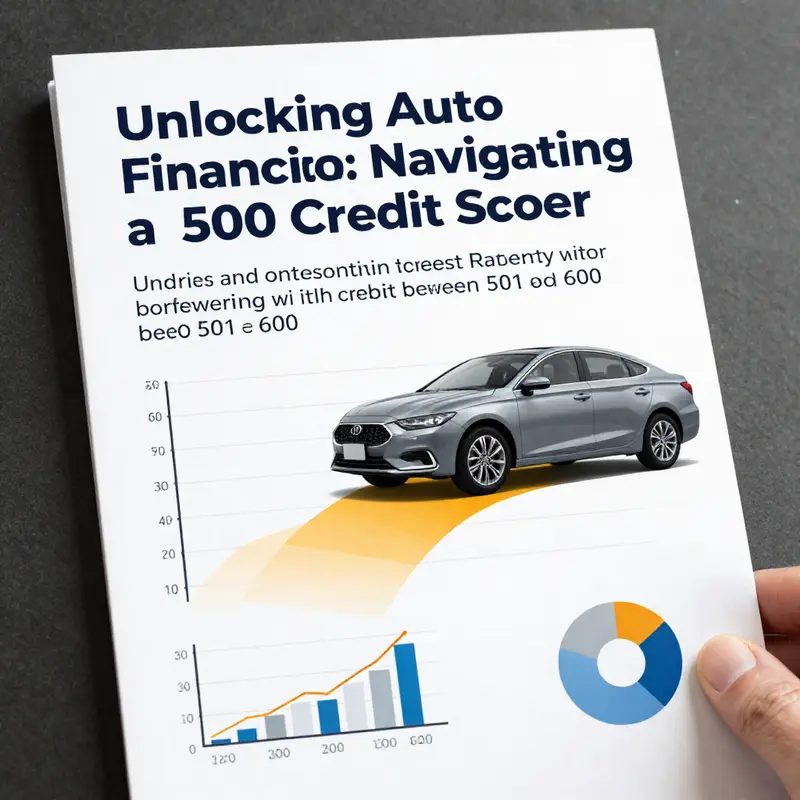
A credit score of 500 sits squarely in the subprime zone, where lenders treat borrowers as high risk and the terms of any loan reflect that reality. When the car keys are just inches from your grasp but your credit history carries a sting of missed payments or extended delinquencies, the road to financing looks markedly different. It’s not simply about whether you can borrow, but about what you will owe over the life of the loan and how fragile that arrangement can be when life throws a curveball—an unexpected car repair, a sudden change in income, or a medical bill that surfaces six months into the term. In this space, the stakes are not just about getting a car but about balancing the daily need for transportation with the long-term health of your finances. The good news, if there is any here, is that financing is not impossible, but the terms tend to be notably harsher and the path forward demands careful planning and a clear view of the trade-offs involved.
Banking on up-to-date data is essential when you’re navigating subprime auto loans. Recent figures compiled by Bankrate show that for borrowers with credit scores in the 501–600 range, average auto loan interest rates typically fall in the broad band of roughly 9.8% to 14.1%. Those numbers reveal a landscape where even the best possible offers within that tier come with a cost that can significantly add to the total amount paid for a vehicle. If your credit score hovers around 500, you’re likely to encounter rates at the upper end of that spectrum, and in some cases beyond it. Lenders may also look for additional assurances—larger down payments, shorter loan terms, or a co-signer wielding a stronger credit profile—to offset the risk they’re taking on. This is not mere theory; it is a practical framework that shapes every loan decision in the subprime space and can push monthly payments into a range that compounds the overall cost of ownership.
The implications extend beyond the headline interest rate. A higher rate compounds the total interest paid over the life of the loan, which can be especially painful when the vehicle’s depreciation outpaces the payoff. For someone starting with a 500 credit score, even modest differences in rate or term can translate into thousands of dollars in additional interest. A longer loan term might appear attractive because it reduces monthly payments, but it often ends up costing more in interest and can trap a borrower in a cycle where the car’s value falls below the loan balance. Shorter terms, while keeping total interest lower, raise monthly payments and can strain a household budget if the income stream fluctuates. In this context, the decision is rarely about affordability in a vacuum; it’s about sustainable budgeting, risk tolerance, and the likelihood of credit improvement in the coming years.
Approval considerations in this arena also matter. When your score is in the subprime range, lenders approach your application with heightened scrutiny. They will scrutinize income stability, debt-to-income ratio, existing obligations, and recent credit activity. You may be asked to provide a larger down payment to reduce the loan’s principal and thus the lender’s risk. In some cases, a co-signer with a stronger credit profile becomes a practical pathway to access more favorable terms. A co-signer can unlock financing that would otherwise be out of reach, but it also transfers some of the risk to another person’s credit and financial standing. There is value in discussing one’s overall financial strategy with a trusted partner who understands both short-term liquidity and longer-term credit-building goals.
Beyond the rate itself, there are sometimes operational hurdles to anticipate. Lenders may limit the loan term to shorter durations, constraining amortization and potentially increasing the monthly burden. They may also require that a vehicle be of a certain age or condition, or insist on a vehicle that holds stronger resale value or lower maintenance risk. The consequence is a financing package that is highly tailored to risk, not just to need. For many buyers with a 500 score, the practical approach includes a thorough assessment of total costs—monthly payment, insurance, maintenance, fuel, and potential repair scenarios—before committing. The aim is to ensure that securing transportation does not become a financial liability that threatens other essential expenses.
In this context, the question shifts from whether you can obtain financing to how to structure a path toward more favorable terms over time. Several strategies consistently show promise for improving loan outcomes, even when your credit score sits at 500. One widely recommended move is to secure a meaningful down payment. By reducing the principal and presenting a larger upfront stake, you demonstrate commitment and risk reduction to lenders. A larger down payment can help mitigate outright risk, which may translate into a lower interest rate within the subprime range or, at minimum, a more manageable monthly payment. It is a practical tactic that aligns with the principle of hedging against depreciation and the possibility that the vehicle will require more than routine maintenance in the early years.
Another core strategy is to actively work on credit health while shopping for financing. This means first ensuring your file is accurate and free from errors, then addressing any negative items with a plan to rebuild. Budget-conscious borrowers often begin by prioritizing timely payments on existing debts, reducing revolving balances, and avoiding new credit inquiries during the loan-seeking window. While it can be tempting to pursue a quick financing fix, the longer-term payoff lies in steady, positive credit behavior that gradually shifts the risk calculus for lenders. In parallel, consider credit-building tools that are designed to strengthen your score without taking on unsustainable debt. A credit-builder loan or a secured credit card can offer a structured way to demonstrate ongoing payment reliability, which, over time, can open doors to better lending terms not just for auto loans but for other financing needs as well.
Location matters as well. Local lenders, credit unions, and community banks often take a different view of risk compared with national or online lenders. In some cases, smaller institutions are more flexible in considering compensating factors, such as steady employment, a long history with a local bank, or a clear plan for improving credit in the near term. For borrowers who are actively pursuing credit repair, a thoughtful discussion with a lender about the trade-offs, such as a higher down payment or a shorter initial term, can yield alternatives that still respect the realities of a tight credit environment. It’s essential to calibrate expectations: while the dream of a low-rate auto loan may seem distant, it is possible to edge toward more favorable terms by combining down payment, credit improvement, and careful lender selection over a defined period.
As you navigate these options, it can be helpful to broaden your information base and connect with resources that explain credit and financing in clear terms. For readers seeking a deeper, more structured understanding of how credit scores interact with auto loan pricing, the knowledge hub on our site offers primers, checklists, and explanations that can guide decisions without feeling overwhelming. This is not a sales pitch but a practical repository to help you build confidence as you plan your next steps. Explore the knowledge section when you want to refresh the basics or map out a concrete plan for credit improvement and loan shopping. knowledge
Of course, there are scenarios where financing remains challenging despite best efforts. Some buyers choose to delay a purchase until their credit improves, while others pursue alternative arrangements that may be riskier in the long run. For example, certain subprime-oriented financing channels advertise easier approvals but come with substantially higher rates and steeper penalties for late payments. Those paths can trap borrowers in cycles of high-cost debt, especially if the vehicle depreciates quickly or if maintenance costs begin to accumulate. The longer you wait, the more time you grant yourself to stabilize income, reduce debt, and steadily lift your credit score. The decision is not simply about getting a car today; it’s about aligning a vehicle with a financial plan that sustains your overall financial health over the next several years.
In contrast, a disciplined approach that emphasizes down payment, timely payments, and gradual credit repair often yields dividends that extend beyond the next loan. As you pursue these steps, keep a close eye on the total cost of ownership, not just the monthly payment. A higher-rate loan with a longer term might appear affordable on a month-to-month basis, but the cumulative interest and the risk of negative equity can undermine your broader financial goals. The arithmetic of subprime financing is unforgiving if you neglect the long view. It helps to run the numbers, project different scenarios, and compare the anticipated total payments across several lender proposals before signing anything. If a particular offer feels tight, ask questions about prepayment options, insurance requirements, and any penalties for early payoff. Understanding these details before you commit can prevent surprises after the fact.
Ultimately, the question is not a binary yes-or-no about whether you can finance a car with a 500 credit score. It is a multi-dimensional assessment of risk, cost, and timing. It’s about recognizing that while a loan is possible today, the real objective lies in structuring a pathway toward better terms in the near future. That pathway often includes a deliberate plan to strengthen credit, a down payment that demonstrates seriousness, and a willingness to consider lender partners who value risk mitigation. In this context, your next steps matter as much as the car you select. The right approach balances immediate transportation needs with the longer-term objective of rebuilding credit, reducing the cost of borrowing, and ensuring you have the flexibility to adapt if life’s expenses evolve.
For readers who want to verify the current rate landscape as they weigh offers, the external data from industry trackers remains a helpful anchor. It’s a reminder that rate realities shift with economic conditions, and staying informed is a practical form of financial stewardship. You can review the latest correlations between credit scores and auto loan pricing to calibrate expectations against what lenders are actually offering today. This careful, informed stance increases the likelihood of securing a loan that fits your budget without compromising your financial security in the years ahead.
External reference for rate data: https://www.bankrate.com/loans/auto-loans/average-auto-loan-interest-rates-by-credit-score/
Rough Roads, Real Options: Securing Auto Financing with a 500 Credit Score
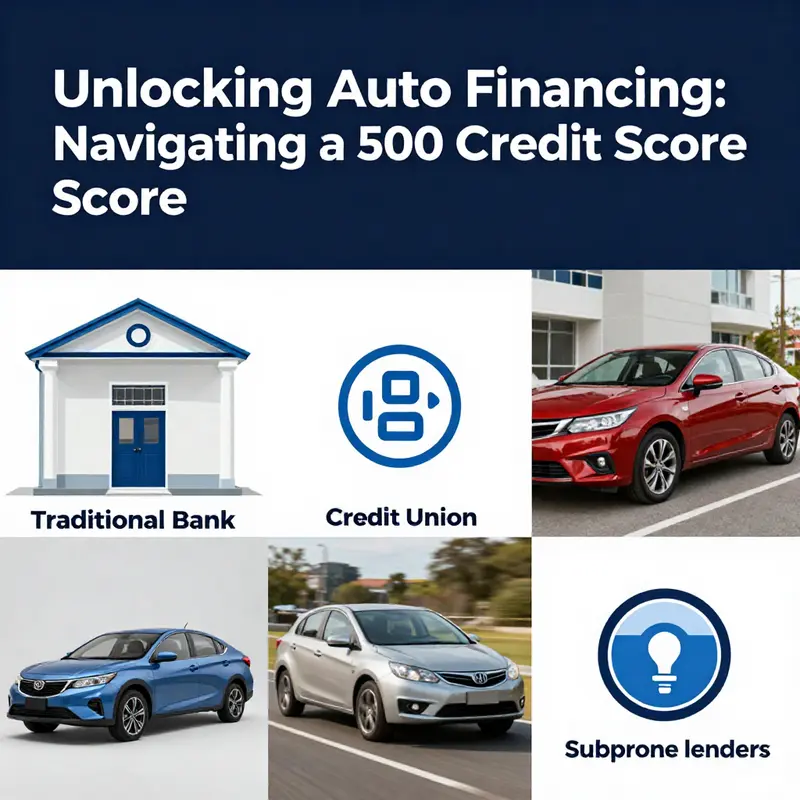
A credit score around 500 instantly signals a tough purchase ahead, and many buyers feel the weight of that label before they start shopping for cars. In the auto lending landscape, scores like yours are typically categorized as subprime, a descriptor that lenders use to flag higher risk. The risk is not only a matter of whether you will be approved, but also what kind of terms accompany the approval. For people sitting at the 500 mark, the probability of a denial is higher, and if a loan is offered, the interest rate tends to reflect the risk in bite-sized chunks—rates that can push monthly payments into a range that makes budgeting difficult. It helps to ground expectations in current data: for borrowers with credit scores in the roughly 501 to 600 range, average auto loan rates have hovered in the upper single digits to mid-teens, and some lenders push even higher depending on other factors. While those figures describe an average, the actual offers you encounter depend on a blend of your income, employment history, debt level, and the amount you’re trying to borrow. As of early 2026, the landscape remains challenging but navigable, especially for buyers who approach the process with a clear strategy and a willingness to move deliberately rather than impulsively. A complete picture also points toward several distinct paths rather than a single obvious route, each with its own trade-offs and safeguards.
To understand why these options exist and how they interact with your long-term financial health, it helps to separate the decision into practical steps rather than a single leap of faith. The first consideration is the trade-off between access and cost. Subprime lenders, whether specialized finance shops or in-house dealer programs, tend to approve auto loans for people with low credit scores when other compensating factors are present—stable income, verifiable employment, and a reasonable down payment. Yet that accessibility often comes at a price: higher interest rates, shorter terms, or stricter repayment conditions. When you examine offers, you’ll frequently see a spectrum: some lenders provide a quick path to approval but with rates that swallow a portion of your budget; others offer more manageable terms but require more stringent qualifying criteria. The balance you strike will shape your monthly payments and your overall financial wellbeing for years to come.
One of the most common routes is a subprime auto loan from a lender that specializes in higher-risk borrowers. These lenders design products with more flexible approval criteria, sometimes going beyond a credit score alone to assess your ability to repay. They frequently accept borrowers with credit scores below 600 and, in some cases, even lower than 500. The catch, however, is clear: the rate can be substantially higher—often in the mid-teens to the mid-twenties or beyond—and repayment terms may be shorter than conventional loans. There is a logic to this: higher risk requires greater compensation to the lender for the possibility of default. If you pursue this path, you should go into negotiations with a clear view of the total cost of the loan, not just the headline rate. Understand the annual percentage rate, the loan term, any fees, and the total interest you would pay over the life of the loan. It’s not unusual for a subprime loan to come with additional charges that are not immediately obvious at the outset, so a careful, disciplined review of the contract is essential.
Another widely accessible channel is the credit union. Credit unions often operate with a community-focused approach and may extend more favorable terms to members who bring a solid income, stable employment, and a history of making payments on time, even if the credit score isn’t strong. They tend to look at the borrower holistically, weighing factors like recent payment behavior, consistency of income, and the ability to manage money. A pre-approval process at a credit union can reveal your options without the pressure of dealership lingo and upsell tactics. If you’re already a member, or if you can join through an affiliation, you may find a higher likelihood of favorable terms, plus access to guidance that can help you manage a budget around transportation. A crucial advantage of credit unions is their willingness to offer structured programs that emphasize responsible credit-building over high-pressure sales tactics. In many cases, these institutions provide tools to monitor your credit health and to set up automatic payments that protect your score from further erosion while you work toward improvement.
Dealer-financed loans, or in-house financing, present another route that buyers sometimes pursue when time is of the essence or when traditional lenders appear unreceptive. Dealerships can move quickly and, with a down payment or a co-signer, they may offer an approval when others refuse. But this speed comes with a price tag. In-house programs often carry higher interest rates and may include fees that complicate the true cost of the loan. Hidden extras or less favorable terms can sneak into the fine print, so you should proceed with a trained eye and a willingness to walk away if the deal doesn’t align with your budget. If you choose this path, insist on a detailed breakdown of every component of the loan, request written disclosures, and compare the final numbers against a clear, side-by-side calculation with other options.
Secured auto loans offer another practical option worth examining, especially for those who can put collateral on the line. A secured loan means the car itself serves as collateral, so the lender bears less risk if you default. In practice, this arrangement can translate into lower interest rates relative to unsecured subprime loans, which can be a meaningful difference over time. Secured options are not universally available, but some credit unions and online lenders periodically promote programs designed for buyers who need to limit the cost of borrowing while still maintaining a realistic path to ownership. The important caveat is that if you fail to meet payments, you risk losing the vehicle as well as your opportunity to repair credit with a timely, successful payoff. Because of that risk, you should only pursue secured financing if you’re confident in your ability to maintain steady payments and the specific terms you’re agreeing to.
Co-signers are another option, often recommended when you want to improve your odds of approval and secure more favorable terms. A reliable co-signer with strong credit can reduce perceived risk for lenders, which can translate into lower rates or looser conditions. This strategy, however, comes with responsibility—the co-signer shares legal liability for the loan, so it must be approached with full transparency and mutual trust. If you’re considering this route, discuss the implications openly with the person involved and prepare to demonstrate a plan for repayment that protects both of you from unforeseen hardship.
Beyond the mechanics of any single loan, there is a strategic imperative: you don’t have to lock yourself into a single, high-cost option. The most prudent approach is to treat auto financing as a step in a broader financial plan, one that prioritizes stability and the gradual improvement of your credit profile. And that brings us to the most powerful lever you can pull before you sign any contract: credit improvement. Even modest improvements in your score can yield meaningful reductions in interest costs. The steady, deliberate discipline that builds a stronger credit history—timely bill payments, reducing overall debt, and addressing any inaccuracies on your credit report—can slowly tilt the odds in your favor. A small nudge upward, from 500 toward 550 or higher, shifts you into a different bracket of affordability and expands the space you have to negotiate. It is not a quick fix, but it is a real, measurable path toward more sensible terms that will support your financial health down the line.
As you navigate these choices, a few guiding principles help you protect yourself and your budget. First, shop around. Talk to multiple lenders, ask precise questions, and request written estimates so you can compare apples to apples. Second, read every document closely before you sign. The cheapest rate on the table can be overshadowed by hidden fees or onerous terms elsewhere in the contract. Third, guard against predatory practices. If a deal sounds too good to be true or uses pressure tactics to lock you in quickly, step back and reassess. Finally, ensure that the monthly payments you agree to fit within your budget, even after accounting for potential future changes in income or expenses. An unaffordable loan is not a solution; it is a risk that compounds financial vulnerability.
If you want a concise primer on how current subprime auto financing is evolving and what borrowers commonly encounter, you can consult broader resources that summarize lending trends and rate ranges. For readers seeking a deeper dive into the landscape, the following external resource provides up-to-date context and calculations that can help you model your own scenario before approaching lenders. Davis Financial Advisors Knowledge also offers practical frameworks for evaluating debt, budgeting for transportation costs, and planning credit-building steps that align with long-term financial health.
In sum, a 500 credit score does not erase the possibility of auto ownership, but it does demand a careful, informed approach. By exploring subprime options with eyes open to cost, leveraging the potential strength of a credit union, considering dealer or secured financing only after thorough scrutiny, and actively pursuing ways to lift your credit over time, you preserve flexibility and reduce the chance of a costly misstep. The objective is not merely to secure a loan but to establish a financing arrangement that supports reliable transportation while strengthening your financial base for the months and years ahead. With patience, due diligence, and a clear plan, you can turn a difficult starting point into a sustainable path toward ownership that remains affordable even as your credit improves.
External reference for further reading: https://www.bankrate.com/loans/auto-loans/best-bad-credit-auto-loan-rates-march-2026/
From Subprime to Sound Financing: Rebuilding Your Credit to Drive Auto Approval

Your credit score is more than a number; it’s a signal to lenders about how reliably you manage money over time. When you’re staring at an auto loan with a 500 credit score, you’re peering into a highly constrained corner of the credit markets. Subprime status makes lenders view you as a higher risk, and that risk is priced into every term of a loan—from the interest rate you’ll pay to whether you’re asked to put down a larger down payment or to bring in a co-signer. The latest data available as of early 2026 shows that for borrowers with credit scores in the 501–600 range, average auto loan interest rates typically fall between roughly 9.8% and 14.1%. Some lenders push even higher, and many will insist on a substantial down payment or require a co-signer. These numbers aren’t just abstractions; they translate into hundreds or thousands of dollars in extra interest over the life of a loan, and they drastically shape whether a vehicle purchase is financially sustainable. If you’re currently operating with a score near 500, the prudent path isn’t to rush into a purchase that locks you into expensive financing, but to view the situation as a strategic opportunity to reboot your financial profile, broaden your options, and reduce the total cost of ownership over time.
The mechanics behind a loan decision are straightforward in theory, though the human behavior behind the numbers can be complex in practice. Lenders rely on your credit score as a quick gauge of repayment reliability, a shorthand for decades of financial behavior. A higher score signals a track record of timely payments, prudent credit use, and a lower likelihood of default. In contrast, a score around 500 signals more volatility—late payments, higher credit utilization, recent credit applications, or a thin credit file. When a borrower’s risk appears elevated, lenders must balance the desire to close the loan against the risk of a future default. That calculus is what pushes interest rates higher and, in some cases, narrows the pool of willing lenders. The direct consequence is simple but powerful: the same car can cost you far more to borrow depending on your credit history, even if the vehicle and the monthly payment look similar to someone with a stronger score.
Yet there is a path forward. The same factors that created a subprime profile can be improved with disciplined, concrete steps. The improvement curve isn’t instantaneous, and it isn’t linear. Positive changes accumulate over months and, in some cases, take more time than hopeful buyers expect. But the science of credit improvement is well understood: payment history accounts for a large share of your score, followed by amounts owed and credit utilization, the length of your credit history, the mix of credit types you use, and new credit activity. Each category presents an opportunity to move the needle, sometimes in small increments that compound into meaningful change. A single late payment will momentarily set you back, but consistent on-time payments, a reasonable reduction in debts, and careful management of new credit inquiries can begin to shift the overall trajectory. In practical terms, this often means prioritizing current obligations, avoiding new debt that you can’t manage, and addressing any inaccuracies that may be dragging your score down.
Consider the impact of payment history first. Payment history is the largest single component in most scoring models. A pattern of on-time payments, even if your total debt remains high, signals that you are capable of meeting obligations. If you’re behind, create a plan to catch up and then stay current. It can be tempting to ignore a single delinquency, but even one late payment in the recent past can have a disproportionate impact on your score. Automating payments or setting calendar alerts helps ensure you don’t miss due dates, especially when life gets busy. If there are legitimate delinquencies in your file, addressing them through a goodwill adjustment letter or negotiating a pay-for-delete arrangement with a creditor—where permissible—can sometimes remove or reduce their impact. While not universally available, these steps are part of a broader strategy to improve reliability in lenders’ eyes.
Next, the amount you owe relative to your credit limits—your utilization—plays a crucial role. A common rule of thumb is to keep overall utilization well under 30%, and ideally closer to 10% for the best leverage. This doesn’t require paying off every debt immediately, but it does require a plan to reduce balances systematically. Simple approaches—making an extra payment mid-cycle, requesting credit limit increases (without spending more), or prioritizing high-interest accounts—can create meaningful changes in a few billing cycles. The psychology of debt matters here as well; reducing the sense of “maxed out” utilization can help you stay on track with on-time payments, which amplifies the positive momentum.
Your credit history length and mix also influence your score, though these are elements you have less immediate control over. If you’re younger or newly rebuilding, the length of credit history will gradually improve as you add positive payment experiences over time. A healthy mix—revolving credit like credit cards (used responsibly) alongside installment loans you’ve successfully repaid—can provide a more favorable profile than a single, isolated line of credit. The key is not to chase every available credit product but to cultivate responsible behavior across the accounts you already hold. And while it’s tempting to reopen old accounts to extend your history, this can backfire if those accounts are closed due to inactivity or if new inquiries accompany the reopening. Patience, over time, becomes a strategic asset rather than a sign of weakness.
For those who need to move sooner rather than later, the reality is that a 500 credit score will limit the pool of lenders and the terms you’ll be offered. You may encounter offers that include stricter terms, higher required down payments, or even a need for a co-signer. A co-signer can dramatically improve your odds of approval and may secure a more favorable rate, but it comes with serious responsibility for the co-signer. If the primary borrower misses payments, the consequences extend to the co-signer’s credit and finances. This is not a decision to be taken lightly, but for some households, it’s a viable bridge to a vehicle that fits their needs while they work on their own credit improvement. If you pursue this route, it is essential to have a formal, written plan with realistic targets for payment progress and a clear understanding of what would happen if you encounter financial stress later on.
Down payments also serve a dual purpose. A larger down payment reduces the loan-to-value ratio, which lowers monthly payments and can help you secure more favorable terms from lenders who might otherwise view you as too risky. A substantial down payment signals cash discipline and reduces the amount borrowed, which can translate into a meaningful reduction in total interest paid over the life of the loan. Even modest increases in down payment relative to the loan amount can tilt the negotiation in your favor, particularly when your score isn’t strong. A down payment also cushions against rapid depreciation in the vehicle’s value—an important consideration in subprime scenarios where the vehicle’s resale value could outpace the outstanding loan balance if your circumstances change.
Another tool in the toolkit, though one that requires careful balance, is the possibility of working with lenders who specialize in subprime borrowers. These institutions understand the constraints of low credit scores and often tailor programs that help borrowers move toward better terms. The trade-offs, however, can be steep: higher interest rates, more fees, tighter eligibility criteria, and shorter repayment horizons. It’s essential to weigh the total cost of financing, not just the monthly payment, and to scrutinize any additional charges that may be added to the loan. A careful comparison—looking at the annual percentage rate, the loan term, any prepayment penalties, and all fees—will reveal the true cost of each option and protect you from surprise charges that can drain a budget over time.
Exploring options without professional guidance can be risky, which is why many readers find it helpful to tap into reliable, self-directed resources as they plan. The knowledge you gather now can change the trajectory of your financial future. For example, understanding how credit scoring works, how lenders evaluate risk, and what concrete steps to take can empower you to negotiate more effectively and avoid common traps. There is value in arming yourself with information before you walk into a dealership or a lender’s office. A well-prepared applicant who can demonstrate intentional credit management—even while still carrying a subprime score—stands a better chance of receiving an offer that isn’t just a denial in disguise, and may even unlock options that allow a smoother, more affordable path toward ownership.
If you want to explore practical, step-by-step strategies for improving your credit score and preparing for auto financing, you can start by visiting our knowledge hub, where we summarize credit scoring concepts, common missteps, and structured plans tailored to different starting points. For a concise overview of how credit scores influence auto loans and what improvements are most impactful, see our overview and practical tips in the knowledge hub: https://davisfinancialadvisors.net/knowledge/.
Ultimately, the goal isn’t simply to get a loan with a 500 score; it’s to position yourself to qualify for a loan with reasonable terms that fit your budget and protect your financial stability. A disciplined approach that prioritizes timely payments, prudent debt management, and thoughtful credit-building activities can, over time, tilt the odds of approval in your favor and reduce the overall cost of borrowing. The road from subprime to more favorable financing won’t be immediate, but it is navigable with a clear plan, steady execution, and careful comparison shopping. When you look ahead at the next year or two, the difference between sprinting toward a purchase now and pacing toward a stronger score becomes stark: you may end up paying thousands less in interest, enjoy lower monthly payments, and gain greater flexibility in the vehicle you actually drive off the lot.
For those who want the most current rate and cost data to inform their decision, refer to external rate analyses that aggregate nationwide trends. A recent Bankrate review of auto loan rates by credit score provides a benchmark for what borrowers in the 501–600 range typically face, highlighting the gap between subprime and higher-score borrowers and underscoring why credit improvement pays off in tangible ways: https://www.bankrate.com/loans/auto-loans/average-auto-loan-interest-rates-by-credit-score/.
null

null
Final thoughts
Navigating auto financing with a credit score of 500 can be daunting yet not impossible. Understanding the challenges, knowing the implications of interest rates, exploring available options, and recognizing the importance of credit score improvement are all vital steps in the process. Additionally, having a co-signer can significantly alter your financing prospects, often leading to better terms and interest rates. By equipping yourself with knowledge and taking proactive steps, you can work towards securing a vehicle that meets your needs while gradually improving your financial standing.