
In today’s competitive automotive market, zero-interest financing has emerged as a compelling strategy that auto manufacturers utilize to entice buyers and maintain market dominance. As buyers look for cost-effective ways to acquire vehicles, numerous automakers present enticing deals that minimize interest payments and maximize affordability. This article navigates the landscape of 0% financing solutions, highlighting the significant programs offered by key automakers like Tesla and various Chinese manufacturers. It delves into the economic implications of these financing options and unpacks consumer trends that demonstrate a growing preference for such arrangements. By exploring these dimensions, we aim to provide readers with a comprehensive understanding of how 0% financing is transforming the automotive purchasing experience.
Zero-Percent Financing at the Edge: Tesla’s 0% Push and the New battleground for China’s EV buyers
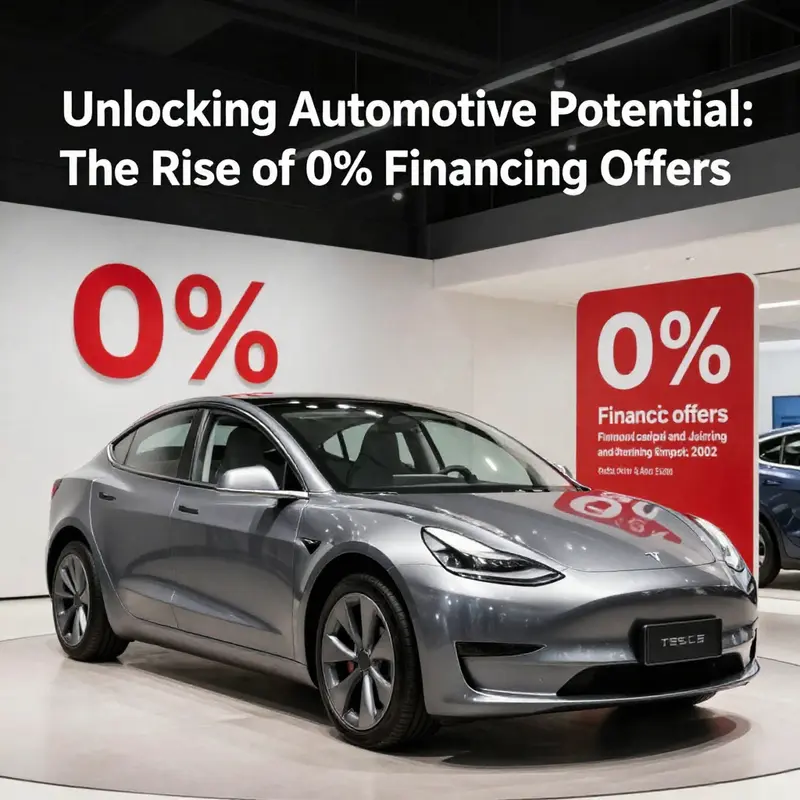
In the crowded, intensely competitive arena of China’s electric vehicle market, financing has become almost as decisive a differentiator as range, charging speed, or interior tech. When a brand deploys near-zero interest financing or long, flexible loan terms that stretch over several years, the effect ripples through the market in ways that go beyond a single sales quarter. It changes who buys, how they think about ownership, and what rivals must do to keep pace. In this context, the current wave of 0% or near-0% financing offers from a well-known global automaker stands out not merely as a marketing promotion but as a strategic instrument designed to broaden access, seed loyalty, and pressure competitors to match or exceed terms that would have been inconceivable a few years ago. The promotions, remarkably, run within a defined window—ending for at least one major plan on January 31, 2026—suggesting both a tactical sprint to capture market share and a longer-term bet on shaping buyer expectations about affordable, predictable vehicle ownership in a market where total cost of ownership is a decisive buying criterion for a broad cross-section of shoppers.
The financing structure itself is a blend of simplicity and audacity. For the best-selling sedan at the brand, the entry point requires a down payment of 79,900 yuan, with monthly obligations that can be as modest as roughly 1,900 to 2,300 yuan, depending on the chosen term and configuration. For a popular six-seat variant of a compact SUV, the entry price and payment cadence are adjusted upward but still emphasize affordability, starting with a down payment near 99,900 yuan and monthly installments that can dip into the few hundred-dollar range when translated for readers outside the local market. And, as part of this aggressive push, a five-year zero-interest option is offered for the six-seat layout, extending the franchise’s promise of low monthly costs and predictable budgeting. Such terms are a notable departure from conventional financing, where interest accumulates and total ownership costs can be opaque to first-time buyers or households evaluating a significant purchase against more immediate needs.
What makes these terms particularly consequential is not only the depth of the discounts but the cadence and geography of their deployment. In a market saturated with options—from established traditional automakers to nimble entrants backed by tech ecosystems—this brand has chosen to foreground financing as a primary differentiator. It is a recognition that, in a landscape where batteries and software are converging with mobility-as-a-service concepts, the decision to own a vehicle is increasingly as much about the payment schedule as about the vehicle’s on-road performance. By reducing the upfront burden and stretching payments over several years, the company expands the potential buyer base to include first-time buyers, recent graduates, early-career professionals, and families weighing a meaningful, durable investment against recurring monthly costs. The result is not merely more units moved in the short term, but a recalibration of what a “reasonable” monthly payment looks like in the eyes of a broad audience.
The immediate market implication is a heightened sense of price competition. Rivals—ranging from traditional automakers with long-standing financing channels to new entrants hoping to carve out a niche—are compelled to respond, either by matching terms, adjusting down payments, or layering new incentives that preserve gross margins while preserving consumer appeal. The reactions in the Chinese market have been swift: a tech-orientated conglomerate with deep pockets has shown that financing can be a strategic weapon, enabling rapid top-line growth even when product line profitability is a work in progress. This dynamic adds a new layer to the ongoing race for brand loyalty, as buyers who might have paused on a purchase or delayed the decision to upgrade are enticed by the prospect of owning a vehicle with a minimal monthly financial burden. The broader message to the market is clear: the barrier to entry is not simply the sticker price, but the memory of how that price translates into cash flow over time.
From a consumer behavior perspective, the appeal of extended, low-interest terms is nuanced. For households with disciplined finances and a desire for a fixed budget, the predictability of a consistent monthly payment can be more compelling than the prospect of a larger, lump-sum down payment. The offerings can also reduce the psychological friction associated with upgrading a vehicle—the thought of “how much will this cost me each month” becomes a more central question than “how much does it cost upfront?” When a promotional window closes, those who entered under favorable terms may develop a sense of attachment to the financing experience itself, rather than only to the vehicle’s features. That attachment can translate into loyalty, eventual trade-ins, and future referrals, thereby extending the economic value of the promotional period beyond the sale date.
Yet the implications extend beyond immediate consumer psychology. The financing push has the potential to influence the competitive landscape in several ways. For one, it pressures rivals to rethink their own financing frameworks, potentially leading to a cascade of similar programs. In a market that rewards speed and scale, a multi-quarter push by a single brand can accelerate a broader industry shift toward longer loan tenures and reduced effective interest rates. It can also change the calculus of financing risk for lenders who partner with automakers, prompting tighter credit criteria, more detailed income verification, or more aggressive terms for customers with different risk profiles. In this sense, the program is a case study in how a vehicle purchase has evolved from a single, transactional decision into a multi-year financial plan that interacts with credit markets, consumer creditworthiness, and the broader economy.
The strategic rationale for such financing offers is not purely about driving sales volume in the near term. It is also about reinforcing brand perception as an enabler of accessible mobility. The target narrative is simple but powerful: owning a high-quality, technologically advanced vehicle can be affordable, manageable, and less burdensome than buyers expect. The messaging aligns with a broader consumer trend toward predictable costs and transparent, straightforward financing terms that avoid surprises down the line. In an era where consumers increasingly scrutinize the total cost of ownership, the ability to lock in low monthly payments for an extended horizon can be a decisive factor in the decision to choose one brand over another, even when competing models boast similar performance and feature sets. In other words, finance becomes not just a support function but a differentiator that reshapes market expectations about value and convenience.
The competitive response from other players, including newer entrants backed by tech ecosystems, has the potential to further accelerate innovation in how carmakers structure deals. We may see more flexible down-payment options, longer loan tenures, and a broader spectrum of terms tuned to different consumer segments. The market could also witness a richer ecosystem of financing products, from incentives tied to service packages and battery-health guarantees to trade-in premiums that mask future depreciation. Such innovations would expand the toolkit available to buyers while simultaneously pressuring manufacturers to find ways to protect margins—perhaps through bundled services, extended warranties, or paid add-ons that complement the core financing offer.
In the longer arc, the episode signals a maturation of China’s EV ecosystem. Financing is no longer an afterthought or a niche perk; it is a central axis around which the competitiveness of a brand rotates. As brands compete not just on range, speed, or software, but on the affordability and certainty of ownership, the entire market shifts toward a more customer-centric model. The willingness of a major automaker to take a bold stance on financing indicates confidence in the underlying demand for EVs and faith in the capacity of Chinese credit markets to absorb aggressive terms without jeopardizing financial health. It also underscores how the interplay between consumer finance, regulatory environments, and corporate strategy can redefine what it means to buy an electric vehicle in a fast-evolving market.
For readers tracking how auto makers compete in China, several threads are worth noting. First, the length and structure of loan terms matter as much as the headline rate. A seven-year horizon with a zero-interest arrangement changes the calculus of future repairs, battery replacement, and resale value. Second, the promotional end date matters because it calibrates buyers’ expectations about pricing momentum and the likelihood of future promotions. An expiration window can create urgency that translates into faster closes, higher conversion rates, and a more dynamic revenue profile across quarterly reporting cycles. Third, the competitive response—whether through rival financing, product enhancements, or service bundles—creates a continuous feedback loop that drives innovation and customer value. This is the practical truth behind headline-grabbing offers: they are catalysts in a broader, ongoing market contest in which the objective is to translate financing into loyalty, trust, and predictable demand.
As with any promotional financing, readers should be mindful of eligibility criteria, credit checks, and the fine print that governs such plans. While the headline figures and the possibility of very low monthly payments may be persuasive, the reality for many buyers involves a closer look at interest rates (when they are not zero), the duration of the loan, and the total cost of ownership over the term. The best buyers will weigh the advantages of reduced upfront costs against the potential trade-offs in flexibility and future resale value. In a market where consumer credit is increasingly scrutinized, clear disclosures and transparent terms help ensure that financing remains a tool for genuine affordability rather than a pressure tactic. The balance between accessible finance and prudent lending is delicate and requires ongoing oversight from both regulators and market participants.
For readers who want to dig into the broader context of how financing shapes mobility, there is useful background available that frames these developments within the elasticity of consumer demand and the evolution of mobility finance. You can explore a related resource in the knowledge base, which provides deeper context on how financing strategies intersect with broader shifts in transport and logistics economics: Knowledge base.
To stay grounded in official information and to see how these terms translate in practice, readers can refer to the brand’s official regional portal for Chinese markets, which provides comprehensive details on current offers, eligibility, and the application process: https://www.tesla.com/zh-CN. This external reference helps situate the discussion within the company’s broader regional strategy and demonstrates how financing promotions are coordinated with branding, service commitments, and ecosystem partnerships that shape the customer experience over time.
null
null
Zero as Strategy: How 0% Financing Reshapes the Auto Market’s Economics
In markets crowded with competing models and rapid shifts toward electrification, zero-percent financing has evolved from a novelty into a core strategic instrument. It is not merely a marketing banner but a calibrated financial tool that shapes consumer choices, dealer dynamics, and corporate budgeting. When a manufacturer routes financing through its own captive arm, it gains a lever to influence price, terms, and eligibility, effectively rewriting the calculus of a purchase for many buyers. The appeal is obvious: a monthly payment that seems affordable, a purchase path that feels closer to a rental, and a sense that the car is more a long-term value than a short-term sacrifice. Yet beneath the surface, the economic logic is intricate, balancing short-term demand with long-run profitability and the broader health of the auto ecosystem.
To understand why 0% financing has become a mainstay in today’s competitive climate, one must follow the money across the lifecycle of a vehicle sale. A 0% or near-zero program typically lasts for a defined promotional window, often accompanied by conditions on creditworthiness, down payment, or the inclusion of service packages or extended warranties. The cadence is deliberate: entice a segment of buyers who are sensitive to monthly outlays, convert them into buyers who might otherwise postpone a purchase, and then lock in a broader pattern of ownership that includes recurring maintenance and potential upsell opportunities. In practice, the financing is not a charitable subsidy. It is a carefully priced component of the go-to-market mix, calibrated to generate incremental volume while preserving acceptable margins in an environment where every cost line—labor, energy, raw materials, and logistics—has risen in tandem with inflation.
From the buyer’s perspective, the draw is immediate: the apparent affordability of a new vehicle, the absence of interest charges over the promotional period, and the perception of favorable terms compared with traditional loan offers. This can tilt the decision in favor of a purchase rather than a lease, or coax a buyer to upgrade to a newer or higher-spec model within the same brand family. But the full cost picture is more nuanced. Even when the stated rate is 0%, the total lifetime cost of ownership may reflect higher upfront payments, longer repayment terms that defer residual value risk, or bundled services that carry their own price points. Buyers with good credit could be offered highly favorable conditions; those with patchier histories might face more restrictions or additional fees. The promise of a 0% rate, therefore, sits atop a scaffold of credit scoring, down-payment requirements, mileage caps, and service commitments that together determine who ultimately benefits from the program.
For manufacturers, the logic rests on more than pushing current-year volumes. Captive financing arms provide a grid of levers to manage financing costs, liquidity, and credit risk—factors that ripple through product pricing, discounting policies, and dealer incentives. By extending 0% financing, a company can soften the marginal cost of a new model for a period, enabling a larger share of the audience to cross the threshold of purchase. The effect on dealer performance is equally consequential: promotions can drive traffic, shorten sales cycles, and improve pitch leverage for sales teams; the practice can also shift the mix toward models and trims that offer higher service and maintenance potential, thereby improving long-term profitability beyond the initial sale. This balance between attracting buyers and safeguarding margins is delicate. In a sector buffeted by rising labor costs, energy intensity, and fluctuating raw-material prices, the ability to modulate demand with financing becomes a strategic asset.
The capital allocation challenge is real. When a manufacturer subsidizes financing, the immediate revenue from interest is reduced, and the company must rely on higher sales volume or favorable residual values to preserve overall profitability. In a market where liquidity conditions waver—despite some easing in financing costs—the risk is that a heavy reliance on promotional financing could compress earnings if volumes fail to materialize as expected or if credit losses rise. This tension explains why many programs are time-limited and tightly scoped: they create a temporary lift in demand while preserving prudent risk management. The relationship between volume growth and profitability becomes less about the price of a single loan and more about the efficiency of the entire value chain: design, manufacturing throughput, logistics, supplier negotiations, and ultimately, the ability to convert a funded sale into a durable relationship with the customer through extended warranties, service plans, and software-enabled features.
The supply chain and production ecosystem respond to this demand choreography just as transparently as the consumer market does. Suppliers face a double-edged sword: higher volumes can justify scale and reduce per-unit costs, yet demand volatility driven by financing incentives can complicate capacity planning and procurement. The industry’s cost pressures—labor, energy, and commodity inputs—have remained stubbornly elevated, with tariffs and geopolitical frictions adding a further layer of complexity. In such an environment, zero-interest promotions can feel like a necessary tactic to sustain demand, a way to lock in forward momentum while the market calibrates to structural shifts toward electrification and high-performance propulsion technologies. The result is a market that resembles a living system, where financing signals, consumer confidence, and supply-chain resilience interact in real time to determine pricing strategies, product cadence, and capital allocation.
The broader market dynamics are also shifting under the pressure of strategic consolidation. Recent movements in the sector show a trend toward greater vertical integration and supply-chain resilience, a response to the vulnerabilities exposed by global disruptions and tariff volatility. By owning or tightly coordinating financing channels, automakers reduce exposure to external credit conditions and can more reliably forecast demand signals embedded in loan approvals and repayment patterns. This convergence of finance and manufacturing is part of a larger evolution: a move toward longer-term planning horizons, where the aim is not only to sell more cars today but to shape a durable ownership experience that sustains loyalty and unlocks cross-sale opportunities over the vehicle’s lifetime. Within this context, 0% financing serves as both catalyst and bridge, lowering the barrier to purchase while connecting buyers to a broader ecosystem of services, upgrades, and mobility options that extend beyond the initial transaction.
Investors and market observers have taken note of how financing incentives thread through earnings potential and stock-market valuations. Financial performance in this arena is not judged by a single line on an income statement; it is read through the lens of volume growth, loan book quality, residual value forecasting, and the efficiency of capital deployment. Exchange-traded funds and other vehicles that track the auto sector monitor these dynamics as proxies for the sector’s health. Financing terms influence earnings multiple not only through direct interest income but also via the implied confidence of consumers to commit to larger purchases and longer ownership horizons. In a broader sense, the rise of zero-interest offers reflects an ongoing shift in how the auto industry allocates risk, leverages balance sheets, and communicates value to the marketplace.
The consumer-education aspect of these programs deserves attention as well. Zero-interest promotions can obscure the true economics of a purchase, particularly when list prices are softened to accommodate financing subsidies or when trade-in valuations and loyalty credits are structured to mask the ultimate cost to the consumer. This is where informed readers can benefit from deeper market context and guidance. For those seeking a wider lens on market framing and financing trends, the knowledge hub offered by industry analysts can provide a structured overview of how these incentives fit into macroeconomic cycles and policy considerations. Davis Financial Advisors Knowledge offers perspectives on how financing options interact with consumer credit trends, price transparency, and the long-run health of auto portfolios.
Beyond the sales desk and the balance sheet, zero-interest financing also interacts with consumer expectations about ownership and total cost of ownership. When buyers see a 0% rate, they may assume a favorable deal across the board, but the reality often involves trade-offs that are not immediately visible at the point of sale. The up-front down payment, the length of the loan, the frequency of required service plans, and the potential for late fees or mileage restrictions all shape the actual financial experience. In a market where buyers value both affordability and predictability, these promotions must be accompanied by clear disclosures and education about what comes after the promotional window ends. Buyers who understand the throughline—from sticker price to monthly payment to maintenance costs and eventual resale value—are better positioned to judge whether a 0% offer represents genuine value or a temporary nudge toward larger, long-term commitments. This nuance underscores why financing is not merely a transactional tool but a narrative device in consumer decision-making.
The sustainability question looms large as well. Will 0% financing remain a durable feature of the auto market, or will it be a phase tied to short-run liquidity pressures and competitive fodder? The likely answer lies in the interaction of macroeconomic conditions with company-specific capabilities. If inflation stays high and credit costs remain volatile, the incentive to rely on financing subsidies may persist as a way to keep demand elastic and protect market share. Conversely, if capital markets stabilize and supply chains regain price discipline, the cost of subsidizing financing could rise as a drag on margins, prompting a shift toward more selective promotions or a rebalancing of pricing and product strategy. The next chapter in this story may hinge on how well automakers monetize the immediate lift in sales against the longer arc of profitability, resilience, and customer lifetime value—and how investors interpret the risk-reward balance of financing-heavy growth.
For readers seeking further context on the macro underpinnings of these financing strategies, recent industry outlooks provide useful benchmarks. A comprehensive external perspective examines how rising costs and integration strategies are shaping auto-supplier dynamics and dealmaking in the current cycle. This lens reinforces the idea that zero-interest financing is not just a promotional tactic but a signal of broader structural shifts in the auto economy. External resources offer a larger framework for understanding how financing terms influence earnings, capital allocation, and market positioning in an environment of ongoing electrification and global supply-chain recalibration. For a broader view, see the commentary on US auto-deal dynamics and the evolution of supplier integration in 2026.
In sum, zero-percent financing serves as a multi-purpose tool within the auto industry’s toolkit. It is a sales accelerant, a capital-allocation instrument, and a signal of competitive intensity that reflects both current market conditions and expectations about the path ahead. The ultimate test of these programs will be whether they translate into durable buying momentum and meaningful profitability, even as the industry navigates the twin currents of vehicle electrification and evolving consumer credit landscapes. The narrative is ongoing, and the terms of the debate keep evolving with every quarterly earnings call, every lease renewal, and every new model rollout. As buyers weigh short-term affordability against long-term cost and value, the economics of 0% financing will continue to shape both the shape of the market today and the structure of the market tomorrow.
External context: for a broader industry perspective that complements this chapter, readers may consult market analyses on auto-deal dynamics and supplier integration available through established financial news and research outlets. https://www.bloomberg.com/news/articles/2025-12-16/us-deals-2026-outlook-rising-costs-push-auto-suppliers-toward-integration
Zero-Down, Zero-Hurdle: How 0% Financing Is Reframing the Car-Buying Experience
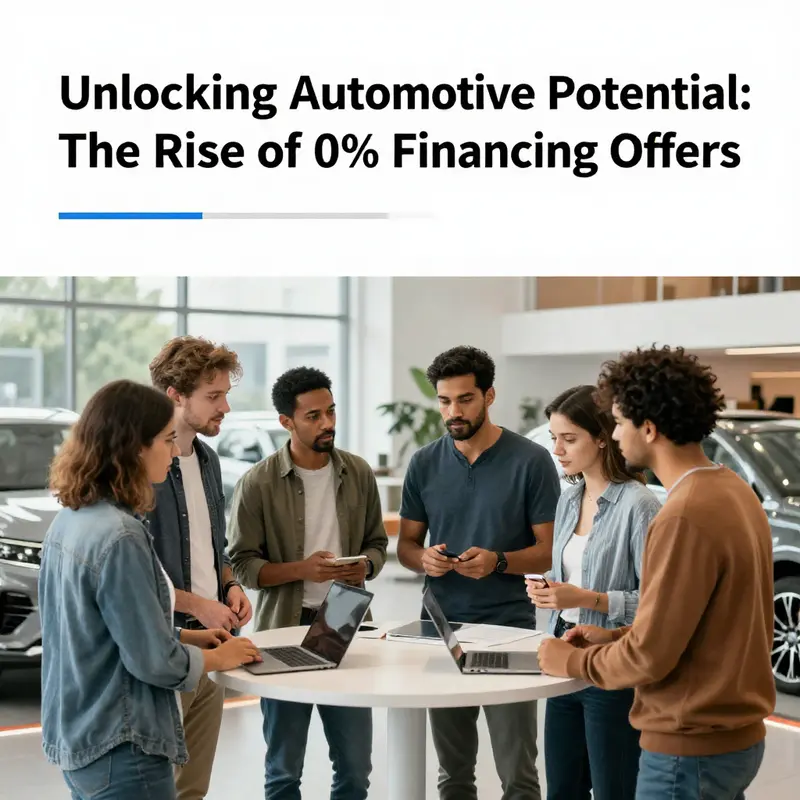
Across the auto market, a quiet pressure cooker has formed: finance is becoming the main differentiator for many buyers. As new models pile up on showroom floors and online inventories swell, manufacturers have turned to aggressive financing to capture attention and close deals before the consumer hesitates. The most visible signals are zero-interest offers and zero-down payment promotions, often couched in terms like “promo rate for qualified buyers” or “longer-term loans with minimal upfront cost.” In practice, these programs are not simply tastefully marketed; they reflect a strategic shift. Firms with captive lending arms promote plans that stretch out for three to seven years, sometimes longer, and in some instances they couple the loan with maintenance bundles or vehicle service packages. The result is a financing ecosystem where the upfront price is partially decoupled from the actual outlay a buyer faces in the first year or two. The consumer, in turn, can step into a new car with a monthly payment that feels manageable, even if the total carried cost grows over the life of the loan. This is a response to rising sticker prices, tighter lending standards in traditional banks, and the relentless assault of competition in a market where every extra day a vehicle sits on a lot costs money.
Autohome’s 2026 study captures a market that is evolving faster than most buyers realize. It identifies five converging consumer trends reshaping how people evaluate a car purchase, and three of these trends appear in nearly every promotional campaign you see today. First, aggressive financing terms have moved from a curiosity to a baseline. Zero down payments, long loan maturities, and promotional rates around 0% for selected models are presented as standard options rather than exceptions. In practice, lenders finance a much larger share of the car’s price upfront, while the buyer feels the relief of a smaller initial expense. Second, value-driven consumers are entering the showroom with a clear preference for clarity over mystique. They scrutinize monthly costs, rather than obsess over the total price tag, and they want to understand exactly how promotional terms affect the long run. Third, there is a redefinition of what constitutes value in mobility. Consumers are not just buying a vehicle; they are buying access, flexibility, and predictable expenses. They favor finance structures that minimize upfront cash, even if the long-term cost rises. A fourth and fifth trend connect closely to practical realities: the role of the financing channel in shaping purchase timing and the weight of perceived security when contracts include maintenance and warranty elements in the package. The upshot is a market where the decision calculus has shifted from sticker shock to cash-flow management and risk tolerance. In this environment, the showroom becomes a stage where financing terms compete as much as the chassis and the engine, and the promotion of zero-down and virtually zero-interest terms becomes a signal of confidence in the line’s appeal to value-focused buyers. For readers seeking a broader, data-backed view of these shifts, the Autohome study provides a detailed map of the current state of financing wars and consumer psychology behind them, including the connection between longer financing and perceived affordability. The essentials of this trend are not simply about saving money now; they are about enabling a purchase that would otherwise be out of reach for many households, especially in markets where the cost of living and the price of vehicles converge upward. The study’s synthesis serves as a compass for buyers navigating a landscape where the terms of credit can be as decisive as the car’s design.
Why do automakers lean so heavily on these financing maneuvers? The short answer is competition. In a market saturated with models, features, and subscription-like bundles, the most efficient way to pull forward a sale is to reduce the barrier to entry for the cash-strapped buyer. A 0% or near-zero interest offer reduces the monthly payment to a level that feels affordable even as the sticker price climbs. It also helps dealers move older inventory or close deals that might otherwise stall. These programs are often geographically concentrated and time-limited, designed to drive foot traffic, data collection, and immediate market share gains. From the lender’s perspective, captive funds enable credit screening aligned with brand-specific risk appetites, with terms tailored to the expected longevity of the customer relationship. But the same structures raise questions about consumer exposure. A zero-interest promise for three years can morph into a heavier cost once promotional periods end or when maintenance and extended-service costs are bundled into the package. The net effect is a financing landscape that cools sticker shock but concentrates risk in the period when the promotional terms end and the buyer confronts reality: what happens if the car depreciates faster than the loan balance or if the vehicle requires higher-than-expected upkeep? In short, the mechanics of the offer are designed to look attractive in the showroom and less forgiving in the driveway. This tension between short-term appeal and long-term cost is a central thread running through every discussion of modern auto financing.
From the buyer’s side, the shift toward zero-down and extended terms reframes the decision process. Consumers can compare monthly payments because the upfront price becomes less decisive. Yet this reframing carries its own caveats. A zero-down deal does not erase the need for funds to cover insurance, taxes, registration, and potential early-termination penalties. When the loan spans seven years, even a small difference in interest rate or fees compounds into thousands of dollars of extra payments. The apparent affordability may mask the true cost of ownership, especially if the consumer’s personal circumstances change, such as job stability, rising insurance premiums, or shifts in credit health. There is also a behavioral dynamic at play: the cognitive ease of accepting a low monthly figure can reduce scrutiny of the contract’s long horizon. The risk here is twofold—first, negative equity if the vehicle’s value declines quickly; second, a misalignment between end-of-term obligations and the consumer’s plans, such as upgrading to a new model or trading in the asset before the loan ends. Buyers who actively engage with total cost of ownership calculations, including depreciation curves, maintenance costs, and potential prepayment options, typically emerge with a clearer sense of whether the promo rate actually delivers value or simply defers expense into a longer period.
Regulatory and market-structure considerations also shape how these programs are designed and perceived. In some markets, auto makers rely on captive financing arms to access capital and tailor risk pricing in ways that less flexible banks cannot. This can enable faster approvals and more favorable terms for well-qualified buyers, while shifting some discernment away from traditional lenders. Critics warn that such arrangements may blur the lines between consumer finance and promotional marketing, potentially encouraging buyers to sign with insufficient scrutiny. Transparency becomes essential. Variable features such as fees, prepayment penalties, lease-like service bundles, and the true annual percentage rate after promotional periods must be carefully disclosed. The risk to consumers rises when promotional credits or maintenance offers mask future costs or when extended terms are used to conceal a higher long-run price. For policymakers and industry observers, the key question is whether the trend improves affordability and access without compromising long-term financial health or steering buyers into higher overall debt than they can responsibly manage. The literature and real-world experience suggest that the most prudent consumers view these offers as a starting tool—one piece of a larger financial plan that includes savings, insurance planning, and a thoughtful assessment of how long they expect to keep the vehicle.
To navigate this landscape effectively, buyers should approach promotional financing with a disciplined framework. Start by comparing not just the monthly payment but the total cost of the loan, including interest accrual over the full term, any upfront fees, and the cost of add-ons that may be wrapped into the contract. A zero-interest window can be compelling, but the option that offers the lowest combined cost over the life of the loan is not always the zero. Read the small print for prepayment penalties; some deals look attractive only if you stay within the lender’s preferred payment schedule. Consider whether you will always be able to meet the monthly obligations; if job security or income is uncertain, a shorter term with a slightly higher monthly payment could reduce risk of default and long-term liability. Also, examine whether the sale bundles maintenance, insurance, or other services; such bundles can improve perceived value, but they also lock you into a specific provider, potentially narrowing future choices. Finally, verify whether the credit criteria for the promotional terms are truly inclusive or whether they meaningfully filter out consumers with imperfect credit. In many cases, a standard loan with a modest down payment and a well-structured repayment plan can deliver competitive or even better total costs than a promotional zero-down option. If the buyer is comfortable with the cash flow and the trust in the lender’s promises, these programs can be a viable route to ownership. If not, a longer-term affordability strategy may be a wiser path, even if it does not capture the immediate marketing advantage of a zero-down deal.
Dealerships and manufacturers also adjust their pricing and service ecosystems to align with these financing strategies. The ability to offer attractive financing creates a powerful halo around a model line, drawing in shoppers who might otherwise delay a purchase or seek a lower sticker price elsewhere. In practice, this translates into a broader shift in the automotive retail model—one where the emphasis moves from sticker price to lifetime cost considerations, including maintenance, insurance, and the risk-sharing characteristics of the loan. The new normal features financing as a core product rather than a nice-to-have add-on. Service plans, warranty extensions, and maintenance credits are presented as components of the total package, reinforcing the impression that getting behind the wheel is less about a single price and more about a comprehensive affordability proposition. This dynamic has implications for consumer trust and brand loyalty. When a customer perceives that the financing construct is the primary differentiator, the decision to stay with a brand or move to a rival shifts toward the reliability and perceived predictability of the financial terms as much as toward the vehicle’s styling or performance. Observers note that as offers proliferate, buyers become savvier about what constitutes genuine value, seeking clarity on the real cost and the risk they assume when the promotional window closes and the contract reverts to a more typical rate.
Looking ahead, the trajectory of zero-down and zero-interest financing will depend on macroeconomic conditions, regulatory developments, and consumer appetite for long-term debt. If inflation cools and interest rates stay low enough, it is reasonable to expect longer promotional windows and more generous packages. Conversely, if the financial environment tightens, lenders will tighten underwriting and gradually phase out the most aggressive deals, pushing buyers toward more conventional financing or alternative ownership models. In this sense, the market could oscillate between periods of promotional abundance and more prudent, cost-focused financing. The trend toward flexible ownership—whether through rental-like arrangements, ownership-with-service bundles, or extended loan terms—appears likely to persist as a staple of the competitive playbook. The balance sheet view for a potential buyer is no longer simply the cost of a car; it is an assessment of the ongoing cash flow obligations and the strategic value of maintaining liquidity in the face of price volatility and shifting credit conditions. The consumer, in effect, emerges as a rational actor negotiating between the immediate relief of zero-down terms and the longer horizon of total ownership costs, with the best outcomes arising from deliberate planning, careful comparison, and a willingness to walk away if the terms do not align with personal financial realities.
To deepen understanding of these forces and to explore the practical implications of the current financing flirtation with zero-down offers, readers can consult industry analyses and practitioner resources. For a broader knowledge base on financing and personal finance strategies related to mobility and asset ownership, see the Knowledge hub. Knowledge. In addition, the wider market narrative and its empirical base are captured in a recent industry synthesis that maps the emergence of zero-down, 8-year rate structures and the evolving consumer attitudes toward affordability, value, and risk. For a detailed, data-rich account of the latest financing wars and the five consumer trends driving them, refer to the Autohome study: https://www.autohome.com.cn/news/2026-01-15/394567.html
Final thoughts
The landscape of automotive sales is being markedly reshaped by the proliferation of 0% financing offers. Tesla and various Chinese manufacturers lead the charge with innovative financing solutions that cater to a diverse consumer base. As buyers increasingly prioritize affordability and attractive financing terms, these manufacturers not only enhance their market position but also drive significant economic trends within the sector. Understanding these dynamics is crucial for consumers, dealerships, and businesses alike, as they navigate their automotive financing options in a more competitive environment. Embracing these offers can lead to remarkable savings and a more gratifying car-buying experience.