
As car buyers and dealerships navigate the complex landscape of auto financing, the absence of clear refinancing options can lead to confusion. Westlake Financial, renowned for its indirect auto loans, primarily focuses on financing new and used vehicles through dealer partnerships. However, the question remains: does Westlake Financial offer auto loan refinancing? This article explores Westlake Financial’s service offerings, particularly concerning refinancing, while discussing indirect auto loans, current rates, customer support, and alternative recommendations. By the end, both individual car buyers and businesses will gain comprehensive insights into their financing options.
Does Westlake Financial Refinance Auto Loans? An In-Depth Look at Refinancing Options, Realities, and borrower implications
When readers ask whether a lender named Westlake Financial offers auto loan refinancing, they touch a core question about the current landscape of indirect auto lending. The market surrounding Westlake has long been characterized by a focus on financing a vehicle purchase through a network of dealers, with an emphasis on ease, speed, and competitive terms for new and used cars. Yet the question of whether the same institution also helps borrowers refine or restructure an existing loan has generated mixed signals in recent summaries. A careful reading of the available materials shows a tension between older characterizations and newer disclosures. On one hand, the traditional image of Westlake is tied to initial financing—getting a loan at the moment of purchase, often supported by a dealer’s financing workflow. On the other hand, there are indications, drawn from more expansive service outlines, that refinancing and related services form part of the lender’s broader catering to ongoing credit needs. For a consumer trying to map options, the practical message is not a simple yes or no but a conditional exploration of what “refinancing” can mean within Westlake’s ecosystem and how to verify current offerings in real time.
At the heart of refinancing is the hope of altering the financial arc of an existing obligation. A borrower might seek a lower interest rate, a reduced monthly payment, or a shorter time horizon to pay off the debt. In the Westlake context, the potential benefits are described as attainable through a process that leverages the same dealer network and underwriting channels that already connect borrowers to vehicle financing. The logic is straightforward: if a new loan can be obtained at a lower rate or with different terms than an existing loan, swapping to that new agreement could translate into bottom-line improvements. In practice, this means borrowers could see a contraction in monthly cash outlays, easier cash flow management, or a compressed schedule for debt freedom. These are classic incentives of refinancing and are often highlighted as central selling points in lender communications that extend beyond the purchase phase.
Beyond the most immediate financial metrics, Westlake’s refinancing framework appears to intersect with related strategies that borrowers use to manage overall debt. Debt consolidation, for example, is frequently presented as a pathway to simplify monthly obligations by rolling multiple debts into a single, more manageable payment. When framed in the auto loan context, consolidation can mean combining an existing car loan with other obligations or restructuring multiple auto-related debts into a single instrument. The practical appeal is clear: a single monthly cadence can reduce confusion, late payments, and stress on household budgeting. In addition, refinancing is sometimes positioned as a lever to improve overall cash flow, providing borrowers with greater financial elasticity to cover essential expenses or respond to changes in income. While these outcomes are not guaranteed for every borrower, they represent the canonical financial logic that undergirds refinancings across many lenders, including those with broad dealer networks.
Another dimension often associated with refinancing is the ability to address lease scenarios. For renters and owners who are transitioning out of a lease, refinancing or a lease buyout can unlock access to vehicle equity or provide an avenue to move from leasing terms into owned equity. In such cases, a lender’s refinancing option may extend beyond the classic purchase loan to include terms that accommodate buyouts or equity extraction. The Westlake descriptions that surface in some materials emphasize this flexibility, suggesting that customers who are navigating leases can also find refinance pathways or alternatives that align with the status of their vehicle and the terms they are prepared to accept. This breadth of approach underscores a broader strategic objective: to meet a borrower where they are, not just where they began, and to offer options that extend the life of a vehicle-financing relationship beyond the initial sale.
Given the spectrum of possibilities, the practical steps a prospective borrower should take are clear and intentionally cautious. First, it is essential to verify current offerings directly with the lender or through the dealer network that serves as the conduit for lending. Policies and product lines evolve, and what may have been accurate in one quarter can shift as market conditions change. Borrowers should seek explicit confirmation about whether refinancing is offered for existing auto loans, and if so, what types of loans qualify, what the rate environment looks like, and what fees or penalties might apply. The message to carry into conversations is simple: confirm current terms, compare apples to apples, and run the numbers with your actual loan details before making a switch.
Second, the decision to pursue refinancing should be anchored in a careful cost-benefit analysis. A lower rate is attractive, but it must be weighed against any added costs—origination fees, the potential extension of the loan term, and the overall total interest paid across the life of the loan. In some cases, a lower monthly payment achieved by extending the term can be appealing for immediate cash flow yet would produce higher total interest over time. For others, a shorter term with a modest rate reduction can accelerate payoff and reduce interest expenses overall. People should run scenarios that reflect their unique priorities—whether minimizing monthly cash outlay, shortening debt tenure, or achieving a meaningful reduction in the total interest burden.
Interwoven with these considerations is the experience of the application process itself. Refinancing, even within an established dealer network, requires a fresh underwriting assessment. Applicants typically supply income verification, employment history, and up-to-date details about the vehicle, including its mileage, age, and current loan status. A lender’s decision is shaped by credit history, debt-to-income ratios, and the automobile’s remaining value relative to the loan balance. Prospective borrowers should be prepared for potential credit checks and the possibility of rate adjustments based on the outcomes of those checks. The aim is not merely to obtain a lower rate but to secure terms that align with one’s broader financial objectives and risk tolerance.
In terms of navigational aids during this process, borrowers can benefit from turning to informative resources that explain the mechanics of refinancing in accessible terms. A good starting point is a knowledge hub that compiles explanations of refinancing concepts, eligibility checks, and practical calculators. Such a resource can help readers build intuition about how rate changes, terms, and monthly payments interact. This chapter does not substitute for personalized advice, but it can empower readers to walk into conversations with lenders with a clearer sense of what to ask and what numbers to expect. For those who want to explore related financial topics while considering auto loan decisions, a broader knowledge base can offer context about debt management and the ways automotive finance intersects with household budgeting. To reach a useful repository of general insights, readers may consult the knowledge hub linked here: Knowledge hub.
Finally, any assessment of refinancing options should stay grounded in current, official information. Lenders often publish rate ranges and eligibility criteria, and those figures can shift with time, market conditions, or changes in policy. The most reliable step is to review the lender’s official site and speak with a representative who can confirm whether refinances for existing auto loans are on the table and what specific terms apply. For readers who want to cross-check or extend their understanding with broader industry context, external resources can provide additional perspectives on how refinancing fits into the broader world of auto credit. As with any financial decision, due diligence, transparent comparison, and careful arithmetic are the best guides to a choice that genuinely improves one’s financial trajectory.
In sum, while the historical emphasis of a dealer-linked lender often centers on financing new or used purchases, there is credible evidence that refinancing pathways exist within the broader service outline presented by Westlake and its partnerships. The precise scope—whether it is a full, traditional loan refinance, a debt consolidation maneuver, or a lease buyout option—depends on current offerings and individual circumstances. For readers who are curious about where they stand, the path forward is straightforward: verify current refinancing availability, run careful financial comparisons, and leverage available informational resources as you evaluate the best route to improved cash flow or a shorter path to debt freedom. External confirmation from the lender’s official channel remains essential, and the latest terms should always guide a borrower’s final decision. External resource: https://www.westlakefinancial.com/
Indirect Paths, Real Savings: How Indirect Auto Financing Shapes Refinancing Realities and Your Car-Loan Decisions
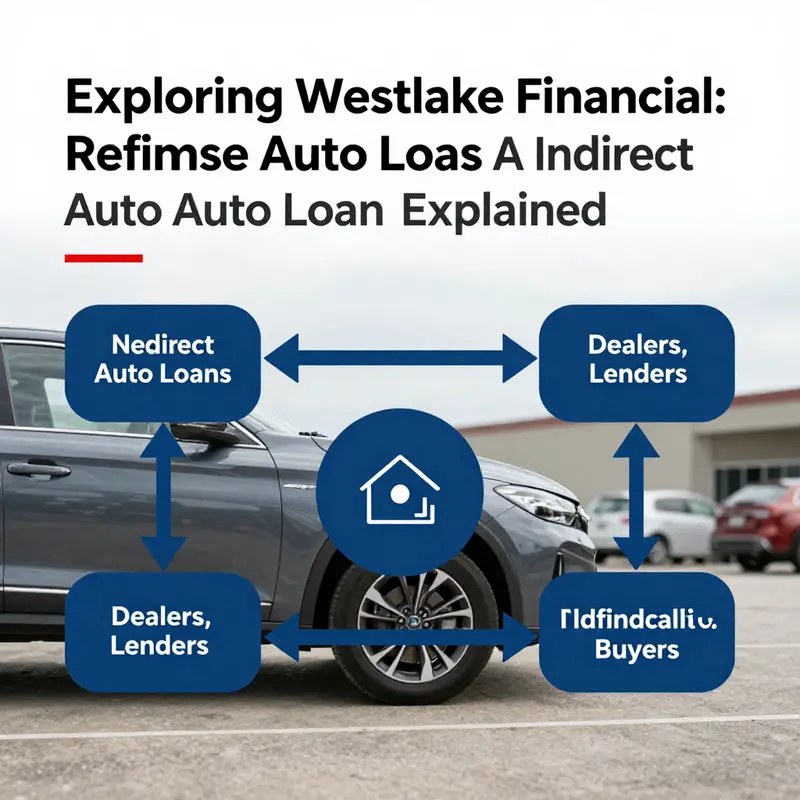
When shoppers begin to untangle the maze of auto financing, a common question emerges: can the lender that coordinates a dealership loan also refinance an existing loan? The quick answer, as the industry and the available program details show, is nuanced. Indirect auto financing—the model in which a lender partners with a network of car dealers to offer loans at the point of sale—does many things well. It streamlines prequalification, consolidates dealer quotes, and often speeds up the experience of buying a car. But it does not automatically function as a refinancing product for an already outstanding loan. This distinction matters for buyers who hope to shave interest costs or lower monthly payments by reshaping the terms of a loan they already hold. In practical terms, the indirect financing approach is designed to help you finance a new or used vehicle through a dealer, not to rewrite the terms of your current loan with the same funder. The implications of this difference ripple through the decision process, particularly for someone weighing whether to refinance or simply pursue a fresh loan via a dealer network that relies on indirect lending channels.
To understand why this distinction matters, envision the moment you walk into a dealership with a rough idea of your budget and a list of preferred trims. The indirect model shines here. You initiate a fast prequalification, and if you’re approved, you’re shown loan quotes from dealer partners who participate in the lender’s network. The flow is designed to be transparent and efficient: you compare rates, terms, and payments side by side, all without submitting separate applications to multiple lenders. The speed and convenience are tangible benefits when time is short, when you want to know your purchasing power quickly, or when you’re trying to maximize the leverage you have at the showroom floor. The quotes you see can reflect a blend of factors—your credit profile, the vehicle’s price, the loan-to-value ratio, and the dealer’s own incentives—so the final terms you sign can vary depending on which dealer in the network you choose to work with.
Yet this streamlined process is almost exclusively framed around vehicle acquisition rather than loan modification. In simple terms: if your goal is to reduce the rate on an existing loan you already carry, the indirect model is not a built-in refinancing solution. It does not typically rewrite the terms of a current agreement with the goal of lowering your APR or extending your payoff horizon on an already financed car. Instead, if you want to pursue refinancing, you generally turn to lenders that offer direct refinancing products—financing that is issued independently of a dealership transaction and intended to replace or reframe an existing loan. These direct refinancers evaluate your credit, collateral, and income to determine new terms and then issue a fresh loan either to pay off the old one or to consolidate into a new agreement with different conditions. While a direct refinance can lead to lower monthly payments or a shorter loan term, the path through indirect financing to accomplish something similar is not guaranteed and often depends on trading in the current vehicle or purchasing a new one altogether.
The practical takeaway for most buyers is straightforward. If your objective is to reduce the rate on what you already owe, you should investigate direct refinance options with lenders that specialize in refinancing. This means asking your bank, credit union, or a dedicated finance company about refinancing a current auto loan. The landscape for direct refinances has its own complexities: a borrower’s credit score, debt-to-income ratio, the remaining balance on the old loan, and the vehicle’s age and mileage all influence whether a better rate is available. It is common to encounter situations where the savings are meaningful on a lower annual percentage rate, but the upfront costs, such as appraisal fees, and the overall length of the new loan must be weighed to confirm it truly lowers the total cost of ownership. In this setting, the indirect model’s strengths become clear when you are at the showroom and contemplating a new purchase—not when you already carry a loan and hope to rearrange it.
From a consumer perspective, the distinction also shapes expectations around promotions and incentives. Car manufacturers, dealerships, and their partnering lenders sometimes offer rate reductions, cash-back incentives, or favorable terms tied to new purchases or lease options. These promotions can make financing a new vehicle via an indirect network appealing, especially if your current loan carries a higher rate or if you’re seeking to upgraded features or a more reliable vehicle sooner rather than later. However, these advantages are highly conditional and tied to the dealer network’s incentives and the vehicle being financed. They are not guarantees that your existing loan terms will improve without undertaking a new acquisition. In other words, the path to savings via indirect financing typically runs through buying a new car rather than reworking the terms of a loan you already have.
For people who are in the midst of evaluating options, a practical approach can blend both worlds without conflating them. Begin by cataloging your current loan details—the remaining balance, interest rate, monthly payment, and payoff date. Run the numbers to estimate how much you would save under a hypothetical direct refinance with a competing lender. Then, explore the possibility of replacing your current loan by financing a nearby qualifying vehicle through an indirect lender’s dealer network. In some cases, the new purchase may offer an overall cost advantage when you consider tax incentives, dealership promotions, and the potential to trade in a vehicle that is approaching an agreed-upon threshold of value. The comparison should be grounded in a clear, apples-to-apples calculation: monthly payments, total interest over the life of the loan, and total cost of ownership for the vehicle you’re considering. A robust decision framework involves computing the present value of payments across both scenarios, adjusting for the different loan terms, and recognizing that the best choice depends on your personal financial picture and your vehicle needs.
If you decide to pursue the indirect route for a new purchase, the dealer network can still serve as a useful ally. It is a way to access multiple lender quotes in one place, with the additional benefit of dealer negotiation leverage. The process remains shopper-centric: you can compare offers side by side, test drive, negotiate, and select the vehicle and financing combination that best fits your budget. Throughout this journey, it is wise to maintain clarity about your goals. If your priority is lower monthly payments, you must account not just for the rate but for the term and the potential vehicle depreciation. If your aim is to minimize total interest, you need to weigh the longer-term costs and the possibility of negative equity when trading in a vehicle that has lost substantial value. In either case, you are benefiting from a structured comparison framework rather than relying on a single rate or a single lender’s terms.
For readers seeking a broader context on how vehicle ownership finances evolve, including how ownership costs stack up over time, there is a resource that frames these considerations in a practical, decision-oriented way. Managing Truck Ownership Finances offers a lens on the broader financial calculus of owning a vehicle, which complements the tighter focus on refinancing. While it does not replace lender-specific guidance, it can help you frame questions to ask lenders and dealers, ensuring you don’t overlook ancillary costs like insurance, maintenance, and depreciation as you weigh different financing paths.
Finally, for readers who want to verify the latest official stance and offerings from the indirect lender that forms the backbone of this discussion, a visit to the lender’s official site is informative. The site outlines the dealer network, the prequalification process, and the general emphasis on speed and convenience for new or used vehicle purchases. External information from the lender confirms the emphasis on indirect financing through dealership partnerships and clarifies that the typical refinancing product is not described as a core offering within their standard menu of services. External resource: https://www.westlakefinancial.com
Beyond the Purchase: Understanding Auto Loan Refinancing Through Indirect Lenders and How It Shapes Your Financing Path
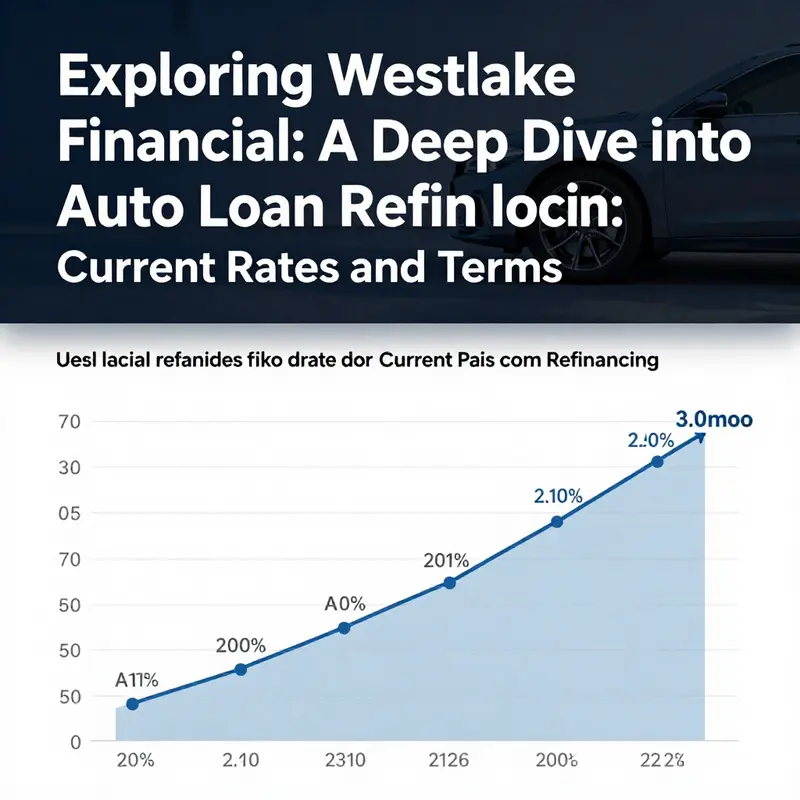
When you buy a car, the financing decision often feels like a single moment in time. Yet the story doesn’t have to end there. Auto loan refinancing through indirect lenders—those who connect borrowers with dealer partners rather than handling every step directly—has become a practical option for many buyers and current owners. The core idea is straightforward: you replace your existing loan with a new loan that could offer a lower rate, a different term, or a different monthly payment structure. The goal is to reduce the overall cost of borrowing or to tailor payments to your current budget and life circumstances. This option sits inside a broader landscape of auto finance strategies, where a borrower’s credit profile, the age and value of the vehicle, and the amount left on the loan all shape what is possible. Even when the target is straightforward—less monthly strain or a shorter pay-off horizon—the path to refinancing through indirect channels carries its own nuances. The indirect approach is popular because it leverages dealer relationships and streamlined prequalification steps, which can simplify what might otherwise be a lengthy process. In practice, a prospective refinancer typically starts with a quick prequalification, often completed in minutes by answering a brief set of questions. This step helps establish whether the borrower might qualify and what kind of offers could be on the table. If prequalification signals a positive outcome, the lender can present loan quotes from several dealer partners, giving the borrower a real-world sense of the options before any commitment is made. The comparison aspect is essential. Different dealer partners may present different terms, and each one may bundle fees, insurance requirements, or optional add-ons in slightly different ways. The ability to compare side by side is a strength of the indirect model, allowing a borrower to weigh monthly payments, total interest, and the length of the loan against the vehicle’s remaining life and the borrower’s financial goals. There is, however, a word of caution that must accompany this process. Although the advertised rates can be enticing, especially for those with strong credit, the actual rate a borrower receives is not guaranteed to be the same for everyone. Rates and terms hinge on several factors: the borrower’s credit score, the vehicle’s age and condition, the loan amount, and the loan-to-value ratio, which is a measure of how much of the car’s value is being financed versus how much is already paid down. Even when a rate as low as a mid four percent APR is advertised, the real-world rate for a given borrower may lie above or below that benchmark. In other words, refinancing can be a powerful tool, but its value is highly personal and contingent on individual circumstances. The indirect model brings convenience, but it also introduces a dealer intermediary into the process. The dealer partner acts as the conduit through which the new loan is originated, and this can affect both the timeline and the documentation required. Borrowers should expect the usual documentation that accompanies any auto loan: proof of income, proof of residence, evidence of insurance, and in some cases information about the vehicle itself, such as mileage and condition. The dealer relationship can accelerate initial steps, yet it may also influence the final arrangement. For instance, the quotes that arrive from dealer partners may have expiration windows that are not always clearly specified on a lender’s public-facing pages. That ambiguity can complicate the decision-making process if a borrower needs more time to compare offers or if market rates shift during the quote window. It’s important to remain proactive, asking for explicit expiration timelines and ensuring you understand any conditions tied to a given quote. When considering refinance options, many borrowers naturally wonder how the age and type of their vehicle influence outcomes. For newer models, the refinancing calculus often looks favorable because newer cars retain more of their value, which supports favorable loan-to-value ratios. For used vehicles, lenders may tailor terms to reflect the vehicle’s age, mileage, and expected depreciation. In some cases, the maximum loan amounts or available terms may differ from those offered for new-car refinancing. The central aim remains consistent: to lower the monthly burden or to adjust the loan term so that it better aligns with the borrower’s present budget and long-term financial plan. The decision to refinance should be grounded in a careful assessment of total cost. A lower monthly payment can be attractive, but it may come at the cost of a longer loan term and higher total interest paid over the life of the loan. Conversely, shortening the term can save interest but raise monthly payments. A simple break-even calculation—comparing the monthly savings against any added interest from a longer payoff horizon—can illuminate the best course of action given a borrower’s income stability, anticipated vehicle use, and plans for ownership. Another practical consideration is the ongoing cost of ownership. Refinancing can potentially unlock funds if the new loan allows a lower rate and a better payment structure, but it should not be viewed as an excuse to extend credit beyond what a borrower can responsibly afford. Borrowers should also be mindful of any prepayment penalties or fees associated with early payoff if they plan to adjust their financial strategy in the near term. As with any major financial decision, information freshness matters. Rates, terms, and eligibility criteria can shift with market conditions and lender policies. The most reliable path to clarity is to engage directly with a dealer network that specializes in auto refinancing and to review the specifics of each offer carefully before signing. For readers seeking broader context and additional perspectives on refinancing strategies, a knowledge resource can provide helpful background and budgeting considerations. See the knowledge page for a succinct overview of refinancing concepts and how they fit into a broader car-financing plan. knowledge page
In the broader arc of car financing, refinancing through indirect channels is just one instrument among many. It sits alongside careful budgeting, equity analysis, and fresh shopping for better terms when the current loan feels misaligned with changing circumstances. The landscape is shaped by personal credit history, the car’s age and condition, and the borrower’s ongoing ability to manage payments. The appeal of the indirect approach lies in its potential to streamline the process: prequalification can happen quickly, and the opportunity to view multiple dealer quotes under one umbrella makes the decision more transparent. Yet this convenience does not erase the need for diligence. The quoted rates, the strength of the credit profile, and the alignment of loan terms with the vehicle’s lifecycle all determine whether refinancing yields a meaningful improvement. For anyone revisiting the question “does a given lender refinance auto loans?” the answer is nuanced. Some lenders do offer refinancing through dealer networks, while others concentrate on initial financing or on new-vehicle purchase financing. Consumers should verify current offerings and eligibility with the lender’s official channels and participating dealers, and they should compare quotes as if they were evaluating any major financial decision. The chapter that follows will pick up from this point, examining how to evaluate different refinancing paths in light of personal goals, vehicle specifics, and the changing tides of interest rates. For now, the practical takeaway is clear: refinancing through indirect lenders can be a viable option to reshape auto debt, but success hinges on careful comparison, timely action, and an honest appraisal of long-term costs. External resource for further reading: auto refinance resource.
Refinancing Auto Loans with Westlake Financial: Eligibility, Rates, and Guidance

When borrowers think about refinancing auto loans, the conversation often centers on lowering monthly payments, reducing interest rate, or reshaping the loan term to fit a changing budget. In the world of indirect auto lending, Westlake Financial occupies a distinctive role. The company has long been associated with financing through the dealer network, helping buyers secure loans for new and used vehicles at the point of sale. Refinancing, a separate function that many lenders offer to borrowers who already hold a car loan, sits in a more nuanced space for Westlake. The existing material suggests that Westlake does provide refinancing options for auto loans, but the specifics of how a borrower initiates that process through Westlake’s channels are not laid out in a way that settles every question. What is clear is that there is a pathway for those who already carry a Westlake loan to explore improved terms, even if the lane to starting that exploration is not as clearly lit as the path to a new loan.
The core of Westlake’s model is indirect financing routed through partner dealers. This structure emphasizes speed, convenience, and access to competitive dealer offers during the vehicle purchase journey. Prospective buyers can receive pre approvals, compare multiple dealer quotes, and watch estimates converge toward a favorable deal. The emphasis on speed and immediacy—“quick pre-approval” and “low rates” for initial purchases—has made the Westlake ecosystem familiar to many shoppers who prioritize a streamlined experience at the moment of sale. This does not automatically translate into a seamless, self-evident refinance process when a borrower already has a loan with Westlake, primarily because refinancing is categorically a different transaction from arranging a loan at purchase.
Yet, the available research points to a more nuanced reality. Some sources indicate that Westlake does extend refinancing options for auto loans, and that borrowers can potentially secure better interest rates or more favorable loan terms by refinancing. This possibility introduces a subtle but important distinction: refinancing is not necessarily a one-size-fits-all offer tied to a single product, but rather a set of options that may be tailored to an individual’s current loan, credit profile, and overall financial picture. The absence of a universal, published, step-by-step refinance pathway on Westlake’s public-facing materials means that the customer journey is likely mediated by direct consultation with Westlake’s customer service team. In practice, this means a borrower who already has a Westlake loan would benefit from engaging with Westlake’s support channels to understand what refinancing options are available, what documentation is required, and what the estimated terms might look like given the borrower’s current loan status.
Speaking of channels, Westlake’s customer-service framework appears to be the primary vehicle through which refinance inquiries are processed. The team is reachable by phone, and the hours reflect a broad coverage that recognizes the needs of borrowers across different schedules. Specifically, the support line operates on weekdays for a substantial window and also accommodates Saturday inquiries. For a borrower seeking clarity on eligibility, rates, or the application procedure, a direct conversation with a Westlake representative can illuminate which factors will determine whether refinancing is viable. The engagement typically centers on questions about the borrower’s existing loan arrangement, payoff amounts, remaining term, and the potential for adjusting monthly payments or total interest costs. While this channel offers a path to information, it also introduces a practical reality: the success of refinancing hinges on the lender’s assessment of risk, creditworthiness, and the terms of the existing loan, which may differ from one borrower to another.
From a borrower’s standpoint, entering a refinancing discussion with Westlake means assembling a concise, decision-ready packet. While the literature does not spell out a formal checklist, prudent preparation aligns with the core elements lenders typically require: the current loan number and payoff balance, the current interest rate and remaining term, your credit profile and income verification, and any other debts that could influence debt-to-income calculations. In addition, having a sense of your financial objectives helps guide the conversation. Are you aiming to lower monthly payments by extending the term, or are you seeking to preserve the same payment schedule while shrinking the interest rate? Or perhaps you want to accelerate payoff with a shorter term and a more favorable rate. Each objective shifts the calculus of the refinancing offer, and a Westlake representative can outline the trade-offs associated with each path.
The practical implications of refinancing with Westlake revolve around the interplay between the new loan terms and the borrower’s current financial position. A lower rate can reduce interest over the life of the loan, but if it comes with a longer term, the total interest paid could increase. Conversely, a shorter term can accelerate payoff and improve overall cost efficiency, but it may raise monthly payments. The refinancing decision thus hinges on a careful assessment of how the new terms fit the borrower’s budget and long-term goals. In this respect, the Westlake refinancing option sits within a broader ecosystem of auto-financing choices, where the objective is to tailor the loan to the borrower’s evolving financial reality, rather than simply replacing one debt with another at a marginally better rate. It’s essential to approach the conversation with a clear sense of what you want to achieve, supported by a frank evaluation of your credit trajectory, income stability, and potential shifts in vehicle ownership plans.
Beyond numbers and timelines, the experience of refinancing through Westlake can be influenced by the overall support structure surrounding existing loans. The customer-service lens emphasizes assistance for current borrowers, which can be a valuable resource when evaluating whether refinancing makes sense. Access to a knowledgeable representative can help demystify terms, clarify the impact on payoff figures, and offer personalized guidance that takes into account your specific loan agreement and vehicle status. It is also worth noting that refinancing discussions often involve sensitive financial information; approaching the process with prepared documentation and direct questions can streamline the evaluation and help ensure that the resulting terms truly align with your financial aims.
For readers who want to place Westlake’s refinancing option in a broader context, a larger landscape of automotive financing concepts—such as APR, loan-to-value, prequalification, and payoff calculations—can be explored in related financial resources. A useful starting point for broader understanding is to consult resources that explain foundational and advanced concepts in vehicle financing. This content can help readers interpret the language that often accompanies refinance conversations, empowering them to ask informed questions and compare offers with greater clarity.
Ultimately, the question of whether Westlake Financial is the right partner for auto loan refinancing depends on the borrower’s current loan details, credit profile, and personal goals. What the available information makes clear is that refinancing is part of the Westlake conversation; it is not simply a far-off possibility but a service that borrowers can pursue, with direct guidance from a dedicated support team. The practical step is to reach out to the Westlake customer-service line to discuss eligibility, document requirements, and the range of potential terms. This approach ensures that you receive information that reflects your unique financial situation rather than relying on generic guidance. For readers who want to connect directly with Westlake for refinancing inquiries, the official contact details are publicly available, and they underscore the organization’s willingness to engage with borrowers who may be seeking more favorable terms after their initial loan setup. A commitment to customer support in this area signals a recognition that automotive ownership is often a dynamic financial journey, one that can benefit from ongoing review and adjustment as circumstances evolve.
For completeness, the official Westlake Financial site remains a valuable primary source for the most current details on refinancing eligibility, rates, and application procedures. Prospective borrowers should consult the site and speak directly with a Westlake representative to confirm what options exist for their specific loan and credit profile. As you explore refinancing, a careful cost-benefit analysis and direct, informed discussions with the lender can help ensure that any refinancing decision advances your long-term financial goals rather than merely reshaping debt in the short term. For official information and updates, you can visit Westlake Financial’s site at https://www.westlakefinancial.com/.
Beyond Westlake: Navigating Auto-Loan Refinancing When a Direct Path Isn’t Available

Westlake Financial is widely recognized for its indirect auto lending model. The company partners with a network of dealers to finance new and used vehicles at the point of sale, promising speed, convenience, and competitive rates on the spot. This setup works well for buyers who want a streamlined experience and for dealers who need a reliable source of financing that moves vehicles off the showroom floor. Yet, public-facing materials and industry summaries consistently describe Westlake’s strengths as originating loans rather than servicing or reselling existing debt. They outline a powerful pathway to buy, not a straightforward channel to refinance, which begs an important question for anyone sitting with a current Westlake loan: if you’re hoping to lower your monthly payments or reduce your interest rate by refinancing, is there a direct route through Westlake itself? The short answer, based on available information, is no. There isn’t a dedicated Westlake refinance product publicly advertised, and there is little to no evidence that the company has rolled out a refinance program for existing loans. That reality matters because it shapes the refinancing decision for many borrowers and pushes them toward alternative lenders and approaches that can still achieve meaningful savings, even if the original lender is not involved in the new financing.
This circumstance isn’t unusual in a market where lenders tailor products to their core business model. Indirect lenders who originate through dealers often structure their offerings around new-vehicle financing, trade-in scenarios, and the consumer’s ability to walk away with a dealership package. Refinancing, by contrast, represents an entirely different set of risks, servicing obligations, and capital deployment considerations. It requires a lender to take on an existing debt, reassess collateral, and adjust terms in a way that may not align with the lender’s current risk appetite or operational capacities. When a lender’s strategic focus centers on rapid funding and seamless dealer transactions, the incentive to maintain a separate, customer-facing refinance product can be low. For borrowers, this means the door to Westlake’s internal refinance option may be closed, even if a borrower’s situation changes significantly after the original purchase.
That reality does not leave consumers without options. If the goal is to secure a lower rate, reduce monthly payments, or tailor a loan to a new financial reality, the landscape is wide and varied, though it does require shopping beyond the walls of an individual dealer network. The market for auto loan refinancing is populated by a mix of credit unions, traditional banks, online lenders, dealership-financing arms, and even more flexible, peer-to-peer platforms. Each channel carries its own set of advantages and caveats, and the choice often hinges on the borrower’s credit profile, vehicle age, loan-to-value ratio, and the presence of any remaining equity in the car. In this sense, the absence of a Westlake refinance option can be reframed as a nudge toward a broader, more competitive field where the terms of the new loan are determined by factors that may be distinct from how the original loan was issued.
For many drivers, credit unions will be a natural starting point. These member-owned institutions frequently offer competitive APRs and more personalized service than large banks, especially for members who meet specific eligibility criteria—whether through employer affiliations, community ties, or other qualifying factors. The appeal of a credit union lies not only in potential rate advantages but also in flexibility around approval criteria and a willingness to discuss the borrower’s entire financial picture. While this path requires membership and patience during the application process, it remains a reliable route to refinance that can yield meaningful savings over the life of the loan when the credit profile is strong and the vehicle remains fairly new.
Online lenders present another broad lane. Many lenders operating in this space advertise auto loan refinancing as a core service, offering quick prequalification, transparent terms, and straightforward online applications. In practice, these lenders can often deliver competitive rates—especially for borrowers with solid credit—and may provide the option to refinance into a more favorable term or facilitate a lower monthly payment. Importantly, using an online lender does not obligate a borrower to relinquish all the convenience of digital applications. Instead, it can combine speed with clarity, helping consumers compare estimates without committing to a single lender until all offers have been weighed. And because online platforms can pull multiple quotes efficiently, they enable a side-by-side comparison that reveals not just the headline APR but also the real cost of the loan when fees, prepayment terms, and the loan term are fully accounted for.
Traditional banks and national lenders also participate in the refinancing market. Banks offer familiar channels—local branches, mobile apps, and well-established servicing platforms—that can be reassuring for borrowers who prioritize consistency and a long-term relationship with a single financial institution. Rates at these institutions can be competitive, particularly for customers with robust banking histories or existing accounts. The downside may be slower processing times or more conservative underwriting compared to some online-only options. Still, for borrowers who value predictable service and the strength of a nationwide brand, this route can be worth pursuing.
Dealership-based refinancing and trade-ins represent a third path that some buyers consider. A dealer may offer to restructure an existing loan through in-house financing or a new product tied to a trade-in. While the convenience of staying in a familiar dealership environment can be appealing, it’s essential to scrutinize the terms carefully. Dealer-driven refinances can carry higher rates or embedded fees, and sometimes the sense of urgency to close a deal can obscure long-term costs. The prudent approach is to treat any dealership offer as one data point among several and to compare it against the terms secured from non-dealer sources before committing. Similarly, when considering newer or used vehicles as a trade-in, the act of refinancing can be combined with a new purchase in a way that reshapes total debt and monthly obligations. A careful calculation of the payoff amount, remaining principal, and any negative equity is crucial to avoid a worse financial position than the one the borrower started with.
A more modern channel, peer-to-peer lending, also edges into the refinancing conversation. These platforms connect borrowers with investors and can offer attractive rates for those who fit the credit criteria. The caveat is that eligibility can be strict, and approval is not guaranteed. For borrowers with excellent credit and a strong repayment history, P2P platforms may present an efficient alternative. For others, they may be less reliable or carry higher risk than traditional lenders, depending on the platform’s funding model and servicing practices. Regardless of the channel, the essential principles remain the same: an auto loan refinance should deliver a lower all-in cost and a payment that aligns with your budget, while preserving or restoring your financial flexibility.
To keep the decision grounded, consider this practical lens: the goal of refinancing is not merely a lower rate but a sustainable monthly payment over a term that matches your current finances and vehicle life expectancy. Extending the loan term can reduce monthly payments, but it often increases total interest paid over the life of the loan. Conversely, shortening the term may raise monthly payments but reduce the amount of interest paid. Equally important is understanding any prepayment penalties, origination fees, and the potential to end up underwater if vehicle depreciation accelerates. Acknowledge these costs, model different scenarios, and avoid rushing to a decision that appears favorable in isolation but costs more over time.
In guiding this process, one practical step is to prequalify with several lenders to gauge offers without triggering hard inquiries. While prequalification can provide rate ranges, a full application will typically involve a hard pull that can affect your credit score. It’s wise to organize payoff statements, current loan terms, and vehicle information before applying. A clear payoff amount helps you evaluate whether the new loan will truly improve your financial picture or simply shift debt from one lender to another. If you want a broader context on managing debt and building resilience in transportation finances, you can explore the knowledge resources from a trusted financial advisor network that addresses related topics and strategies.
For a broader view on managing car debt and financial resilience, see the Davis Financial Advisors Knowledge. This resource helps readers connect the dots between vehicle financing choices, household budgets, and long-term planning, reinforcing that refinancing is most effective when viewed as part of an integrated financial strategy rather than an isolated decision. When you’re weighing options, remember that the absence of a direct Westlake refinance route does not close doors to savings. It simply means you should widen the search to credible lenders with transparent terms and robust servicing.
To stay current with comparisons and personalized rate estimates, you can consult independent tools that aggregate offers from multiple lenders. For up-to-date comparisons and personalized rate estimates, visit NerdWallet’s Auto Refinance Comparison Tool. This external resource compiles real-time data across lenders, helping you nimbly navigate the market and find terms that fit your situation, vehicle, and credit profile.
Final thoughts
In conclusion, while Westlake Financial excels in providing indirect auto loans, the absence of explicit refinancing options necessitates consideration of alternatives. Understanding the ins and outs of auto financing — from loan types to current rates — is vital for both individual buyers and commercial clients. By actively engaging with Westlake Financial’s customer support or exploring other financing avenues, buyers can navigate their financial landscape more effectively and secure the most favorable terms.