
Navigating the nuances of auto loan interest rates can be daunting, particularly when dealing with a lender such as GM Financial. Those seeking to finance a vehicle—whether individuals purchasing their first car or businesses looking to expand their fleet—must grasp the factors that influence interest rates. This guide focuses on pivotal elements such as credit scores, loan terms, and vehicle type, all of which play crucial roles in determining rates. By exploring these topics in detail, we aim to empower potential buyers with the knowledge to make informed financing decisions that best suit their circumstances.
Decoding GM Financial Auto Loan Rates: How APRs Are Set and What They Mean for Your Car Purchase
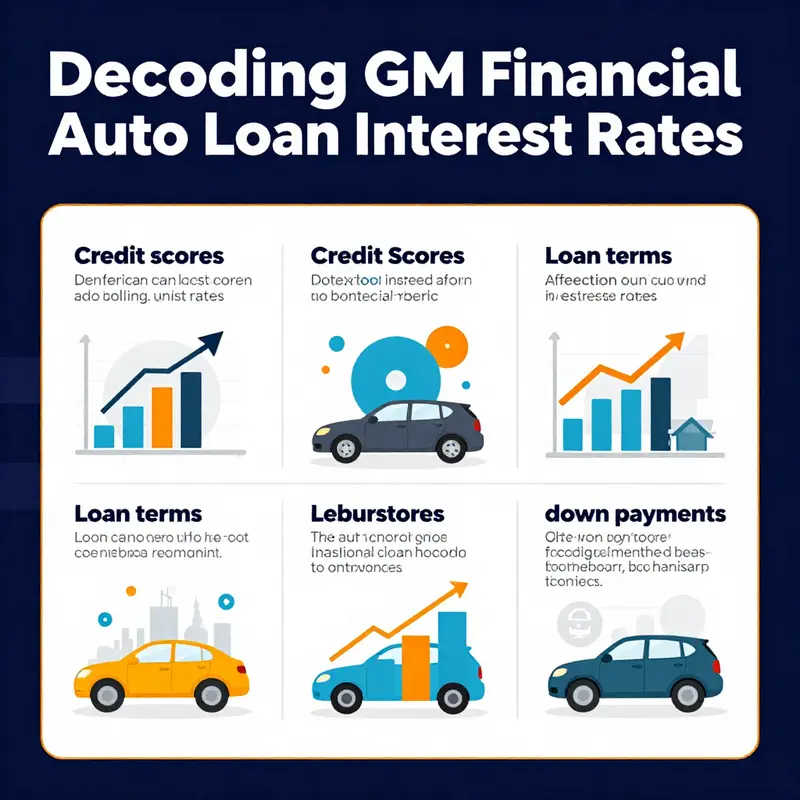
When you step into the car-buying process with GM Financial as a possible lender, a single question often shapes the math of your monthly budget: what will the interest rate be? The short answer is that the rate you see on a quote is not a fixed badge you wear for every car or every buyer. It’s a dynamic figure, built from your personal financial snapshot, the specifics of the loan, and even the particulars of the vehicle you choose. In practical terms, GM Financial’s rates are determined by a mix of factors that work together to produce a single annual percentage rate for each applicant. Understanding these factors is the key to forecasting what your payments will look like and deciding how to structure your deal for the best overall value.
At the core, several elements drive the rate you’ll be offered. The first is the choice of loan product. Different loan programs come with distinct terms and built-in rate profiles. The second is the loan term—the length of time over which you repay. A longer term generally means a lower monthly payment, but it often comes with a higher overall interest cost. The third is the total amount being financed. The more you borrow, the more interest you accumulate over the life of the loan. The fourth is your credit qualifications, which remain a decisive factor in most auto lending decisions. Each element interacts with the others, so the same car, the same price, and the same down payment can yield different APRs for different borrowers.
Your credit history, in particular, sits at the center of rate calculations. GM Financial, like many lenders, uses a credit assessment process that may rely on industry-specific scoring alongside standard consumer credit scores. The goal is to gauge how reliably you’ve managed debt in the past and how that history translates into risk for a new loan. Because GM Financial’s internal criteria can differ slightly from a consumer’s FICO score, two borrowers with similar nominal scores can still receive different rate offers. This reality matters because it means that even small changes in your credit profile—or in the way GM Financial weighs factors—can produce meaningful differences in APR for the same vehicle and the same loan amount.
If you want to anchor your expectations with some practical ranges, consider the typical picture many buyers encounter. For borrowers with excellent credit—often defined as a FICO score above 720—the advertised rates are frequently in the low single digits, roughly around 3% to 6% APR. Those with fair or average credit, typically in the 620 to 719 range, often see rates in the mid-single digits to the low double digits, roughly 6% to 10%. Individuals whose credit scores fall below the 620 threshold may face higher rates, sometimes exceeding 10% APR. It’s important to stress that these ranges are indicative rather than guaranteed. GM Financial uses its own evaluation framework, and the exact rate you receive will reflect the confluence of your credit qualifications, the product you choose, and the terms you select.
New versus used vehicles also factor into the rate landscape. In many cases, lenders extend more favorable terms for new-car purchases, largely because new vehicles present a clearer value proposition and potentially longer-term collateral stability. Used vehicles, given their depreciation and potential maintenance concerns, can carry higher APRs. Down payment makes a tangible difference here as well: a larger down payment lowers the amount financed, which can help in two ways. It reduces the loan’s principal and can improve your loan-to-value ratio, both of which lenders view favorably when pricing rates. If you come prepared with a meaningful down payment, you may unlock a slimmer APR or a more affordable monthly payment, even if your credit is solid but not outstanding.
The mechanism behind how you receive a rate quote also matters for planning. GM Financial’s process is designed to deliver a quote after you provide basic information, including the vehicle type, the term length you’re considering, and your financial profile. The best way to determine your personalized rate is to apply directly through GM Financial’s website or visit a participating GM dealership, where a pre-approval quote can be generated based on your specific situation. This approach gives you a concrete baseline to compare against offers from other lenders and helps you build a negotiation strategy around both price and financing terms. In the same breath, you’ll discover the actual monthly payment associated with your chosen rate and term, which can be surprisingly different from the sticker price of the car when financing is involved.
To make the numbers more tangible, many buyers turn to payment calculators that simulate how different APRs, loan terms, and financed amounts translate into monthly obligations. An Auto Loan Payment and Interest Calculator, for example, can take your estimated rate, the chosen term, and the principal amount to generate a projected monthly payment. It’s a useful tool for exploring scenarios—like what happens if you extend the term to lower the monthly bill, or if you increase the down payment to shave the loan balance. Remember, the calculator’s output reflects the assumptions you enter. The real-world payment may differ if the actual rate varies or if taxes, fees, and insurance are factored in. Still, the exercise is invaluable for evaluating affordability and for understanding how rate changes ripple through the entire financing package.
Beyond the math, there’s a strategic dimension to rate shopping that deserves attention. Rates aren’t merely a single number; they influence how quickly you build equity in the vehicle and how much you end up paying over the life of the loan. A slightly lower APR can mean thousands of dollars saved in interest over a six-year term, especially on a high-priced vehicle. Conversely, accepting a higher rate could be tolerable if it enables you to secure a vehicle you know you’ll value over time, or if you’re leveraging a very short-term loan that minimizes exposure to depreciation. The broader consideration is not only the monthly payment but the total cost of ownership, including maintenance, insurance, and potential finance charges, over the period you plan to hold the car.
As you prepare to engage with lenders, it’s helpful to know that the information available publicly is a starting point rather than a destination. The official GM Financial site and participating dealers provide current offerings and rate structures, which can evolve with changes in policy, market conditions, and individual borrower profiles. When you see a quoted rate, treat it as a tailored figure that could fluctuate with your circumstances. If your goal is to maximize value, approach the process with a plan: improve your credit score where feasible, quantify how much you’re willing to put down, decide on a realistic term length, and shop the options side by side. In doing so, you’ll be equipped to compare not just the monthly payment, but the long-run cost of financing and the pace at which you’ll regain equity in your vehicle.
For readers seeking additional context on how these financial decisions fit into broader planning, the Knowledge section of a trusted finance resource can be a helpful companion. It offers a framework for understanding how credit, debt, and financing choices interrelate with other aspects of personal finance. As you explore, you’ll find that the core ideas—credit history, down payment, loan term, and total amount financed—recur across many kinds of loans, not just auto financing. This broader perspective can reduce anxiety around the process and empower you to approach the GM Financial rate discussion with clarity. Davis Financial Advisors Knowledge.
In the end, the rate you’re offered from GM Financial is a snapshot of a broader finance plan tailored to you. It reflects both objective factors—down payment, loan amount, term—and more subjective ones—credit history, risk assessment, and the lender’s current pricing environment. By combining pre-approval quotes, careful down payment planning, and a realistic view of what you can comfortably manage each month, you can approach the dealership with leverage and confidence. The rate is important, but it’s part of a larger equation that includes vehicle price, incentives, taxes, and the total cost to own. As you navigate these choices, remember that the goal is not simply a low monthly payment but a sustainable financing arrangement that aligns with your financial reality over the life of the loan.
External resource: https://www.gmfinancial.com/auto-loans
Credit Score Gatekeeper: Understanding GM Financial Auto Loans and Your Purchase
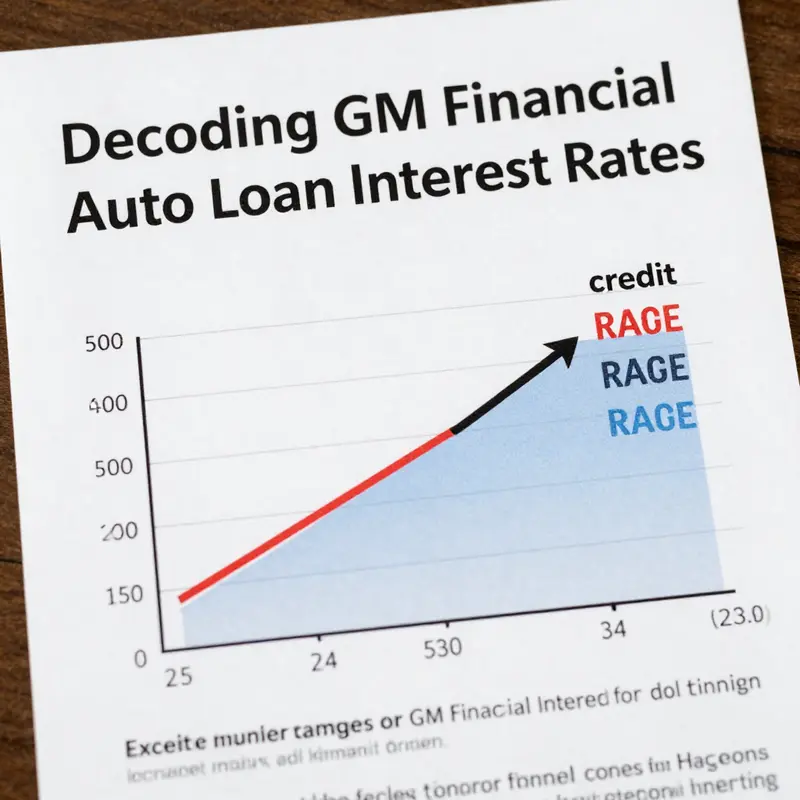
Your credit score acts as a gatekeeper when you finance a GM vehicle through GM Financial or any automaker’s captive lender. It helps determine qualification and the APR that drives your monthly payment. In general, loan terms depend on several factors: your credit score, the loan amount, the loan length, whether the vehicle is new or used, and the size of your down payment. Rates are not one size fits all; they vary within a range that reflects your overall financial picture and the lender’s underwriting criteria. This means two buyers with similar car prices can get different APRs if one has a stronger credit profile or a larger down payment. Better credit typically yields lower rates, while weaker credit tends to push rates higher. For borrowers with excellent credit, often defined as a score around 720 or higher, rates might fall toward the lower end of the market, potentially in the 3 to 6 percent range for new vehicles. Those with fair to average scores, roughly 620 to 719, commonly see higher costs, perhaps 6 to 10 percent, depending on other factors. If a score falls below 620, expectations should be more conservative. The exact rate is the result of a composite evaluation that may also weigh income stability, existing debt, delinquencies, and how aggressively the loan is structured to the lender’s policy. The best way to know your rate is to obtain a pre approval or a formal quote from the dealer or the lender’s online portal. A pre approval gives you a concrete, nonbinding rate to compare offers and can help you negotiate with confidence. Context matters, including how new versus used financing affects averages. In recent quarters, new vehicle loans have tended to carry lower rates than used vehicle loans, though individual factors can tilt the outcome. A concrete example helps illustrate the point: a $100,000 loan over three years for a borrower with a top tier score might incur around 10,000 in total interest, while a borrower with a credit score in the 600s could see roughly twice that cost under the same terms. Down payment and term length also shape the equation. Zero down offers can be attractive in theory but often require stronger credit or higher loan to value, and the total cost may be higher over the life of the loan. The practical takeaway is simple: a higher credit score typically translates to a lower rate, a lower monthly payment, and lower total interest, all else equal. But the loan length and down payment can amplify or mitigate that benefit. For buyers weighing new versus used inventory, look for promotional rates on new cars that might sit at the lower end for strong credit profiles, while used cars may have higher average rates but can still offer good value if you value price and depreciation. To connect financing choices with overall ownership costs, consider using an auto loan calculator to estimate monthly payments and total interest under different scenarios. In the end, a clear assessment of your credit health, down payment plan, and vehicle choice will help you negotiate a favorable package and avoid overextending your budget. If you want practical insights, speak with a dealer or lender about pre approval, which provides a solid baseline to compare offers and keep your purchase aligned with your financial goals.
Balancing Term, Credit, and Cost: Decoding How Loan Length Shapes GM Financial Auto Loan Rates and Your Total Bill
When you start exploring auto financing, a natural question arises: what is the actual GM Financial interest rate for an auto loan, and how is that rate determined? The simple answer is that there isn’t a single fixed rate that applies to every borrower. GM Financial, like most lenders, sets its interest rates based on a blend of factors tied to your financial profile and the specifics of the vehicle and loan you choose. The result is a rate that can vary considerably from person to person. In practical terms, you won’t get the same APR if you have a pristine credit history and you opt for a short loan term as you would if your credit is thinner or you select a longer repayment schedule. To many buyers, this is both empowering and a little daunting: the rate is not arbitrary, but it is not a single price tag either. The best route to a precise number is to engage directly with GM Financial through its official channels or via a participating dealer, where a personalized pre-approval quote can crystallize the terms you might expect given your situation. And while you investigate, it helps to keep a few core realities in view: rate, term, vehicle type, and down payment all interact to shape not only monthly payments but the total cost of ownership over the life of the loan.
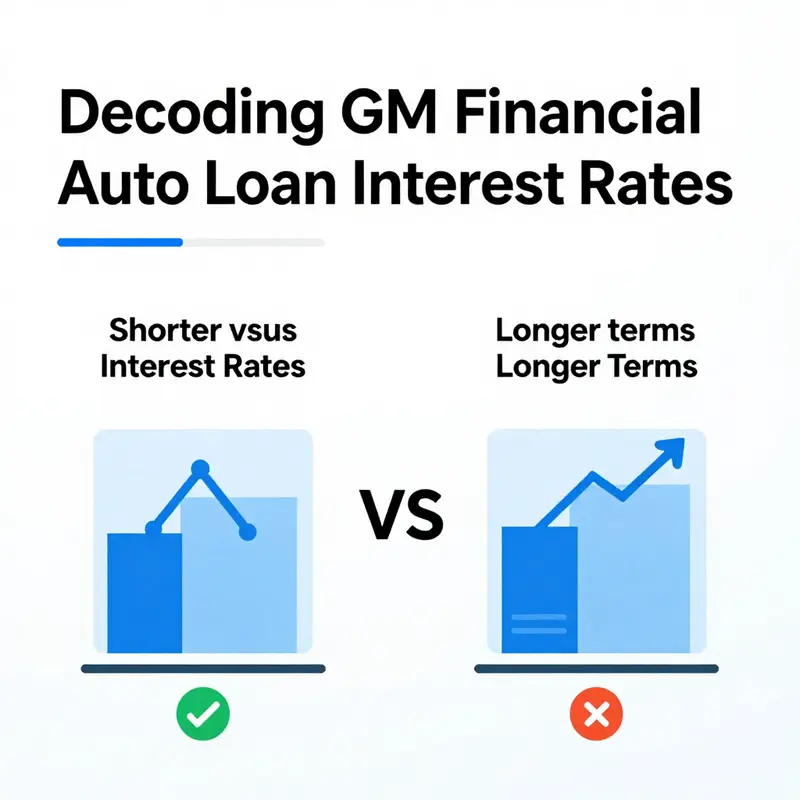
The most easily observed lever in that interlocking system is the loan term. Lenders, including GM Financial, tend to offer more favorable rates for shorter terms and higher rates for longer ones. The logic is straightforward from a risk perspective: the longer the loan stretches, the greater the chance that the borrower might encounter a snag—job loss, illness, or a market downturn—that could affect repayment. So, a 60-month loan may carry a lower APR than a 72- or 84-month option, all else equal. Yet the flip side is equally important in everyday budgeting. A longer term reduces the monthly payment, which can make a vehicle more affordable on a month-to-month basis. That apparent affordability, however, hides a larger price tag over the life of the loan. With the same interest rate, a longer term means more payments and more interest accrued. To illustrate, financing a $30,000 vehicle over 72 months at an APR of 5% yields roughly $482 per month, with total interest paid over the life of the loan approaching $4,700. In contrast, financing the same $30,000 over 48 months at 5% APR might push the monthly payment to about $690, but the total interest would drop to roughly $3,100. Those numbers are indicative, not universal, but they capture the core truth: longer terms spread the cost out, but they also increase the total interest you pay.
The word “term” here refers to how long you commit to repaying the loan. GM Financial, like other lenders, typically markets popular terms such as 36, 48, 60, 72, and 84 months. The exact availability and the rates offered for each term depend on the other factors in play—the borrower’s credit profile, the vehicle’s price, whether the car is new or used, and the size of the down payment. The vehicle type matters because new cars generally present different risk and depreciation profiles than used cars, which lenders take into account when pricing risk. While many buyers assume new-car loans are always cheaper, the interplay of term length and the borrower’s credit strength can shift that dynamic in practice. GM Financial’s own underwriting criteria apply here, and while the public-facing rate bands give a sense of direction, your personal quote can diverge based on the composite picture of your finances and the vehicle you choose.
Credit score remains a central axis in the rate spectrum. A borrower with an excellent credit history—often a FICO score above 720—may qualify for rates near the lower end of the range, sometimes dipping into the mid-single digits or just above. Those with fair to average credit, typically in the 620–719 band, frequently see higher APRs, commonly landing somewhere in the mid-to-high single digits or into the teens depending on the term and vehicle. Borrowers with lower scores may face substantially higher rates, occasionally surpassing 10% APR, especially on longer terms or when the loan-to-value ratio is high. It is important to note that GM Financial uses its own set of credit evaluation criteria, which can differ from standard consumer credit scores in how they weight various aspects of your financial picture. As a result, a pre-approval or quote from GM Financial can sometimes look different from a generic scorecard expectation, underscoring the value of a direct, personalized rate check.
Because rate information changes with policy shifts, market conditions, and underwriting guidelines, the most reliable way to determine your personalized rate is to apply. A dealership can run a pre-approval quote based on your application, or you can begin the process on GM Financial’s site. This step not only provides a rate tailored to your situation but also places you in a stronger negotiating position with the dealership, since you’ll have a credible financing offer in hand before you start discussing price and trade-ins. Beyond the rate itself, negotiations can incorporate the overall cost of the loan, including the total interest paid, any potential rebates, and the pace at which down payment reduces the amount financed.
Down payment is another lever you can pull to optimize your outcome. A larger down payment lowers the loan amount and often improves your loan-to-value ratio, which can influence the rate offered and the loan’s overall risk rating. A bigger down payment can translate into a lower required loan balance, which may prompt the lender to extend a more favorable APR, especially when coupled with a solid credit profile and a shorter loan term. In practice, buyers frequently assign a 10–20% down payment to help secure a more favorable rate, but the exact amount that pays off will depend on your price target, the vehicle’s value, and your overall financial plan. It is also worth considering how a down payment interacts with other costs, such as taxes, fees, and extended warranties, to avoid inadvertently over-leveraging yourself in the pursuit of a lower rate.
The marketplace for auto financing is not a single-planet system where one price rule applies to all. You will often encounter a spectrum of possible outcomes for a given vehicle price, depending on your credit strength, term length, and down payment. The practical upshot is that you should not fixate on the rate in isolation. Instead, you should model scenarios across several term lengths and down-payment levels, then compare the total cost of each option. A short-term loan may offer the best rate and the smallest total interest, but it commits you to a higher monthly outlay. A longer-term loan reduces monthly pressure but increases the cumulative interest and the amount you pay over time. In this calculus, your monthly budget, your near-term liquidity, and your long-term financial goals should all guide the decision.
For readers who want to broaden their understanding of financing decisions for vehicle ownership, the broader finance context is worth exploring. A practical reference point is how financing choices intersect with the total cost of ownership, maintenance budgeting, and even opportunities to streamline other related expenses. For a broader, finance-focused overview, you can visit a knowledge hub that covers fundamentals of personal finance and vehicle financing principles. This kind of resource can help you see how an APR sits within the larger picture of budgeting for transportation, insurance, maintenance, and depreciation over the life of the car.
As you consider your options, you may also benefit from seeing how financing choices relate to the practical realities of vehicle ownership. For example, in the context of heavy- and light-vehicle fleets, long-term financing decisions often hinge on balancing cash flow with asset resilience. If you’re managing a fleet or making a multi-vehicle purchase, the same principles apply, though the scale changes the math and logistics. The core idea remains the same: shorter terms tend to produce lower costs in interest and faster equity buildup, while longer terms free up monthly cash flow but demand more discipline in budgeting for end-of-lease scenarios, potential trade-ins, and the risk of being upside down on the loan if the vehicle’s value declines rapidly. A thoughtful approach is to anchor your decision in a clear sense of your monthly affordability, your long-range plans for the vehicle, and your readiness to absorb potential changes in interest rates over time.
The financing journey begins with awareness of how rate, term, and credit score interact, then moves to action: shopping quotes, comparing alternative lenders, and selecting terms that fit your life rather than shaping your life around a payment. In practice, you can start by understanding the typical ranges for your credit tier, recognizing that longer terms often accompany higher rates, and planning a down payment that aligns with your comfort level and overall budget. Keep in mind that the best rate you will receive is contingent on your specific financial picture and the terms you choose. By approaching the process with a deliberate plan, you can minimize the total cost while still achieving the vehicle you want and the payment schedule that works in your life.
Internal resource guidance: for readers who want to connect financing choices to broader ownership considerations, consider exploring practical insights on managing vehicle ownership finances, which can illuminate how your loan structure interacts with other costs of car ownership. Managing Truck Ownership Finances.
External resource: for the most current, official information on GM Financial rates, terms, and pre-approval options, consult the lender’s site at https://www.gmfinancial.com
Decoding the Spectrum: How Vehicle Type, Credit, and Terms Shape GM Financial Auto Loan Rates
When you start exploring auto financing with GM Financial, the first takeaway is almost always the same truth: the interest rate you pay is not fixed. It isn’t carved in stone for every borrower, every vehicle, or every purchase. Instead, GM Financial, like many captive finance arms, uses a composite picture of your financial profile, the specifics of the vehicle, and the terms you choose to determine an offered rate. The result is a spectrum rather than a single number. Rates float within a broad range because they reflect risk, depreciation, and the lender’s current funding costs, as well as promotional nudges that can tilt the odds toward a lower rate if a borrower qualifies. In practical terms, this means two people could walk into the same dealership on the same day and walk out with two very different APRs, each one tailored to their own financial picture and the exact vehicle and terms selected. For anyone stepping into the process, understanding where those variations come from can save time, frustration, and money over the term of the loan.
A foundational factor in shaping any auto loan rate is the borrower’s creditworthiness. Lenders rely on credit histories to gauge the likelihood that a borrower will repay the loan as agreed. Higher credit scores typically translate into lower interest costs because they imply lower risk to the lender. Within common credit-score bands, someone with an excellent score—often in the 720 and above range—will generally see rates near the lower end of the spectrum. In contrast, borrowers with fair or average credit may find themselves in mid-range rates, and those with lower scores may face higher APRs, sometimes significantly so. It’s important to note that GM Financial uses its own set of underwriting criteria. While standard credit scores provide a useful reference point, the company may weigh certain elements differently, such as individual debt levels, recent credit history, or other financial obligations. This means your official rate could diverge from competing lenders even if your FICO score looks similar on paper.
Beyond credit, the term length of the loan plays a crucial role in rate structuring. Shorter terms—like 36 or 48 months—often carry lower APRs because the loan is repaid more quickly, reducing the lender’s exposure to interest accrual over time. Longer terms, such as 60, 72, or even 84 months, can come with higher APRs, offset by smaller monthly payments. The math is straightforward: a longer repayment horizon means the borrower pays interest for a longer duration, which can add up even if the monthly burden feels more manageable. The vehicle’s type and age also influence the interest landscape. New vehicles typically attract more favorable financing terms than used ones, largely because newer models tend to retain value better and carry lower depreciation risk. Lenders may view new cars as safer bets for recovery in case of default, which can translate into lower rates on the loan. Meanwhile, used vehicles, particularly older ones, can trigger higher rates to compensate for the increased depreciation risk and the potential for maintenance concerns that might complicate timely repayment.
Down payment size is another lever that borrowers can pull to shape the rate. A larger down payment reduces the loan principal and signals stronger borrower equity upfront. This often translates into lower rates or, at minimum, a more favorable loan-to-value ratio. The relationship between down payment and rate is not always linear, but the general rule holds: more skin in the game can yield a better pricing outcome. The vehicle’s category also matters in nuanced ways. Personal vehicles—whether new or used—carry different pricing dynamics than commercial or fleet vehicles. For personal auto loans, lenders tend to apply standard consumer underwriting criteria, while dealer or institutional loans may be structured with different incentives or risk allowances.GM Financial’s portfolio includes personal auto loans for individuals, dealer auto loans that support inventory and dealer operations, and institutional loans aimed at fleets. This variety allows the lender to tailor offerings to the specific purpose of the financing, but the underlying principle remains: the more predictable and lower-risk your profile, the more favorable your rate is likely to be. Promotional rates add another layer of complexity, often turning what would be a mid-range APR into an unusually attractive figure for a limited window. Manufacturers, dealerships, and lenders occasionally run promotions tied to seasonal sales events or end-of-year clearances. These promotions can temporarily reduce the stated APR for qualified buyers, but they come with constraints—such as vehicle eligibility, loan-to-value limits, and required purchase dates. It’s entirely possible to encounter a short-lived, highly favorable rate that makes a particular combo of vehicle and term especially enticing. The caveat is that promotions are time-bound and contingent on meeting credit and down payment criteria, which means a borrower’s actual rate on a given day may differ from the advertised promotional rate if those criteria aren’t met.
For those who want to gauge where they stand before stepping into a dealership, getting a sense of the process and the variables at play is crucial. The best path is to initiate a pre-approval quote either through GM Financial’s online portal or with a participating dealership. A pre-approval provides a personalized rate quote based on your stated financial situation and the vehicle you intend to buy. It’s not a guarantee of financing, but it does offer a credible benchmark that you can compare against any in-dealership offers. The pre-approval can also help you understand how much you might be able to borrow, which in turn informs the loan term you select, the down payment you’re comfortable contributing, and the type of vehicle that best aligns with both your budget and your long-term financial plan. When you consider vehicle type as a factor, this becomes even more meaningful. A new SUV with a robust down payment in a shorter term could land you a notably lower rate than a used sedan in a longer term with a modest down payment, even if both borrowers share similar credit scores. The practical takeaway is simple: there is no one-size-fits-all rate, and your best approach is to assemble as much information as possible, from your credit posture to your intended vehicle category and the term length you prefer.
In the landscape of vehicle financing, awareness of the categories and their implications helps you navigate with confidence. The types of vehicles and the corresponding loan options that GM Financial can accommodate range from personal autos to commercial fleets, with distinctions in the way rates may be applied depending on the purpose and category. Personal auto loans cover individuals buying new or pre-owned vehicles for everyday use, while dealer auto loans function as a mechanism to support dealership inventory and operations. Institutional auto loans address the needs of businesses financing fleets or company vehicles. This broad spectrum is more than a technical footnote; it reflects how financing strategies are crafted to fit different financial realities. When you’re evaluating a rate, you’re not just choosing an amount over a fixed period—you’re aligning your purchase with a financing framework that recognizes how you intend to use the vehicle and how it fits into your overall financial health.
To keep the process grounded, it’s helpful to keep in mind a few practical steps. First, gather a clear picture of your credit standing, including your current score, any outstanding debts, and your recent credit history. Second, decide on your preferred vehicle category and whether you’re leaning toward new or used, recognizing that new vehicles often unlock better pricing dynamics. Third, establish a target down payment and a realistic loan term that fits your monthly budget while balancing total interest costs. Fourth, initiate a pre-approval to obtain a personalized rate quote, and compare that quote with any dealer offers. Finally, remember that promotional periods can tilt the rate landscape in meaningful ways, but they come with eligibility rules. By approaching the process with this framework, you’ll be in a position to select a financing arrangement that aligns with both your short-term budget and your longer-term financial objectives.
For readers seeking a concise context on how these pieces fit together, you can consult a broader automotive financing knowledge resource that outlines how lenders assess risk and structure auto loan pricing. This helps connect the dots between credit, down payment, term, and vehicle type, translating the math of rates into actionable steps you can take before stepping into a showroom. As you move from understanding the factors to applying for financing, you’ll likely notice that your final rate reflects your unique combination of variables rather than a single universal figure. The key is to approach the process with a plan, shop around when possible, and use the pre-approval as a yardstick for comparison.
For the most accurate and current information on GM Financial interest rates and vehicle eligibility, consult the official GM Financial site or speak with a certified lender. If you want a broader context while you’re gathering information, you can explore the knowledge resources available at the automotive financing knowledge hub: GM Financial auto loans knowledge. This internal resource provides a framework for understanding how rates are typically shaped and how different factors interact in practice. It’s not a substitute for a personalized quote, but it can help you interpret the numbers you receive and set realistic expectations about what a given rate implies over the life of the loan. Of course, any concrete decision should be anchored by your pre-approval quote and the specific terms you agree upon with the lender.
External resource: For the most precise, up-to-date rates and policy details, visit GM Financial’s official auto loan financing page at https://www.gmfinancial.com/loans/auto-loans.
Decoding the Auto Loan Rate Puzzle: How Credit, Terms, and Down Payment Shape a Captive Lender’s Offer
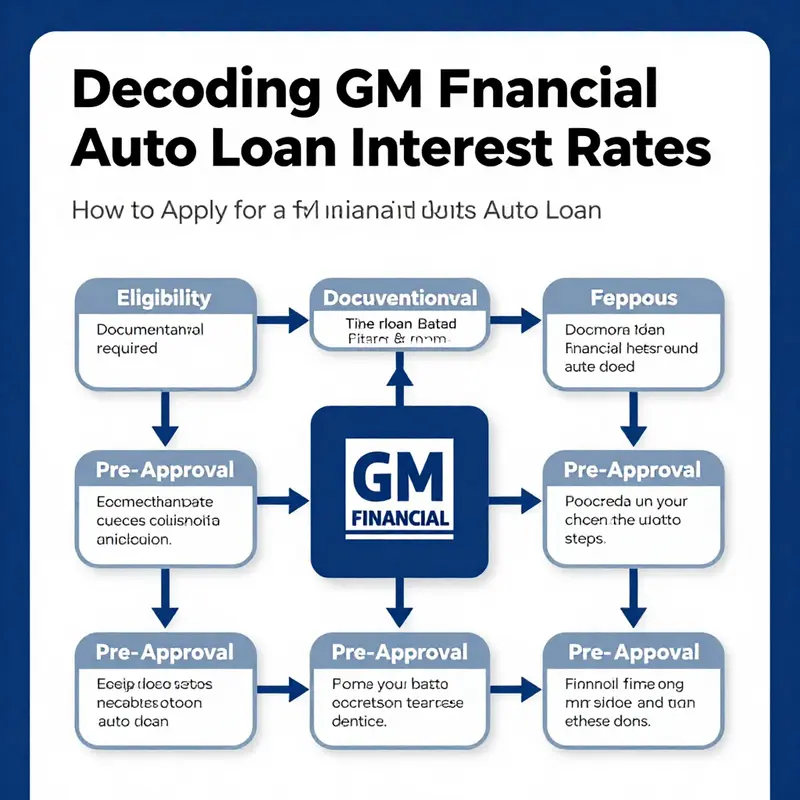
The rate you see attached to an auto loan from a captive lender is not a single number carved in stone. It is the product of a landscape where credit history, the length of the loan, the age of the vehicle, and even the size of the down payment all interact. This is true whether you are buying new or used, and whether you are negotiating at the showroom floor or applying online. Because the lender is tied to a specific automaker, some promotions may come and go with the seasons, and the published rates are optimized to balance risk and sales momentum.
Credit score is the most familiar lever. The basic range you will hear from many lenders is something like 3% to 15% APR overall, but the exact rate depends on your profile. If you have excellent credit—think a score above 720—you might land in the lower end of the range, roughly 3% to 6% APR for a typical new-vehicle loan. If your score sits in the fair-to-good zone, between 620 and 719, expect a middle band, perhaps 6% to 10%. Those with credit struggles below 620 often face higher rates, sometimes over 10% APR, especially if the lender weighs recent delinquencies or thin credit history heavily. Remember, the lender uses its own underwriting criteria that can differ slightly from generic credit score interpretations, so your official rate is best understood after submitting an application.
Loan term and vehicle type also tilt the odds. A longer term reduces monthly payments, which can be appealing, but it often raises the total interest you pay over the life of the loan. The same principle holds whether you’re financing a brand-new model or a used vehicle, though used-car financing sometimes carries a different risk analysis and may carry a higher baseline rate. Down payment matters too: a larger upfront payment lowers the loan amount, which can position you for a more favorable rate or, at minimum, a smaller monthly obligation. A solid down payment also signals to the lender that you’re invested, which can translate into smoother processing and clearer approval terms.
With the basics in mind, the practical path to getting an accurate rate starts with eligibility and a true look at your financial picture. The lender typically requires U.S. citizenship or permanent residency, a minimum age (often around 18) and a maximum age limit at loan start, a valid driver’s license, and evidence of stable income. A steady employment history is valued, but some programs allow alternative proofs of income. Before you apply, pull your credit report from the major bureaus to confirm your score and spot any errors. It helps to know where you stand before you visit the online pre-approval tool or a dealership, because the pre-approval result is a powerful frame for negotiations.
The pre-approval tool is the gateway to a rate estimate that you can act on quickly. Using the lender’s online calculator, you enter details such as your score range, desired loan amount, planned down payment, and whether you’re looking at a new or used vehicle. The tool returns an instant rate estimate and a monthly payment projection, which gives you a tangible sense of affordability and monthly budget. If the estimate aligns with your expectations, you proceed to submit a full application. This step requires more detail: your full name and contact information, your employment details, and documentation such as a government-issued ID, recent pay stubs or W-2s, and proof of residency. The process is designed to balance speed with verification, and it is common for lenders to conduct a standard review that ensures the applicant’s stated income and identity match records.
After submission, you typically wait 1 to 3 business days for a decision. If approved, you’ll receive a conditional approval letter listing the loan amount, the term, and the interest rate, subject to the vehicle’s evaluation and final underwriting. If you are satisfied with the terms, take the pre-approval letter to a participating dealership. The sales team can help you choose a vehicle that fits the approved amount and terms, and the dealership will finalize the financing. The funds are usually sent to the dealer to complete the purchase once the loan is officially processed. Throughout this step, it’s wise to compare the pre-approval with the final terms carefully. The rate can shift based on the exact vehicle you select, the car’s year, mileage, and the dealer’s assessment of the vehicle value and market conditions.
A few important nuances can save you money. Pre-approval gives you leverage when negotiating with the dealer because you already have financing in place, which makes the sticker price the primary variable rather than the financing amount. Even with pre-approval, the final decision hinges on the vehicle’s condition and the dealer’s evaluation, so expect a possible adjustment after a physical inspection. Be aware of promotional rates that may appear during seasonal sales events; they can be highly attractive but come with strings—such as required down payments, lease-style terms, or purchase criteria that fit a limited selection of models. Reading the contract carefully is essential. Confirm the advertised rate, monthly payment, total loan amount, annual percentage rate, and any fees or penalties that could alter the bottom line. If something seems off, don’t hesitate to ask questions or seek a second opinion from a trusted advisor.
When the dust settles, the rate you pay is not a fixed badge of your credit worthiness alone. It reflects a combination of risk assessment, product mix, and timing. By understanding the levers—credit standing, the loan’s term, whether you’re financing a new or a used vehicle, and how you structure your down payment—you can approach the process with clarity rather than guesswork. The pre-approval experience helps you set a budget, but the real test comes at the lot, where the vehicle’s value, dealer incentives, and the final terms converge. For broader context on personal finance strategies and to deepen your understanding of how such decisions fit in a larger financial plan, readers can explore the knowledge hub.
External resource: https://www.gmfinancial.com
Final thoughts
Understanding the characteristics that influence GM Financial’s auto loan interest rates can significantly aid buyers in their financial planning and decision-making. Variations in credit scores, loan terms, and the type of vehicle can result in differing rates, underscoring the importance of personal financial health and informed decision-making. As potential borrowers explore their options, a clear grasp of these factors will ultimately lead to more advantageous financing outcomes. Make sure to engage directly with GM Financial or through authorized dealerships to obtain tailored quotes that align with your unique financial situation.