

Auto loan refinancing has become an increasingly important option for individual car buyers, auto dealerships, and small business fleet purchasers seeking financial relief or better terms. Ally Financial’s specialized services offer a straightforward avenue to reassess auto loans, potentially lowering payments and improving financial flexibility. This article will explore how refinancing with Ally Financial affects borrowers, detail the refinancing process, highlight the benefits of choosing Ally, and compare its offerings with other refinancing options available in the market, providing all stakeholders— from individual buyers to businesses— with critical insights for informed decision-making.
Rewriting the Payment Equation: How a Modern Online Lender’s Auto-Loan Refinance Affects Borrowers

When a single debt dominates a monthly budget, even a modest drop in the payment can change the rhythm of a household. Car loans, with their predictable bills and fixed terms, become a steady drain or a quiet relief depending on the negotiated rates and the remaining term. Refinancing an auto loan through a modern online lender offers a way to rework that equation without rearranging every other financial obligation. The idea is straightforward: if the new loan has a lower rate or a more favorable term, the monthly payment may fall, and the total cost of borrowing can shrink. The reality, however, sits in the details of who qualifies, how the process unfolds, and what actually changes when you swap one loan for another. For many, the outcome is a tighter budget, a clearer path to paying off the car sooner, or simply a chance to avoid seasonal spikes in expenses when interest rates shift. The best part of the online refinancing experience is that it can begin with little risk to your credit and progress toward a decision with tangible benefits if you qualify.
One of the defining strengths of the contemporary refinancing option is the ability to start with a prequalification. This step uses a soft credit inquiry, meaning it does not count as a hard pull on your score. In practical terms, you can glimpse a range of potential rates and monthly payments without triggering a credit score impact. This is not just a technical nicety; it’s a meaningful guardrail for borrowers who want to explore options before committing. The soft inquiry is designed to protect a borrower’s credit standing while still delivering rate previews that are concrete enough to inform choices. In the best cases, the previews come back quickly, enabling applicants to compare offers side by side, weigh term lengths, and examine how a change in the loan’s term interacts with the monthly amount due. A fast response to rate previews also makes it easier to decide when a lender’s terms align with personal budgets and long-term goals.
Within this landscape, the practical appeal of refinancing often centers on how the monthly payment can be reshaped. For many borrowers, a refinancing option can translate into noticeable cash flow improvement. Reports and user data from online refinancing platforms indicate that a sizable share of refinancers see meaningful reductions in their monthly obligations. In the narratives shared by customers, a typical outcome is a lower payment that lasts for the same loan horizon or a longer horizon that still reduces the monthly burden because the rate is more favorable. A representative figure cited by user data indicates that some borrowers reduce their monthly payments by a substantial margin, which translates into easier budgeting and more room in the monthly schedule for essential expenses, savings, or debt repayment. It’s important to interpret such figures as indicative rather than universal; each borrower’s situation—credit profile, loan-to-value ratio, vehicle age, and remaining term—plays a key role in final numbers. Yet the core message remains consistent: refinancing has the potential to lower monthly outlay and improve overall loan terms for a wide range of borrowers who qualify.
A crucial but often overlooked factor in the refinancing conversation is how the lender evaluates risk and determines eligibility. The modern approach tends to balance borrower information with vehicle specifics and market conditions. For the borrower, this means that loans with higher credit quality, steady income, and a favorable debt-to-income ratio are more likely to unlock the best rates and terms. The presence of a co-applicant or co-signer can alter that dynamic in meaningful ways. When a co-applicant brings strong credit, reliable income, and a robust financial footing to the table, the lender has additional assurances that the loan can be serviced with less risk. The practical implication is a real opportunity: the potential for lower interest rates and better loan terms than would be available to a sole applicant. The co-signer approach is not merely about achieving a lower rate; it also can broaden access to refinancing for borrowers who might otherwise miss out due to a thinner credit profile or a higher debt burden. Sharing responsibility for the loan with a co-signer can distribute risk in a way that benefits both parties and the lender alike, often translating into more favorable offers and more flexible terms for the primary borrower.
The refinancing journey, from prequalification to a final decision, follows a straightforward arc, but the outcomes hinge on careful comparisons and honest self-assessment. After the initial soft pull, applicants may receive rate previews that illuminate how different term lengths and rate scenarios affect monthly payments and total costs. It’s common for borrowers to run a few scenarios side by side: a shorter term with a slightly higher monthly payment that reduces total interest, versus a longer term with a lower monthly payment that keeps cash flow comfortable but extends the time until ownership is complete. The heart of the decision rests on what the borrower values most: immediate monthly relief, total savings over the life of the loan, or a balance between the two. It’s prudent to calculate not only the monthly figure but also the cumulative cost across the full term, including any origination fees or additional costs that may accompany a new loan. While the monthly payment is a focal point, the total cost tells the full financial story and often reveals the true value of refinancing beyond the headline monthly savings.
For many borrowers, the timing of a refinance also matters. If rates have improved since the original loan was issued, or if the borrower’s credit profile has strengthened, refinancing can become a strategic move rather than a reflex. The decision to proceed involves a careful audit of the existing loan’s details: the current interest rate, remaining term, the remaining balance, and any penalties for early payoff. In parallel, the new loan’s structure must be appraised—how long the new term would last, whether the rate is fixed or variable, and whether the new monthly payment aligns with the borrower’s broader budget. A crucial caveat is the temptation to simply chase the lowest monthly payment without considering the total cost. Extending the term, even if the monthly figure looks appealing, can result in paying more interest over time. The aim should be to reduce both the burden and the duration of the debt, ideally achieving a healthier balance between monthly cash flow and the total interest paid over the life of the loan.
The everyday value proposition of refinancing also extends beyond the numbers. A lower monthly payment can have a cascading effect on financial well-being: it can free up funds for emergency savings, contribute to debt payoff strategies, or simply provide a cushion against unexpected expenses. In this sense, refinancing becomes a budgeting tool as much as a loan arrangement. The smoother the cash flow, the easier it is to maintain financial stability, and the less pressure there is on non-discretionary spending. For those who own a vehicle longer than originally planned, refinancing can align the loan with a revised horizon: paying off the car before it becomes an uncertain asset in need of expensive maintenance becomes more plausible when the loan balance is reduced and the rate is favorable.
The process itself is designed to be transparent and accessible, with the borrower at the center of a straightforward path. The initial step invites exploration without risk: a soft credit check that reveals a spectrum of rate previews without impacting credit scores. Those previews are meant to be navigated with intention, allowing borrowers to juxtapose different loan terms, rates, and payment amounts. If the decision is to move forward, the borrower will typically submit a formal application, after which the lender conducts a more complete credit assessment and a verification of income and vehicle details. At this stage, the inquiry may become a hard pull, which can impact credit scores in some cases, so borrowers should be prepared for the possibility and avoid multiple applications in a short window. Once approved, the new loan terms are formalized, and the existing loan is paid off. The new payment schedule begins under the new terms, and the borrower experiences the practical shift in monthly obligations. In daily life, this translates to more predictable budgeting, reduced friction in monthly planning, and a renewed sense of control over one’s financial trajectory.
As readers consider whether refinancing makes sense for their own situation, a few guiding questions emerge. Does the new rate improve the balance between monthly payment and total interest? Is the remaining term compatible with the borrower’s goals—whether that means paying off the loan sooner, preserving flexibility, or aligning with other financial plans? How do the fees and any prepayment considerations compare to the current loan’s terms? These questions are not just arithmetic; they are about how the decision integrates into a broader life plan. For instance, if a borrower is contemplating major changes—an upcoming home purchase, a shift in employment, or a tightened budget due to changes in income—refinancing can be a prudent step to stabilize debt service and reclaim financial margin. Conversely, if the current loan already offers competitive terms and the borrower anticipates only modest changes in income, the incentive to refinance may be smaller, and the prudent choice could be to continue with the existing agreement rather than incur new costs or extend liability.
In framing the refinancing decision, it helps to remember the human dimension behind every loan. Credit profiles evolve as people work, save, and manage debt across time. An online refinancing path recognizes that evolution by offering a flexible, user-friendly route to reassess debt in light of present circumstances. The goal is not to push every borrower into a new loan but to provide a clearer, more affordable option for those who stand to gain from reworking their terms. The most persuasive stories are those in which borrowers experience real-world relief—lower monthly payments, improved budgeting, and a clearer path toward debt freedom—rather than abstract numbers on a screen. When those stories emerge, they reflect not merely a better rate, but a smarter alignment of a car loan with a borrower’s current life and future plans.
For readers seeking further context on refinancing decisions, practical guidance, and clarifying explanations that illuminate the mechanics of the process, a comprehensive knowledge resource can offer a helpful primer. You can explore foundational insights at the following reference: Davis Financial Advisors Knowledge. This resource provides core concepts that underpin refinancing choices, including how soft pulls work, how to compare offers, and how to think about total cost versus monthly payment. While the specifics of any particular lender’s program vary, the framework for evaluating refinancing options remains consistent: understand the terms, compare the long-term impact, and choose the path that best aligns with your financial priorities.
In sum, the refinancing journey for an auto loan is a practical exercise in financial rebalancing. It invites borrowers to pause, measure, and reallocate their cash flow toward matters that matter more in daily life. It is not a guarantee of savings for every borrower, but it offers a credible, data-supported pathway to reduce monthly obligations and improve loan terms for those who qualify. The online, prequalification-first approach reduces barriers to exploration and gives prospective borrowers a clear window into what could be possible. When combined with thoughtful consideration of co-applicant options and a disciplined evaluation of term lengths and total costs, refinancing becomes less about the thrill of a new loan and more about the disciplined pursuit of a more livable financial future.
External resource: https://www.ally.com/auto-loans/refinance/
Digital Precision, Real Savings: Navigating Auto-Loan Refinancing with a Leading Online Lender
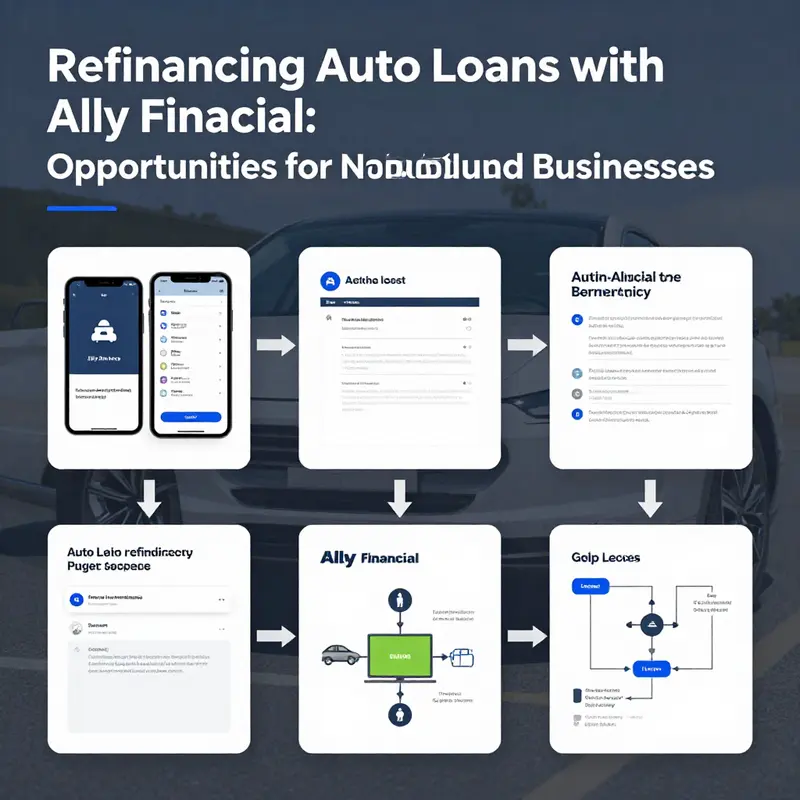
When a borrower looks at an auto loan, the underlying math is often about cash flow as much as it is about debt. Refinancing a loan can make room in a budget, shorten or extend the payoff timeline, and blunt the bite of rising rates or hefty monthly obligations. In today’s landscape, the act of refinancing has shifted from a paper-heavy, in-person process to a streamlined, online experience. A leading online lender has designed a pathway that emphasizes speed, clarity, and control, offering a route to potentially lower monthly payments without the friction that once defined traditional financing. The aim is straightforward: you maintain enough flexibility to adapt to changing circumstances while preserving the integrity of your credit and your vehicle’s value. At its core, refinancing is a financial recalibration. If your current loan has a rate that feels fixed to your budget or if your credit profile has improved since you last signed, a refinance can realign terms in a way that better matches your present situation. The digital approach to this recalibration is not simply about convenience; it is about transparency and empowerment. The platform guides you through a process that starts with pre-qualification in minutes and moves toward a formal decision with minimal disruption to your day.
The first impression of a digital refinancing journey is efficiency. You begin on the lender’s online portal or mobile app, where the interface invites you to input your current loan details, the vehicle’s information, and essential personal and financial data. This is not a guesswork exercise. The system leverages automated underwriting to assess your eligibility quickly, often delivering an instant pre-approval decision. This instant feedback is meaningful because it sets expectations early. You learn whether you’re in the running for a new loan before you commit to pulling credit or gathering documents. In practice, this means you can explore whether refinancing might lower your monthly burden without enduring the anxiety of weeks of back-and-forth with a loan officer. The ability to pre-qualify without a hard inquiry is a subtle but powerful feature that preserves your credit profile while you shop around for the best option.
Once pre-approval is in hand, you face concrete choices. The lender presents a menu of competitive interest rates and loan terms, designed to align with a range of financial goals. If the objective is to reduce the monthly obligation, you may opt for a longer term. If the goal is to minimize total interest and pay off sooner, a shorter term could be the route, even if the monthly payment rises. Importantly, the process is transparent about how each option translates into real costs and timelines. The ability to tailor terms to your personal budget reflects a broader shift in consumer finance: the emphasis is on personalization rather than one-size-fits-all packages. The platform’s design supports this by presenting side-by-side scenarios that let you compare the long view of costs against the monthly experience you need to sustain.
The benefits of refinancing go beyond the numerical savings. For many, refinancing through a digital lender translates into improved cash flow, greater predictability, and reduced financial stress. The logic is simple: if you can lower your monthly payment, you free up funds for emergencies, education, or other essential expenses without sacrificing your vehicle. Even a modest reduction in monthly payments can accumulate into meaningful annual savings, especially when you consider how those extra dollars could be redirected toward paying down principal on other debts or building an emergency cushion. The data landscape behind refinancing is layered. Historical observations from a broad auto-financing ecosystem have shown that customers who refinanced could experience noticeable monthly relief. It’s important to interpret such figures in context: they reflect a specific period, a unique mix of credit profiles, and particular terms. Still, they illustrate that refinancing has the potential to improve daily cash flow, which can be especially valuable for households juggling fluctuating incomes or unexpected expenses.
What often distinguishes a good refinancing experience from a frustrating one is how the lender handles the details after pre-approval. A streamlined refinancing journey places the documentation, underwriting, and closing within a digital ecosystem that minimizes in-person interactions. You upload the necessary documents—income verification, proof of insurance, vehicle information, and perhaps a recent pay stub or tax document—through secure channels. The platform accepts electronic signatures, and the entire closing can be completed online. After the new loan is funded, the lender pays off the old loan directly, so you do not have to manage multiple payments or coordinate payoff checks. Then you begin making payments on the new loan according to updated terms. The efficiency of this end-to-end process is a hallmark of the modern online lending model: clear steps, timely updates, and a predictable workflow that lets you plan with greater confidence.
With any refinancing decision, the consideration set should include not just the rate and payment but also how the new terms align with your broader financial trajectory. A lower monthly payment is appealing, but it may come with a longer repayment horizon that increases total interest if the new rate is not sufficiently favorable or if you extend the term too much. Conversely, a shorter term often comes with a higher monthly payment but reduces interest costs and accelerates equity growth in your vehicle. The smart approach is to model different scenarios, weighing the tradeoffs between monthly flexibility and long-term cost. The digital environment supports this kind of scenario planning by presenting clear projections for each option and by making it straightforward to adjust inputs as your income, expenses, or goals evolve.
To understand the scale of capability behind online auto-financing platforms, it helps to step back and consider the evolution of the lender itself. The institution began life in the early automotive era and has grown into one of the world’s leading automotive finance providers. Over the decades, it transitioned from being a subsidiary of a major automaker to an independent bank holding company, embracing a contemporary identity and a public market presence. Its reach extended beyond domestic borders through strategic partnerships that expanded its financing expertise into international markets. This trajectory matters for borrowers because it underscores a core idea: a lender with deep roots and a broad footprint is often able to offer more stable terms, a wider range of loan options, and a robust underwriting framework that supports consistent decisioning in a fast-changing market. The digital, online-first approach complements that legacy by removing traditional bottlenecks and enabling a faster, more transparent experience for customers who value simplicity and speed as they make a meaningful financial decision about their vehicle.
A practical takeaway from this journey is that refinancing through a digital lender is not merely about filing forms. It is about engaging with a system that respects your time, your budget, and your financial goals. The online process is designed to be intuitive: you can start with a no-commitment pre-qualification, review terms in plain language, and make an informed choice before you finalize your commitment. The ability to handle the majority of the workflow online—from document submission to e-signing—reduces the friction that discouraged people from refinancing in the past. It also means that you can complete the entire cycle without visiting a branch or meeting a representative in person, which is a meaningful consideration for busy households or for those who prefer to manage their finances from home.
As you navigate the details, it is natural to seek additional knowledge and assurance from credible sources. For readers who want to deepen their understanding of refinancing mechanics and budgeting tactics, a trusted resource in the broader financial knowledge landscape offers practical guidance. You can explore a wide range of related topics at the Davis Financial Advisors Knowledge hub, which provides clear explanations and actionable insights that complement the refinancing decision. Davis Financial Advisors Knowledge
Of course, every refinancing decision should be grounded in current information specific to your situation. Rates, terms, and eligibility can shift with market conditions, regulatory changes, and evolving underwriting criteria. The online lender’s own site remains the best place to verify up-to-date offerings, rate ranges, and required documentation. When you’re ready to take the next step, you can initiate the process with confidence, knowing that pre-qualification can be completed quickly and without affecting your credit score. If approved, you will have the chance to compare the available loan structures and select the terms that best fit your budget and goals. The promise of a streamlined, transparent experience—where you understand your options, see the impact of each choice, and move through the closing with minimal friction—has become a hallmark of modern auto-financing.
For readers who want to ground their expectations in the realities of how these platforms operate, consider the end-to-end flow: you initiate online, you submit documents electronically, underwriting assesses eligibility, you receive an approval, you peruse a set of loan terms, you choose, you sign digitally, your old loan is paid off, and you begin repaying the new loan under updated terms. In practice, many borrowers discover that the most material benefit is not a single improvement in a single metric but a more predictable monthly rhythm—one that reduces the stress of budgeting and makes it easier to plan ahead for major expenses or opportunities. That steady rhythm is precisely what a digital, online-only lender seeks to deliver: consistent, reliable access to financing that aligns with modern life without requiring you to rearrange your schedule around the lender’s processes.
As you weigh the decision, remember that refinancing is a tool, not a guarantee. The value lies in its ability to adjust to your evolving financial picture, not merely to chase the lowest rate in a vacuum. A well-executed refinance can help you reclaim monthly cash flow and shift your financial trajectory toward greater flexibility and security. If your current loan details no longer match your income, your spending patterns, or your long-term plans, exploring a refinancing option through an efficient online channel is a prudent move. The modern lender’s architecture—from automated underwriting to digital signing—exists precisely to reduce barriers and empower borrowers to act with clarity and confidence.
External resource: https://www.ally.com/auto/loan-refinance/
Digital Precision, Real-World Savings: Reframing Auto Loan Refinancing with Ally

When a borrower looks at an auto loan refi, the goal is simple on the surface: lower the monthly payment, reduce the interest rate, or get a term that fits a shifting financial picture. Yet the path to that outcome can feel murky, especially when the process is tangled with paperwork, timelines, and a sense that a decision must be made quickly. What sets a modern, digitally oriented refinancing option apart is not merely the promise of faster approvals, but the design of the journey itself. A lender that operates primarily online reframes the experience from a series of checkpoints in a branch to a streamlined flow that begins with clarity and ends with a transparent closing. The result is a process that respects a borrower’s time, finances, and long-term goals while maintaining a rigorous standard for pricing, terms, and service. This is no small shift in how auto loan refinancing is approached. It is a reimagining that emphasizes speed without sacrificing the due diligence that protects a borrower’s interests, a balance that more borrowers today expect from financial services designed for the digital age.
To understand why this shift matters, it helps to consider the broader credibility and legacy of the lender behind the option. Ally Financial, rooted in a long history of automotive finance, has evolved from its origins as GMAC into a modern bank holding company with a substantial footprint in consumer finance. This heritage matters because it signals more than just a recognizable name. It reflects a track record of scale, systems, and risk management that are essential when a borrower is evaluating a refinance that could alter their monthly budget for years to come. In recent years, Ally has demonstrated a sustained capacity to operate across a wide spectrum of automotive financing services—from retail auto loans to dealer financing and related insurance products. That breadth translates into a platform that can absorb market fluctuations and provide consistency to borrowers who want to feel confident in the stability behind their financial decisions. The fact that Ally reported significant revenue activity in 2022 underscores its ongoing operational scale and market position. For a consumer, this translates into a lender that is not just an online interface, but a financially sound partner with the resources to deliver on promises, answer questions, and maintain the systems that make online pre-qualification and refinancing possible.
The digital experience at the heart of Ally’s auto loan refinancing is designed to be intuitive and customer-friendly. The process typically begins with a soft credit inquiry, a feature that allows a borrower to gauge potential savings without triggering a hard inquiry that could temporarily impact credit scores. This no-pressure pre-qualification step is more than a courtesy; it is a practical tool that gives borrowers the space to compare offers side by side, understand how different rate scenarios would affect monthly payments, and assess how shortening or extending a term might alter the lifetime cost of the loan. The idea is to empower borrowers with information before they commit to a full application, which reduces anxiety and helps align the decision with a broader budget plan. In practice, this means you can explore possibilities in minutes, with results that feel actionable rather than hypothetical. The emphasis on speed and transparency reflects a broader industry shift toward digital-first processes, where the online environment is crafted to remove the friction that used to accompany refinances.
Beyond the mechanics of pre-qualification, the continuous thrust of a digital refinancing journey is convenience and visibility. A borrower can manage the entire process—from initial paperwork to final closing—without stepping into a physical branch. This level of convenience matters for people balancing work, family, and other financial obligations. It also matters for those who simply prefer to handle important financial decisions on their own terms and on their own schedule. In many cases, the online experience is designed to provide clear explanations for the terms on offer, straightforward comparisons between interest rates and monthly payments, and a sense of control over the timing of each next step. This is not just about speed; it is about creating a user experience that respects a borrower’s time and intelligence, presenting information in a way that is easy to digest and act upon.
A dedicated customer service framework underpins the digital journey. When a borrower enters the refinancing process, the assurance that guidance is available throughout the timeline—from initial inquiry to the moment the new loan terms are set—can transform a potentially stressful experience into a well-managed project. A strong emphasis on service is especially meaningful when the financial product involved carries long-term implications. Refinancing can affect everything from monthly cash flow to overall loan cost and loan term, so having a support team available to answer questions, clarify terms, and help with document submission can lift a significant weight off a borrower’s shoulders. The combination of robust digital tools and responsive human support creates a balanced ecosystem where technology enhances the human side of financial decision-making rather than replacing it.
Pricing and terms form another critical axis of a refinance decision. The promise of lower monthly payments and a more favorable interest rate is appealing, but the value proposition must be understood in the context of overall cost and term length. A lender with a competitive pricing framework and flexible terms offers borrowers the opportunity to tailor the loan to their evolving financial situation. Flexibility might mean a choice of loan maturities that better align with a borrower’s income trajectory, responsibilities, and long-range goals. It might also involve the option to adjust payments during the life of the loan in response to unexpected changes in income. While the specifics of each offer depend on creditworthiness, vehicle details, and market conditions, a platform that conveys this information plainly, without high-pressure tactics, helps borrowers make decisions that fit their real-world budgets rather than a one-size-fits-all approach.
The potential savings from refinancing extend beyond the headline interest rate. A lower rate can reduce the monthly obligation, but the true value comes from how the new terms fit into a borrower’s overall financial plan. When a lower payment is achievable without extending the loan term excessively, the borrower can redirect the freed cash flow toward savings, debt reduction, or other goals. Conversely, if a lower rate is paired with a longer term, the monthly benefit may be modest, and the borrower should carefully consider whether the shift produces meaningful long-term savings or simply postpones the eventual payoff. The digital refinancing path makes it easier to compare scenarios side by side, to weigh the immediate relief of a smaller installment against the cumulative cost of a longer loan, and to do so with an eye toward the total financial picture rather than a single metric.
In evaluating a lender’s value proposition, it is important to acknowledge the potential trade-offs that may accompany any refinance. A soft inquiry during pre-qualification preserves credit standing, which is a meaningful advantage when you’re exploring options across multiple lenders or deciding whether now is the right time to pursue a refinance. When you move from pre-qualification to a formal application, a hard pull may be required, and that is a standard part of the process once you commit to a lender. Understanding this sequence helps borrowers plan the timing of their application to minimize any temporary impact on their credit while still pursuing the best possible terms. The digital environment often makes this transition smoother, with clear messaging about what happens at each stage, expected timelines, and the precise costs involved, so there are few surprises after you decide to proceed.
Accessibility and transparency are also central to a credible refinance experience. Borrowers should expect a clear outline of any fees, such as origination charges or prepayment penalties, and an explicit explanation of how the new loan interacts with existing obligations, including any payoff timing and the status of the old loan. When a lender provides well-defined disclosures and a predictable closing timeline, it reduces anxiety and fosters trust. In the context of an online-only refinancing option, this transparency becomes even more important because the absence of physical interactions can create a sense of disconnection if information is not presented in a straightforward, digestible manner. An online platform that combines robust educational materials with practical, action-oriented tools helps bridge that gap, turning a refinancing decision into a disciplined financial move rather than a trial of resolve.
For readers seeking broader context beyond the specifics of any one lender, it is worth reflecting on how a digital-first refinancing path fits into the landscape of consumer finance. Knowledge resources that explain the mechanics of credit, interest accrual, and payment timing can be invaluable when evaluating long-term financial consequences. A good benchmark is to examine not only the advertised rate but the total cost of financing over the life of the loan and how changes in monthly payments align with personal goals. A credible refinancing option will make these comparisons straightforward, often offering calculators and sample scenarios that illuminate how different terms translate into real-world outcomes. It is in this spirit of clarity and empowerment that the best online refinancing experiences stand out: they do not push a single solution, but rather illuminate a range of possibilities and support the borrower in choosing the path that best aligns with their life plan.
Readers who want to deepen their understanding of financial decision making can explore practical insights through the knowledge hub of financial guidance, which provides accessible resources for evaluating options, budgeting, and planning ahead. Knowledge base offers a starting point for those who want to frame refinancing as a strategic decision rather than a reactive choice. As you weigh the merits of refinancing your auto loan, consider not only the numbers on a page but the quality of the process and the level of support you receive along the way. The combination of a credible lender, a streamlined digital journey, transparent pricing, and ongoing service creates a refinancing experience that can deliver meaningful savings while keeping you in control of the timing and direction of your financial life.
Finally, if you want to verify current rates, eligibility requirements, and other practical details, you can consult the lender’s official refinancing page for the latest information. This external resource provides up-to-date terms and conditions as of today, helping you ground your decision in the most recent data available: https://www.ally.com/auto/loan-refinancing/
Refinance Smarter: How Ally’s Digital Auto-Loan Refinancing Stacks Up Against Banks, Credit Unions, and Online Lenders
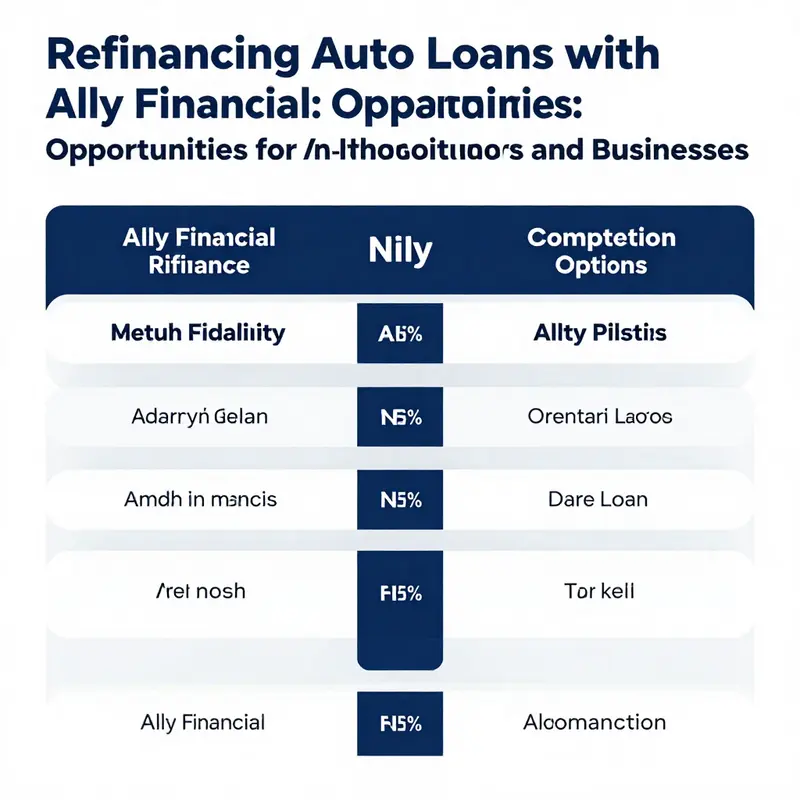
Every borrower who carries an auto loan eventually weighs the question of refinancing. The goal isn’t simply to pay less each month; it’s about aligning a loan with a changing financial picture. When a lender like Ally Financial presents a streamlined, online refinancing path, it invites a different kind of decision—one that balances speed and convenience with the long-term math of interest, term, and total cost. The core idea behind refinancing is straightforward: replace your current loan with a new one that has a more favorable combination of rate and term. If you can secure a lower rate and keep the same or a shorter term, you may reduce the total interest paid and, in some cases, lower your monthly obligation. If you instead lengthen the term to reduce monthly payments, you might lower the immediate burden but end up paying more over the life of the loan. The challenge is to separate emotional savings, like a smaller monthly check, from real economic savings, measured in dollars over the life of the loan. And in a market where digital experiences are increasingly the default, Ally’s online-only approach adds another layer to this calculus: convenience that can accelerate decision-making without sacrificing accuracy, but with nuances that deserve careful weighing against traditional banks, credit unions, and other online platforms.
Ally markets a fully digital refinancing process that promises a fast, user-friendly experience. Borrowers can pre-qualify in minutes, with a soft pull that does not affect credit scores, and then complete the rest of the journey—app, document upload, underwriting, and signing—almost entirely online. For someone juggling work, family, and a busy calendar, this is not a mere novelty; it can be a practical way to compare offers without the friction of in-person visits. In practice, the pre-qualification step is a quiet green light: it gives you a likely rate range and shows you whether refinancing is worth pursuing, all before you formally apply. That distinction—soft inquiry first, hard inquiry later if you proceed—helps you test the waters without dinging your credit profile. The result can be a clearer sense of how much you might save and whether the monthly payment you seek is within reach under different term lengths and rate scenarios.
The mechanics of the process matter as much as the process itself. Ally’s system is designed around a few recurring realities that apply to almost any refinancing decision. First, the rate you’re offered is not fixed in a vacuum. It depends on your credit profile, the age and mileage of your vehicle, the loan-to-value ratio, and the term you pick. A borrower with excellent credit who is refinancing a relatively recent vehicle could see a rate that improves the budget against a similar or shorter term. Someone with a longer payoff horizon or a higher debt load might still gain from refinancing, but the upside could be more modest, or, in some cases, offset by closing costs. In this sense, Ally’s rate offers must be evaluated in the context of the full loan package—fees, any required gap coverage or warranties, and the eventual term length. The broader lending landscape confirms this pattern: several lenders operate with different emphasis—some favor longer terms for lower monthly payments, others lean on tighter underwriting to push down the rate. The outcome hinges on your unique financial posture and the car’s particulars.
To understand the choice set beyond Ally, it helps to consider how other lenders approach auto refinancing. Bank outcomes in 2025, for instance, highlight a spectrum of strengths. A major bank earned the highest overall score for auto loans that year, particularly excelling in rate offerings for both new and used vehicles and in refinancing and lease buyout options. Yet even that benchmark carries a caveat: certain capabilities, like funding private party sales, were not part of its offering. In other words, the best rate environment on paper does not automatically translate into a universal solution for every borrower or every vehicle transaction. It speaks to a larger truth in auto financing: the best fit is rarely a one-size-fits-all scenario. Online lenders, traditional banks, and high-functioning credit unions all carve out niches that can be advantageous depending on your credit profile, state of residence, vehicle type, and whether you value additional benefits like member perks or robust customer service.
The online lending space—where Ally sits alongside other digital-first platforms—tends to win on speed and transparency. A borrower can often compare multiple terms quickly, adjust term lengths, and see a real-time sense of total interest cost and monthly payment. This dynamic is particularly appealing for refinancers who want clarity without the legwork of visiting branches or negotiating conditions in person. However, the speed comes with trade-offs. Some online refinancers may have stricter eligibility requirements, or they may propose shorter windows of acceptance on certain terms. The bottom line is that a digital platform can offer powerful tools for comparison, but it should be used as part of a broader evaluation process that includes a careful read of the fine print: origination fees, prepayment penalties, vehicle eligibility, and the impact of any trade-in or payoff balance.
In this landscape, credit unions stand out for their value proposition, especially for members who can access rates through memberships. Institutions such as large credit unions often provide competitive APRs, sometimes lower than national banks, and the terms can feel more flexible in exchange for longer tenure. The caveat for many borrowers is membership eligibility and the possible need to join a specific group or meet a residency requirement. For those who qualify, the combination of favorable rates and member-focused service creates a meaningful alternative to online-only lenders. It is not unusual to see a scenario in which a credit union refinance makes more sense for someone who prioritizes rate stability and a cooperative sense of service, even if the application is more manual than the purely digital route.
From the borrower’s vantage point, the decision to refinance involves more than the headline rate. It requires a careful accounting of the loan’s total cost over time. A lower monthly payment is attractive, but if the refinance extends the term, the total interest paid can rise even if the rate falls. Conversely, a higher monthly payment paired with a shorter term can dramatically reduce the total interest, delivering real long-term savings. The choice hinges on one’s cash flow, job security, and future plans for the vehicle. If you intend to keep the car for several years, a longer-term refinance can feel comforting as a monthly cushion, but you should still run the numbers to confirm that the lower monthly payment does not lock you into paying more in interest than you would at a higher payment for a shorter horizon. Conversely, if you expect a change in income or anticipate a sale or trade-in in the near term, a shorter term with a slightly higher payment might be the prudent path, reducing risk and debt exposure.
Another layer to consider is the vehicle’s age and condition. Lenders factor in the vehicle’s age and mileage because they influence the loan-to-value ratio and the risk of depreciation. As vehicles age, the collateral risk rises, and some lenders may tighten terms or restrict eligible models. In practice, this means that even if you secure a favorable rate for a younger, low-mileage vehicle, a high-mileage car—not uncommon in a refinance scenario—might command a less favorable offer. For borrowers already dealing with an underwater loan or a vehicle whose payoff value is close to or less than the remaining balance, refinancing can still be worth exploring, but it requires a sharp eye for fees and a realistic sense of the car’s resale trajectory. The best approach is to collect several quotes, compare the annual percentage rate and the total cost of financing, and model a few scenarios in which you keep the car for different lengths of time.
The path toward a refinancing decision is rarely linear. It often begins with a soft inquiry that helps you gauge eligibility and potential terms, followed by a hard inquiry if you decide to move forward. The online refinancing experience in particular shines when it aligns with your goals for speed and simplicity. If the aim is to reduce payment while extending the term, you must be ready to accept the countervailing reality of more interest paid over the life of the loan. If the aim is to minimize total interest, you may be prepared to accept a higher monthly obligation for a shorter period. Understanding these trade-offs is essential before you sign anything. A practical tactic is to build a side-by-side comparison that includes the current loan’s remaining balance, current APR, and monthly payment, alongside potential offers from Ally and competing lenders. This apples-to-apples view clarifies not only the numbers but also the experience you prefer: a fully digital workflow, human guidance via customer service, or a blend that invites some in-person consultation.
The narrative around lenders is not purely about rates and terms. It also touches on service quality, accessibility, and the ongoing relationship you will have with the lender after the refinance closes. Digital platforms thrive on a frictionless onboarding experience, but they can vary in responsiveness when questions arise, during document verification, and after funding. Banks with strong reputations for customer service may offset a slightly higher rate with better post-closing support, protection against unexpected fees, and quicker problem resolution. Credit unions may offer rates that are hard to beat, but access is tied to membership and sometimes local presence. In short, the choice among Ally, competing banks, online platforms, and credit unions should reflect a clear sense of which values—cost, speed, service, or flexibility—matter most to you personally.
For anyone who wants a practical roadmap, the process typically unfolds in a few recognizable steps. Start with a quick pre-qualification to understand your probable rate range without affecting your credit. Gather documentation that proves income, identity, residence, and vehicle details. Submit the formal application only after you’ve settled on a preferred term and rate, then await underwriting and approval. If approved, you’ll review the closing terms, sign electronically, and drive away with a new loan that pays off the old one. Throughout, keep your eye on the total cost of financing and the effect on your monthly budget. A useful discipline is to recalculate after any minor change—say, a side job or reduced expenses—to confirm you’re still on track for your long-term goals.
This approach aligns with a broader habit of informed comparison. The landscape features standout options across different models of lending. Some lenders excel at rate offerings for refinancing and flexibility in term selection, while others shine in user experience and speed. The net effect is a market that rewards diligence: borrowers who compare multiple offers, understand the term and rate mechanics, and are honest about their own financial trajectory tend to emerge with a refinancing decision that supports stability rather than merely a lower number on the page. If you want a quick primer on how to frame your search and what to look for in a refinancing quote, the knowledge hub linked here can be a helpful starting point for building your own evaluation framework: Davis Financial Advisors Knowledge.
As you navigate this decision, remember that the story is not about choosing one lender over another in a vacuum. It’s about finding a refinancing path that harmonizes with your overall financial plan. The right choice for one borrower may be completely different for another, depending on income volatility, debt load, homeownership status, and plans for the vehicle. When you consider Ally’s digital refinance option, it’s useful to place it within this broader spectrum. Its strength lies in the efficiency of the online experience and the ability to pre-qualify quickly, which lowers the barriers to testing the waters. Yet the ultimate decision should reflect a careful, personal accounting: how the new terms affect the total cost, how the monthly payment fits within your cash flow, and how the vehicle fits into your longer horizon. In the end, refinancing is a financial tool, not a mere convenience, and its value is measured by the degree to which it helps you reclaim control over monthly obligations and overall debt. The next phase of the article will explore practical how-tos for evaluating offers, negotiating terms, and determining the right moment to act, so you can approach refinancing with confidence rather than guesswork.
External resource: https://www.bankrate.com/loans/auto-loans/best-auto-loan-rates-december-2025/
Final thoughts
Ally Financial stands out as a reliable partner for borrowers seeking to refinance their auto loans, offering a straightforward process and numerous benefits. Individual car buyers, dealerships, and small business fleet managers can benefit significantly from its tailored services, which aim to reduce monthly payments and simplify the refinancing experience. With an understanding of both the process and benefits, stakeholders are equipped to make well-informed decisions regarding their auto financing strategies, propelling them towards greater financial security and flexibility.