

Navigating the complexities of auto financing can be daunting for individual car buyers, auto dealerships, and small business fleet buyers. One critical aspect of this landscape is understanding when Ally Auto Financial initiates its repossession procedures, especially when borrowers default on loan agreements. This guide delves into the intricacies of Ally Financial’s policies on repossession, highlighting essential factors that contribute to this process, the legal implications involved, and practical customer guidance on managing potential repossession situations. As we explore each chapter, you will gain valuable insights and actionable strategies to help make informed decisions when faced with the possibility of vehicle repossession.
Decoding When Ally Auto Financial Starts Repossession: Timing, Triggers, and What to Expect
Understanding the timeline for vehicle repossession starts with accepting one fact. There is no single calendar date that marks the start of repossession. Instead, repossession is a process that unfolds after a sequence of missed payments, contractual triggers, and legal steps. For borrowers wondering when a lender will move from reminders to action, the answer lies in a blend of contract language, state law, and the lender’s internal collections practices.
Most auto lenders begin formal collection activities soon after a payment is missed. The initial stage usually involves courtesy notices and phone calls. These early messages ask the borrower to bring the account current. They also outline options to avoid escalation. For many accounts, the first set of reminders arrives around the 30-day late mark. At this stage, the account is delinquent, but it is not yet typical for a vehicle to be taken.
If the account remains unpaid, further steps follow. After multiple missed payments, lenders intensify their approach. For many lenders, the risk of repossession becomes real between 60 and 90 days of delinquency. During that window, a lender often considers third-party repossession as a practical option. However, this is not a fixed rule. Contract provisions and state statutes change the calculus significantly. A loan agreement may outline specific cure periods. Some states demand additional notice before a creditor may reclaim collateral. Other states permit quicker action once a loan is in default.
Notices are central to how the process proceeds. Lenders typically send a sequence of communications. These include past-due statements, demand letters, and warnings about repossession. Notices may also explain ways to avoid repossession. They commonly offer repayment plans or temporary forbearance options. Receipt of a written notice does not mean repossession is imminent. Instead, it means the lender is documenting the borrower’s status and offering resolution paths.
The mechanics of a repossession vary next. If the lender decides to repossess, it usually hires a recovery agent. These agents locate and take physical possession of the vehicle. In most states, repossession may occur without prior court order. Still, the taking must avoid a breach of peace. That phrase covers any action that could provoke confrontation or violence. Repossession agents cannot break into locked garages or tow a car while the owner is physically resisting. Where a peaceful repossession is impossible, the lender may need court involvement.
Borrowers facing repossession should know their immediate rights. They can ask the lender for a written demand for payment. Many loan contracts give a timeframe for curing the default. Even after a repossession, some states allow a redemption period. During that period, the borrower can regain the vehicle by paying the full amount due plus repossession costs. The redemption right and its duration depend on state law and the loan agreement. If the vehicle is sold after repossession, the lender must follow statutory procedures. These include reasonable marketing and providing the borrower with notice of the sale.
A related, important concept is deficiency balance. If a vehicle sells for less than the outstanding loan, the lender may pursue the borrower for the shortfall. That amount is the deficiency. It can lead to further collection actions, including lawsuits. Conversely, if the sale yields more than the loan balance, the borrower should receive the surplus after sale costs. Timely communication with the lender can sometimes limit deficiency exposure.
Many borrowers assume repossession is automatic once they miss a payment. That is not accurate. Lenders balance the cost of repossession against recovery value. They also weigh reputational risk and regulatory requirements. This is why some accounts enter extended collection before any physical recovery attempt. A recent inquiry into a major lender’s policies highlights variability in practice. Lenders may handle cases differently based on borrower history and loan terms. This case-by-case approach explains why one borrower may face repossession earlier than another with similar delinquencies.
Preventing repossession depends mostly on communication. Contacting the lender at the first sign of trouble creates options. Lenders sometimes offer short-term payment plans, deferred payments, or temporary forbearance. These options do not erase debt, but they can suspend repossession activity while the borrower stabilizes. A written agreement that modifies repayment terms offers the best protection. If a lender agrees to a plan and documents it, the borrower gains a layer of defense against sudden repossession.
Documentation matters. Keep records of all communications, payment receipts, and written promises from the lender. If a repossession does occur, documentation helps when disputing improper procedures. It also assists in tracking costs charged after recovery. Lenders often charge repossession fees, storage costs, and towing expenses. These fees are recoverable from the borrower, so knowing what was promised and what was charged helps limit surprises.
Insurance and registration status can influence outcomes too. A vehicle without proof of insurance, or with expired registration, may invite closer scrutiny. Lenders want collateral preserved and legally operable. Keep insurance current and registration valid whenever possible. Doing so reduces friction and demonstrates responsible custody of the collateral.
When a vehicle is repossessed, removing personal property should be a priority. Most jurisdictions require the lender to allow retrieval of personal items. But there is a narrow window to collect belongings before the vehicle is moved, stored, or sold. Act quickly and follow the lender’s instructions. Be prepared to show identification and proof of ownership or a clear right to access the vehicle.
A repossession affects credit and future borrowing. A lender typically reports missed payments and eventual repossession to consumer reporting agencies. This record lowers credit scores and raises interest rates for future loans. Rebuilding credit begins by addressing any remaining deficiency and making timely payments on other obligations. Sometimes negotiating a settlement or paying off a deficiency can remove a pending collection item from appearing unresolved.
State laws shape many procedural details. For example, some states require additional notice before sale. Others limit the repossession agent’s methods. Researchers and consumer advocates often point readers to general knowledge resources. For broader context on managing loan problems and protecting assets, consult the financial knowledge center available here: financial knowledge center. That resource offers insight into preserving credit, negotiating with creditors, and making informed decisions when vehicle ownership is at risk.
If you face the prospect of repossession, act immediately. Call the lender and explain your situation. Request written options. Ask for time-limited agreements and document everything. If you find a lender moving toward repossession despite these efforts, consult a legal advisor. Laws differ by state, and an attorney can clarify rights and defenses.
Finally, understand that lenders must follow legal process. They cannot take vehicles arbitrarily or without notice in many circumstances. Yet, because procedures vary, there is no universal timeline. Typical practice often places repossession risk in the 60-to-90-day delinquency window. But contract terms, state statutes, and account-specific factors produce exceptions. Treat the timeline as a guideline rather than a rule.
For specific steps and official policy details on repossession timelines and borrower rights, refer to the lender’s posted repossession information. It provides the clearest view of that institution’s procedures and notices. External resource: https://www.ally.com/auto-loans/repossession-information/
When the Repossession Door Opens: Understanding Auto Loan Reclaims, Timing, and Realities
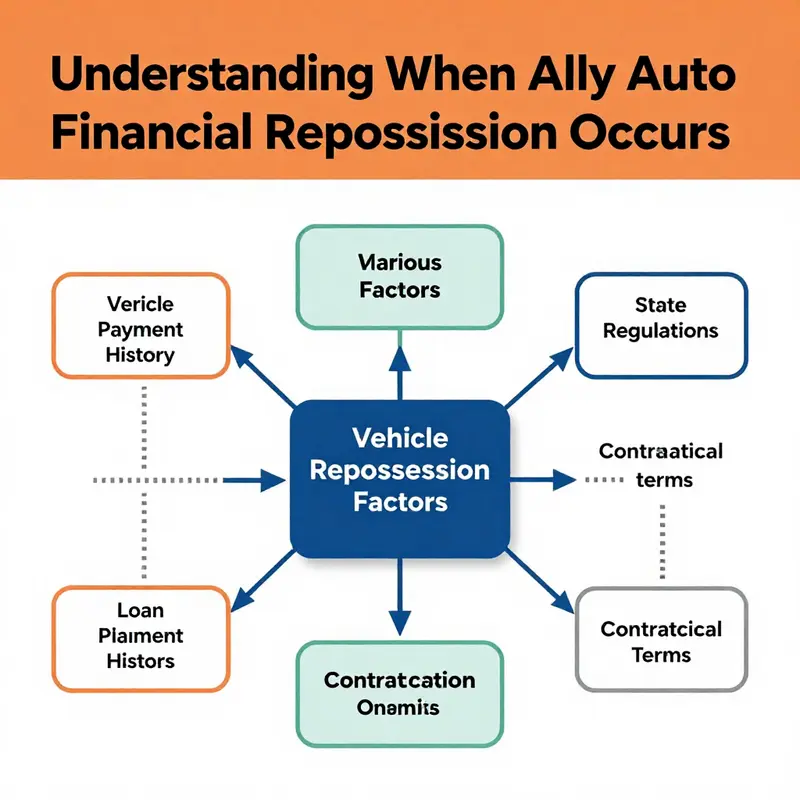
In auto lending, repossession timing is not a single moment but the result of contract terms, delinquency, notices, and state law. Delinquency typically triggers formal action after missed payments; the exact timing varies by loan terms and risk models. The loan agreement often defines default, cure periods, and required notices. Notices bridge default and repossession; timely borrower response can pause or slow the process. State laws vary; some allow self-help repossession, others require court involvement or longer notice. The borrower’s behavior, such as communicating hardship or proposing a plan, can influence the timeline and options like deferrals or modified payments. After repossession, the lender may sell the vehicle to recover the balance; if the sale price is insufficient, the borrower may owe a deficiency. To navigate this, borrowers should locate their loan agreement, keep records, and seek counsel if needed. Financial protections exist in federal guidance; the CFPB provides general information about auto loans and repossession mechanics. The practical takeaway is to engage early and document all communications to preserve options and minimize loss.
Timelines of Default: How Repossession Decisions Emerge in Ally Auto Financing
Pinning a single timetable to repossession in auto financing is rarely possible. In the churn of monthly statements, late notices, and legal definitions, the moment a lender can begin recovering a vehicle rests on a mix of contract terms, state law, and the lender’s policy stance on risk. The available public signals, including a February 4, 2026 letter addressed to Ally Financial, indicate that the company is actively reviewing its repossession policy and related error rates. That correspondence points to a process that is often case specific rather than a fixed calendar rule. For borrowers, this means the path from delinquency to repossession is not a blunt, universal clock but a sequence shaped by the borrower’s actions, the loan agreement, and the jurisdiction in which the loan resides. The reality is that lending practices surrounding repossession are best understood as a calibrated response to default, rather than a rote procedure with a single decisive moment.
To grasp why timing varies, it helps to start with the concept of default itself. A loan agreement typically defines default in concrete terms: missing a payment by a specified due date, failure to maintain required insurance, or breach of other covenants. But the point at which a creditor moves from polite reminders to aggressive recovery is not merely about how late the payment is. It also hinges on the lender’s assessment of risk, the history of the account, and the remedies the agreement provides. Most contracts include an acceleration clause that, once triggered, declares the remaining balance due in full. In practice, acceleration is a legal tool that can be invoked when default is serious enough to threaten the lender’s security interest. Yet even after acceleration, many lenders prefer to pursue collection steps that can preserve value and avoid the more dramatic act of repossession. The decision is rarely a single hinge that swings overnight; it is a process with multiple checkpoints, each with its own potential to delay or advance the path toward recovery.
In this light, the specific date at which a vehicle may be repossessed is not a universal milestone but a function of several interacting factors. First, the degree and duration of delinquency matter. A borrower who misses a single payment and promptly resumes curtailment may stay within a grace window defined by the contract, whereas a borrower who misses multiple payments in sequence represents a higher risk profile that can push default into action more quickly. Second, the loan terms themselves play a decisive role. The loan agreement will typically specify what constitutes a default, what the cure options are, and whether the lender can pursue forbearance, modification, or a payment plan before taking more drastic steps. A lender’s decision to tighten or loosen these levers—grace periods, late fees, and the acceptability of reinstatement—often reflects not only the contract text but the lender’s current risk appetite and the operational realities of handling many accounts simultaneously.
State law adds a further layer of variation. The rules governing repossession are not uniform across the country. Some states impose strict notice requirements and a prohibition on certain collection tactics, while others permit a lender to take possession of the vehicle after a defined default threshold and minimal procedural steps. Even when a lender can physically repossess, there are guardrails designed to protect consumers from unlawful actions, such as repossession without “breach of peace.” These legal boundaries shape the practical pace at which a car can be seized. As a result, even for identical loan structures, two borrowers in different states can experience noticeably different timelines from the moment they fall behind to the moment the lender repossesses.
The process is also a matter of how the lender chooses to operationalize its policy in routine practice. In many agencies, the sequence begins with outreach: reminders by mail, email, or automated calls that inform the borrower of delinquency and outline options for catching up. This stage serves dual purposes: it seeks to preserve the relationship and to reduce the risk of collateral loss by enabling a cure before a formal default. If the borrower communicates, negotiates, or demonstrates intent to remedy the situation, the lender often defers moves toward repossession, especially if there is an opportunity to restructure the loan or defer payments temporarily. When communications stagnate or the risk of nonpayment escalates, the lender may escalate to more formal actions. Involving a collections department, verifying income, assessing feasibility of forbearance, and evaluating alternative financing paths can all influence how quickly a default advances toward repossession. In this sense, timing reflects not simply the calendar but a continuous negotiation with the borrower’s present and future ability to pay.
An important but sometimes overlooked nuance is the policy posture that lenders maintain around collateral, risk, and customers. The 2026 correspondence discussed earlier suggests that Ally—and likely other major lenders—want transparent, auditable processes. When a financial institution asks for information about its own policies and error rates, it signals a concern with how the process is executed in real life, not merely what the contract says on paper. In practice, this means a default timeline is not guaranteed and can depend on internal reviews, case-by-case assessments, and regulatory considerations. If a borrower’s account shows unusual activity, such as inconsistent payments or potential misapplication of funds, the lender may pause or slow the process to confirm facts before moving forward. Conversely, in a straightforward default with clear disobedience of the payment schedule, the timeline might be shorter, yet still bound by the state rules and by the loan terms. The absence of a universal rule here is not a loophole; it is a feature of risk management that accommodates the diversity of real-world financial behavior and legal landscapes.
For borrowers, this ambiguity can be disorienting. It invites questions about what can be done to shift the trajectory away from repossession and toward recovery of the loan while preserving access to transportation. The safe approach is to treat delinquency as a signal rather than a verdict. Early, proactive communication with the lender is often the most powerful lever. By outlining a credible plan to cure the delinquency—whether through a temporary forbearance, a payment arrangement, or a loan modification—the borrower can convert a looming default into a negotiable situation. Lenders, for their part, benefit from partnerships that reduce loss severity and preserve some residual value from the vehicle by avoiding forced repossession wherever possible. This shared incentive structure explains why many lenders emphasize dialogue and flexibility in the initial stages of delinquency, and why the precise moment of repossession remains a negotiated, context-rich decision rather than a headline date.
Another practical lens is to consider the risk of repossession as part of the broader asset-financing lifecycle. The loan is not merely a promise to pay but a secured claim on a piece of property. The lender’s ability to recover value depends on the vehicle’s residual value, the borrower’s equity in the asset, and the costs associated with repossession and resale. If the vehicle’s value has deteriorated below the loan balance, there may be less incentive to pursue aggressive collection beyond a certain point, particularly if legal and logistical costs threaten to erode recoverable value. Conversely, a lender may push toward repossession when the vehicle remains worth more than the outstanding debt and the costs of recovery are manageable. In other words, the economic calculus intersects with legal constraints and customer interactions to produce a timetable that is, again, highly situational.
What can borrowers extract from this landscape in practical terms? First, there is value in early, documented communication. When a payment becomes unfixed, reaching out to discuss options can buy time, reduce the risk of misapplied payments, and preserve the possibility of a voluntary payoff or a manageable restructuring. Second, knowing the loan’s exact terms matters. The contract will spell out what constitutes default, what grace periods exist, and what remedies the lender may pursue. Reading the loan agreement with care—and ideally with counsel or a trusted advisor—can illuminate the precise thresholds that apply to a particular account. Third, understanding state law helps manage expectations. The possibility of forced recovery can hinge on where the borrower lives, and awareness of these rules can frame the discussions held with the lender and the timelines involved. Finally, borrowers should keep options open: securing alternative financing, seeking debt counseling, or exploring vehicle surrender agreements can sometimes provide a path to minimize damage to credit while avoiding the most severe outcomes.
Within this framework, the specific policy posture of Ally Auto Financing remains a function of both the contractual framework and the regulatory environment. The February 2026 information request signals a trend toward more transparent, auditable processes, which itself can alter the default-to-repossession timeline. In practice, this means borrowers should not rely on a rumored fixed date. Instead, they should treat the loan documentation as the authoritative source and engage with the lender promptly when difficulties arise. The trajectory from delinquency to repossession is less a countdown and more a negotiated arc shaped by the borrower’s actions, the contract, and the jurisdiction. For readers seeking a broader vantage on how financing decisions intersect with asset ownership across different sectors, there is a broader set of discussions available on handling asset ownership risks and finances.
If you want a broader context on financing decisions and asset ownership, consider exploring resources on managing asset ownership finances, which can illuminate how people navigate the interplay between payments, ownership rights, and risk. Managing truck ownership finances.
In sum, the question of when a lender will repossess in Ally Auto Financing is not answered by a single date. It is answered by a constellation of factors: the precise default language in the contract, the length and severity of delinquency, the legal framework of the state, the lender’s current risk posture, and the borrower’s willingness to communicate and cure. The best approach for any borrower facing delinquency is to treat the timeline as a moving target—one that can be steered by early, proactive engagement and a clear plan to restore the loan’s current status. The absence of a universal schedule should not breed fatalism but rather a disciplined, informed strategy to preserve ownership, protect credit, and mitigate the longer-term costs that debt default can impose.
For readers who want to connect this discussion to a wider landscape of auto financing and asset management, the following external resource offers a broad overview of how repossession laws operate in practice. https://www.nolo.com/legal-encyclopedia/car-repossession.html
Facing Ally Auto Financial Repossession: Your Rights, Steps to Avoid It, and What Comes After

Understanding your rights and next steps when Ally Auto Financial may repossess
If you are worried that Ally Auto Financial may repossess your vehicle, the first priority is to understand your rights and the practical steps available. Repossession does not happen the moment a payment is late. It follows a process that varies by contract and by state law. Knowing how that process works gives you leverage to act early, negotiate effectively, and protect your financial standing.
Begin by recognizing that legal protections can change the timing or outcome of a repossession. Bankruptcy filings generally pause collection actions. Active military service may trigger protections under the Soldiers’ and Sailors’ Civil Relief Act, which can halt or alter repossession rules. Lenders must follow federal and state statutes. If you believe special circumstances apply to you, mention them immediately when you contact the lender.
Acting quickly is the single most effective step. When a payment becomes or will become overdue, call the lender. Explain your situation honestly and calmly. Representatives can outline available relief options. Typical alternatives include temporary deferrals, modified payment plans, or restructuring the loan. Each option has pros and cons. Deferrals delay payments but may add fees or interest. Restructuring can lower monthly payments but could extend the loan term and increase total interest paid.
When you make that first call, have basic information ready. Note your account number, last payment date, and the monthly amount. Prepare a brief summary of your income and expenses. If a temporary setback caused the problem, describe how and when your situation will improve. If the issue is longer term, ask how a modification would affect your total payoff.
Documentation speeds resolution. If you request a deferral or hardship modification, the lender will likely ask for supporting documents. Typical requests include recent pay stubs, bank statements, and a signed hardship statement. If illness, job loss, or other verified events caused the issue, provide documentation showing the cause and duration. If you are protected by military status or bankruptcy, provide court orders or service documentation promptly.
Understand the timeline and the notices you should expect. Lenders usually send delinquency notices by mail and may call before repossession. These notices state that your account is past due and explain potential next steps. In many states, lenders must provide a written notice of intent to repossess or a right to cure before taking the vehicle. Timing varies by state, by the loan contract, and by the lender’s internal policies. Because state law differs, a full timeline cannot be exact for all cases.
If the vehicle is repossessed, it does not erase your debt. The lender will recover and store the vehicle, then typically sell it at auction. Auction proceeds are applied to the outstanding balance. If the sale amount is less than what you owe, you may be responsible for the deficiency. You may also owe repossession-related costs, such as towing and storage. After a repossession, the lender will send a post-sale notice detailing the sale price, the remaining balance, and any deficiency.
You have limited options after repossession. Redemption is often possible before the vehicle is sold. Redemption means paying the full amount owed, plus repossession costs and allowable fees, to reclaim the vehicle. If you cannot redeem, you can sometimes reinstate the loan by paying the past-due amount and fees, though some contracts do not allow reinstatement once repossession occurs. Review your loan documents and ask the lender which choices apply.
If you face a deficiency after a sale, you may negotiate. Lenders sometimes accept a settlement for less than the full deficiency. Consider a written settlement offer if you have lump-sum funds. Alternatively, you can negotiate a payment plan for the remaining balance. If negotiations stall, seek counsel. Nonprofit credit counselors and consumer attorneys can advise on the best path forward.
Repossession can affect your credit report. Late payments and the repossession entry remain visible on credit files. The specific impact depends on your full credit history. Rebuilding credit requires consistent, on-time payments for other accounts, reducing debt balances, and avoiding new negative marks where possible. If you find inaccuracies in your credit report after repossession, dispute them promptly with the credit bureaus and provide supporting documents.
Legal disputes sometimes arise. If you believe the lender violated your rights during repossession, document everything. Note dates, times, names of representatives, and copies of communications. If the repossession involved force, theft, or entry into private property without permission, you may have legal recourse. State laws and federal statutes detail prohibited actions by repossessors. Consult an attorney if you think unlawful conduct occurred.
Many borrowers find that proactive planning prevents repossession. Create a short budget to identify nonessential expenses you can pause. Contact community resources that offer temporary assistance for bills. Some nonprofit credit counselors can negotiate with the lender on your behalf. If you own multiple vehicles or assets, consider selling or trading to cover the loan before repossession occurs. These moves are stressful, but they often yield better outcomes than letting a repossession proceed.
When you speak with the lender, document the call. Ask for written confirmation of any agreement. If the lender offers a hardship plan, request details including effective dates and total costs. Keep copies of all mailed notices and receipts for payments. Written records help if a dispute arises. If you reach a verbal agreement, confirm it in writing and save the lender’s reply.
State law matters. Some states require a waiting period before a sale. Others limit certain fees the lender can charge after repossession. Research your state’s rules or ask a legal aid office. If you cannot afford private counsel, many states offer free or low-cost legal clinics for consumer issues. Early legal advice can clarify whether a lender followed required procedures.
When bankruptcy is an option, understand its implications carefully. Chapter 13 may allow you to keep the vehicle by proposing a repayment plan. Chapter 7 can sometimes discharge the deficiency but may not stop repossession if the lender has the right to repossess. If bankruptcy is under consideration, speak to a bankruptcy lawyer before making other moves. Filing can immediately halt collection and repossession attempts in many cases.
If you are a service member, notify your lender and provide service documentation. Protections under the law may reduce the interest rate or delay repossession. Lenders are obligated to comply when proper proof is presented. Failure to provide notice when protected could complicate a lender’s ability to collect.
Finally, don’t navigate this alone if you feel overwhelmed. Nonprofit credit counselors, consumer law clinics, and certified financial counselors offer guidance. You can also explore practical resources on managing vehicle ownership and finances, including articles about managing truck ownership finances that address budgeting and cost control strategies for vehicle owners.
For the most reliable, account-specific information, consult the lender’s official help center. Their resource pages explain protections, special handling for hardship cases, and steps to request assistance. Visit the lender’s help center to review special handling FAQs and to confirm contact methods and documented requirements: https://www.ally.com/auto/help-center/
Final thoughts
In summary, understanding when Ally Auto Financial initiates repossession procedures is crucial for individual car buyers, auto dealerships, and small business fleet buyers. By recognizing the factors that contribute to this process, including contract terms and state regulations, and understanding the legal implications at play, customers can be better prepared to navigate potential repossession scenarios. Moreover, contacting Ally Financial directly for personalized support can be an effective way to address any concerns about payment difficulties. With this knowledge, individuals and businesses alike can approach their financing decisions with greater confidence and clarity.