
In recent years, AutoZone has remained a cornerstone of America’s automotive retail market, drawing interest from individual car buyers, dealerships, and small business fleet owners. Despite external distractions, including headlines about financial distress in the auto sector, a thorough analysis reveals AutoZone’s financial position is sound. This article delves into key financial metrics, credit ratings, resilience during economic downturns, market perceptions, and a comparative review with industry peers. Each chapter reinforces the argument that AutoZone is not embroiled in financial troubles but rather thriving amidst challenges.
Beyond the Rumor Mill: AutoZone’s Financial Fortitude in a Turbulent Retail Era
AutoZone has shown resilience amid macro shocks and has actively optimized its capital and operations to create durable value for shareholders. The retail and auto parts space faces cycles of higher costs and shifting demand, but AutoZone’s latest financial portrait reads as a company executing a disciplined plan to strengthen its fortress from within. Key signals include a solid investment grade rating with a stable outlook, steadiness in core growth drivers, and a capital allocation framework that prioritizes long run per share value over short term optics. Taken together, these indicators form a narrative of financial health that stands in contrast to negative chatter about the sector. External validation from credit markets remains supportive: Fitch affirmed AutoZone at BBB with a stable outlook, signaling durability in the business model and financing strategy. The company also benefited from a favorable view from Bank of America in mid 2025, reinforcing a sense of financial steadiness among lenders and investors. On the operating side, the Direct to Independent Repair Shops and Mechanics channel has continued to outpace overall revenue growth, signaling a shift toward professional service channels that tend to offer higher margins and more predictable demand. Over a broader horizon, the DIFM segment has grown faster than total revenue, underscoring a resilient earnings engine even as consumer sentiment fluctuates. The firm has also demonstrated efficiency in capital deployment: cash and short term investments have been used to fund share repurchases and growth initiatives, helping to reduce the diluted share count and lift earnings per share over time. While negative net cash in the Ben Graham sense appears on some balance sheets, it does not imply distress but rather reflects a deliberate stance to leverage cash for strategic investments and buybacks. Against peers, AutoZone has shown disciplined cost management and margin discipline, with cost of sales rising at a pace that remains favorable relative to peers and supports margin resilience. Collectively these factors support a view that AutoZone is navigating a challenging retail environment with a long horizon mindset, a disciplined capital allocation framework, and a balance sheet that can weather macro volatility while continuing to invest in growth. In short, the constellation of external ratings, operating momentum, and capital discipline paints a coherent picture of resilience and value creation for shareholders over the coming years.
Steady Momentum: AutoZone’s Financial Health in 2025

AutoZone maintains solid credit quality and healthy cash generation, suggesting resilience rather than distress. Fitch affirmed its Long-Term IDR at BBB with Stable Outlook and its Short-Term ratings at F2, signaling durable credit metrics. The company generated about $1.9 billion of free cash flow last year, supported by disciplined capital allocation including share repurchases that have reduced diluted shares. AutoZone’s core growth engine, including the DIFM channel, has driven steady earnings power over a long horizon, even as macro conditions shift. Market commentary in 2025 included an upgrade from a major institution, reinforcing the view that AutoZone can fund operations, reinvest in the business, and return capital to shareholders. While digital initiatives remain an area for improvement, the overall fundamentals point to a durable growth trajectory and a robust balance sheet capable of supporting ongoing investments and shareholder value creation.
Weathering Economic Storms: AutoZone’s Resilience and the Quiet Strength of Its Financial Health
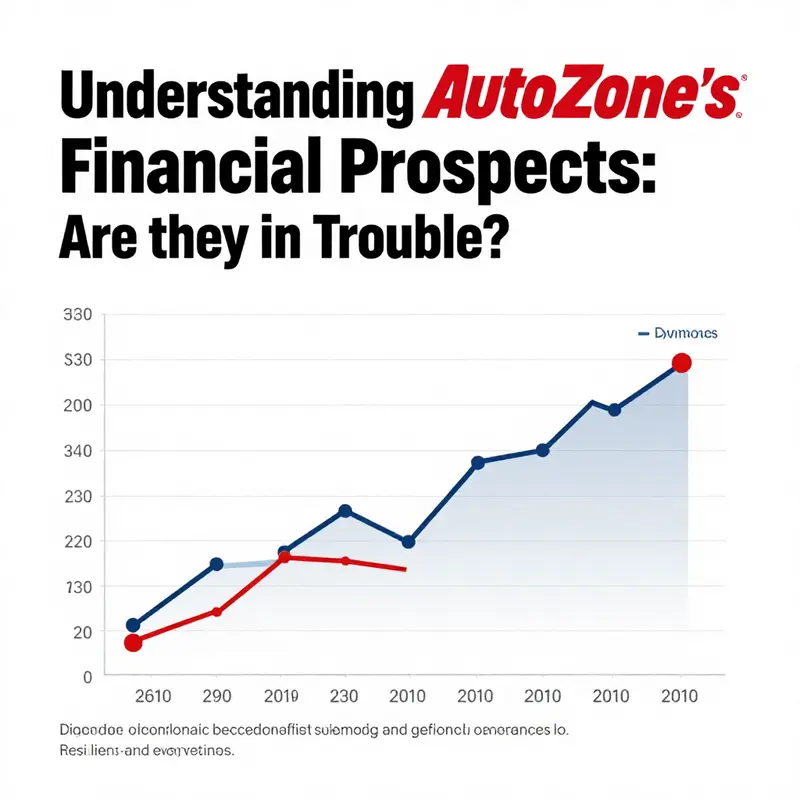
When readers ask whether AutoZone is in financial trouble, the answer, based on the latest evidence, is decisively no. Instead, the data point to a company that has withstood economic shocks and emerged with a fortified financial profile and a business model that adapts to changing conditions without sacrificing core earnings. The central thread of this chapter is simple and consequential: in downturns, durability of demand, breadth of revenue streams, and the capacity to manage liquidity while continuing to invest in core capabilities matter more than headline debt levels or peak revenue. AutoZone benefits from a steady, essential product category and a diversified approach to serving two main customer groups, do it yourself customers and professional mechanics in the DIFM channel, which together stabilize the balance sheet and earnings trajectory during tougher times. The question, therefore, shifts from whether the firm is healthy to how it translates that health into resilience for employees, suppliers, and customers amid uncertain macro cycles.
The essential rationale lies in the inelastic nature of demand for automotive parts and maintenance. Vehicles require ongoing upkeep and the parts that keep them roadworthy are not discretionary purchases when times are tight. This counters cycles that buffet other consumer segments. In calmer periods, AutoZone can optimize inventory and expand service capabilities; in downturns, it relies on repair and maintenance needs. The historical record supports this: during the Great Recession, AutoZone posted positive comps in fiscal years around 2008 and 2009, reflecting customer loyalty and steady demand for repair products even as the broader economy contracted. This pattern is echoed by investors and analysts who note that the product category tends to be more inelastic than many consumer goods, supporting a resilient top line when other sectors tighten.
Beyond macro factors, AutoZone has built a business model that leverages DIFM. Direct to Independent Repair Shops and mechanics have grown as a share of revenue, with a CAGR of roughly 12 percent in the 2013 to 2023 period, outpacing overall revenue growth. This channel provides recurring service opportunities and durable relationships. DIFM helps stabilize cash flows because professional shops require frequent replenishment, creating cross selling opportunities. The stronger performance in this segment during economic stress is not accidental; it reflects a durable demand base anchored in essential repair work and maintenance. When households cut back on discretionary spending, fleet maintenance and professional repair networks continue to generate activity, keeping wheels turning in many communities.
This structural strength signals to lenders and investors that AutoZone can sustain earnings quality, not just quarterly headlines. External validations from rating agencies and market observers reinforce the view that the model remains compelling. Fitchs long term approach and a rating upgrading signals the balance sheet supports operations under stress while pursuing growth opportunities. Taken together with other assessments, these validations support the view that the company is a study in stability rather than distress. They shape lenders confidence, influence supply arrangements, and provide a credible backdrop for strategic decisions by management.
The financial ecosystem around AutoZone also includes adjustments that are largely technical. Revisions in the classification of supplier financing, for example, clarify the true leverage and risk profile without eroding cash flow generation, liquidity, or the ability to service obligations. This discipline demonstrates how external ratings agencies scrutinize capital structure, not a signal of deteriorating fundamentals. In other words, the debt may move to a different line item, but the underlying cash flow generation remains the bedrock of resilience that has held firm through prior crises and into the current cycle.
The resilience narrative rests on operational efficiency, disciplined capital allocation, and a diversified customer base that includes both DIY enthusiasts and professional repair shops. Continued investment in store growth, parts assortment, and service capabilities supports a virtuous cycle: more robust product availability drives higher traffic, which strengthens relationships with repair professionals and enthusiasts alike. In downturns, traffic shifts toward essential, time sensitive purchases that keep vehicles on the road. The macro environment may impose headwinds, but AutoZone’s response reflects deliberate recalibration rather than retreat. This distinction matters for anyone assessing the health of the business because it signals adaptive execution amid uncertainty.
For readers seeking a formal accounting perspective, external credit assessments provide a rigorous framework. The picture that emerges is of a company that has weathered downturns and preserved financial strength across cycles. The market’s willingness to upgrade ratings and maintain favorable outlooks signals confidence in the balance sheet and business model. The broader takeaway is clear: AutoZone’s financial health is characterized by durability, not desperation, and the current trajectory suggests it will continue to weather economic storms with a degree of confidence that is rare in retail.
Finally, the knowledge framework around resilience in cyclical retail points to practical takeaways: the importance of essential product categories, a diversified channel strategy that includes DIFM, and disciplined capital allocation that maintains liquidity for investment. As the next chapters unfold, readers will see how these threads influence not just AutoZone but the broader landscape of parts retail and automotive services.
In sum, the question is not whether AutoZone will face headwinds, but how it transforms them into opportunities for cash flow stewardship, customer relationships, and sustainable growth. The evidence—credit ratings, channel diversification, documented performance in cyclical downturns, and external validations—collectively argues that AutoZone remains financially sound and strategically advantaged. The broader implication for investors and stakeholders is that a stable financial foundation provides room to pursue long term value creation even when the economic backdrop is uncertain.
null

null
AutoZone in the Eye of the Storm: Resilience, Rivalry, and the Question of Financial Trouble
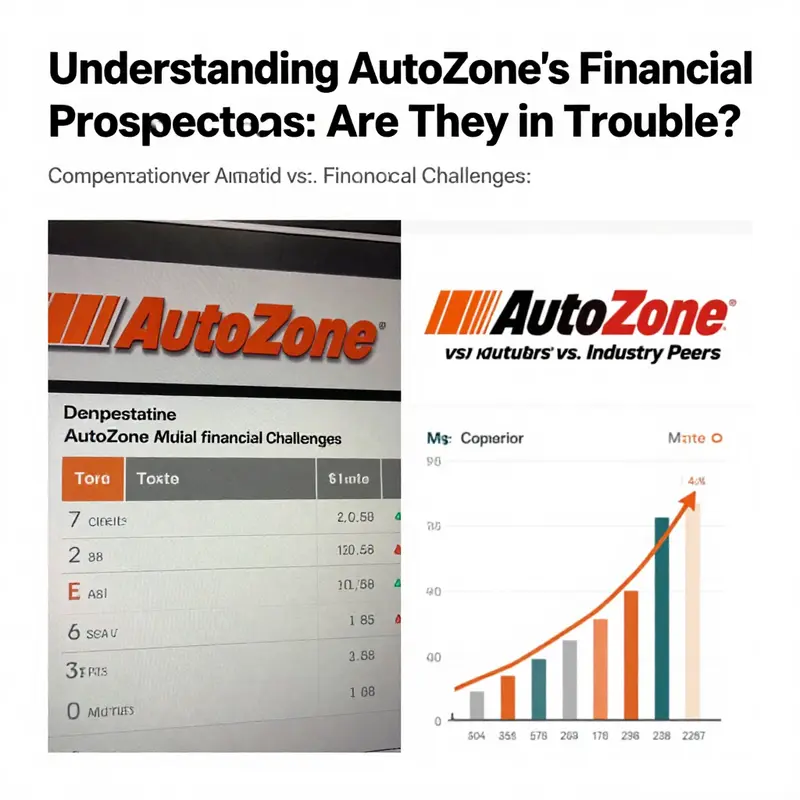
When readers ask whether AutoZone is in financial trouble, they are really probing a broader question: can a leading retailer anchored in automotive aftermarket parts withstand the pressures of a volatile macroeconomy, rising input costs, and a fiercely competitive landscape? The simplest answer, drawn from the most recent and authoritative signals, is that AutoZone is not in financial distress. Instead, it demonstrates a robust financial profile and a capacity to adapt to shifts in demand, currency exposures, and the evolving expectations of both customers and capital markets. In September 2025, Fitch Ratings affirmed AutoZone’s credit rating at BBB with a stable outlook. A BBB rating sits within the investment-grade range, signaling credible default risk is modest and that the firm has a durable ability to service its obligations. A stable outlook, meanwhile, implies no near-term worry about a downgrade or a material weakening of credit quality. Those two data points—credit strength and a steady near-term trajectory—lay a solid groundwork for interpreting the deeper dynamics at play in AutoZone’s business model and strategic position. In parallel, other pieces of market sentiment have reinforced this view. In May 2025, Bank of America upgraded its view of AutoZone, underscoring confidence in the company’s growth potential and its capacity to navigate a challenging retail environment. Taken together, these external assessments do not align with the narrative of distress; rather, they reinforce a portrait of resilience, discipline, and a strategic orientation toward value creation for shareholders and customers alike.
Behind the credit lines and ratings, there is a more tangible demonstration of resilience in AutoZone’s operating performance. The company has long leaned on a differentiated approach to parts retail that emphasizes speed, accessibility, and a channel mix that blends traditional stores with a strong digital footprint. One of the most instructive metrics from recent years is the performance of the Direct to Independent Repair Shops and Mechanics (DIFM) segment. From 2013 through 2023, this segment expanded at a compound annual growth rate of roughly 12.16%, a rate that outpaced the company’s overall revenue growth, which hovered around a 6.68% CAGR. This divergence matters, because the DIFM channel captures a steady, recurring demand stream tied to vehicle maintenance and repair activity rather than one-off purchases. It also reflects the company’s capacity to monetize a growing installed base of repair habits that favors professional shop networks—an economically more stable customer cohort than casual DIY buyers during downturns. The DIFM strength has historically helped AutoZone withstand cycles that can buffet consumer discretionary spending, underscoring a resilience that aligns with the firm’s anti-cyclical characteristics observed in prior crises, including the 2008 financial crisis and the 2020 pandemic. In those periods, retail volumes ebbed and flowed, but AutoZone’s earnings trajectory demonstrated a degree of steadiness that is rare in this segment of the retail landscape. The same thread appears in long-run crisis testing: when demand softened, the company’s mix and operational discipline kept profitability from collapsing, a pattern that reassured lenders and investors and helped sustain investment in growth initiatives even during downturns.
Yet the financial story is not a purely domestic one. The global footprint of AutoZone introduces an important source of nuance: foreign exchange volatility and international exposure can tilt profitability and complicate forecasting. The industry, including peers like O’Reilly Auto Parts and Advance Auto Parts, faces a shared challenge from currency swings, supplier dynamics, and the shifting pace of global trade. In AutoZone’s case, observers note that FX volatility has been more visible in international operations, potentially compressing margins and introducing more variance into quarterly results. This is not a unique predicament but a frontier where the competitive landscape diverges in how companies mitigate risk. Some peers have demonstrated comparatively steadier international exposure or stronger cost-management programs that help dampen the earnings impact of currency movements. The point is not that FX risk excuses performance gaps; rather, it explains why some players maintain a more predictable earnings path even amid macroeconomic tremors. It also highlights why a broad, multi-pronged risk-management framework—anchored in hedging, supply chain resilience, and flexible cost structures—remains essential for sustaining long-run profitability.
What this means in practice is a picture of AutoZone as a company that is continuously adapting its mix of channels and its operating levers to preserve strength in the face of headwinds. The retailer has invested in strengthening its digital presence and delivery capabilities, a move that reinforces customer convenience while expanding the addressable market beyond traditional store visits. This emphasis on omnichannel integration matters because it reduces the sensitivity of revenue to single-point shocks. In a competitive environment where rival does more than just sell components—where they optimize store footprints, develop private-label lines, and sharpen supply chains—the relative performance of each firm becomes a function of how quickly it can pivot to channels that align with evolving consumer preferences. AutoZone’s ongoing focus on service offerings, workflow efficiency, and inventory discipline suggests that it has built a robust internal mechanism for absorbing volatility rather than amplifying it. It is this combination of steady credit signals, DIFM-driven growth, and a disciplined balance-sheet approach that helps explain why AutoZone has remained a steadfast leader even as market pressures intensify.
A broader reading of the competitive landscape adds context but does not negate AutoZone’s resilience. The sector’s dynamics—rising input costs, inflationary pressures, and disruptions in the supply chain—create a shared backdrop. Within this context, peers have pursued different strategic emphases. Advance Auto Parts has pursued private-label expansion and enhanced supply chain agility, actions that contribute to margin control in a way that complements its sales growth. O’Reilly Auto Parts has continued to invest in digital platforms and store optimization, aiming to maintain high conversion rates and steady traffic through both physical and online channels. NAPA Auto Parts benefits from the scale and distribution network of its parent company, which provides a diversified cushion against external shocks. Pep Boys, while smaller, has pursued efficiency improvements and a sharper focus on core markets. These variations illustrate a fundamental point: in a competitive and uncertain environment, strategic execution matters as much as macro trends. AutoZone’s advantage does not rest on a single lever but on a balanced mix of the DIFM-focused revenue engine, a disciplined approach to working capital, and a prudent long-term investment posture that prioritizes resilience over rapid, unsustainable expansion.
As readers weigh these forces, a practical takeaway emerges about the nature of financial trouble in a sector that is both cyclical and structurally resilient. The headline risk that sometimes accompanies headlines about distressed markets can obscure a more nuanced reality: a company can face meaningful headwinds without slipping into distress if it maintains robust cash generation, manages collateral and supplier relationships with care, and preserves liquidity buffers that allow for strategic investment during downturns. In AutoZone’s case, the record shows a history of weathering shocks with a steady hand on the wheel, even as currency swings and inflation leave fingerprints on profitability. The external signals—rating confirmations, upgrades from major banks, and documented earnings resilience—help triangulate a credible conclusion: the company is not in financial trouble but rather navigating a complex environment with a clear plan and proven execution.
For readers who want to connect these macro-financial observations to practical decision-making, consider how risk management and financial strategy intersect with corporate performance. A broader look at capital allocation, debt management, and the balance between growth investment and shareholder returns can illuminate why a company positioned like AutoZone remains resilient in the face of market uncertainty. And for those exploring the broader ecosystem of automotive retail finance, it is useful to compare how different firms respond to FX shifts, supply chain pressures, and demand volatility. The discussion is not merely about one company’s fortunes but about the art of sustaining a durable business in a sector where change is a constant and where lenders, investors, and customers all seek stability in an increasingly complex landscape. In that sense, AutoZone’s experience offers a practical case study in how a well-capitalized, strategically focused retailer can maintain strength despite pervasive external headwinds.
For readers who want to explore related financial considerations in a broader logistics and transportation context, a practical reference point can be found in industry knowledge that connects capital management to operational realities. Managing Truck Ownership Finances provides a useful framework for understanding how fleet and logistics considerations influence cost structures and liquidity across related sectors. https://davisfinancialadvisors.net/managing-truck-ownership-finances/
External context can sharpen this understanding further. The Wall Street Journal’s overview of competitive dynamics within the auto-parts ecosystem highlights how rivals respond to similar macro pressures and how market leadership can shift as execution under pressure differentiates the winners from the followers. The linked piece offers broader market context to complement the internal performance signals discussed here: https://www.wsj.com/articles/autozone-competitors-o-reilly-advance-auto-parts-napa-pep-boys-2025
In sum, the available data paint a consistent picture: AutoZone is not in financial trouble. Instead, it stands as a financially sound, well-managed company that benefits from a durable business model, strong cash generation, and a strategic focus on channels and segments with built-in resilience. The narrative from credit ratings, from outcomes during past crises, and from industry comparisons all converge on a straightforward conclusion: the question is not whether AutoZone will endure, but how it will continue to navigate an expanding set of macroeconomic and competitive challenges while sustaining growth and value over the long run.
Final thoughts
In conclusion, AutoZone’s financial health reflects resilience and stability amid the fluctuations of the automotive industry. By maintaining a strong credit rating and demonstrating remarkable performance even during economic hardships, AutoZone sets itself apart from its peers. Individual car buyers, auto dealerships, and fleet buyers can take comfort in knowing that AutoZone represents a solid partnership for both their current and future automotive needs, reinforcing the belief that it is a thriving, not troubled, entity.