
Understanding the financial responsibilities associated with auto insurance in Missouri is crucial for vehicle owners, drivers, and businesses alike. In Missouri, the liability for insurance revolves primarily around the vehicle owner, who is legally obligated to provide valid coverage. This article will delve into the distinct roles played by vehicle owners and drivers, the legal mandates specified within Missouri law, and the potential consequences faced if these responsibilities are neglected. Each chapter aims to equip individuals and businesses with a clear comprehension of their obligations, ensuring that they can navigate the intricacies of auto insurance with confidence.
Owners, Drivers, and the Bottom Line: Who’s Financially Responsible for Insuring a Car in Missouri
Understanding who holds the financial burden for insuring an automobile in Missouri matters more than paperwork. It matters because accidents cost money, and state law assigns responsibility to ensure that money is available. Missouri’s system centers on the vehicle owner, but it also recognizes drivers and the named policyholder. Each party has a role. Each role carries potential financial exposure when coverage is missing or insufficient. This chapter walks through the legal duties, practical realities, and common scenarios that clarify who must insure a car in Missouri and why.
Missouri requires evidence of financial responsibility for every registered vehicle. The quickest way to meet that requirement is a conventional auto insurance policy. The state sets a minimum liability floor: $25,000 per person for bodily injury, $50,000 per accident for bodily injury, and $10,000 per accident for property damage. Those numbers are the baseline. They do not protect drivers or owners from liability beyond those limits. They do not erase the risk of strong civil judgments when claims exceed policy limits.
At the center of the law sits the vehicle owner. Ownership creates the primary legal duty to keep the car covered. If you own the title or are the registered owner, the state expects you to maintain active liability coverage that meets minimum limits. That duty exists even if you do not personally drive the vehicle. If someone else uses your car and injures a third party, your lack of required insurance can leave you exposed to fines, registration suspension, and direct legal liability for damages. Courts and administrative agencies treat ownership as the pivot of financial responsibility because the owner has the greatest practical control over whether a vehicle is insured.
The named policyholder is the person who signs the contract with the insurer. That person has the immediate financial obligation to pay premiums. The insurer enforces the contract terms against the policyholder. For the insurer, the policyholder is the primary point of contact. But being the policyholder does not alone determine who is liable after a crash. If the policy covers a vehicle, the insurer’s duties arise from the policy language and the vehicle’s status. If the policyholder is not the owner, both the insurer’s contract and legal doctrines about permissive use and named drivers come into play.
Drivers share responsibility too, but in a different way. A driver must obey licensing and registration rules. A driver should not operate a vehicle without valid insurance that meets Missouri’s minimums. When a driver uses someone else’s car, coverage typically follows the vehicle first. That means the vehicle owner’s policy is usually primary. If the owner lacks coverage, an individual driver’s own insurance may step in as secondary coverage, but this depends on the policy terms. Drivers without their own coverage face penalties similar to those of owners who fail to insure a vehicle.
These basic roles — owner, policyholder, and driver — create a hierarchy of financial responsibility. In most ordinary situations, the sequence works like this: the vehicle owner’s policy responds first. If the owner’s coverage is absent or insufficient, the driver’s personal policy may act as excess coverage. Finally, if neither source covers a claim, the injured party can pursue the at-fault individual or the vehicle owner in court. Courts may look to make the owner pay, because ownership implies control over whether insurance is maintained.
Consequences for failing to meet financial responsibility are both civil and administrative. On the civil side, someone harmed in an accident can sue for medical bills, lost wages, pain and suffering, and property damage. If a judgment exceeds available insurance, the uninsured party may face collections against wages or assets. On the administrative side, the Missouri Department of Revenue can suspend driver licenses and vehicle registrations, levy fines, and require SR-22 filings. An SR-22 is not an insurance policy. It is a certificate proving that a driver has purchased insurance that meets state requirements. Courts and the Department of Revenue rely on these tools to compel compliance.
Missouri also permits alternatives to traditional insurance for proving financial responsibility. An owner can post a surety bond or make a cash deposit with the state. These options are less common. They are usually relevant when insurance is unavailable or prohibitively expensive. Businesses that operate fleets sometimes choose self-insurance. Self-insurance allows companies to assume the financial risk internally, subject to licensing and financial tests. Individuals rarely qualify for self-insurance, because the state requires evidence of financial capacity that most private owners cannot demonstrate.
Practical scenarios help to illustrate how responsibility works in practice. Imagine an owner who lends her car to a friend. If the friend crashes and injures someone, the owner’s policy would normally be the first source of indemnity, assuming the use was permissive. If the owner never bought insurance, the injured party can pursue the friend who drove and the owner who failed to maintain required coverage. The driver may face criminal penalties if driving without a license or while uninsured. The owner may face administrative sanctions for not maintaining insurance on a registered vehicle.
Leased and financed vehicles create additional layers. Lenders and leasing companies typically require full coverage, beyond state minimums. The lienholder’s interest means the contract will demand collision and comprehensive protection. Even if the owner is a lessee, the legal responsibility to carry named coverages remains with the person in contractual control of the vehicle. If the lessee fails to insure, a lender may buy insurance and charge the lessee. The practical result is that title holders and lienholders often enforce higher coverage than state law mandates.
Employer liability and commercial operations broaden the picture. If an employee drives a company vehicle within the scope of employment, the employer’s commercial policy generally covers accidents. Missouri law recognizes vicarious liability in many employer-employee scenarios. For businesses that operate many vehicles, the economics of insurance push managers to consider risk management strategies. Some fleets obtain self-insurance authority after meeting strict financial requirements. Others buy high-limit policies and use risk retention mechanisms. For more on the financial side of running vehicle fleets, see this resource on managing truck ownership finances: managing truck ownership finances.
Uninsured and underinsured motorist coverage is another layer to consider. These coverages protect insured drivers when the at-fault party has no insurance or insufficient insurance. Missouri allows drivers to reject these protections in writing, but doing so can leave you exposed. Uninsured motorist insurance can be critical when a crash involves a vehicle that was not properly insured. It does not shift the legal responsibility from the owner or driver who failed to insure the car, but it does provide compensation for the policyholder or covered drivers when other sources fail.
When an accident occurs and insurance is absent, the financial consequences are immediate. The injured party will seek compensation. A lack of insurance can slow down settlements. It can lead to judgments that attach to the owner’s assets. Collections can include wage garnishment and liens on property. Missouri’s courts will enforce valid judgments, which can mean long-term financial consequences for the uninsured owner or driver.
Administrative remedies aim to prevent these situations. The Department of Revenue monitors vehicle registrations and insurance filings. If an owner fails to maintain required coverage, the state can suspend the vehicle’s registration and the owner’s driving privileges. Reinstatement often requires proof of insurance and payment of fines. Persistent violations can lead to escalating penalties. For many owners, the threat of license or registration suspension is the prompt to obtain and maintain coverage.
Understanding how policies interact during a claim is essential. Insurers look to the policy terms. Permissive use clauses define which drivers enjoy coverage when they operate someone else’s car. Named driver policies may restrict coverage to specific drivers. Non-owner policies provide limited protection for drivers who do not own vehicles but still need liability coverage. Courts also examine who had control over the vehicle and whether use was consistent with permitted purposes. These factual inquiries determine how insurers respond and who ultimately pays.
The policyholder’s financial duties to the insurer are contractual. Premiums must be paid to keep coverage active. False statements on an application can void a policy. A lapse in payment can trigger cancellation. If insurance lapses and a claim occurs, the insurer may deny coverage. The policyholder then becomes personally responsible for damages. For this reason, careful management of premium payments and policy renewals is a core part of responsible vehicle ownership.
Cost considerations influence owner choices. Many owners purchase only the minimum required limits because of price. That choice reduces monthly expense but increases exposure. If a serious crash occurs, minimum limits can be exhausted quickly. Owners should weigh the tradeoff between premium savings and potential personal liability. An umbrella policy can extend liability protection at relatively low incremental cost. Higher limits reduce the risk that an injured party will attach the owner’s assets after a claim exceeds primary limits.
When ownership is shared, such as with spouses or business partners, responsibilities can be less clear. Co-owners should ensure that the insured vehicle is listed correctly on the policy. The named insured should align with the registered owner when possible. Misalignment can cause disputes after a claim. If a vehicle is owned by a business, the business must maintain the appropriate commercial coverage. Private owners and businesses face distinct regulatory paths to demonstrate financial responsibility.
The SR-22 filing is often misunderstood. It is a certificate, not an insurance policy. Insurers file it with the state to certify that a driver meets financial responsibility requirements. Courts may require SR-22s following certain traffic offenses or insurance lapses. The requirement can increase insurance costs. Typically, an SR-22 must remain active for a specified period. If coverage lapses, the insurer notifies the state, which can trigger license suspension.
Preventive measures reduce the chance of being financially exposed. First, maintain continuous coverage that meets or exceeds state minimums. Second, review policy terms for permissive use and named drivers. Third, consider higher liability limits to protect personal assets. Fourth, verify that leased or financed vehicles meet contractual insurance obligations. Fifth, for business owners, assess whether commercial policies or self-insurance are appropriate. These steps lower the risk of costly gaps and legal penalties.
Documenting insurance matters. Keep a copy of your policy declarations and proof of insurance in the vehicle. Many insurers offer digital proof that meets legal requirements. When lending a vehicle, confirm that permissive drivers will be covered. When hiring drivers or employees, confirm that the company’s commercial policy applies. Get a written agreement when a vehicle will be used in ways beyond ordinary personal use. Clear documentation helps during claims and when dealing with regulators.
Finally, the legal landscape is practical and strict. Missouri law aims to ensure that injured parties have access to compensation. That objective explains why ownership triggers primary responsibility. It explains why the Department of Revenue enforces mandatory coverage. The law does not eliminate private liability, but it creates systems to limit the frequency of uncompensated losses. For precise legal requirements and administrative procedures, consult the Missouri Department of Revenue’s guidance on financial responsibility: https://dor.mo.gov/vehicle/financial-responsibility/.
Understanding these dynamics helps owners and drivers make informed choices. It clarifies why owners must maintain coverage, why drivers must verify insurance before operating a vehicle, and why policyholders must keep premiums current. When each party meets their duties, the system functions to protect the public and limit personal financial exposure after collisions.
Owner First: Missouri’s Legal Duty to Insure a Vehicle and Who Ultimately Pays
Understanding Missouri’s Legal Duty for Auto Insurance and Who Bears the Cost
Missouri law places the primary financial burden for insuring an automobile squarely on the vehicle owner. That principle is simple in theory but can become complicated in practice. Ownership creates legal responsibility to show financial responsibility for harms a vehicle causes. The most common, practical way to meet this duty is to buy and keep current a liability insurance policy that meets the state minimums. If the owner does not carry insurance, the law treats them as the party ultimately responsible for damages resulting from the vehicle’s use.
The statutory minimums are foundational to that responsibility. Missouri requires liability coverage with limits of at least $25,000 per person for bodily injury or death, $50,000 per accident for bodily injury or death, and $10,000 for property damage per accident. These numbers set the baseline for legal compliance, and they are the amounts a court or an insurer will consider when assessing whether a vehicle satisfied its financial responsibility obligations at the time of an incident. The coverage must be issued by an insurer authorized to write auto liability in Missouri. Falling below these limits leaves the owner exposed to civil liability and state enforcement actions.
Ownership matters because it anchors the legal obligation. The owner is the person who registers and titles the vehicle. That status triggers duties: to maintain insurance, to ensure the vehicle’s registration is valid, and to produce proof of financial responsibility when requested. If an uninsured vehicle causes harm, courts and state agencies typically look first to the owner for answers and for compensation. That can mean the owner pays out of pocket, faces judgments, or sees personal assets targeted to satisfy claims.
Drivers and policyholders both play roles, but their obligations differ. A policyholder is the person who signs the contract with the insurer and pays premiums. They are responsible to the insurer for payments and compliance with policy terms. A driver, by contrast, has an operational duty: to hold a valid license and operate the vehicle safely. When someone borrows or rents a vehicle, coverage questions arise. Typically, the owner’s policy provides primary coverage for liability arising from permissive use. That means the owner’s insurer is often first on the hook. The driver’s own policy may act as secondary or excess coverage if the owner’s limits are exhausted, or if the owner’s policy does not apply.
Because the owner’s policy is usually primary, owners must be careful who they allow to operate their vehicle. If an owner gives permission to an unlicensed or clearly unsafe driver, a court could find the owner partly liable for negligence in entrusting the vehicle. Lenders and lessors also complicate responsibility. Many finance companies require proof of insurance as a loan condition. If a vehicle is leased or financed, the contract may obligate the lessee or buyer to carry higher limits or gap coverage. Failure to follow those contractual terms can trigger repossession or other lender remedies, while the underlying legal duty to the public remains with the registered owner.
When insurance lapses, the legal consequences are immediate and serious. Missouri enforces its financial responsibility laws through criminal and administrative penalties. Drivers and owners who cannot produce proof of the required insurance can face fines, suspensions of their driver’s license, and suspension of vehicle registration. The state may also require the filing of an SR-22 certificate. An SR-22 is not insurance. It is a certification from an insurer that the policyholder will maintain required liability coverage. Filing an SR-22 typically signals to the state that the insured presents a higher risk and requires monitoring. Insurers charge fees for the SR-22 filing and often charge higher premiums. The state may also require a period of continuous coverage as a condition for reinstating driving or registration privileges.
Missouri does not generally allow self-insurance for private individuals. That option is reserved for large entities that can demonstrate the financial ability to pay claims directly and maintain a fund or other mechanism to cover losses. Certain high-risk drivers may pursue alternative methods to satisfy the state, such as posting a surety bond. Bonds are rare for private motorists and require approval by the state. They are also costly and subject to strict conditions.
Consider a few real-world scenarios to see how legal responsibility unfolds:
-
If an insured owner lends their car to a friend, and the friend causes a crash, the owner’s liability policy typically responds first. If damages exceed policy limits, the driver’s own insurance might pay the excess. If neither policy covers the full amount, the injured parties may sue both driver and owner.
-
If a vehicle owner leaves a car uninsured and someone else drives it and injures others, the owner can be sued directly. The owner’s lack of coverage does not shield them from civil liability. The owner may also face administrative penalties and be required to file an SR-22.
-
If a vehicle is stolen and used in a crime, the owner still faces questions about whether they maintained reasonable security or permitted unlawful access. Insurers investigate the circumstances and may deny coverage if fraud or gross negligence is found.
Beyond immediate liability, the absence of insurance can ripple through many areas of life. Civil judgments may attach to the owner’s wages, bank accounts, and other assets. A significant accident could jeopardize future credit, home purchases, or vehicle financing. Missing insurance can trigger higher premiums in the future and may limit an owner’s options for coverage.
For owners and potential owners, practical steps reduce the risk of exposure. First, maintain continuous liability coverage at or above the state minimums. Even brief lapses in coverage can lead to significant penalties. Second, make sure the named insured and the registered owner align properly. If a vehicle is used primarily by one household member, list them appropriately on the policy. Third, verify permissive-use terms and named-driver restrictions. Some policies exclude coverage for drivers not listed on the policy or for drivers with particular circumstances. Fourth, keep clear and accessible proof of insurance. Whether a paper card or an electronic copy, showing proof when requested prevents many immediate penalties.
Owners who lend vehicles should think through consent and foresee potential liability. Restrict use to trusted, licensed drivers. If frequent lending is expected, consider adding likely drivers to the insurance policy. For owners of specialized vehicles or those who use a vehicle for commercial purposes, consult with an insurer about the right endorsement or additional coverage. Misclassification, such as using a personal auto policy for rideshare or delivery operations, can result in denied claims and exposure to personal liability.
The policyholder’s relationship with the insurer deserves attention. Premiums must be paid on time. Late or missed payments risk policy cancellation. Insurers generally provide notice before cancellation, but the result is the same: loss of coverage and exposure to penalties and civil claims. Maintaining a record of payments and understanding the policy cancellation process is wise.
State enforcement mechanisms go beyond fines. When a court or the Department of Revenue finds a vehicle uninsured, it can suspend registration until the owner proves financial responsibility. The owner may also face reinstatement fees and an obligation to maintain high-risk insurance for a period of time. Typically, authorities require continuous coverage for a set number of years if an SR-22 is mandated. During that period, any lapse can extend penalties and prolong the path to full reinstatement.
The SR-22 process reflects the state’s interest in preventing repeat noncompliance. When an insurer files an SR-22, it notifies the state that coverage exists. The insurer also agrees to inform the state if coverage lapses. Because an SR-22 is a red flag, insurers often adjust premiums to reflect the greater perceived risk. Owners should view an SR-22 as both a tool for reinstatement and a marker of heightened responsibility. Avoiding future lapses is important to prevent compounding consequences.
For parties injured by uninsured vehicles, Missouri law allows civil remedies against drivers and owners. An injured person can sue for medical bills, lost wages, pain and suffering, and property damage. If defendants lack sufficient insurance, recovering full compensation can be difficult. Plaintiffs may obtain judgments, but collecting against individuals with limited assets can be challenging. That possibility drives many victims to consider settlements with insurers when available.
Owners who suspect fraud or misrepresentation in a claim should cooperate with the claims process and document events carefully. Insurers investigate claims for validity. Deliberate misrepresentations by an owner or driver can lead to denial of coverage and legal exposure for fraud. On the other hand, innocent mistakes should be corrected promptly with supporting evidence.
A few special contexts deserve emphasis. First, if a vehicle is used for business, personal policies often exclude coverage. Commercial auto insurance or specific endorsements may be necessary. Second, leased and financed vehicles often require proof of collision and comprehensive coverage in addition to liability. Owners under finance agreements should confirm the lender’s insurance requirements to avoid breach of contract. Third, those who frequently operate out of state should ensure their Missouri policy provides appropriate coverage when traveling. Insurance laws differ by state, and minimums elsewhere may be higher.
If you manage vehicle ownership in a small fleet, or if your vehicle plays a role in commerce, resources on managing vehicle ownership finances can be helpful. Owners can learn more about structuring financial responsibilities and matching coverages to use by visiting internal resources about ownership and finance. For a practical guide on managing vehicle ownership finances, see this resource on managing truck ownership finances: https://davisfinancialadvisors.net/managing-truck-ownership-finances/.
In every case, the simplest path to compliance is proactive. Purchase a liability policy from a licensed insurer, keep premiums current, and make sure proof of insurance is available. Review your policy to understand primary versus secondary coverage, permissive user rules, and any exclusions that might affect real-world incidents. When in doubt, contact your insurer or an attorney experienced in auto liability to clarify obligations.
Missouri’s rules aim to protect the public and to ensure victims can be compensated. The legal framework assigns responsibility to the owner because ownership provides a clear, administrable point of contact for enforcement. That allocation also encourages owners to exercise care in selecting drivers and maintaining insurance. Being the registered owner has benefits, but it also carries obligations that can be costly if ignored.
Finally, for authoritative, up-to-date details about how Missouri enforces financial responsibility and how to file an SR-22, consult the Missouri Department of Revenue’s guidance on financial responsibility: https://dor.mo.gov/insurance/financial-responsibility/.
Owners who follow the law avoid many headaches. Keep coverage continuous. Know who is insured. Understand what your policy covers. When an incident occurs, cooperation and documentation protect both legal rights and financial interests. Above all, remember that owning a vehicle in Missouri means more than paying taxes and registration fees. It means carrying the financial responsibility to make others whole when your vehicle causes harm.
The Price of Driving Uninsured in Missouri: Unpacking Consequences and Responsibility
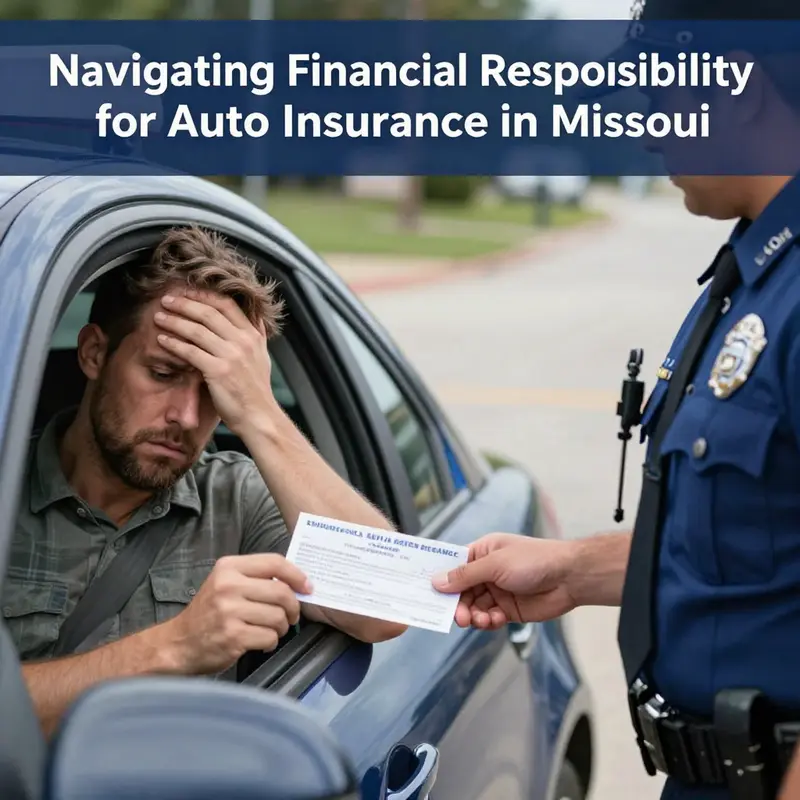
In Missouri, the line between personal habit and legal obligation is not blurry for long once a driver takes to the road without adequate auto insurance. The law draws a clear map: every vehicle owner bears the responsibility to carry minimum liability coverage, and the state enforces this duty with tangible penalties when coverage lapses or never exists. This chapter does not wander into abstract ethics or mere compliance. It lays out, with concrete detail, the consequences that attach when financial responsibility to insure an auto in Missouri goes unfulfilled. It is a story of risk—risk to your finances, your freedom, and your future insurance prospects—woven through the very structure of how ownership and driving intersect in the state. The overarching thread is simple: when the car sits in the driveway, the owner holds the legal obligation to insure it; when the car hits the road, the insurance you carry becomes the shield against cascading consequences that can linger long after the moment of impact. Understanding this is not about fear; it is about preparation, budgeting, and making solid decisions that protect your finances and your life on the road. The stakes are higher than a single incident. They extend into courtrooms, driver’s license status, and the price you will pay for insurance for years to come. The following reflection ties the mechanics of Missouri’s mandate to the realities faced by vehicle owners and drivers, tracing how a lapse or outright failure to insure transforms a routine obligation into a cascade of legal, financial, and personal repercussions.
Missouri’s statutory framework is explicit about what must be carried on every insured vehicle. The minimum liability coverage, as defined by state law, is not a mere suggestion; it is a baseline that protects others from the damages you might cause. In plain terms, the policy should cover at least $25,000 per person for bodily injury, $50,000 per accident for total bodily injury, and $10,000 for property damage liability. These are not extravagant protections; they are the floor designed to prevent a single accident from wrecking a person’s life through uninsured medical bills or a flood of civil lawsuits. When a vehicle owner fails to meet these requirements, the state treats the lapse not as a private misstep but as a breach of a public duty. The penalties come swiftly, and they are designed to deter precisely that breach.
The most immediate and visible consequence of driving without insurance is the suspension of driving privileges and vehicle registration. It is not just a theoretical danger; it is a concrete administrative action that can derail daily life. A driver who is caught behind the wheel uninsured faces the risk that their license is pulled and their vehicle registration is put on hold. Without valid coverage, the road becomes a legal risk zone, and any accident that occurs—the kind of ordinary incident that happens on any street—can trigger further penalties and a broader review of one’s ability to operate a vehicle legally. The suspension creates a ripple effect: missed work because you can’t drive to your job, delays in fulfilling family responsibilities that require transportation, and the added stress of navigating a system that must restore privileges once coverage is back in place. The process of reinstatement is not merely paying a penalty; it is a demonstration to the state that you have obtained ongoing coverage and that you will maintain it moving forward.
Fines for uninsured driving are not decorative costs; they are substantive financial penalties that accumulate and escalate. A first offense can carry fines that reach up to $1,000, a stark reminder that the state treats uninsured operation as a significant breach of the social contract that underpins the road system. For repeat offenders, the penalties often rise, reflecting a policy choice to penalize noncompliance more harshly each time a driver returns to the road without the required protection. The risk assessment behind these fines is not merely punitive; it is intended to deter behavior that places innocent bystanders at risk and to ensure that future incidents have a readily available channel for compensation. The message is clear: the cost of driving uninsured on Missouri roads is not a momentary expense; it is a long-term liability that can shadow a driver’s financial life and legal status for years to come.
Beyond fines and license suspensions, Missouri’s requirements include the SR-22 certificate, a mechanism that signals to the Department of Revenue that you have obtained the mandated coverage and intend to maintain it going forward. An uninsured driver who is found lacking must file an SR-22, a form that certifies financial responsibility and is filed with the state to reinstate driving privileges. The SR-22 process is not a one-off administrative box to check; it often carries with it a period during which the driver’s insurance is closely monitored by both the insurer and the state. The presence of an SR-22 can influence the terms of future coverage, affecting premiums and the insurer’s willingness to extend policy terms. The requirement underscores a broader principle: the state does not simply punish; it seeks to compel a transition from noncompliance to ongoing responsibility through structured oversight.
For those who face uninsured driving, the penalties can expand into more severe outcomes, particularly for repeat offenses or accidents while uninsured. Mandatory jail time can be imposed in extreme circumstances, with some cases citing up to 30 days of detention. Reinstatement fees rise in tandem with the severity and frequency of offenses, and the road back to legal driving status grows more complex with each lapse. These penalties serve a dual purpose: they deter noncompliance and provide a framework for community safety by ensuring that individuals who drive carry the financial protection necessary to cover potential damages and medical costs. While the prospect of jail sounds drastic, it is a reminder of the seriousness with which Missouri treats the problem of uninsured driving and the lengths to which the state will go to address it.
The consequences of driving uninsured are not confined to the legal arena. When you cause an accident without insurance, you face personal liability for all damages arising from the incident. This is where the practical costs become staggering. Medical expenses, property damage, and the legal costs of defending yourself in civil action can quickly exhaust personal savings and put families at risk of financial ruin. In a moment of crisis, uninsured drivers bear the burden of paying out of pocket for damages suffered by others. Even if a judgment is not fully collected, the mere threat of long-term legal action can create a chilling effect on an uninsured driver’s finances and credit. The penalty is not limited to the immediate aftermath of the accident; it can reverberate through years of debt, wage garnishments, and compromised financial futures for the driver and their dependents.
A consequence that often compounds the immediate penalties is the impact on future insurance prospects. Insurance companies track risk, and driving without coverage places a driver in the high-risk category. When a claim history includes uninsured driving, insurers may view the applicant as someone with a greater likelihood of future lapses. This perception translates into higher premiums, less favorable terms, or even denial of coverage in some cases. For many homeowners and drivers, affordability is already a tight constraint; an uninsured lapse can push insurance into a higher price bracket that becomes a recurring financial drain. Over time, the cost of coverage can accumulate to a level that makes maintaining insurance financially challenging, creating a cycle in which the driver is tempted to let coverage lapse again rather than confront escalating rates. This dynamic is precisely why the state’s enforcement of the minimum coverage standards is paired with mechanisms like SR-22 and reinstatement requirements—to prevent a cycle of noncoverage.
To understand the full gravity of these consequences, consider the relationship between ownership and responsibility. The owner of the vehicle holds the primary duty to secure and maintain insurance, but the driver’s actions can bring additional layers of risk. If you are driving someone else’s car, your own policy can provide a secondary layer of coverage depending on the policy terms. This arrangement underscores a broader truth about financial responsibility in Missouri: the vehicle, not merely the driver, is the anchor of insurance responsibility. The owner’s obligation to insure the car is a legal duty that protects more than one person; it protects the entire financial ecosystem around the vehicle—from the owner’s assets to the other party’s welfare. The policyholder, the person named on the insurance contract, bears the responsibility for paying premiums and maintaining the policy. In practice, this means that the owner’s budgeting, financial planning, and consistent maintenance of coverage are the foundational acts that prevent tail-risk scenarios from taking root.
This is where the concept of responsible ownership intersects with everyday financial management. The burden of ensuring continuous insurance coverage is not simply a legal obligation; it is a prudent financial discipline. For many people, the costs of insurance are a predictable monthly outlay—part of the total cost of owning and operating a vehicle. Yet when this outlay is neglected, the consequences cascade beyond the cost of a monthly premium. They involve fines, license suspensions, possible jail time, and a widening web of financial liabilities that can threaten everything from personal savings to credit scores. The practical takeaway is straightforward: a stable household budget that accounts for insurance must be designed to withstand life’s disruptions—income gaps, medical emergencies, or unexpected car repairs—so that a lapse in coverage does not become a doorway to financial ruin.
A practical piece of context for owners trying to navigate this complexity is how ownership finances intersect with insurance responsibilities. Keeping a car insured requires more than a policy; it requires a plan for premium payments, renewals, and potential rate changes after claims or lapses. For owners who juggle multiple financial commitments, it can be tempting to reallocate funds away from insurance to cover immediate needs. Yet Missouri’s framework is designed to prevent that very short-term decision. The penalties for uninsured driving are aimed at preserving a safety net for all road users, and they are proportionate to the risk the state seeks to mitigate. The long arc of consequence—from the administrative burden of license reinstatement to the specter of civil judgments—serves as a potent reminder that insurance is not a discretionary expense but a nonnegotiable element of responsible vehicle ownership.
To bring this to life in a concrete way, imagine a typical household budget where a vehicle is one part of a broader transportation plan. The owner must include not only the monthly policy premium but also the costs of minimum coverage in the event of an accident. If a lapse occurs, the family may face a pinched budget for years as fines accumulate and premiums rise. The ripple effects extend to the community as well: uninsured driving can place higher costs on public services, emergency responders, and medical facilities that must absorb uncompensated losses. In short, the price of noncompliance is not paid by the individual alone. It touches neighbors, relatives, employers, and the broader local economy. This broader perspective is essential for any reader trying to understand why Missouri enforces these requirements with such seriousness.
No chapter about consequences should overlook the human element—the stories of people who found themselves confronting these penalties. A single lapse can become a turning point that alters the trajectory of a family’s finances, a driver’s career prospects, and even where a person lives when debt becomes a heavy, unyielding weight. The human cost is real, and it informs a practical, forward-looking approach: maintenance of insurance coverage is a cornerstone of personal stability. It is not simply about avoiding penalties, but about preserving the ability to recover from life’s unexpected events with dignity and financial resilience. The law’s design is existentially practical: it ensures that when accidents occur, there is a mechanism to respond, compensate, and move forward, rather than a quiet refusal to acknowledge responsibility that would leave victims shortchanged and communities exposed.
For owners who want to understand not only the moral and legal logic but also the practical steps to prevent a lapse, there is a straightforward path. Vigilant budgeting helps keep the policy payment current, and proactive maintenance of the vehicle reduces the risk of claims that could destabilize a household’s finances. In the event a lapse occurs, immediate action matters: securing coverage, addressing any SR-22 requirements, and communicating with the insurer about reinstatement timelines can shorten the period of uninsured operation. The aim is to minimize disruption, preserve driving privileges, and protect the financial future from the cascading effects of noncompliance. A thoughtful approach to ownership finances—considering premiums, deductibles, and the potential impact of a claim on future rates—can make the difference between a temporary setback and a long-term financial strain. The message here is practical and explicit: the cost of responsible ownership includes the discipline to sustain insurance without interruption.
As a bridge to the next part of this discussion, consider how the ownership mindset shapes your choices when you buy, insure, or operate a vehicle. The relationship between asset management and legal responsibility is intimate and consequential. If you are a vehicle owner who wants to understand the broader landscape of financial accountability, you can explore resources that address both the cost side and the risk management side of vehicle ownership. See, for example, one of the practical guides that connects ownership responsibilities with financial planning and risk mitigation: Managing Truck Ownership Finances. The guide offers a broader lens on how owners balance obligations, not just to insurers but to lenders, maintenance providers, and the households that rely on reliable transportation. By situating insurance within a broader finance-and-ownership framework, you gain a fuller sense of why continuous coverage matters as much as any other ongoing expense.
In sum, the consequences of failing to insure a vehicle in Missouri are not abstract risks. They are real, immediate, and multifaceted. They touch the law, the wallet, and one’s long-term ability to drive and to protect the people who depend on you. The rules are clear, the penalties are precise, and the route back to compliance—though sometimes tedious—always exists when a driver acts with timely information, a plan for renewal, and a commitment to responsible ownership. The broader article you are reading continues to explore who bears financial responsibility for insurance in Missouri, and this chapter reinforces the practical why behind that responsibility: insurance is the safety net that turns a potential catastrophe into a manageable, solvable problem. For owners, this means building a budget that prioritizes coverage, maintaining the vehicle in good working order, and embracing the systems that ensure continuous protection. For drivers, it means understanding that while the primary obligation rests with the owner, your choices behind the wheel influence risk, premium costs, and the likelihood of encountering the law’s penalties. The chain of responsibility is long, but it is also clear—and the costs of ignoring it are correspondingly high. With the right approach, you stay protected, compliant, and able to keep moving forward, even when life throws a curveball on your daily commute.
To keep your plans aligned with practical realities, take a moment to reflect on how you manage the financial pieces of vehicle ownership. It is not merely about buying a policy. It is about maintaining a financial habit that preserves your ability to drive, protect others, and preserve the security of your family’s income and future. The state’s framework exists not to punish but to protect, to ensure that when an accident happens, the costs are covered and the road to recovery remains open. That is the core purpose of Missouri’s auto insurance requirements and the consequences tied to failing financial responsibility. It is a sober reminder that in the realm of personal finance and public safety, responsibility is not optional—it is fundamental to the right to drive.
External resource: For official guidance and penalties, see the Missouri Department of Revenue’s Auto Insurance Requirements page at https://dor.mo.gov/insurance/automobile-insurance/ and verify how SR-22 filings and reinstatement procedures are handled in your specific situation.
Final thoughts
In Missouri, understanding who bears the financial responsibility for auto insurance is vital for individual car buyers, dealerships, and small business fleet owners. The car owner holds the primary obligation to ensure that their vehicle is properly insured, while drivers must be aware of the relevant coverage policies. Furthermore, the legal requirements under Missouri law dictate the minimum liability coverage necessary, and failure to comply with these regulations can lead to severe penalties. By remaining informed and proactive about their insurance obligations, vehicle owners and drivers can safeguard themselves against legal repercussions and ensure a smoother vehicle operation experience.