

Navigating the complexities of auto financing can be daunting for many car buyers, particularly when disputes arise with the finance company. Understanding the option to sue an auto finance company is not only relevant but critical for consumers who may find themselves facing unjust practices, hidden fees, or breaches of contract. Such situations can significantly impact a buyer’s financial wellbeing and ownership experience, making it essential for individuals to grasp their rights within financial agreements. This knowledge empowers consumers to take action if necessary, ensuring they are not left vulnerable in a situation where their interests are compromised. To better equip auto buyers for these potential challenges, understanding legal recourse is pivotal. By becoming informed, consumers can protect themselves and seek justice when faced with unfair practices in the auto finance industry. For further insights on financial management and consumer rights, consider checking out Davis Financial Advisors’ knowledge resources.
Circumstances Under Which Individuals Can Sue an Auto Finance Company
Individuals might find themselves needing to take legal action against an auto finance company under various circumstances. Here are some specific scenarios:
1. Breach of Contract
A breach of contract occurs when either party fails to fulfill their obligations as per the agreement. For instance, if the finance company does not honor the agreed-upon terms of financing, such as interest rates or payment schedules, customers may sue for damages. This can include issues like:
- Failure to provide documents: Not supplying necessary paperwork or disclosures relevant to the loan.
- Misrepresentation of terms: Altering interest rates or fees without proper notification.
2. Fraud
Fraud involves deceit that results in harm. An auto finance company may be liable if it:
- Misrepresents financial terms: Providing misleading information about the loan’s total cost or terms.
- Falsifies documentation: Altering figures or signatures to influence the agreement adversely.
3. Negligence
Legal action can also arise from negligence, where a company fails to exercise reasonable care, causing injury or loss. Situations can include:
- Data security failures: Allowing personal information to be stolen due to inadequate data protection measures.
- Failure to advise on loan options: Not informing customers of better financing options or potential pitfalls in the loan.
4. Unfair Lending Practices
If a finance company engages in unfair lending practices, such as predatory lending, it can face legal challenges. This can occur when they:
- Target vulnerable populations: Offering loans with exorbitant interest rates to individuals with poor credit histories without clear explanations.
- Engage in discrimination: Providing less favorable loan terms based on race, gender, or other protected characteristics, violating fair lending laws.
These scenarios underline the rights of consumers against auto finance companies. It’s advisable to consult with a legal professional if you find yourself in one of these situations. For further details on financial matters, learn more about our insights.
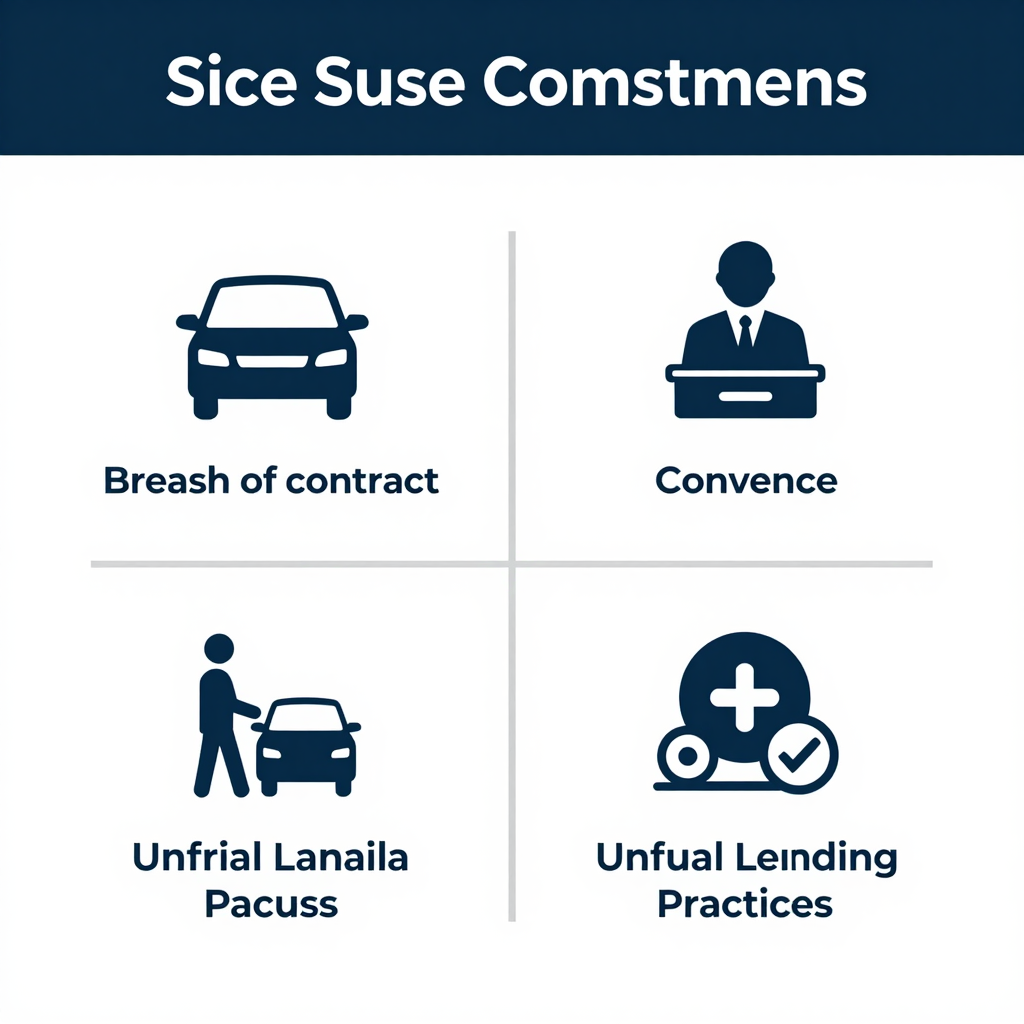
Common Claims Against Auto Finance Companies
When dealing with auto finance companies, consumers may encounter various issues that lead to claims or lawsuits. Here are common reasons individuals might pursue legal action:
-
Predatory Lending Practices
Allegations of coercing borrowers into high-interest loans without properly assessing their ability to repay, often targeting vulnerable populations. -
Deceptive Practices
Engaging in misleading advertising or not disclosing hidden fees associated with auto loans, which consumers may find excessive. -
Discriminatory Lending
Claims concerning unfair lending practices that disproportionately affect minorities and low-income customers, potentially violating the Equal Credit Opportunity Act (ECOA). -
Failure to Honor Loan Terms
Disputes regarding the enforcement of loan agreements, where finance companies might not uphold their own stated terms or conditions. -
Hidden Fees
Lawsuits often cite excessive service charges and administrative fees, which were not clearly disclosed initially, leading to claims of fraud.
Understanding these issues is crucial for consumers contemplating legal action against auto finance companies. For more insights into managing financial issues, review our expert knowledge and learn about financing logistics.
The Legal Process of Suing an Auto Finance Company
Suing an auto finance company may seem daunting; however, understanding the process can empower you to take the necessary steps toward resolution. Below, we outline the primary steps you can expect when considering legal action against an auto finance company.
Step 1: Preliminary Documentation
Before proceeding with a lawsuit, it is crucial to document all aspects of your loan agreement and any communications with the finance company. This documentation may include:
- Loan agreements: Signed copies of your contract.
- Payment history: Monthly statements and any proof of payments made.
- Correspondence: Emails or texts exchanging information regarding the loan.
- Evidence of errors: Records showing missed payments or discrepancies.
Consider sending a formal demand letter to the finance company, outlining the issues and requesting a resolution. This creates a formal record and may prompt a response, which can be favorable before engaging in litigation.
Step 2: Filing a Complaint
If the issue remains unresolved, the next step is to file a lawsuit. Depending on the amount in dispute, you may do this in:
- Small claims court (for claims under $10,000)
- District court (for higher claims)
Ensure you file in the appropriate court jurisdiction based on your location and the company’s address. When filing, include a detailed complaint outlining the reasons for your lawsuit.
Step 3: Gathering Evidence
As the case progresses, you will need to gather evidence to substantiate your claims. This includes presenting all documentation collected earlier:
- Evidence of breach: Any records proving the finance company engaged in unlawful practices (e.g., misrepresentation of loan terms, charging hidden fees).
- Witnesses: Individuals who can testify to the events surrounding your case may also be essential.
Step 4: Navigating Court Processes
After filing, the court will issue a summons and complaint to the defendant. The finance company typically has 30 days to respond. If they fail to respond, you may seek a default judgment. If they do respond, the case enters the discovery phase, where both sides exchange information and evidence.
If no settlement is reached, the matter proceeds to trial, where both parties will present their arguments, and a judge (or jury) will render a decision. Remember, adhering to court rules and maintaining organization throughout this process is crucial.
For more information about common reasons for suing an auto finance company, check out this resource. Understanding this legal process can help you navigate your situation more effectively and achieve a favorable outcome.
Notable Court Cases Against Auto Finance Companies
Understanding the legal landscape surrounding auto finance can help individuals in navigating complex issues when dealing with car loans. Here are a few notable court cases:
Case 1: Attorney General James and CFPB vs. Covenant Automotive Credit
- Summary: New York Attorney General Letitia James, along with the Consumer Financial Protection Bureau (CFPB), sued Covenant Automotive Credit for issuing unaffordable loans to low-income consumers without proper assessment of repayment capabilities.
- Outcome: The court mandated that Covenant halt its predatory lending practices. This case emphasizes regulatory scrutiny on high-risk auto loans and aims to enhance consumer protections.
- Implications: Financial institutions may be compelled to reevaluate their lending practices, particularly concerning vulnerable populations.
Learn more about this lawsuit here.
Case 2: Nationwide Settlement in Auto Loan Discrimination
- Summary: A large auto finance company reached a $50 million nationwide settlement after allegations of racial discrimination in loan approvals were raised.
- Outcome: The settlement mandates the refunding of consumers and funding for financial education programs.
- Implications: This case strengthens adherence to fair lending laws, encouraging increased scrutiny of financial algorithms and internal policies.
Discover more details about the settlement.
Case 3: Class Action Against CarMax
- Summary: CarMax faced a class action lawsuit concerning hidden fees and misleading advertising practices, leading to a court ruling that required the company to pay over $28 million in compensation.
- Outcome: The decision underscored the need for transparent pricing and truthful marketing.
- Implications: The ruling prompts better compliance standards within the auto retail industry to avoid exploiting informational asymmetries that can harm consumers.
Learn more about the lawsuit against CarMax.
Preparing Documentation for a Lawsuit Against an Auto Finance Company
Before embarking on legal action against an auto finance company, it is crucial to gather comprehensive documentation to support your case. Below are key types of documentation that you should collect:
1. Original Loan/Financing Contract
- Description: The signed agreement outlining the terms of your auto loan, which includes interest rates, repayment schedules, and any fees associated with the loan.
- Relevance: This document serves as the cornerstone of your agreement with the finance company, proving the agreed-upon terms and highlighting any violations, such as usury or undisclosed fees.
2. Payment History Records
- Description: Detailed records showing all payments made on the loan, including dates and amounts. This can include bank statements or online payment logs.
- Relevance: Payment records are essential to demonstrate your compliance with the contract and may expose discrepancies if the lender claims missed payments or defaults.
3. Correspondence with the Lender
- Description: Any communication you’ve had with the lender, including emails, letters, and text messages, regarding disputes, payment terms, or collection efforts.
- Relevance: This correspondence can illustrate patterns of communication and any promises made by the lender to resolve issues, which may bolster your case.
4. Repossession Notices and Documentation
- Description: Notices related to vehicle repossession, as well as documentation proving the legality of the repossession actions (e.g., police reports, tow receipts).
- Relevance: Essential for challenging the legality of the repossession; proper notification must be provable to validate the lender’s actions.
5. Proof of Debt Assignment (if applicable)
- Description: Documentation reflecting any assignment of the debt to a collections agency, including the chain of title.
- Relevance: Validates that the entity attempting to collect the debt holds the legal right to do so, preventing invalid claims against you.
For further information about auto financing and litigation, you can learn more about auto loans here and enhance your understanding of managing your finances effectively with financial management tips.

Proportion of Document Types in an Auto Finance Lawsuit
Collecting and organizing these documents carefully before filing a lawsuit will significantly strengthen your position against the auto finance company and prepare you for potential legal proceedings.
| State | Interest Rate Caps | Disclosure Requirements | Borrower Protections |
|---|---|---|---|
| California | 10% | Mandatory pre-approval disclosures | Strong protections against discrimination |
| New York | 14% | Detailed breakdown of charges required | Right to cancel the loan within 3 days |
| Texas | 25% | Minimal disclosure | Few borrower protections |
| Florida | 20% | General disclosure of fees and charges | Limited rescission rights |
| Michigan | 15% | Lenders must explain loan terms clearly | Provisions for financial counseling |
| Illinois | 18% | Comprehensive loan documentation | Enhanced rights against aggressive collection |
| Washington | 15% | Requires cooling-off period | Consumer restitution protections in place |
| Mississippi | No limit | Little to no requirements | Weak consumer protections |
| Arkansas | No limit | Basic disclosures only | Limited or no recourse options |
This table illustrates significant variations in auto finance regulations across states, indicating that consumers should be informed of their rights and obligations where they reside. For in-depth information about auto finance and legal recourse, consider visiting the Consumer Financial Protection Bureau and NerdWallet.
Understanding Your Rights with Auto Finance Companies
Navigating the world of auto finance can be daunting, but it is crucial for consumers to be aware of their rights. As noted by auto finance expert Stephen Elias, “Knowing your rights is crucial when negotiating an auto loan. Consumers have the right to shop around for the best rates and to request a copy of their credit report. This understanding empowers buyers to reject unfavorable contracts and seek better deals.”
This highlights the necessity of transparency and informed decision-making when engaging with auto finance companies.
Consumers must demand clarity on loan terms and conditions to protect themselves from hidden fees and aggressive practices.
“Consumers must demand clear information about who is lending the money-especially in cases where third-party financiers are used behind branded dealerships. Transparency is not just a legal requirement but a fundamental consumer right.”
- Auto Finance Expert, Financial Times
For further insights on consumer rights in finance, feel free to explore more about financial education.

In today’s auto financing landscape, being informed can make all the difference in securing a fair deal for your vehicle.
Conclusion and Next Steps
In closing, navigating disputes with your auto finance company can be both complex and daunting. Key insights reveal that individuals may have valid grounds to pursue legal action under circumstances such as unfair lending practices or improper vehicle repossession. Legally, it’s crucial to gather all relevant documentation-loan agreements, payment histories, and communication records-to bolster your case, as suggested by resources like LegalMatch.
With the new FTC CARS Rule, consumers now have expanded options for legal recourse against auto lenders who may have acted improperly, even extending liability to past dealer actions. As consumer advocate Martin Lewis emphasizes, victims should act quickly to file complaints to ensure eligibility for compensation schemes like the FCA’s recent redress package, which aims to address widespread overcharging abetted by lending practices.
For those considering legal action, it is advisable to consult with a qualified consumer protection attorney to assess your situation and options thoroughly. Furthermore, taking proactive steps such as documenting issues and exploring legal resources can empower you in seeking justice against industry malpractices.
Elevate Your Riding Experience with Summit Fairings
When it comes to enhancing your motorcycle’s performance and aesthetics, custom-fit fairings are an excellent choice. Summit Fairings specializes in premium, customized fairings designed to meet the unique specifications of your bike model. These fairings are crafted from high-quality materials, ensuring durability and an impeccable fit. By reducing wind resistance and improving aerodynamics, custom-fit fairings can make a significant difference in your riding experience.
With features such as improved wind protection and reduced drag, these fairings not only enhance the visual appeal of your motorcycle but also promote better fuel efficiency and rider comfort. Summit Fairings emphasizes quick delivery while offering tailored solutions that cater to your specific needs.
If you’re looking to upgrade your bike, consider investing in Summit Fairings’ custom-fit solutions. Elevate your riding experience today with fairings that combine style, performance, and durability. Explore the motorcycle fairings available and transform your ride into a true reflection of your personality and passion for the open road!
For more information on managing your motorcycle investments, check out our resources on auto finance strategies.