
Navigating the landscape of auto leasing can be complex, especially for individual car buyers, auto dealerships, and small business fleet purchasers. Understanding which financial institutions provide comprehensive leasing solutions is crucial for making informed choices that align with your transportation needs and financial goals. This article offers a thorough examination of prominent auto leasing providers, starting with Ford Motor Credit Company, which focuses on Ford vehicles, followed by BMW Financial Services, known for its diverse range of luxury offerings. General Motors Financial Company emerges as a significant player, especially within the Chinese market, while Ping An Leasing garners attention for its exceptional consumer satisfaction. Through these chapters, readers can gain valuable insights into tailor-made leasing options to suit their distinct requirements.
Beyond the Showroom: Ford Motor Credit Company and the Architecture of Auto Leasing

The auto leasing landscape is rarely understood as a simple matter of monthly payments. It is, at its core, an intricate system of risk management, liquidity, and customer flow that depends as much on a lender’s operational discipline as on its ability to price a contract. At the heart of one of the most influential nodes in that system sits Ford Motor Credit Company, the financial arm of Ford Motor Company. FMCC is not merely a lender; it is a steward of Ford’s retail network and a pivotal engine for the way leases move from showroom floor to road. In markets where Ford competes for consumer attention, FMCC’s positioning matters. It is the in-house financier that can streamline the customer journey, align marketing with financing, and reduce friction at the moment a consumer commits to a vehicle through a lease agreement rather than a purchase loan. This is particularly evident where the Ford sales network and its dedicated financial services arm operate with a degree of integration that allows decisions to be made quickly, often within a single dealership visit, and with terms that reflect Ford’s broader business objectives rather than a lender’s standalone risk calculus alone.
One of the most defining aspects of FMCC’s role lies in the function it performs within the capital structure that supports leasing. Beyond underwriting individual lease contracts, FMCC acts as the servicer and administrator for securitization transactions involving leased vehicles. This means it handles the day-to-day operations of the lease portfolio, including collecting payments, maintaining contract records, and ensuring compliance within the structured financing deals that pool dozens or hundreds of leases into asset-backed securities. In effect, FMCC translates a continuous stream of customer contracts into financial instruments that investors can purchase. The relevance of this role becomes clearer when one considers liquidity in the auto finance market: securitization fuels the capacity to fund more leases and, in turn, to offer more attractive terms to customers by spreading risk and freeing capital for new transactions. The Securities and Exchange Commission has documented that Ford Credit will serve as the servicer of both the leases and the leased vehicles in its reference pool and the securitization transaction, and will also act as the administrator for the trust. This explicit framework underscores FMCC’s centrality to Ford’s ability to maintain robust lease volumes while offering competitive terms, a dynamic that benefits individual lessees and fleet operators alike.
For consumers, the practical implications are meaningful. When FMCC underwrites a lease, the decision calendar can be tightly aligned with the dealership’s sales cycle. In many cases, a decision can be rendered faster because the in-house process has visibility into Ford’s product mix, residual value forecasting, and fleet utilization metrics. This alignment reduces the time between choosing a vehicle and signing a lease agreement, a factor that matters for buyers who want limited upfront cash, predictable monthly payments, and a straightforward path to vehicle ownership or replacement at the end of the term. FMCC’s leasing programs are often described as offering competitive rates and flexible terms, alongside a straightforward application process. That combination is not incidental; it is a direct outcome of FMCC’s dual objectives: to move vehicles off the lot and to manage a predictable, securitizable asset base that supports the broader Ford financial ecosystem.
Another layer of FMCC’s influence is its specialization of leasing options for different customer segments. For business customers, fleets, and individuals seeking lower monthly payments with minimal upfront costs, FMCC has structured offerings that reflect the needs of those groups. The ability to tailor terms—such as mileage allowances, residual assumptions, and maintenance considerations—within a framework that Ford can monitor through its dealer network allows for a level of price discipline and predictability that is harder to achieve with third-party lenders who lack Ford’s product line visibility. In effect, FMCC can synchronize pricing and term structures with Ford’s marketing campaigns, incentive programs, and new-vehicle introductions. This synergy is a tangible benefit to customers who are balancing a fleet strategy with an eye on total cost of ownership, resale value, and service considerations across the vehicle’s lifespan.
The broader market context makes FMCC’s model both necessary and competitive. In markets where auto leasing competes with consumer loans, retail financing through bank partnerships, and independent lessors, FMCC’s combination of dealer integration, securitization-driven liquidity, and in-house risk management creates a distinctive path for customers who want predictability and speed. The presence of state-backed banks, large commercial banks, and digital lenders in many markets adds pressure to FMCC to maintain efficiency while continuing to offer terms that reflect Ford’s brand promise. The result is a leasing experience that is not simply a product choice but a process and relationship. The customer interacts with a lender that is closely tied to the vehicle brand, the dealership, and the aftersales network. The lender’s service model, in turn, influences how dealerships present lease terms, how sales teams communicate residual value scenarios, and how customers perceive the value of leasing versus buying.
To readers seeking foundational context on how auto financing choices fit into consumer decisions, a visit to the Knowledge Center can be enlightening. The resource distills the various financing paths, including the in-house and partner options that shape the domestic and international auto leasing landscape. Knowledge Center resources illuminate how a lender’s securitization strategy, dealership alignment, and technology investments translate into real-world terms for the buyer. This kind of context helps explain why FMCC’s approach often translates into terms that feel intuitively aligned with Ford’s brand experience, from the first test drive to the final contract signature. In parallel, the broader market picture reveals a continuum where leasing is not a standalone product but an integrated component of a manufacturer’s sales and service strategy. When buyers compare leasing from FMCC with offers from other lessors, they are not just evaluating a rate sheet; they are evaluating a pipeline—how quickly they can secure a vehicle, how predictable their monthly outlay will be, how maintenance and mileage are factored into the plan, and what happens at the end of the term.
The interplay between FMCC and the rest of Ford’s corporate structure also has implications for dealers and for market liquidity. Because FMCC holds a significant stake in the ongoing flow of lease contracts, it can influence residual value forecasts and the appetite for new leases. This is not merely a matter of internal budgeting; it affects how much capital Ford can deploy into production, how aggressively the company can price early-termination options, and how resilient the lease book appears to investors during periods of economic volatility. In the securitization chain, FMCC’s role as servicer provides a stable, predictable counterparty for the trust. It ensures that payments are collected, delinquency risk is managed, and reporting is consistent with the expectations of investors who purchase notes backed by lease cash flows. The result is a funding mechanism that supports growth while maintaining the discipline necessary to protect the investor’s interests. That discipline, in turn, supports a stable and attractive financing proposition for lessees, particularly for those who value the flexibility of a lease with terms that are understood across a broad network of Ford dealerships and service centers.
In markets outside the United States, FMCC’s footprint and strategy may adapt to local regulatory and consumer realities, yet the core logic persists: a strong integration with the vehicle brand, a securitization-informed funding model, and a customer-centric approach that emphasizes speed and clarity. For buyers and fleet managers navigating a multi-brand, multi-lender environment,FMCC’s model serves as a benchmark for how a captive finance arm can balance brand alignment with financial outcomes. The result is a leasing experience that can feel seamless, almost invisible, because the dealer and the lender operate with shared metrics and common objectives. Such coherence is not accidental; it is the byproduct of investment in processes, data, and governance that make leasing both scalable and sustainable across cycles of demand.
As the auto leasing ecosystem continues to evolve—with the rise of digital platforms, online credit checks, and increasingly sophisticated risk scoring—the FMCC blueprint emphasizes not just the price of a lease but the reliability of the process behind it. In practice, customers who engage with FMCC often encounter an experience where the boundary between sales and financing is blurred in a way that prioritizes convenience without sacrificing rigor. The securitization layer, while an advanced financial mechanism, translates into tangible benefits for the consumer: shorter approval times, more consistent terms, and a portfolio that is managed with an eye toward long-term value rather than a single quarter’s results. This alignment, from showroom floor to the securitized pool, helps explain why FMCC remains a central and influential actor in auto leasing—one that other market participants study not just for its pricing or risk models, but for the way it binds together product, finance, and customer experience into a coherent whole.
External resource: https://www.sec.gov/Archives/edgar/data/1429765/000119310123185815/tm23185815-1_10k.htm
Financing the Drive: How BMW Financial Services China Shapes Auto Leasing with Flexibility, Digital Tools, and Customer-Centric Terms
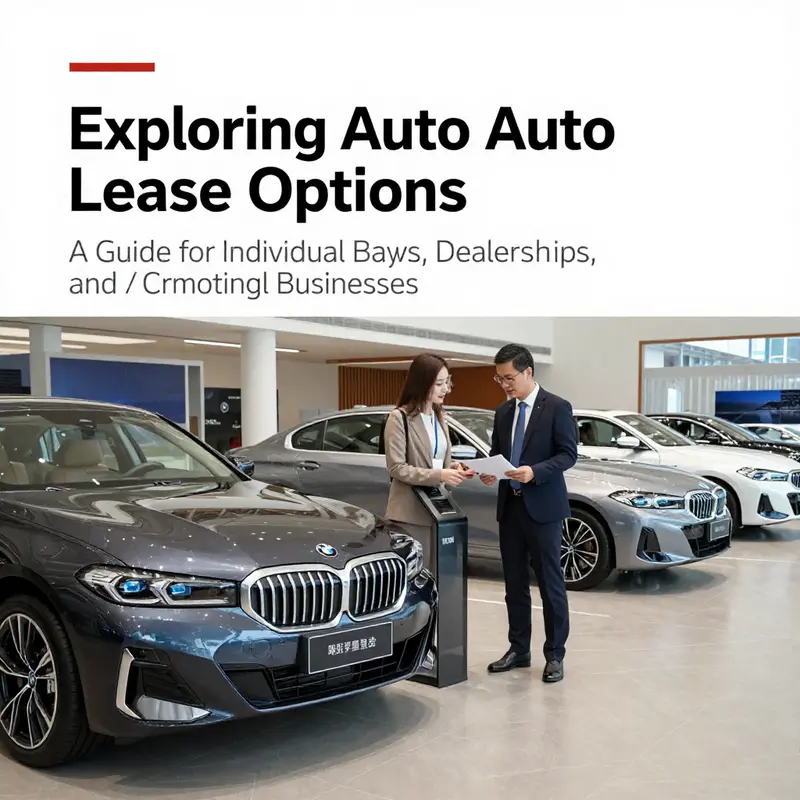
Auto leasing in China has evolved from a boutique option for a few early adopters into a mainstream, customer-centric pathway that blends flexibility, speed, and digital efficiency. Within this broader landscape, a leading automotive finance arm of a global luxury brand serves as a compelling exemplar of how leasing can be structured to attract a broad spectrum of buyers—ranging from first-time lessees seeking predictable monthly costs to established owners pursuing seamless upgrades and services that keep the ownership experience both simple and satisfying. BMW Financial Services China offers a window into this evolution, showing how a dedicated finance subsidiary can extend the luxury brand’s appeal beyond showroom floors and into accessible, flexible, and technology-enabled leasing solutions that feel tailor-made for the realities of modern Chinese consumers and businesses. The company’s local footprint—strongly aligned with the BMW Group’s philosophy of “In China, For China”—speaks to a design intent that prioritizes relevance, speed, and a frictionless customer journey across a vast and diverse market. As a result, the organization has grown its user base to tens of millions of interactions and a correspondingly broad dealer network, underscoring the strategic value that integrated financing and leasing can bring to both automakers and the customers who aspire to own or operate their vehicles through a leasing arrangement rather than a straight loan or outright purchase.
From the outset, the Chinese arm of BMW’s automotive finance operation positions itself as more than a funding source. It presents a comprehensive financing ecosystem that spans normal lease financing, management of payments, and a suite of add-on financial services designed to smooth every stage of the lease life cycle. In practical terms, this means customers can access a product set that is oriented toward reducing upfront costs, debiting manageable monthly payments, and offering flexible ways to conclude the lease when it matures. The emphasis on flexibility is deliberate. It speaks to a market reality in which budget contours, tax considerations, and the shifting needs of business fleets demand options that can adapt as circumstances evolve. The leasing options are designed not only to lower the barrier to entry but also to preserve purchasing power and cash flow for the longer term. In the Chinese market, where consumer expectations about speed and convenience are high and competition among financiers is intense, that combination of affordability and swiftness can be the deciding factor between choosing a lease and opting for a traditional loan or purchase.
The core structure of BMW Financial Services China’s offerings centers on a set of features that balance affordability with financial clarity. A key element is the possibility of zero upfront costs, enabling customers to begin a lease with no initial cash outlay beyond their identity verification. This reduces the initial burden and helps potential lessees, especially first-timers or small-business fleets, to test the waters with a vehicle that aligns with their operating needs. Equally important is the focus on lower monthly payments. By smoothing out the cash flow impact of vehicle ownership, the lender helps individuals and organizations plan more effectively around other obligations—whether those are fleet maintenance budgets, driver training, or marketing expenditures associated with a business vehicle program. These terms, in combination with flexible final payment structures, give lessees a pathway to tailor their end-of-lease obligations to their anticipated future finances. In practice, customers can negotiate a final payment profile that aligns with anticipated resale values, renewal options, or the desire to upgrade to a newer model without an onerous lump-sum settlement at lease end. What emerges is a leasing framework that respects cash flow realities while preserving the option to refresh one’s vehicle portfolio on a regular cadence.
Another pillar of the offerings is add-on financing. Customers can incorporate into their lease arrangement a range of ancillary costs that typically accompany vehicle ownership or operation. These include vehicle purchase tax, mandatory insurance, factory-specific accessories, and extended service plans or maintenance packages. By packaging these items into a single, coherent financing solution, the lender helps lessees avoid the administrative complexity of arranging separate financings for each component. The result is a streamlined experience in which the lease agreement, insurance needs, and service commitments move forward together with synchronized terms and a unified payment schedule. This approach is particularly attractive to small and mid-sized fleets, where administrative simplicity and predictable budgeting are critical to effective fleet management. It also benefits individual consumers who value predictable monthly costs and a single point of contact for all related financial questions, rather than navigating multiple providers with separate timelines and requirements.
A notable feature of the BMW Financial Services China model is its loyalty-driven incentives. The program is structured to reward ongoing engagement with the brand and to incentivize upgrade activity within the BMW and MINI lineups. For certain upgrade scenarios, customers may receive cash back that effectively lowers the net cost of transitioning to a newer model. In public accounts and press materials, the organization has highlighted substantial cashback milestones associated with specific model families, signaling a practical approach to loyalty that couples brand affinity with real, measurable savings. Beyond direct cashbacks, there are also discounts applied to the financing rate for other new models, a lever designed to reward continued participation in the brand’s ecosystem. The combination of cash incentives and financing discounts illustrates a broader philosophy: to make the economics of leasing repeatedly favorable for customers who remain within the brand’s universe. The payoff is not merely a lower price tag on a single vehicle; it is sustained value across multiple cycles of renewal, which in turn reinforces customer retention and the potential for a longer-term financial relationship between the lessee and the lender.
The digital dimension of leasing is not an afterthought but a central driver of the customer experience. BMW Financial Services China has pursued a digital transformation that enables a fully online journey from application to contract signing and ongoing lease management. In a market where consumers increasingly demand speed and convenience, moving the entire process online reduces friction, shortens cycle times, and enhances transparency. The company’s digital workflow is supported by analytics and automation that streamline approvals, credit checks, and document handling. Importantly, the operator reports impressive performance metrics: a high share of applications receive second-stage approvals, a majority of disbursements are automated, and the first-point contact resolution rate exceeds the high bar of 99 percent. These metrics matter not only for speed but for consistency and reliability. Customers receive timely updates, clear explanations of terms, and predictable pathways through the approval process, with fewer trips to a dealership or a bank branch. The digital platform thus serves as a critical bridge between luxury branding and everyday practicality, showing how premium automakers can deliver a premium financing experience that remains accessible and fast.
An equally important strand in this story is risk management. The finance arm relies on robust risk control systems, underpinned by intelligent models and large-scale data analytics. These tools enable ongoing compliance with domestic regulations and protect customer data against evolving cyber threats. They also facilitate more accurate pricing and risk segmentation, allowing the lender to offer competitive terms while maintaining prudent underwriting standards. In this sense, technology plays a dual role: it reduces friction for compliant, creditworthy applicants and strengthens the overall risk posture of the business. As the Chinese auto leasing market expands and competition intensifies, the capacity to balance competitive terms with disciplined risk controls becomes a major differentiator for any institution seeking to gain or protect market share.
The broader market context reveals why these elements matter. The Chinese auto leasing ecosystem features a spectrum of players—from manufacturer-backed finance divisions to large state-owned banks and innovative digital lenders. Yet even amid this diversity, BMW Financial Services China stands out for the clarity of its value proposition. It combines a reputable brand with financing flexibility, a streamlining of ancillary costs, a loyalty architecture that rewards ongoing engagement, and a digital-first customer journey that keeps pace with consumer expectations. The combination of these features helps explain how leasing remains attractive not only to individual buyers who want to control upfront costs but also to fleet operators seeking predictable budgeting, maintenance planning, and a standard process for upfitting or expanding their vehicle fleets.
As BMW Financial Services China observes its 15th anniversary, the company frames its growth as part of a larger strategic narrative within the region. The emphasis on a localized, China-focused approach reflects a broader conviction in the value of tailoring financial solutions to regional economic conditions, regulatory environments, and consumer behavior. The aim is to maintain a virtuous cycle: a leasing framework that is responsive to market demand, supported by digital capabilities that accelerate decision-making, and reinforced by a customer experience that rewards continued interaction with the brand and the finance arm. The result is a model that not only supports immediate vehicle sales but also builds a durable channel for ongoing mobility financing as consumer preferences shift toward longer-lived asset utilization, flexible ownership models, and a seamless, end-to-end leasing journey.
For readers who want to place BMW Financial Services China in the wider landscape of auto leasing, the picture is instructive. It shows how a luxury brand finance arm can influence affordability, accessibility, and convenience in ways that resonate with both individuals and corporate fleets. It demonstrates the power of a modular financing architecture that absorbs taxes, insurance, and maintenance into a single financing plan, lowering the administrative burden on the lessee and creating a smoother custodial pathway for the vehicle itself. It also highlights the critical role of digital tools in producing a frictionless experience—from online applications to instant approvals and quick fund disbursal—without sacrificing the rigor required to manage risk and comply with regulatory standards. In a market where customers increasingly compare terms, service quality, and speed across providers, these characteristics—affordability, simplicity, speed, and trust—form a compelling value proposition that can help explain why many buyers consider leasing an attractive option rather than pursuing ownership through a conventional loan.
To readers who may be exploring the topic from a more strategic perspective, this case study underscores a practical takeaway: the decision to lease or to buy can be shaped by the sophistication of the lender’s process, the breadth of add-on services offered, and the clarity of the end-to-end experience. When a finance arm can offer zero-down opportunities, low monthly payments, flexible end-of-lease structures, bundled ancillary costs, and a loyalty-driven incentive framework—all delivered through a digital platform with rapid, reliable service—the value proposition extends beyond mere affordability. It translates into a reliable, predictable, and enjoyable path to mobility that aligns with the broader goals of both consumers and businesses who rely on predictable transportation costs to drive performance. The result is a leasing environment that is not just an alternative to ownership but a thoughtfully designed option that enhances choice, reduces friction, and elevates the overall experience of vehicle finance in a rapidly evolving market.
For those who want to explore how these leasing arrangements compare across providers, our knowledge resources offer broader context and analysis that situates BMW Financial Services China within the spectrum of financing options available in the market. Readers can consult our knowledge hub for background on how different institutions structure their leases, the kinds of terms that are commonly offered, and the ways in which digital platforms are transforming the application and approval processes. This broader lens helps situate the BMW approach as a leading example of how an automaker can align its financial services with customer needs, brand values, and a rapidly changing regulatory and technological environment. To deepen that understanding, explore the knowledge hub here: Davis Financial Advisors knowledge hub.
For external readers seeking official, primary information on the program and its current terms, the formal site of the finance arm provides comprehensive details and the latest updates. External resource: https://www.bmwfinancialservices.cn/.
Why General Motors Financial Matters When Choosing an Auto Lease Provider

General Motors Financial matters when choosing an auto lease provider
General Motors Financial has shaped how many drivers access vehicles through leasing. Its long history, integrated relationship with an automaker, and wide geographic footprint make it a central option to consider when comparing institutions that offer auto leases. This chapter explains why its presence matters to consumers and businesses, how it operates in China, what its product and underwriting approach typically look like, and practical considerations for anyone deciding where to lease a vehicle.
GM Financial began as an early innovator in automotive finance. The company’s model—an OEM-affiliated financing arm—changed the way cars were sold and financed. That origin still matters. An affiliated financier can align incentives with the manufacturer, creating lease structures that match vehicle residual values and incentivize dealer participation. For consumers, that often means access to competitive lease pricing for new models and streamlined dealer processing.
In China, GM Financial operates through a major joint venture formed to serve a vast and evolving market. The local entity offers consumer vehicle loans, dealer inventory financing, lease-to-own programs, and equipment financing for fleets. The joint-venture structure brings local capital and regulatory familiarity together with global finance expertise. For lease seekers, this combination translates into product variety and a local footprint for support and aftercare.
Product design at an affiliated financier typically centers on three priorities: predictable monthly payments, residual value management, and flexible end-of-term choices. Instead of presenting a single rigid product, most offerings allow customers to choose among repayment structures. These can include even monthly payments, higher early payments with lower final obligations, or plans that minimize monthly cash outlay in favor of a larger final payment. That flexibility helps households manage cash flow while retaining optionality at lease end.
For fleet and business customers, the value proposition shifts. Businesses often need tailored financing that addresses cash flow, tax treatment, and asset rotation. A financier closely linked to a major manufacturer can bundle services—for example, remarketing support, maintenance packages, and equipment financing—into a single relationship. This reduces administrative friction and can lower total cost of ownership. Lease-to-own arrangements are common for businesses that want predictable depreciation accounting and the option to acquire assets later.
Underwriting at a large, manufacturer-affiliated financier balances scale with risk control. Automated credit scoring is used for routine approvals. At the same time, centralized risk teams develop residual value assumptions for each model. These assumptions affect monthly payment levels. When residuals are estimated accurately, leases are priced attractively. When market conditions change, the financier adjusts terms to protect margins and dealer stability. That responsiveness matters when used-vehicle markets shift rapidly.
Dealer relationships are another key element. A financier with deep OEM ties tends to integrate tightly with dealer systems. That integration accelerates approval times, simplifies documentation, and reduces the back-and-forth that slows delivery. Dealers also value captive finance support for inventory financing. When dealers can rely on consistent financing partners, new-vehicle availability improves and promotional lease programs become feasible at scale.
Customer experience now relies heavily on digital tools. Large automotive financiers offer online eligibility checks, pre-approval, and digital document signing. In many markets, mobile apps handle payment, account management, and early-termination quotes. The combination of a national dealer network and digital servicing means customers get both local face-to-face support and remote convenience. This hybrid approach reduces friction for first-time lessees and supports ongoing account management for fleets.
Competition in the leasing market includes independent banks, specialized leasing companies, and other OEM-affiliated financiers. Each competitor brings different strengths. Independent banks often offer wide product ranges across brands and may price aggressively for creditworthy customers. Specialized leasing firms focus on remarketing and residual management, sometimes offering creative terms for hard-to-place vehicles. An affiliated financier commonly matches vehicle incentives and integrates dealer programs. For consumers, the choice depends on priorities: lowest payment, broad brand options, or a simplified dealer experience.
Market positioning matters for residual values and lease pricing. Vehicles backed by a manufacturer-affiliated financier can enjoy favorable residuals because the financier has deep data on expected future values. That data helps set monthly payments that are competitive. Conversely, independents must rely on external remarketing channels and conservative residuals, which may raise monthly costs. Understanding how each provider estimates future value helps lessees choose the best fit for their budget and risk tolerance.
Regulatory and macroeconomic conditions influence lease availability and pricing. Interest rate changes, used-vehicle demand swings, and policy shifts affect how financiers underwrite leases. A large financier with diverse operations can often absorb shocks better than a smaller provider. In China, local joint ventures combine global risk management with local capital—an advantage when regulatory updates or currency effects occur. For lessees, this stability can mean sustained product offerings and clearer end-of-term outcomes.
Documentation and transparency are essential. A clear lease contract spells out monthly cost, mileage limits, wear-and-tear standards, and end-of-term choices. Affiliated financiers usually adhere to consistent contract templates across dealer networks. Still, customers should review mileage limits and excess wear terms carefully. Negotiating initial capitalized cost or selecting optional maintenance packages can alter total cost meaningfully.
For customers who want a deeper grasp of ownership costs, business-focused resources help. Practical guides on managing vehicle ownership finances explain how leasing compares to buying, and how to factor in taxes, maintenance, and depreciation. For operators of light-duty commercial vehicles, tailored advice can enhance fleet planning and budgeting. One helpful guide covers practical strategies for managing truck ownership finances and structuring payments for business fleets. Managing truck ownership finances
When comparing offers, lessees should evaluate effective cost, not just monthly payment. Effective cost includes down payment, fees, maintenance obligations, and the value of any included services. A low monthly payment with high up-front fees can be more expensive over the lease term. Likewise, included maintenance or roadside assistance may offset higher monthly payments and simplify ownership.
End-of-lease options vary. Standard choices are return, renew, or purchase. Lease-to-own arrangements give lessees a predictable path to acquisition. Some financiers provide appraisals and purchase quotes at term end. Others partner with remarketing networks to maximize resale value. Knowing these options ahead of time helps lessees plan and avoid unexpected charges.
Finally, consider customer support and dispute resolution. Lease relationships often span several years. Access to responsive customer service, online account tools, and clear repair dispute processes matters. A financier affiliated with a major manufacturer typically offers both dealer-level support and centralized customer service teams. These channels help resolve billing, repair adjudication, and end-of-term valuation questions.
Overall, General Motors Financial’s combination of scale, OEM alignment, and local-market partnerships makes it a key option when shopping for an auto lease. Its joint-venture presence in China means lease structures reflect local needs while leveraging global underwriting expertise. For consumers and businesses evaluating lease providers, the important factors remain consistent: transparency in pricing, residual assumptions, dealer integration, and aftercare support. Assessing these areas will help lessees pick the provider that best matches their priorities and budget.
For more detail on the company’s global operations and product offerings, visit the official website: https://www.gmfinancial.com
Ping An Leasing and the Customer-Centered Wave Reshaping Auto Leasing in China’s Digital Era
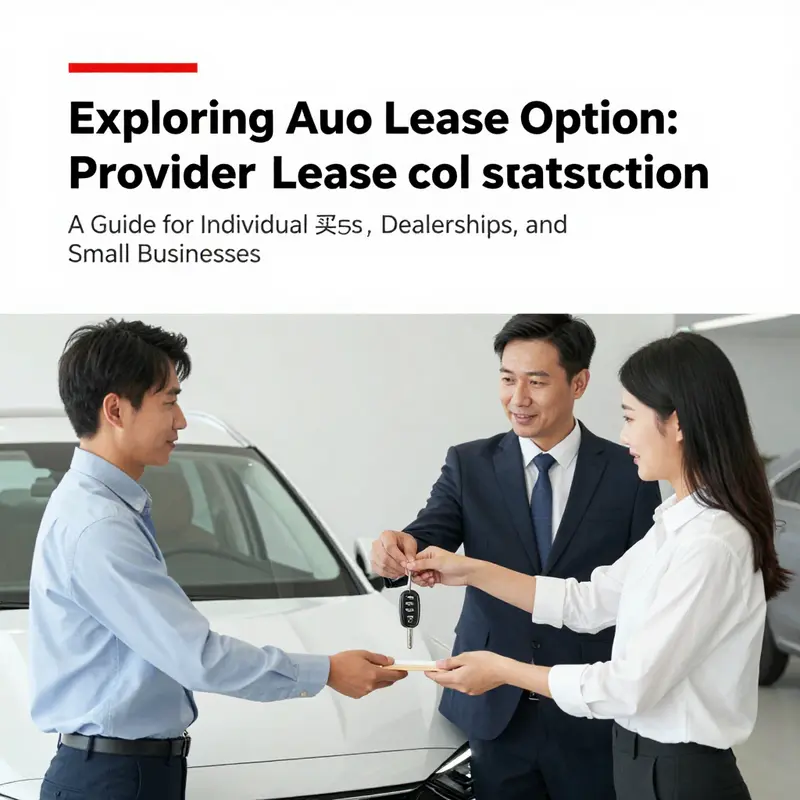
Across the spectrum of auto leasing, one provider stands out as a vivid illustration of how a traditional financing function can evolve into a comprehensive mobility service. Ping An Leasing, part of the broader Ping An Insurance group, embodies a model where risk management, digital enablement, and relentless attention to customer experience converge to redefine what “leasing” means in a modern financial ecosystem. The narrative of Ping An Leasing is less about a single agreement and more about a long-running commitment to making vehicle access simple, reliable, and transparent for a wide range of customers. In a market that has rapidly expanded its appetite for flexible ownership solutions, the company has cultivated a scale and a service ethos that highlight why, for many consumers, leasing is the preferred pathway to mobility rather than a one-off loan or a rigid, owner-centric arrangement.
At the core of Ping An Leasing’s narrative is a digital platform designed to meet customers where they are. The ecosystem has grown so pervasive that, by mid-2025, hundreds of millions of users can be touched through a single streamlined interface. This scale is not a cosmetic achievement; it signals a deliberate strategy to knit together application, approval, delivery, and aftercare into a seamless journey. The user base reflects a broader trend in which leasing becomes an everyday service rather than a one-time transaction: a continuous relationship in which the vehicle, rather than simply the contract, is the anchor around which a suite of related services orbits. Such a setup expands the leasing funnel beyond new purchases to a more dynamic mix of customers who seek flexibility, predictable monthly costs, and access to a wide dealer and service network.
Satisfaction is not an incidental outcome but a designed outcome. Ping An Leasing has consistently earned high marks in customer experience metrics, with a satisfaction degree reported well above 97 percent. Those numbers surpass typical industry averages and reveal a strong alignment between what the provider promises and what customers actually experience. High satisfaction in auto leasing is rarely the product of a single good interaction; it is the product of several linked capabilities working in concert: simple enrollment, rapid processing, transparent pricing, predictable terms, clear communication, responsive service, and dependable follow-through on commitments. When a company can deliver on all these fronts, it creates a virtuous circle in which positive word of mouth reinforces trust and expands both the pool of prospective lessees and the willingness of existing customers to renew or expand their lease horizons.
The backbone of Ping An Leasing’s operational excellence lies in disciplined risk management paired with continuous process refinement. The company is positioned within a large ecosystem that emphasizes data-driven decision-making, end-to-end process optimization, and a relentless focus on reducing friction at every stage of the leasing lifecycle. In practice, this translates into pre-emptive risk assessment that balances affordability with responsible lending, streamlined onboarding that minimizes paperwork and manual intervention, and rapid yet prudent credit decisions. It also means building resilience against fluctuations in vehicle demand, residual value risk, and macroeconomic shifts by applying scalable models and standardized workflows. This is not merely about efficiency; it is about consistent reliability. Customers who experience predictable, transparent terms and dependable service across multiple touchpoints tend to stay within the ecosystem longer, increasing the lifetime value of the relationship and enabling the provider to offer additional mobility-related services with greater confidence.
A crucial driver of this performance is the way Ping An Leasing integrates technology with service delivery. Rather than relying on a single channel or a handful of manual processes, the company embraces a digital-first approach that spans onboarding, underwriting, contract management, and aftercare. A core principle is to reduce the time and effort a customer must expend to secure a lease, while preserving clarity on what the lease entails. Digital onboarding enables instant document submission, e-signatures, and remote verification, which together shorten the path from interest to vehicle delivery. Once the lease is active, the platform supports ongoing management through real-time status updates, proactive reminders for maintenance or renewal, and options to adjust the lease arrangement as a customer’s circumstances evolve. This continuous capability—where the customer interacts with a single, coherent system across stages of ownership—turns leasing into a flexible, responsive service rather than a static agreement.
The scale and reach of Ping An Leasing are notable for what they imply about accessibility. A broad access model means more individuals and businesses can consider leasing as a viable option, including those who may not have experienced such arrangements before. The company’s footprint matters not just in terms of fleet growth but in the expansion of financial inclusion: more households and enterprises can access reliable mobility without bearing the full burden of ownership upfront. In this sense, the leasing choice becomes a stepping stone toward greater financial flexibility, allowing customers to allocate resources to other priorities while keeping transport costs predictable and manageable. The platform doesn’t operate in a vacuum; it is deeply interwoven with other services offered by Ping An’s broader financial ecosystem. This interconnection enables bundled solutions that can include maintenance plans, insurance protections, and telematics-driven insights, all aligned to the goal of delivering a smoother, more economical mobility experience over the life of the lease.
Beyond the mechanics of processing and policies, Ping An Leasing’s leadership is evident in how it continuously refines processes to reduce friction and enhance predictability. The emphasis on risk management is not about constraining access; it is about enabling sustainable growth and responsible lending. With a disciplined posture toward underwriting and residual value risk, the provider can offer competitive terms that give lessees real value while preserving the health of its own balance sheet. The result is a leasing proposition that combines affordability with stability, a combination that is especially compelling in markets where customers value transparent pricing, predictable monthly payments, and minimal surprises at renewal or end of term. Such stability also supports the broader mobility goals of families and small businesses, who rely on dependable transportation as a platform for daily life and economic activity.
The customer journey under Ping An Leasing is an exemplar of the modern service experience. It begins with a clear articulation of what the lease covers and what remains the lessee’s responsibility. The next steps, facilitated by a digital platform, involve swift evaluation of eligibility, straightforward documentation collection, and rapid confirmation of terms. The promise of speed does not come at the expense of clarity; instead, the platform is designed to present terms in an accessible way, allowing customers to compare options and understand the total cost of ownership across the lease horizon. Delivery logistics are coordinated to minimize downtime and maximize convenience, reinforcing the perception that leasing is not a bureaucratic hurdle but a practical, customer-centric route to mobility. After delivery, a suite of supportive services keeps the relationship healthy: reminder notices that align with service schedules, flexible options to adjust the lease in response to life changes, and a robust network of service centers that assure reliability across the vehicle’s lifecycle. Each of these aspects reinforces trust and reinforces the sense that leasing is an ongoing service rather than a one-off product sale.
What makes Ping An Leasing particularly instructive for readers exploring which financial institutions offer auto lease is not only its scale or its metrics, but its philosophy about what leasing can become in a consumer’s life. It is a reminder that the best lease partners are those that treat the customer as a long-term collaborator. They build capabilities that span underwriting and risk management with the same vigor as customer education and aftercare. They invest in digital platforms that make the experience coherent, predictable, and accessible, ensuring that whether a customer is signing for a car for the first time or renewing a fleet lease for a growing business, the process feels familiar, fair, and straightforward. In this sense, Ping An Leasing serves as a reference point for best practice in auto leasing, illustrating how an institution can combine financial discipline with a user-centric design to create a durable competitive advantage.
The broader landscape of auto leasing in China is characterized by a mix of specialized finance arms and leasing subsidiaries tied to major automotive brands, as well as state-backed financial institutions that offer auto lending and leasing in partnership with automakers. The presence of such players underscores an ecosystem in which the leasing decision is influenced by factors as diverse as access to funding, residual-value expectations, network reach, and the perceived reliability of partner institutions. Against this backdrop, Ping An Leasing’s distinctive contribution lies in its explicit focus on customer satisfaction as a strategic asset. By pairing high service quality with a scalable digital infrastructure, the provider demonstrates how satisfaction can become a measurable driver of growth, retention, and cross-service expansion. For readers, this offers a compelling lens through which to evaluate other institutions in the market: look beyond the headline rates and consider how a company manages the end-to-end journey, how it uses data to anticipate needs, and how it sustains a service culture as the business scales.
As the auto leasing market continues to evolve, the example set by Ping An Leasing invites a broader reflection on what consumers should seek when assessing lease options. A high-quality leasing experience should feel effortless and transparent from the first inquiry to renewal. It should provide clear information about the total cost, including any maintenance or insurance components that accompany the lease, without burying terms in legalese. It should offer a digital experience that enables convenient onboarding, easy document management, and timely communications. It should also deliver on its promises with a dependable service network, and it should be able to adapt as customers’ circumstances change, whether that means adjusting payment terms, extending a lease period, or transitioning into a different mobility arrangement entirely. When a provider can consistently deliver on these expectations, the result is not merely a customer who is satisfied; it is a customer who becomes an advocate and a stable participant in a broader ecosystem of mobility services.
For readers who want to explore how this discipline translates into practical financial decision-making, a useful path is to consider how leasing fits within the broader framework of owning and using vehicles. The financial dynamics—the balance between upfront costs, monthly payments, and residual risk—are influenced by a provider’s approach to risk, pricing transparency, and service quality. In other words, the choice of a lease partner extends beyond the numbers on a term sheet. It includes the provider’s ability to shorten the gap between intention and fulfillment, to offer predictable, value-led terms, and to support customers throughout the life of the agreement. Ping An Leasing’s track record in customer satisfaction and its comprehensive platform demonstrate that the best leasing experiences are not solely about what is financed, but how financing is delivered, managed, and reimagined to support ongoing mobility needs.
Internal linking note: for readers exploring how financing ties into broader vehicle ownership costs, see Managing Truck Ownership Finances.
External resource: for a broader view of leasing dynamics across major automaker financial arms and how they structure customer experience, refer to BMW Financial Services China’s official platform: https://www.bmwfinancialservices.cn/
Final thoughts
Understanding the landscape of auto leasing is pivotal for various market segments, from individual buyers to large franchises. Each financial institution discussed offers unique advantages that cater to diverse automotive needs. Ford Motor Credit Company excels with its specialized support for Ford owners, while BMW Financial Services presents a premium experience for luxury vehicle enthusiasts. General Motors Financial Company ensures a robust presence in the marketplace, and Ping An Leasing stands out for its customer satisfaction focus. By leveraging these insights about leading leasing providers, stakeholders can make informed decisions to enhance their car-buying or leasing experiences.