
Chrysler Financial, once a leader in automotive financing, underwent a significant transition after its acquisition by TD Bank Group in 2010. This article delves into the transformation of Chrysler Financial into TD Auto Finance, highlighting the operational changes that occurred post-acquisition and the expanded market presence and service offerings that position TD Auto Finance as a key player in the automotive finance sector. Each chapter will provide insights tailored to individual car buyers, auto dealerships, and small business fleet buyers, ensuring a comprehensive understanding of TD Auto Finance and its current role in the industry.
Shifting Gears: Chrysler Financial to TD Auto Finance Transformation and North American Lending Footprint
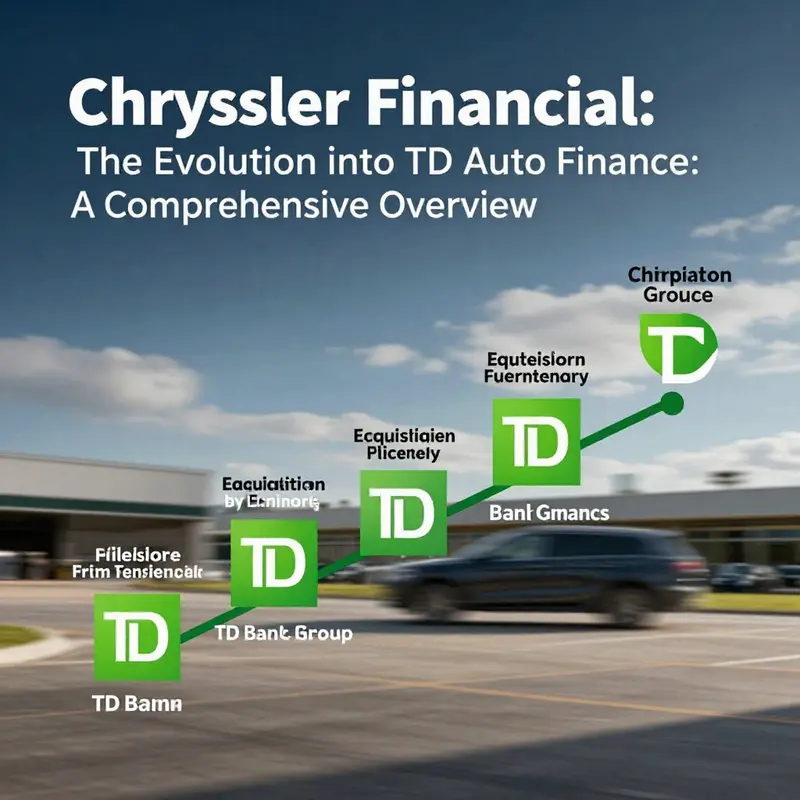
In the North American auto finance landscape, TD Bank Group’s 2010 acquisition of Chrysler Financial marked a turning point. By transitioning Chrysler Financial into TD Auto Finance, TD unlocked scale, diversified funding, and a cross-border footprint spanning the United States and Canada, and extending into Mexico and beyond. The rebranding and service alignment were designed to deliver a seamless customer journey across deposit, loan, and protection products while preserving the trust customers had in their dealer relationships. The combined platform offered a larger originations engine, an enhanced servicing and collections capability, and access to a broader dealer network, enabling more favorable terms and accelerated asset growth.\n\nOver time, TD Auto Finance evolved from a captive finance arm into a standalone lending platform with the capacity to compete with independent lenders on terms, speed, and cross-sell potential. The integration benefited from TD’s risk discipline, balance-sheet strength, and brand promise of stability and service. Market access broadened, allowing cross-border financing and access to diversified funding sources and securitization channels, reinforcing TD’s position in North America’s auto lending market.\n\nThe Chrysler Financial-to-TD Auto Finance transformation illustrates how a strategic acquisition can recalibrate a bank’s lending footprint, customer experience, and long-term earnings trajectory by combining asset-backed lending with a unified, customer-centric service model within a cross-border financial ecosystem. For practitioners, the case underscores the importance of disciplined integration, consistent underwriting standards where feasible, and a coherent brand architecture to sustain long-term value.
Operational Rebirth: TD Auto Finance’s Transformation After Acquiring Chrysler Financial
In late 2010, a seminal shift occurred in the North American auto finance landscape. TD Bank Group announced its acquisition of Chrysler Financial, a move that would reframe the contours of consumer lending within the automotive sector. The deal, valued at about $6.3 billion, carried more than financial weight; it carried the promise of a unified, cross-border platform capable of stitching together a broad dealer network, a robust asset portfolio, and a data-driven approach to credit that could withstand cycles in both mature and emerging markets. By mid-2011, the acquired unit had been officially renamed TD Auto Finance, signaling not just a branding change but a strategic recalibration of how the bank would scale, manage risk, and serve customers who shopped for vehicles across the Americas. The transformation was purposeful in both scope and pace, designed to turn Chrysler Financial’s on-the-ground strengths into a durable engine for growth within TD’s broader financial ecosystem.
From the outside, the integration looked like a straightforward consolidation of two portfolios. Inside, it unfolded as a careful orchestration of people, processes, and technology. The core objective was clear: align lending practices and risk controls across the United States and Canada while leveraging a shared technology backbone to deliver faster decisions, smoother applications, and more consistent outcomes for dealers and buyers alike. The operational playbook drew on Chrysler Financial’s established dealer relationships and asset generation know-how and fused them with TD’s disciplined risk management culture, capital strength, and deposit-based funding. The result was not merely a bigger lender but a more resilient one that could navigate the complexities of multi-jurisdictional credit markets with greater confidence.
A foundational pillar of the transition was the consolidation of systems. TD Auto Finance sought compatibility across core platforms to reduce frictions in application processing, underwriting, and servicing. The integration aimed to harmonize data standards, scoring methodologies, and approval workflows so customers could experience a seamless path to credit whether they walked into a dealership in Minneapolis, Toronto, or a cross-border outlet serving buyers in border towns. Technology teams mapped Chrysler Financial’s existing capabilities onto TD’s broader digital stack, prioritizing scalability and reliability. The expectation was that a shared technology platform would not only lower operating costs but also unlock analytics capabilities that could identify risk concentrations, segment demand with greater precision, and guide quarter-by-quarter lending decisions with a more granular lens than ever before.
The operational shift extended beyond software. It encompassed people and processes, particularly in underwriting and risk governance. TD Auto Finance did not dismantle Chrysler Financial’s historical strengths; instead, it integrated them into a more rigorous framework. Underwriting criteria were codified and aligned with TD’s financial controls, preserving the low default rates and prudent credit standards that characterized Chrysler Financial’s legacy while embedding them into a broader, more scalable risk architecture. This balance—preserving established strengths while elevating them with TD’s risk-management discipline—helped the combined organization maintain credit quality even as it absorbed a larger asset base. It also enabled a more proactive approach to risk, where early indicators from one market could inform practices in another, ultimately reducing the likelihood of later-stage delinquencies and charge-offs.
One of the most consequential strategic outcomes of the merger was the expansion of TD Auto Finance’s footprint. The integration positioned the company as a top five bank-owned auto lender in North America, a designation that carried not just prestige but practical advantages. A larger, more visible balance sheet and a broader dealer network increased loan origination opportunities and diversified the mix of customers and vehicles financed. Chrysler Financial’s proven relationships with a wide array of dealerships became a powerful complement to TD’s existing consumer finance framework. By combining these strengths, TD Auto Finance could scale its asset generation platform in ways that neither organization could have achieved alone. This synergy did not merely add volume; it created a more resilient engine capable of sustaining growth across varying market conditions.
With scale came a strategic shift in how the company approached asset creation and funding. The expanded platform enabled TD Auto Finance to pursue a more integrated approach to asset generation—leveraging Chrysler’s established dealership ecosystems, credit histories, and asset pools alongside TD’s depositor base and funding flexibility. The ability to draw on TD’s capital base and deposit franchise infused the auto lending operation with greater liquidity and a steadier funding runway. This, in turn, supported a more predictable loan book growth trajectory, reducing the need to rely on volatile funding channels during downturns and allowing for steadier pricing, consistency in product terms, and a more reliable customer experience.
Under the hood, the operational integration emphasized efficiency and analytics. Consolidated platforms created a single view of the customer and the loan portfolio, enabling faster decision-making and more accurate pricing across channels. Faster online applications, streamlined dealer interactions, and real-time data exchanges between origination, underwriting, and servicing meant that customers could secure approvals more quickly, while dealers could push more deals through the pipeline with confidence in the credit decision. The improvements extended to servicing as well, where standardized workflows and centralized operations reduced cycle times, improved accuracy, and enhanced the customer experience during post-sale interactions. The cumulative effect was a more responsive operation that could adapt to customer preferences and market shifts without compromising risk discipline.
TD’s leadership underscored the strategic upside of the deal by highlighting the opportunity to build a scalable, profitable auto finance platform with substantial long-term upside. The merger provided access to a broader capital base, a deeper pool of credit experience, and a more diverse portfolio that could withstand sector-specific shocks. Ed Clark, then Group President and CEO of TD, framed the acquisition as a way to create enduring value by combining two strong lender franchises into a platform capable of sustained growth in a high-potential segment. The emphasis was not only on growth in loan volume but also on depth of customer relationships, the ability to offer value-added financing and insurance products through a trusted brand, and the leverage of cross-border capabilities to optimize product mix and risk-adjusted returns. These considerations guided the post-merger roadmap, informing decisions about technology investments, risk governance, and the geographic scope of operations.
The narrative of integration was reflected in the practical outcomes the company pursued. By aligning lending practices across the United States and Canada, TD Auto Finance could implement more consistent credit policies, fewer process variations, and a more unified customer experience. This coherence was essential for maintaining credit quality as the organization grew. The cross-border dimension introduced additional complexities, but it also offered advantages. Shared compliance frameworks, standardized reporting, and coordinated capital planning allowed the lender to optimize capital allocation across markets and take better advantage of regulatory cycles and economic conditions in North America. Moreover, the expansion into markets where Chrysler Financial previously had a solid foothold enabled a broader geographic diversification that could dampen adverse local trends and contribute to a more stable overall portfolio performance.
From a dealer perspective, the integration translated into a more efficient and supportive financing ecosystem. Dealers benefited from a larger and more diverse pool of potential borrowers, broader credit access, and faster approval processes. A stronger, more integrated platform also meant better transparency in the financing terms offered to customers, which in turn enhanced trust and dealer satisfaction. This alignment helped dealers optimize their inventory financing strategies, improve turn times, and deliver competitive financing options that could accelerate sales cycles. For customers, the net effect was a smoother journey from showroom to financing approval to vehicle delivery—a journey supported by a backend that could process applications with greater speed, accuracy, and consistency across regions.
The operational changes were not merely about systems and speed. They reflected a broader shift toward data-driven decision-making. The integrated platform enabled richer analytics, allowing TD Auto Finance to analyze portfolio performance in more granularity. Lenders could identify patterns in borrower behavior, detect emerging risk clusters, and adjust pricing and terms with greater precision. Data transparency also improved governance, making it easier to monitor performance against risk appetite and regulatory expectations. In practice, this meant better capital allocation, more stable loss experience, and a lending portfolio that could adapt to evolving consumer preferences and macroeconomic dynamics without sacrificing credit quality.
The story of Chrysler Financial’s acquisition by TD Bank Group is, at its core, a narrative about strategic synthesis. It demonstrates how a well-timed combination of dealer strength, asset generation capability, risk rigor, and scalable technology can transform an insurance within banking that touches millions of customers each year. The integration did not erase Chrysler Financial’s legacy; it amplified it within a larger framework that could support more ambitious growth while preserving the careful underwriting discipline that had produced favorable default performance in the past. As TD Auto Finance continued to mature within the TD ecosystem, it built a platform that could serve both retail customers and dealers with a depth and consistency that might have seemed unlikely at the outset of the deal. The transformation was, in essence, a reinvention of how a bank-owned auto lender could operate across a continental footprint, combining the strength of local relationships with the advantages of a cross-border, capital-rich parent.
For those tracing the arc of this transformation, the official statement and details surrounding the initial integration offer a useful capital narrative. The December 21, 2010 TD Bank Group investor transcript lays out the strategic rationale, the integration plan, and the expected benefits with clarity. The discussion points toward the creation of a scalable platform that could drive sustainable growth in auto finance across North America, anchored by TD’s risk controls and funding capabilities. While the specifics of product terms are beyond the scope of this chapter, the overarching theme is evident: an integrated, disciplined, and data-informed approach to auto lending can yield meaningful advantages in market positioning, customer experience, and long-run profitability. This is the backbone of the narrative that connects Chrysler Financial’s legacy with TD Auto Finance’s current identity and ongoing evolution.
As the market evolves and regulatory expectations continue to rise, the integration served as a case study in how a major lender can reposition itself by marrying cross-border capabilities with granular local strengths. It demonstrates the value of a unified credit framework across regions while respecting the nuances that come with operating in diverse markets. The chapter’s broader argument—about the potential for strategic acquisitions to generate durable improvements in efficiency, risk control, and growth—rests on this successful fusion of heritage and new capabilities. It also invites readers to consider how similar transformations could unfold in adjacent segments where financing intersects with asset ownership, a topic that future chapters will explore through a wider lens. For practitioners and scholars alike, the TD-Chrysler integration offers a concrete illustration of how a carefully managed merger can create a more resilient engine for auto financing in a changing world.
To learn more about how the broader lessons of capital-based transformations apply to other vehicle-related finance contexts, readers can explore related discussions on managing asset ownership and financing structures. This line of inquiry links to practical considerations around ownership costs, depreciation, and financing strategy, which remain central to understanding how lenders evaluate and support complex asset portfolios. For ongoing insight, see the deeper discussions in Managing Truck Ownership Finances, which offers context on how ownership dynamics interact with financing decisions across fleets and individual purchases. Managing Truck Ownership Finances
External references for further reading include primary sources that document the integration’s milestones and the strategic framing of the merger. The TD Investor 2010 Transcript provides a contemporaneous account of the expectations, risk considerations, and long-term vision driving the consolidation. It offers readers a window into the governance and planning that underpinned the operational changes described above. For those seeking a faithful, verbatim record of the period’s strategic articulation, the transcript remains a valuable touchstone: TD Investor 2010 Transcript. TD Investor 2010 Transcript
null
null
Final thoughts
The transition from Chrysler Financial to TD Auto Finance has paved the way for innovative automotive financing solutions that meet the needs of individual car buyers, dealerships, and businesses seeking fleet financing. TD Auto Finance not only preserves the legacy of Chrysler Financial but also expands upon it, offering a wide range of services designed to enhance the purchasing experience and empower customers with flexible financing options. As the automotive landscape continues to evolve, TD Auto Finance stands ready to support customers and partners with their financing needs, solidifying its presence in the automotive finance industry.