

In selecting an auto insurer, financial stability is paramount for individuals and businesses alike, ensuring that claims are honored when necessary. This article delves into the top-rated auto insurers recognized for their financial strength, providing an overview of leading companies, analyzing crucial financial metrics and ratings, and examining how state regulations impact these insurers and consumer protection. Each chapter contributes to understanding why financial stability is essential, equipping car buyers, auto dealerships, franchises, and small business fleet buyers with the insights needed to make informed decisions.
Steady Ground: The Role of Financial Stability in Auto Insurance
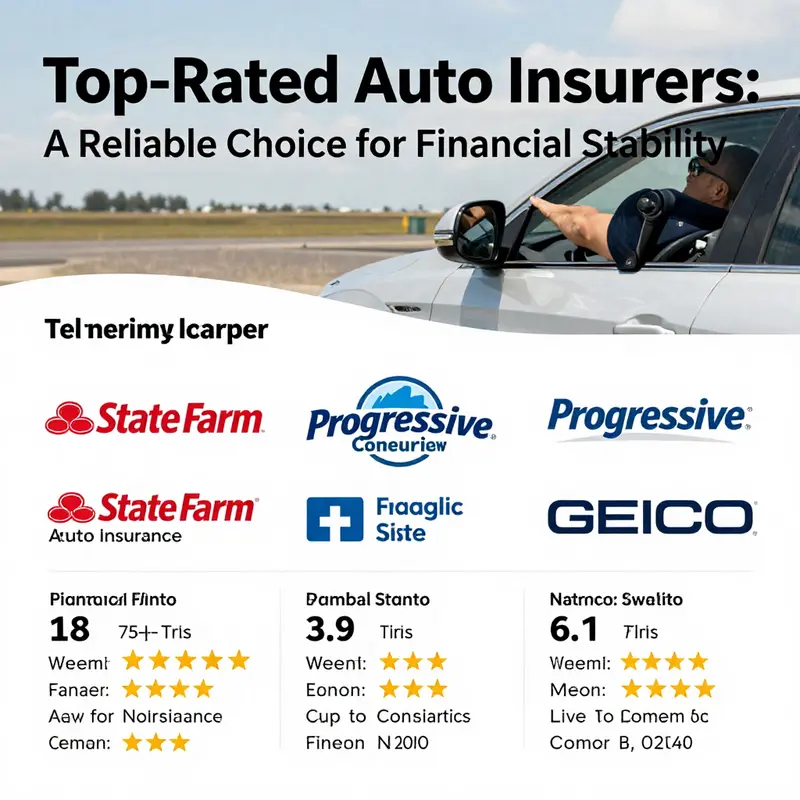
Choosing auto insurance is often framed as balancing price, coverage, and convenience. Yet the bedrock of any reliable policy is financial stability. It signals an insurer’s ability to pay claims through downturns, spikes in losses, and other stresses. Ratings from independent agencies, governance quality, and capital discipline together shape policyholder confidence in long-term reliability. This chapter explains how AM Best and Demotech frame stability, how scale interacts with disciplined risk management, and what consumers can look for beyond market share to assess enduring strength.
In practice, stability means adequate capital, steady profitability, liquidity to pay near-term claims, and strong risk controls across underwriting and investments. The most durable insurers combine prudent leverage with clear governance and reserve adequacy, delivering reliable service even when conditions turn adverse. The takeaway for readers is to seek insurers whose financial architecture supports promises over time, not just the most favorable quotes today.
Stable by Design: How Top-Rated Auto Insurers Build Financial Resilience and Why It Matters to Drivers
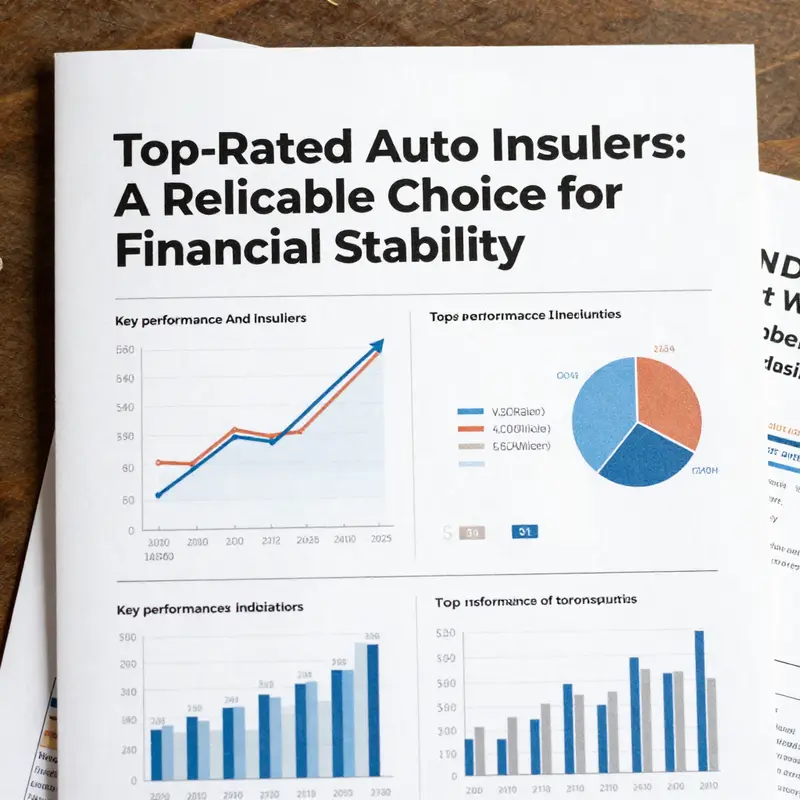
The question of whether top-rated auto insurers truly deliver financial stability is not merely academic. For drivers, a company’s capacity to pay claims when accidents happen, to honor obligations during natural disasters, and to maintain steady pricing strategies over time matters as much as the price of the premium itself. The core of this question rests on a set of measurable signals that independent rating agencies and market researchers have honed over decades. The most trusted among them is a formal credit rating that reflects an insurer’s balance sheet strength, operating performance, and business risk, bundled with a forward-looking assessment of capital adequacy. When you hear that a major insurer carries an A++ or A+ rating from a respected rating agency, that badge does not simply imply high profitability; it signals confidence that the company can weather economic shocks, absorb losses from catastrophic events, and continue to meet policyholder obligations even as market conditions shift. In that sense, financial stability is not abstract—it is the backbone that supports reliable claims handling, durable coverage, and enduring trust between a company and the people who depend on it.
The language of financial strength is not a single score but an integrated narrative. Credit ratings, widely used by investors and policyholders alike, summarize a long-running assessment of an insurer’s balance sheet resilience, liquidity, and earnings resilience. They are anchored by capital adequacy, which gauges whether a company has enough cushion to absorb unexpected losses, plus the quality of assets that back insurance liabilities. A robust reserve framework, disciplined underwriting, and disciplined investment management all contribute to a rating. These elements form a triad of signals: solvency, profitability, and risk governance. When a rating agency sees an insurance group consistently generating favorable underwriting results while maintaining strong surplus and prudent asset allocation, it translates into higher ratings and, critically for consumers, greater assurance that every claim filed will be supported by real financial capacity.
A crucial aspect of this framework is the consistency of the company’s profitability over time. Underwriting profit, a term that signals a healthy margin between earned premiums and incurred losses plus expenses, often captures the core health of an insurer’s core business model. In a mature market like auto insurance, where competition can compress prices, the ability to earn an underwriting profit rather than relying solely on investment income is a meaningful differentiator. The most financially stable insurers tend to manage this balance with a disciplined pricing approach, careful risk selection, and a diversified product and distribution strategy. They avoid aggressive pricing that could win business in the short term but undermine the long-run ability to cover claims when the portfolio experiences higher-than-expected losses. This discipline preserves capitalization in adverse cycles, which, in turn, supports favorable credit ratings—a cycle that is self-reinforcing rather than a one-off achievement.
Beyond underwriting results, the health of an insurer’s balance sheet hinges on how it manages assets and liabilities. A stable company will demonstrate conservative asset-liability matching, ample liquidity to meet near-term payout obligations, and a long-term investment plan that prioritizes capital preservation alongside reasonable growth. The best-rated groups tend to hold diversified investment portfolios, with a meaningful emphasis on high-quality, liquid assets that can be deployed to satisfy claims even when markets are stressed. In practice, this means maintaining a buffer of surplus that sits above regulatory minimums, enabling the company to honor policyholder commitments without resorting to distress sales or sudden shifts in pricing. A capital framework that remains robust through diverse macroeconomic regimes is a powerful signal to both rating agencies and consumers that the insurer is prepared to handle the kinds of tail risks that can arise in auto insurance—from catastrophic weather events to sudden spikes in claims frequency during a major disaster.
The 2026 perspective on top auto insurers underscores how these elements come together in real market conditions. In the United States, the suite of insurers that routinely earns high marks for financial stability includes several large, well-capitalized players as well as smaller but financially disciplined firms. A pattern emerges: firms with sustained performance, strong credit ratings, and disciplined capital management occupy the upper echelons of credible rankings. Among the leading names, we see a mix of long-established agencies with broad distribution networks and newer entrants that have achieved scale through efficient operations and a focus on profitability metrics that go beyond mere top-line growth. The common thread is not a flashy pricing gimmick but a coherent governance framework that aligns product design, pricing strategy, risk controls, and capital planning with the goal of enduring solvency in changing conditions.
To understand why these factors matter to consumers, it helps to translate the abstract into the tangible. Consider the function of a rating in a driver’s daily decision: when you choose a company with a higher rating, you are selecting a partner whose financial strength is designed to endure. You are not selecting a guarantor of perfection—no insurer is immune to all risks—but you are choosing a partner with a demonstrated capacity to pay claims, maintain service levels, and continue investing in claims infrastructure and technology that improve the customer experience. The practical implication is straightforward: a top-rated insurer is more likely to honor claims promptly, keep policy terms stable, and sustain a responsive claims network during a high-stress period, such as a region-wide weather event or a sudden spike in auto accidents. In the insurance world, reliability in that sense is as critical as the price tag on the policy itself, because it preserves fairness and predictability when policyholders most need support.
The credit rating agencies, led by organizations that publish comprehensive reports on balance sheet strength and risk, emphasize that these ratings are not static. They reflect a process that weighs both current performance and forward-looking risk. The emphasis on forward visibility is particularly important in auto insurance, where exposure to changing loss trends, regulatory shifts, and macroeconomic cycles can alter risk profiles. A company that maintains robust capital levels, prudent reserving, and strong earnings resilience is better positioned to absorb adverse developments without requiring abrupt changes to underwriting discipline or pricing in a way that hurts customers. In practical terms, this translates into a more predictable policy experience for drivers: fewer surprises, steadier premiums over time, and a more reliable path to claim resolution. The link between financial stability and consumer experience is not merely theoretical; it is a narrative that unfolds in the statements, rating actions, and the everyday operations of those insurers that routinely appear at the top of stability rankings.
The literature and market practice converge on a simple but powerful set of signals that readers can use to gauge financial stability. First, the rating itself matters; a high-grade rating signals that an external evaluator sees a low risk of insolvency and a high likelihood that the insurer can meet its obligations now and in the future. Second, profitability metrics, notably the combined ratio for auto lines and analogous measures for other lines, reveal whether the company can sustain operations under typical and stressed conditions. A ratio consistently below break-even is not inherently positive if it is achieved by sharply reducing claim oversight or by underpricing risk; it must be achieved through sustainable pricing, crisp underwriting discipline, and cost control. Third, capital adequacy and reserve strength reflect whether the insurer has a cushion to weather tail events without compromising policyholder protections. Finally, governance and risk management quality—how the company tests scenarios, adjusts for shifting risk landscapes, and maintains alignment between executive incentives and policyholder interests—round out the picture. These intertwined dimensions create a robust framework that explains why some insurers sit at the top of stability tables generation after generation.
To illustrate how the narrative translates into ranking, it is helpful to reference the 2025–2026 landscape in broad strokes. Analysts consistently note that the front-runners tend to be large, diversified insurers with deep capital bases, though not all stability stories are identical. Some widely recognized leaders balance scale with a conservative risk posture, ensuring that large premium volumes are matched with solid loss reserves and prudent asset management. Others achieve stability through a combination of disciplined underwriting and a diversified book of business that cushions the company when auto claims surge in one region or another. Across these profiles, the central theme remains: stability is earned through a consistent, multi-year track record of sound capital management, reliable profitability, and credible risk governance. The upshot for policyholders is meaningful: when the market experiences stress, these insurers have both the reserves and the discipline to remain operational and fair in their dealings with customers.
Regulatory and state-level dynamics also shape the stability calculus. Auto insurance markets differ by state due to pricing regulations, minimum capital requirements, and the local competitive landscape. In states such as Washington and Texas, where rates are known to fluctuate considerably, top-rated insurers have demonstrated that they can sustain their financial footing while offering competitive pricing and robust coverage. The stability signal persists even as price competition intensifies because the core financial strengths—capital adequacy, reserve discipline, and earnings durability—underpin the long-term resilience of these firms. For policyholders in variable markets, this is a meaningful distinction: stability is not solely about the price; it is about the company’s capacity to remain solvent and service claims consistently when state markets tighten, and that capacity is most visible through sustained credit ratings and careful capital management.
In recent analyses, a recurring emphasis has been on the alignment between a company’s financial metrics and its customer-facing performance. The best-rated insurers tend to exhibit a coherent strategy across pricing, product design, claims handling, and channel management. They invest in claims systems and data analytics, which helps them adjudicate claims efficiently, detect potential fraud, and maintain fair settlements. They train and retain adjusters and service staff who can respond quickly when a claim arises, a factor that is as important to the consumer experience as the premium itself. In environments where consumer expectations are rising for speed, transparency, and choice, the stability of a firm’s financial base becomes even more critical. A company that can fund rapid claim settlement while maintaining solvency sends a powerful signal to customers: we are reliable now, and we are prepared for tomorrow.
As readers explore the implications for personal choice, it is useful to keep in mind that financial stability does not guarantee the absolute lowest price for a given risk profile. It guarantees a baseline of reliability and predictability under uncertainty. A top-rated insurer can still price competitively, but the consumer should also assess coverage terms, claim experiences, and the available risk-management tools that come with the policy. In this sense, financial stability becomes a lens through which to evaluate value over the long term, not a single determinant of affordability. A company that combines stability with customer-centric practices—clear communication, straightforward claim processes, and transparent pricing—tends to earn loyalty and maintain competitive positioning across market cycles.
The practical takeaway for readers who want to translate these insights into personal decision-making is straightforward. Look first at the rating and the capital story behind that rating. Consider whether the insurer has demonstrated the ability to maintain solvency while growing and adapting to new risks. Then examine profitability and reserve adequacy in a way that considers how a company handles tail events and regulatory changes. Finally, look at governance—how the company aligns incentives, manages risk, and integrates technology to enhance customer service. By stitching together these pieces, you gain a more complete understanding of why top-rated auto insurers are not just about price but about the steadiness and reliability that policyholders rely on when life goes off script.
For readers who want a broader, more technical view of how these metrics are tracked and interpreted, the industry’s reference ratings and reports provide a structured framework. These resources explain the nuanced definitions of capital adequacy, reserve strength, and asset quality, along with the way analysts project the sensitivity of ratings to different macroeconomic scenarios. Such materials matter because they help translate a rating into a practical expectation about service quality and claim settlement timelines. When you see a high rating, you can interpret it as a signal that the insurer has built a robust, scalable operation designed to withstand shocks without compromising policyholder protections. In a market where price competition can be intense, the stability signal may be the differentiator that ensures continued access to reliable coverage when you need it most.
Finally, while the landscape of auto insurers remains dynamic, the core idea endures: financial stability rests on a disciplined, integrated system of capital, performance, and governance. The strongest players do not merely survive; they invest in capabilities that maintain trust across cycles—reserving prudently, pricing sensibly, investing wisely, and governing with a long view. This is why, in 2026, the insurers that consistently land at the top of stability rankings are those that treat financial strength not as a shield to deflect competition but as a platform to deliver dependable service and fair outcomes for drivers who depend on them. The consumer experience, after all, is built on the quiet assurance that a company can and will stand behind its promises when the time comes to pay a claim, and that assurance is precisely what the highest ratings are designed to convey.
For readers seeking a concise, authoritative anchor on these topics, the AM Best ratings remain the most widely cited external validation of an insurer’s financial strength. Their structured reports illuminate the interplay between balance-sheet sustainability, earnings resilience, and risk control in ways that are especially relevant to auto insurers. As a consumer or advisor, anchoring your assessment in these ratings helps you separate temporary pricing advantages from enduring stability. The result is a more informed choice that aligns cost, protection, and confidence, especially when life’s unforeseen events require reliable financial backing from the insurer you rely on. In a complex market, that alignment can be a decisive factor in long-term financial well-being.
External resource: For the official, up-to-date credit ratings and in-depth analyses, consult AM Best at https://www.ambest.com.
Internal link reference: For a broader, consumer-focused discussion of insurance metrics and stability concepts, readers can explore the Knowledge Center at Knowledge Center.
How State Rules Keep Top-Rated Auto Insurers Solvent and Policyholders Protected

Balancing Solvency and Consumer Safety: The Role of State Regulation in Auto Insurance
State-level regulation forms the backbone of the U.S. auto insurance system. For top-rated insurers, these rules are not mere compliance checkboxes; they directly shape capital allocation, pricing discipline, claims-paying capacity, and the way consumers experience coverage. While a national market supplies scale, the patchwork of state laws determines whether a leading insurer remains financially robust across diverse regulatory landscapes and whether policyholders receive fair treatment when they file claims. This chapter traces how statutory requirements, rate review processes, reserve rules, market conduct oversight, and other state mandates create a framework that protects both solvency and consumers.
At the heart of financial stability are statutory reserves and liquidity requirements. States require insurers to hold minimum reserves calibrated to their liabilities. These reserves are not theoretical figures. Regulators insist they be held in cash or highly liquid, marketable securities. That stipulation is intentional: liquid assets can be converted quickly into cash to meet sudden waves of claims. During industry stress—catastrophes, economic shocks, or rapid inflation—insurers with adequate liquid reserves can pay claims without resorting to asset fire sales that would otherwise amplify losses. For top-rated insurers, robust reserve practices underpin their high financial-strength ratings. Regulators review reserve assumptions, mortality and morbidity models where relevant, and the valuation of assets backing those reserves. The result is a double layer of protection: actuarial discipline inside the company, and supervisory oversight outside it.
State regulation also governs capital adequacy and risk-based capital assessments. Rather than relying on a single number, many states use risk-sensitive formulas that account for underwriting risk, credit risk, asset risk, and operational exposures. Insurers must maintain capital above thresholds that rise with measured risk. When a company’s capital falls into watch zones, regulators can require corrective action plans. For top-rated carriers, these requirements encourage conservative capital management and prompt corrective measures, such as slowing new business, raising additional capital, or rebalancing investment portfolios. The effect is predictable: insurers that consistently meet state capital tests are more likely to sustain operations through adverse cycles and retain the confidence of rating agencies and large policyholder bases.
Premium regulation is where consumer protection and solvency concerns sometimes appear to pull in different directions. States typically require insurers to justify rate changes with actuarial support. Rate filings must show that prices are adequate to cover expected losses, expenses, and a reasonable margin for contingencies. Many jurisdictions constrain how often rates may change and whether proposed increases need pre-approval. Those controls are designed to prevent undue volatility in consumer costs and to ensure pricing transparency.
However, these same rules can delay insurers’ ability to respond to rapidly shifting cost environments. A notable example occurred when industry-wide cost pressures rose sharply but rate approvals lagged. Insurers were obliged to maintain pricing that had been set under different assumptions, squeezing margins until regulators authorized adjustments. This tension illustrates why top-rated insurers emphasize conservative loss reserves and diversified investment returns: they must absorb temporary pricing restraints without compromising solvency. State rate regulation, when combined with rigorous oversight of company reserving, pushes insurers to misprice less frequently and to maintain capital cushions that can bridge approval delays.
Market conduct supervision is the regulator’s tool for protecting consumers beyond dollars and cents. States monitor how insurers handle claims, complaints, advertising, underwriting, and cancellations. They examine whether companies process claims in a timely manner, communicate clearly with policyholders, and avoid unfair discrimination in underwriting and pricing. For leading insurers, good market conduct scores support reputational strength and reduce litigation risk. Regulators can levy fines, mandate restitution, or require operational reforms when market conduct violations are found. These sanctions create incentives for insurers to invest in systems and training that treat consumers fairly while reducing the likelihood of costly disputes that can erode capital.
Another regulatory lever concerns reinsurance and the transfer of risk. States typically regulate reinsurance practices, ensuring that ceded risks are properly accounted for and that reinsurance counterparties meet financial standards. For top-rated insurers that use reinsurance to smooth volatility, strict oversight prevents the use of appetite for leverage that might otherwise create an illusion of stability. Regulators verify that reinsurance recoverables are collectible and that concentration risks are managed. This oversight reduces the chance that a reinsurer default would ripple through carriers and threaten claims-paying ability.
Consumer protections also extend to transparency requirements. States require insurers to disclose policy terms, exclusions, and premium calculation methods. Policyholders must be able to compare coverage and price, and to understand the drivers of their premiums. Transparency rules protect consumers from surprise rate hikes and obscure underwriting practices. For top-rated insurers operating across multiple states, compliance with disclosure standards becomes a discipline that standardizes product documentation and reduces errors that could give rise to costly disputes.
Regulatory tools for solvency are not static. State systems evolve as markets and technologies change. Telematics, usage-based insurance, and advanced analytics challenge regulators to adapt oversight without stifling innovation. States balance innovation and risk by setting guardrails for data use, privacy, and fairness in algorithmic underwriting. These guardrails matter because misuse of data or opaque pricing models can trigger regulatory interventions that are costly and reputationally damaging. Top-rated insurers that integrate compliance into their innovation cycles manage these transitions smoothly. They design models that are explainable and auditable, ensuring regulators and consumers alike can understand how pricing decisions are made.
In addition to proactive oversight, states maintain resolution regimes for distressed insurers. Mechanisms such as guaranty funds and receivership frameworks exist to protect policyholders if an insurer becomes insolvent. Guaranty associations step in to pay covered claims up to statutory limits, funded by assessments on solvent insurers. While policy limits exist, these funds reduce the immediate exposure of consumers and stabilize markets during insurer failures. For top-rated insurers, the existence of such safety nets reduces systemic risk, but strict regulatory supervision aims to prevent insolvency before guaranty systems are needed.
Rate regulation, reserve rules, market conduct oversight, and resolution frameworks are complemented by licensing and financial reporting requirements. Insurers must file detailed financial statements and actuarial opinions with state departments. Periodic examinations, whether in-house reviews or third-party audits, ensure that reported numbers reflect reality. Regulators read these filings to detect early warning signs such as rising loss ratios, unusual reinsurance arrangements, or deteriorating asset quality. For insurers pursuing top-tier financial ratings, transparent and conservative reporting is a non-negotiable business practice.
State regulation also addresses competitive dynamics in the market. Antitrust and competition principles embedded in regulatory frameworks prevent anti-competitive practices and encourage consumer choice. Regulators scrutinize mergers and acquisitions to ensure consolidation does not threaten market stability or leave consumers with fewer buying options. When consolidation does occur, regulators evaluate the implications for capital concentration and systemic risk. Top-rated insurers often grow through scale, but they must demonstrate that growth is accompanied by prudent capital management across all jurisdictions where they operate.
One area where consumer protection and solvency goals intersect involves premium subsidies and rate credits. Many states mandate or approve concessions for certain driver groups or impose surcharges for others. Regulators weigh the social policy objectives of affordability against the insurer’s need to price risk accurately. Subsidies and credits can help vulnerable populations maintain coverage but may introduce cross-subsidization that affects overall financial results. Top-rated insurers manage these pressures by using detailed actuarial segmentation, lobbying for transparent regulatory frameworks, and maintaining capital buffers that absorb the effects of mandated affordability programs.
The interplay between state rules and insurer behavior also shapes catastrophe preparedness. States require insurers to model exposure, maintain contingency plans, and participate in industry-wide stress testing. In regions prone to severe weather or seismic risk, regulators may insist on higher capital levels and conservative reinsurance strategies. These measures ensure that top-rated insurers can meet spikes in claims without threatening solvency. Moreover, regulators coordinate with insurers and emergency management agencies to ensure claims payment systems remain functional during disasters, which is crucial for rapid recovery and community resilience.
Enforcement tools give states teeth. When deficiencies appear, regulators can demand corrective plans, restrict new business, appoint conservators, or place companies into receivership. These supervisory interventions aim to correct problems long before insolvency becomes the only option. For top-rated insurers, the prospect of regulatory enforcement motivates continuous investment in risk management, operational controls, and compliance infrastructure.
Importantly, state regulation affects pricing signals that guide consumer behavior. When rules mandate transparent premium calculations and limit discriminatory practices, consumers receive clearer signals about pricing drivers like driving history, vehicle safety features, and credit-based measures where permitted. Clear signals encourage safer driving, vehicle maintenance, and risk reduction—outcomes that lower losses and support insurer stability. Regulators thus play a preventive role, not just a corrective one: shaping incentives that reduce the frequency and severity of claims over time.
Finally, coordination among states and between states and federal entities strengthens the overall system. Model laws and guidelines from national bodies help harmonize approaches, while interstate compacts address coverage portability and multistate risks. Cooperation matters because top-rated insurers often operate nationally; consistent standards reduce compliance complexity and allow firms to deploy capital and products more efficiently while meeting local expectations.
State-level rules are not a panacea. They carry trade-offs: protective measures can slow price corrections, create administrative burdens, and sometimes produce inconsistent outcomes across borders. Yet, for the consumer and for insurers aiming to sustain top-tier financial strength, the regulatory structure is indispensable. It enforces prudence in reserve and capital management, ensures disciplined pricing, safeguards claims handling, and provides contingency arrangements should a carrier falter. The dynamic regulatory environment pushes top-rated insurers to integrate strong governance, transparent reporting, and conservative financial planning into their corporate DNA.
For readers seeking more technical guidance on the mechanics of regulation and solvency assessment, an accessible resource is available at the Davis Financial Knowledge Center. This internal collection offers practical insights into how rules translate into financial outcomes and what consumers should look for when assessing an insurer’s reliability: Davis Financial Knowledge Center
For the most authoritative and up-to-date assessments of insurer financial strength, consult the industry credit-rating providers. Their published ratings and analyses reveal how reserve practices, capital adequacy, reinsurance arrangements, and regulatory compliance combine to influence an insurer’s ability to pay claims. One such source is AM Best, which maintains comprehensive credit ratings and commentary on insurer financial health: https://www.ambest.com
Final thoughts
In conclusion, selecting a top-rated auto insurer for financial stability is vital for ensuring that personal and commercial auto insurance needs are met reliably. By exploring leading companies, understanding financial metrics, and acknowledging surrounding regulations, individuals, and businesses can navigate the complexities of the insurance industry with greater confidence. Ultimately, the chosen insurer not only safeguards against unexpected incidents but also provides peace of mind, affirming trust in their financial strength.