
Navigating the world of auto insurance can be daunting, especially for individual car buyers, auto dealerships, and small business fleet managers. Financial merit auto insurance offers a framework where premiums are tailored based on the driver’s history and behavior. Through a merit rating system, insurers incentivize safe driving practices, determining premium rates that resonate with the level of financial responsibility exhibited by the driver. This article delves into the intricacies of financial merit auto insurance, addressing its definition, the critical impact of driving behavior, factors influencing premium costs, global comparisons of merit systems, and future trends. Each chapter invites you deeper into this essential aspect of vehicle ownership, providing clarity and actionable insights tailored to diverse stakeholders.
The Price of Prudence: A Deep Dive into Financial Merit Auto Insurance
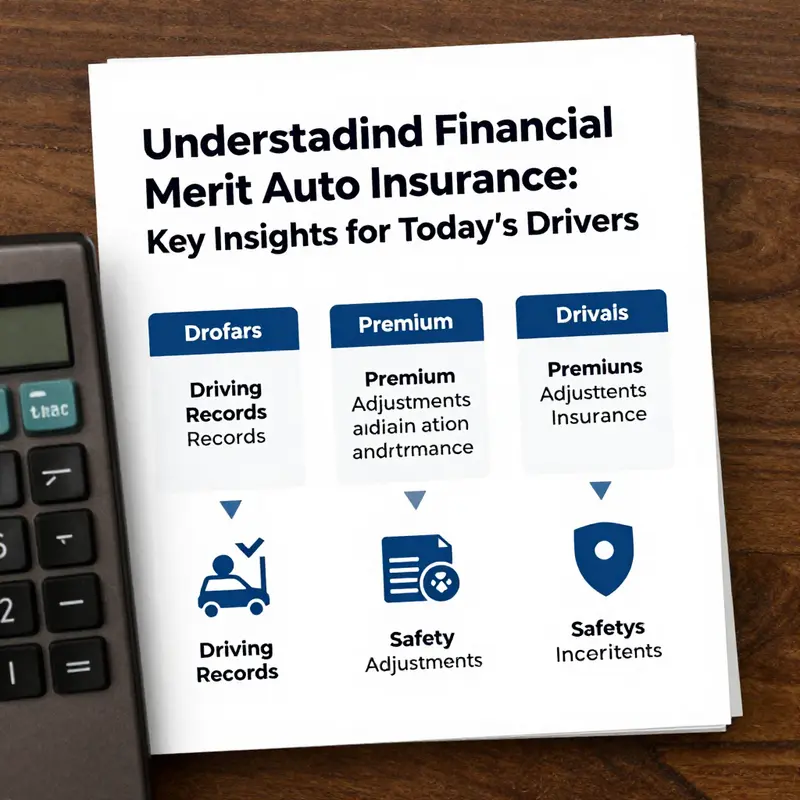
Financial merit auto insurance operates as a disciplined calculus of risk, where the premium you pay is not a fixed price but a reflection of your personal driving behavior. In practice, this approach is often described through the umbrella term merit rating. The central idea is simple: drivers who demonstrate consistent safety and responsibility over time should pay less, while those with a track record of claims or violations contribute more to the pool that funds coverage. This creates a market-driven balance. It rewards prudence and, in turn, incentivizes safer roads. Yet the mechanics behind the idea are subtle and deeply rooted in actuarial science, where historical data inform the likelihood of future claims. The result is pricing that is meant to match risk, not just a policy’s face value, which is why financial merit matters to a broad spectrum of drivers, not only the cautious minority.
At its core, financial merit is a forward-looking assessment built on a timeline of past behavior. The longer a driver remains accident-free and free of major infractions, the greater the potential discount. A widely cited principle in merit rating is that a driver’s rate benefit grows with the length of time the risk has stayed accident-free. In many systems, the maximum credit appears after a window of several years, with five to two years often cited as the span that yields the strongest discount. This structure formalizes a simple truth: safer driving tends to reduce the probability of future losses, and insurers reward that reduced risk with lower premiums. It is not merely the absence of incidents that matters, but the consistency of responsible choices over an extended period.
To translate behavior into numbers, insurers lean on actuarial models that sift through enormous data sets. They compare projected claim costs with actual historical outcomes to estimate future cash flows. Key inputs include driving history and a range of demographic and vehicle-related factors. Age, where you live, the type of car you drive, and even the typical miles you log can influence the expected risk. In some jurisdictions, lenders or insurers also factor in credit-based insurance scoring. The premise is that financial behavior, reflected in credit history, correlates with the likelihood of filing claims. While this correlation is disputed by some, many markets incorporate it as part of a broader risk assessment. The overarching aim remains consistent: align premium levels with expected future costs, so the pricing pool remains financially viable while individuals pay in proportion to their risk.
The merit framework also recognizes the broader reality that insurance is not only about past incidents. A clean record signals low probability of future harm. Conversely, a history peppered with accidents, tickets, or frequent claims suggests higher risk. An insurer’s task is to separate the signal from the noise: identify which past behaviors most reliably forecast future loss. By doing so, they can adjust pricing to reflect the true cost of covering a given driver. This risk-based pricing is widely regarded as a cornerstone of modern auto insurance. It is designed to be fair, not merely punitive. The fairness rests on the idea that those who take care to prevent harm contribute less to the risk pool, while those who present greater risk shoulder a larger portion of the cost.
For many drivers, the practical consequences of financial merit extend beyond a lower or higher monthly payment. Some insurers offer tangible benefits to low-risk customers, such as faster claim handling or access to enhanced roadside services. While the specifics vary, the idea is to confer a small but meaningful advantage to those who stay within the safest lanes of driving. The broader implication is a customer experience that rewards ongoing good behavior with more than just a cheaper policy. It creates a feedback loop: better driving behavior lowers price, which makes responsible choices more attractive, reinforcing safer habits over time. In markets where merit rating is deeply embedded, this loop can shape everyday decisions, from how rigorously a driver adheres to speed limits to whether a driver takes a defensive driving course after a close call.
The benefits of merit-based pricing are most visible when one considers how it interacts with the behavior of different groups of drivers. A driver who avoids accidents and minimizes claims over several years is statistically less likely to require a costly payout in the near future. Their premiums reflect that reduced risk, creating a virtuous cycle: less risk, fewer premium hikes, and more money left in the budget for essential expenses. At the same time, drivers with a history of accidents or multiple claims face higher costs, which can be a powerful financial incentive to adjust behavior. This influence extends beyond the policy itself. It shapes the way households budget for transportation, plans for potential emergencies, and even engages in decisions such as whether to swap to a car with safer safety features or implement more stringent maintenance practices.
Yet merit rating also raises questions about privacy and fairness. The reliance on personal histories means that a single unfortunate year can leave a lasting imprint on a premium, sometimes more than one might intuitively expect. Errors in records or misinterpretations of events can distort risk assessments. Additionally, the topic of credit scores as a predictor of risk remains controversial in some regions, leading to ongoing debates about the balance between predictive power and potential inequities. The conversation around merit pricing, therefore, intersects with regulatory choices and consumer protections. Some jurisdictions emphasize stability and affordability for broad segments of drivers, while others emphasize precision in risk discrimination, accepting greater variability in premiums as the price of targeted pricing.
In the Canadian context, merit rating has found a receptive environment in which the Canadian Merit Rating Plan has operated for years. The essence of that system is direct: premiums adjust in response to individual risk profiles. Clean records translate into lower rates, while poorer histories result in higher costs. This creates a real, tangible consequence for driving behavior: safe habits lead to money saved on the annual cost of coverage. The CMPR model illustrates how merit-based pricing can function at scale within a national insurance framework. The approach emphasizes fairness through individualized pricing rather than broad, one-size-fits-all rate structures. It is a practical demonstration of how risk-based pricing can align financial outcomes with driving behavior while maintaining policy availability for a broad cross-section of drivers.
Even as merit rating anchors pricing, insurers continuously refine their models. They test assumptions against observed outcomes, adjusting for shifts in driving patterns, urban development, vehicle safety features, and traffic dynamics. The inclusion of more nuanced variables reflects a broader trend in the industry: moving toward a more refined understanding of risk. This evolution does not erase the central premise—that risk, measured through history and correlated with future behavior, should drive premiums—but it adds layers of sophistication. In this sense, financial merit is not an immutable formula. It is a living framework that adapts as data and practice evolve, always tethered to the core objective of aligning costs with expected losses while encouraging safer driving.
For readers seeking practical perspective beyond the abstract, consider how to engage with merit-based pricing in your own life. The first step is to understand your record thoroughly. Check your driving history for accuracy and address any errors promptly. If you have a history of at-fault accidents, consider how time and perhaps education or defensive driving courses can reduce risk in the eyes of insurers. Time is a critical variable; the longer you remain accident-free, the more you can expect to see your rate trend downward as the merit discount compounds. Financial discipline in the broader sense—keeping up with vehicle maintenance, avoiding high-risk driving behaviors, and planning for safe miles—translates into tangible benefits when premiums are calculated through a merit framework.
From a policy design standpoint, the merit approach embodies a balance between individual responsibility and collective risk sharing. It incentivizes personal mitigation of risk while ensuring that the insurer’s claims pool remains solvent and capable of covering losses. The result is not a punitive system but a risk-sensitive mechanism designed to reflect the reality that not all drivers carry the same probability of incurring a loss. While it creates clear winners and losers, the underlying logic is to align the cost of coverage with the likelihood of requiring a payout. The policyholder who steers clear of claims over time becomes financially rewarded, while those who encounter higher risk learn to adjust behavior accordingly. This is the practical heartbeat of financial merit in auto insurance—a framework built on the premise that prudent choices reduce overall costs for the entire system, not just the person paying the premium.
For readers who want to explore the broader landscape of risk management and financial planning alongside auto insurance, resources such as dedicated knowledge hubs can offer helpful context and tools. Take a moment to explore a trusted knowledge repository that focuses on financial matters and personal finance for transportation. It can provide a complementary lens on how risk assessment, budgeting, and disciplined planning intersect with insurance costs. Davis Financial Advisors knowledge hub.
In sum, financial merit auto insurance represents a pragmatic approach to pricing that recognizes the imperfect predictability of human behavior while still rewarding consistency and caution on the road. It is a mechanism that translates years of responsible driving into tangible, recurring savings and creates cultural incentives for better habits. It is not a flawless system—no pricing model ever is—but it remains a central pillar of the modern insurance marketplace, where risk is a living variable and premiums reflect not only past events but the ongoing probability of future losses. Understanding this framework helps drivers navigate their options with clarity, making it easier to make decisions that reduce costs and improve safety in equal measure. External resources and ongoing industry dialogue can deepen this understanding, enabling more informed choices about coverage, risk management, and long-term financial well-being.
External resource: http://www.meritinstn.com
Numerical Reasoning in Auto Insurance: Real-Time Behavior and Financial Merit
Auto insurance pricing now blends risk history with observed driving behavior. Instead of a simple ledger of accidents and tickets, many markets are moving toward real-time data streams that reflect how a car is actually driven. Telematics devices or smartphone apps measure speed relative to limits, braking smoothness, acceleration patterns, time of day, and total mileage. Each measurement contributes to a driving score that informs pricing. In usage-based insurance (UBI), this score is central to premiums, rewarding safer, more predictable behavior with lower rates and flagging riskier patterns with higher costs. This shift turns financial merit into a forecast of future risk rather than a retrospective tally. Empirical studies, including recent PMC work, show that driving-behavior signals improve risk stratification beyond claim history alone. The results are more tailored pricing, incentives to maintain safe habits, and greater transparency about how costs are derived. Privacy, consent, and data governance remain critical to ensure fairness and trust. Finally, drivers are encouraged to engage with their policies as living documents, adjusting their behavior and preferences to balance cost, privacy, and coverage.
What Really Shapes Your Financial Merit: The Factors That Set Auto Insurance Premiums
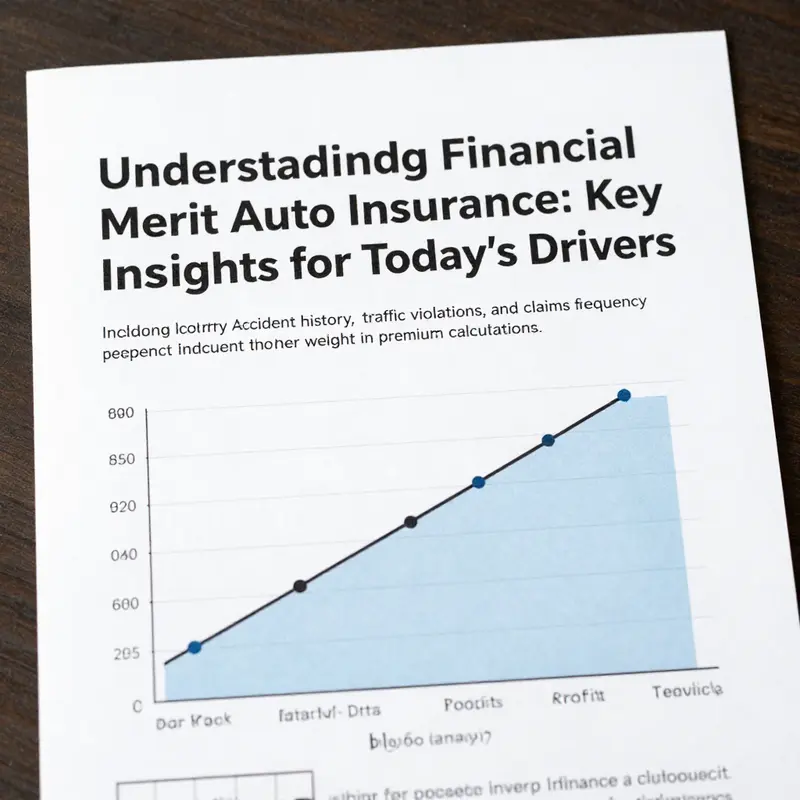
How Insurers Translate Behavior into Premiums
Financial merit in auto insurance is not a single score or a mysterious penalty. It is a calculated reflection of how likely you are to generate claims, and how much those claims will cost. Insurers build that picture by combining your personal driving history, the vehicle you drive, where you live, and broader economic and industry forces. Each factor nudges your premium up or down. Together, they determine whether you look like a safe investment or a high-risk exposure on a policyholder roster.
At the core is the driving record. Insurers treat traffic violations, at-fault accidents, and claim frequency as primary signals. A clean record signals low frequency of costly events, and that typically produces lower premiums. By contrast, speeding tickets, DUI convictions, and repeated at-fault collisions increase the probability that you will file claims. Insurers usually review three to five years of history when setting rates. That window matters: a recent infraction carries more weight than something that happened years ago. Small incidents can stack. A single minor ticket may not move a premium dramatically, but multiple incidents create a pattern. Filing claims also influences pricing. Even no-fault claims can register as increased risk for some companies. Because insurers price for future losses, the record that shows how often you sought payment matters as much as the severity of past payouts.
Parallel to driving history is a credit-based insurance score, which many insurers use in pricing. This score is distinct from a traditional credit score. It focuses on patterns that correlate with claim behavior, like timely bill payments and stable credit usage. Studies link higher credit-based scores with lower claim frequency. Where this tool is permitted, it often counts for a meaningful portion of the rate calculation. However, regulation varies by state or province. In some places, the use of credit information is limited or banned. If your jurisdiction restricts this practice, your premium will rely more heavily on driving and vehicle factors.
The vehicle itself changes the math. Make, model, age, and installed safety systems all influence expected claim costs. Luxury and performance cars have higher repair bills and replacement part costs. Vehicles with advanced driver-assistance systems (ADAS) offer safety benefits, but they also bring higher repair and recalibration expenses after collisions. A modern bumper with integrated sensors can triple a repair bill compared with older parts. Newer cars can therefore cut premiums through safety credits, while also increasing them through higher replacement costs. How you use the vehicle matters too. Daily commuting, ridesharing, or business use increases exposure. Parking in a secure garage versus on the street is relevant. High annual mileage raises the probability of wear-related incidents and collisions, so insurers usually reward lower mileage with cheaper rates.
Location is a major, but often uncontrollable, factor. Urban drivers face denser traffic, more theft, and more claims tied to vandalism. Rural drivers may see lower collision frequency but face different risks, like wildlife strikes or limited emergency response. Local crime rates and even ZIP code-level trends feed into rate models. Natural disaster exposure also changes premiums. Living in an area prone to floods, hail, or wildfires raises the expected frequency and severity of non-collision claims. Because insurers evaluate aggregated risk across neighborhoods, moving even a few miles can materially change your premium.
Outside the individual factors, macroeconomic and industry trends shift pricing for everyone. Inflation affects parts, labor, and total repair costs. When repair costs climb, insurers face larger claim payouts. That pressure often results in rate increases. The rising complexity of modern vehicles has amplified this effect. ADAS and integrated electronics have increased average repair bills. Combined with labor cost pressures and parts supply constraints, these trends have pushed insurers to adjust premiums across the board.
Insurance companies themselves add another layer. Their underwriting standards, reinsurance costs, and profitability targets all play roles. If an insurer experiences a period of high losses, it may tighten underwriting or raise prices. Conversely, competitive pressure can result in price cuts to win market share. Underwriting rules determine who qualifies for certain rates or discounts. Some firms offer forgiveness programs, accident-free discounts, or usage-based pricing that can help lower premiums for safe drivers. Others may withdraw certain products from high-risk territories. These business decisions create variance in pricing between companies even for identical driver profiles.
Understanding which elements you can influence helps you act where it matters. Your driving behavior is the clearest area of control. Avoiding violations and reducing at-fault incidents will steadily improve your record and lower your premium over time. Enrolling in defensive driving courses can sometimes remove points and earn discounts. Monitoring and improving your credit-based insurance score is another practical step where applicable: timely payments, low credit utilization, and a stable credit history can have measurable effects on cost. Selecting a vehicle with strong safety ratings, lower repair costs, and modest replacement values helps too. If you own multiple vehicles, placing the highest-risk drivers in the least costly cars can reduce household premiums.
There are also strategic choices in how you buy coverage. Shopping around regularly matters because insurers weight these factors differently. Policy bundling, such as combining auto and home coverage, often results in meaningful discounts from many insurers. Increasing deductibles can lower premiums, but only if you can afford the higher out-of-pocket cost after a claim. Usage-based programs let insurers monitor real driving and offer rewards for low-risk behavior. If your driving is conservative, these programs can provide direct savings.
Some factors remain out of your hands. Your ZIP code, statewide regulation on credit use, and macro trends like inflation are structural drivers you cannot change quickly. Awareness of them, though, helps set realistic expectations. For example, if a region experiences a surge in thefts or severe weather, expect premium pressure. Likewise, broader auto repair inflation will affect most policyholders, even those with pristine driving records.
For specialized vehicles or commercial use, financial considerations become more complex. Ownership of heavy vehicles or trucks, for example, introduces distinct cost and risk dynamics. Managing the finances of truck ownership requires attention to maintenance, insurance classification, and usage patterns to keep premiums manageable. Useful resources on that subject can guide decisions about vehicle selection, coverage limits, and cost allocation. See this primer on managing truck ownership finances for deeper guidance: managing truck ownership finances.
When you weigh these elements together, two themes emerge. First, insurers price for expected future cost. They blend individual signals, vehicle exposure, geographic risk, and market dynamics to estimate that cost. Second, while many forces are systemic, meaningful levers to lower your premium exist. Clean driving, responsible claims behavior, credit stewardship where permitted, thoughtful vehicle choice, and savvy shopping can all improve your financial merit.
To act deliberately, track your driving record and insurance history. Ask insurers how they weight credit-based scores and what specific discounts they offer. Compare quotes annually, and consider usage-based plans if you drive infrequently. When you change vehicles, inquire about safety feature discounts and repair cost expectations. Finally, remember that short-term fixes are rare in insurance pricing. Improving your financial merit is a steady process. Over time, consistent safe driving, careful financial habits, and strategic coverage decisions combine to produce the lower premiums that reflect a lower expected cost to insurers.
For a broader view of the market forces currently affecting premiums, including inflation and repair cost trends, see this analysis on why premiums are rising: https://www.insurance.com/auto-insurance/why-car-insurance-is-so-expensive/.
Global Merit Systems: How Countries Price Driving Risk and Reward Safer Drivers
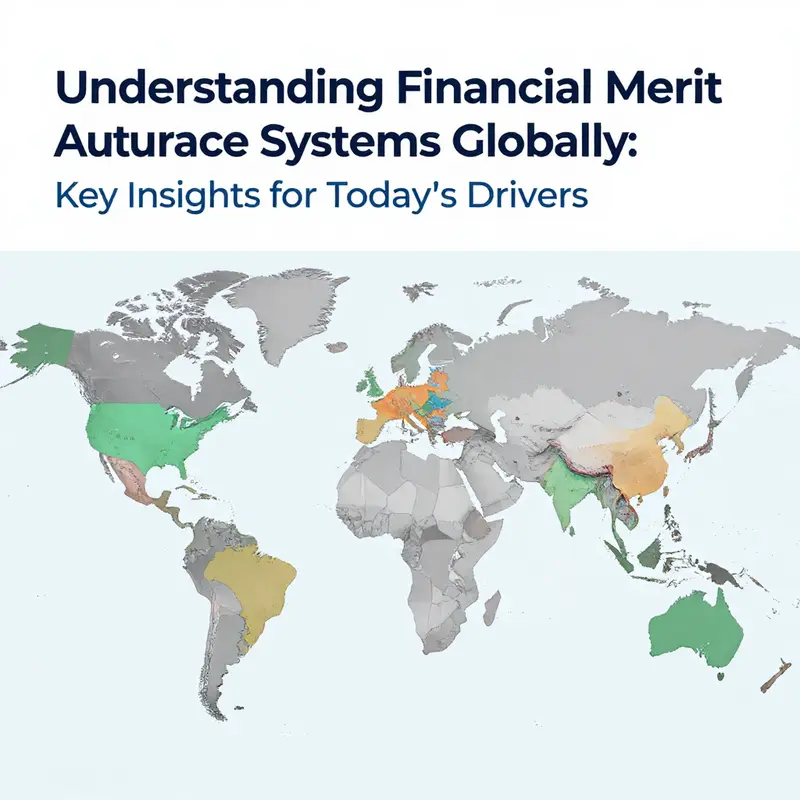
Comparing approaches to financial merit in auto insurance reveals how markets balance fairness, risk management, and technology. Across regions, insurers aim to align premiums with the true cost of risk. That alignment depends on data, regulation, distribution channels, and customer behavior. The result is a patchwork of merit-rating systems that all share the same intent: reward low-risk drivers and make high-risk drivers pay more of the cost they impose.
In developed markets, underwriting has become highly granular. Actuarial models draw on long histories of collision, claims, and violation records. Insurers factor vehicle make and model, local accident patterns, and even the time of day someone typically drives. This lets premiums reflect more than crude averages. Safer drivers get clearer rebates. Riskier drivers face surcharges that track their expected claims.
Telematics and Usage-Based Insurance (UBI) accelerate this precision. Insurers can now measure speed, braking, cornering, trip length, and mileage. Mobile apps and onboard devices collect that data. When those signals show consistent safe behavior, they convert into lower premiums. The link between observed driving and price strengthens the principle of financial merit. When telematics data is absent, insurers revert to proxy measures. Those proxies include credit-based factors in some jurisdictions, prior claims frequency in others, and demographic proxies where regulations allow them.
Emerging markets show a different trajectory. Mobile penetration has leapt ahead of legacy telematics infrastructure. Insurers and startups seize that opportunity to offer lightweight UBI products using smartphone sensors. Those products reduce friction and lower costs for customers. Yet they also expose gaps. Regulatory oversight is often immature. Claims databases may be fragmented or incomplete. That makes consistent merit-rating harder. Insurers face higher uncertainty and must price conservatively. Consumers in these markets may pay more relative to true risk. At the same time, competition and innovation gradually improve access and fairness.
Regulatory frameworks shape how merit works. Some countries limit which personal data insurers can use. Others set strict rules on rate variation to protect affordability. Where regulators allow broad use of driving and financial data, premiums can reflect individual behavior more closely. Where regulators restrict variables, pricing must rely on group-level signals. The trade-off is between personalization and social protection. Policymakers weigh fairness against issues such as privacy and market stability.
Technology transforms both sides of the ledger. Artificial intelligence improves risk segmentation and claims automation. AI can flag subtle correlations that classical models miss. It can speed claims handling and root out fraud. Those efficiencies reduce administrative costs. Some savings flow into lower premiums. Other benefits arrive as faster payout and smoother customer experience. However, AI also raises questions about explainability. Regulators in several jurisdictions now require that pricing decisions be explainable. That encourages insurers to balance algorithmic complexity with transparency.
Data governance becomes core to financial merit. Telematics data is rich and granular. It tells a story about individual trips. That story can improve fairness when used well. But it can harm consumers if mishandled. Secure storage, clear consent, and defined retention policies are essential. In regions with strong data protection laws, telematics-based merit systems often earn higher public trust. Where protections are weak, adoption stalls and regulatory intervention follows.
Distribution partnerships shape how merit reaches drivers. Bancassurance and similar models leverage existing customer relationships to distribute insurance products at scale. Banking partners bring broad customer reach and a trusted interface. That combination can lower acquisition costs and produce more competitive pricing. It also enables cross-selling of tailored merit-based products to captive audiences. In markets where insurers and banks collaborate closely, customers often see more accessible merit-based options and clearer incentives for safer driving.
A persistent global challenge is adverse selection. When merit systems are optional, the safest drivers may leave pooled products for personalized ones. That can raise costs for remaining customers. Insurers manage this through careful product design, mandatory minimum coverages, and blended rate structures. Some jurisdictions encourage broad participation by incentivizing telematics enrollment with modest immediate discounts rather than large one-time reductions. The goal is to balance fairness with system stability.
Comparisons across countries also reveal differing attitudes toward punitive versus rehabilitative pricing. Some systems impose steep surcharges after violations. Others favor graduated rehabilitation, where premiums ease if drivers improve their record. Merit systems that integrate coaching, feedback, and safe-driving rewards can reduce recidivism. Those programs often combine telematics feedback with targeted interventions. The result is lower overall claims and improved road safety. When merit aims to change behavior, it becomes a tool for risk reduction, not just cost allocation.
Cost of implementation varies widely. Sophisticated telematics and AI require investment. Insurers in mature markets amortize that cost over large customer bases. In tighter-margin environments, incumbents move slower. New entrants, however, can leapfrog legacy systems with cloud-native platforms and app-first telematics. That dynamic fuels innovation but also creates short-term market disruption. Regulators must monitor to ensure consumer protection keeps pace with technological change.
Another global divergence lies in the treatment of non-driving factors. Some places allow credit-based scoring, employment status, or home ownership as rating variables. Others consider those inputs unfair. Jurisdictions that disallow such factors force insurers to rely more on driving-specific signals. That can narrow premium variation but also blunt the incentive effects of merit-rating. The balance again reflects national choices about equity, privacy, and risk sharing.
Practical outcomes for consumers differ. In markets where merit is deeply integrated, safe drivers can see substantial savings. They earn reduced premiums simply by demonstrating consistent, low-risk behavior. In places with limited merit adoption, consumers rely more on traditional discounts such as multi-policy bundling or loyalty credits. Those rewards are less linked to actual driving performance.
The pace of global change suggests continued convergence, but not uniformity. As regulatory regimes evolve, many countries will expand their acceptance of telematics and AI. Mobile-driven UBI will grow fastest where smartphone use is high and data costs are low. Bancassurance and strategic partnerships will accelerate distribution in regions with established banking relationships. Meanwhile, regulators will refine rules on privacy, transparency, and algorithmic fairness.
For policy and industry leaders, the takeaway is straightforward. Financial merit systems can improve pricing equity and promote safer roads. But they require robust data governance, thoughtful regulation, and careful product design. When these elements align, merit-rating reduces moral hazard and rewards responsible behavior. When they do not, merit initiatives risk reinforcing inequality or generating market instability.
One practical illustration of technology shaping transport risk is the growing use of AI in logistics and mobility systems. Initiatives that integrate AI into freight and passenger transport influence how insurers estimate exposure for commercial fleets. For a deeper look at how AI is reshaping transport and logistics, see this analysis of a transport AI initiative linked here: Transforming Transport AI initiative.
Overall, comparing financial merit systems across countries reveals a common aspiration. Markets want to price risk accurately and incentivize safer driving. The route each market takes depends on technology, regulation, and distribution. As global auto insurance grows, these differences will shape how quickly and how fairly merit-based pricing becomes the norm. For a detailed market outlook and projections on global auto insurance growth, consult the market report cited here: https://www.grandviewresearch.com/industry-analysis/auto-insurance-market.
Evolving Merit: How Financial Merit Auto Insurance Will Change with Technology, Costs, and Fair Pricing
Evolving Merit: How Financial Merit Auto Insurance Will Change with Technology, Costs, and Fair Pricing
Financial merit auto insurance, at its core, ties premiums to an individual’s driving risk and financial responsibility. Over the next few years, that connection will tighten and become more dynamic. Insurers will move beyond simple historical scorecards and toward systems that read risk in near real time. This shift does not happen in a vacuum. Rising repair costs, vehicle complexity, workforce shortages, and powerful new analytics tools are converging to reshape pricing, underwriting, and how merit is measured.
Economic pressures are the immediate force shaping change. Repair and replacement parts cost more. Labor shortages lengthen repair timelines and raise hourly rates. Even minor collisions often produce large bills because modern cars include advanced driver-assistance systems. Replacing or recalibrating sensors, cameras, and radar modules multiplies claim costs. Those increased payouts force carriers to refine how they assign financial responsibility. Merit systems will need to account not just for whether a driver caused a collision, but how the vehicle involved amplifies the financial consequences of that event.
At the same time, insurers are embedding technology into every step of the risk lifecycle. Predictive analytics now ingest far broader datasets than traditional claims and ticket histories. Insurers fuse telematics, smartphone sensors, and fleet data to profile driving patterns with much finer granularity. These data sources let carriers reward consistent, low-risk behaviors such as smooth braking, steady speeds, and prudent route choices. They also allow for quicker detection of changes in driving risk, enabling premiums and policy conditions to adjust more responsively.
Generative AI is accelerating operational gains. Weaknesses in customer service, claims triage, and document handling are being addressed by models that draft responses, summarize accident reports, and suggest plausible repair outcomes. That reduces administrative friction and shortens claims cycles. For financial merit systems, faster and smarter handling means claims histories become reliable inputs sooner. Instead of penalizing a driver weeks or months after an incident, merit adjustments can reflect resolved outcomes and contextual details that matter for fair pricing.
Cloud adoption and interconnected platforms enable insurers to scale these capabilities. Cloud systems host large models and datasets, support real-time computation, and let carriers share anonymized insights across portfolios. This reduces the friction of deploying complex merit-rating tools and helps smaller insurers participate in advanced risk modeling. As cloud-powered analytics become standard, the cost of implementing personalized merit systems falls, making dynamic pricing accessible to a wider range of insurers and consumers.
One of the most consequential innovations is the rise of digital twins. A digital twin creates a virtual replica of a vehicle or fleet, mapping its physical condition, usage, and exposure over time. For insurers, this opens the possibility of calculating premiums based on a simulation of risk rather than a static record. Digital twins incorporate maintenance records, equipment configurations, installed safety features, and behavioral telemetry. They enable scenario testing: how would a particular routing pattern, combined with a specific vehicle configuration, change expected losses? This level of modeling supports precision pricing that aligns premiums closely with actual risk.
This precision matters because consumers increasingly expect transparency and fairness. Drivers who take specific actions to reduce risk—installing safety equipment, completing defensive driving courses, or choosing lower-risk routes—want measurable benefits. Merit systems that can quantify those choices will build trust. When customers see a clear line between safer behavior and lower premiums, they are more likely to buy into telematics programs and share necessary data.
The market response will produce new forms of product design. Insurers will shift from static policies toward embedded, usage-based coverages that blend with mobility services. Fleet operators, for example, will receive layered offerings that combine risk mitigation services with insurance. Personal drivers will be offered flexible policies that change by the month, day, or even trip, matching cost to exposure. Those offerings will be financed by merit systems that continuously evaluate behavior, vehicle risk, and environmental context.
But the path to a data-driven merit system is not frictionless. Privacy and data governance present real obstacles. Consumers must trust that their driving data is handled securely and used fairly. Regulators will scrutinize models to prevent discriminatory pricing that could disproportionately affect certain groups. Insurers will have to implement transparent model explanations, clear consent frameworks, and robust anonymization when sharing pooled insights. Those safeguards will shape which data streams become mainstream inputs to merit calculations.
Regulatory frameworks will also influence how quickly dynamic merit systems scale. Some jurisdictions encourage individualized pricing and reward innovation, while others impose constraints to protect vulnerable consumers. The balance between fairness and affordability will determine whether flexible merit mechanisms become the norm. Insurers will need to demonstrate that their models are predictive, not punitive, and that they enhance equity by offering more precise risk allocation rather than excluding higher-risk drivers outright.
Operationally, the industry must grapple with claim severity inflation and driver shortages. When costs per claim rise, actuarial models must evolve to separate behavioral risk from vehicle-driven cost risk. Two drivers with identical records might produce very different claims simply due to the vehicles they operate. Merit rating models will therefore place greater weight on the intersection of driver behavior and vehicle attributes. This means reward structures will favor drivers who operate safer, less costly-to-repair vehicles, and who maintain preventive upkeep.
For commercial fleets, merit will focus on holistic performance. Telematics and digital twins let fleet managers identify risky routes, schedule preventive maintenance, and optimize driver assignments. Insurers will offer incentives that tie premium reductions to measurable safety investments. That includes training programs, maintenance schedules, and even route planning tools. Those collaborative models create a feedback loop: better operations reduce claims, which lowers costs and preserves access to affordable coverage.
A related trend is the integration of insurance into broader mobility services. As vehicles become part of shared and connected ecosystems, insurance follows the flow of use. Merit systems will need to adapt to multi-modal exposures and transient users. Short-term drivers in shared fleets will be assessed through aggregated behavior metrics and platform-level controls. Underwriters will design merit criteria that can operate at both the individual and asset level, ensuring fairness without compromising the viability of shared mobility models.
By 2026 and beyond, merit systems will look less like scorecards and more like living profiles. Insurers will record and reward incremental improvements. Customers will receive actionable guidance on how to lower their premiums through specific, verifiable steps. This evolution will drive participation in telematics programs as the perceived value rises. When drivers see tangible reductions in cost tied to concrete actions, the incentive to share data and adopt safer practices grows.
The transformation also creates new roles for insurers as partners in mitigation. Carriers will co-design safety solutions with manufacturers, fleets, and routing platforms. They will offer bundled services that combine insurance with maintenance alerts, sensor-based diagnostics, and behavior coaching. Those services reduce losses and reinforce the merit signals that underpin the pricing model.
All these changes point to a more equitable and efficient insurance landscape. When premiums reflect actual behavior and vehicle risk, low-risk drivers receive fairer rates. High-risk drivers face clearer pathways to improve their standing. That said, progress depends on thoughtful implementation. Insurers must balance innovation with transparency. Regulators must ensure models do not institutionalize bias. Consumers must be able to opt in with confidence.
For readers interested in how market-wide pressures are already pushing these shifts, a recent industry review outlines how rising costs and structural changes are affecting rates and risk allocation. See the coverage of market trends for further context: https://www.insurancejournal.com/news/international/2026/01/07/534828.htm
For organizations exploring how AI-driven logistics and mobility initiatives influence insurance models, additional perspectives on technological impacts are available in insights on transforming transport: AI initiative shaping the future of logistics at Transforming transport: AI initiative shaping the future of logistics.
This evolving landscape will reward strategic thinking. Insurers that combine precise analytics, clear customer value, and strong governance will lead. Drivers who engage with merit programs and act on tailored guidance will gain lower premiums. The result will be a more responsive insurance ecosystem, where merit truly reflects both behavior and the changing cost environment of modern vehicles.
Final thoughts
Ultimately, financial merit auto insurance represents a pivotal shift in how risk is perceived and managed within the auto insurance industry. By prioritizing safe driving behavior and responsible financial practices, this system not only rewards individual drivers but also fosters a culture of safety on the roads. As we move forward, understanding these nuances will empower you—whether as a car buyer, dealership owner, or fleet manager—to make informed decisions that benefit both your finances and driving standards. Embracing the principles of merit rating can transform the insurance landscape into one that is fairer and more conducive to promoting safety and accountability.