
Understanding which auto insurance policy provides better financial protection is crucial for individual car buyers, auto dealerships, franchises, and small business fleet buyers. In an unpredictable world, having the right coverage can make all the difference after an accident or unexpected vehicle damage. This article explores critical aspects of auto insurance policies, focusing on liability limits, comprehensive and collision coverage, uninsured and underinsured motorist protection, and evaluation tools to guide your decision. Each chapter aims to equip readers with the knowledge necessary to make informed choices, ensuring they select a policy that aligns with their financial goals and risk tolerance.
Beyond Compliance: The Liability Pillar of Auto Insurance and How It Shields Your Finances
Liability coverage is not just a checkbox on a policy; it is the foundational shield that determines how well you will weather the financial consequences of an accident. When you are at fault in a crash, liability protection steps in to cover the medical expenses of others and the repair costs to their property. This is the core mechanism that prevents potentially ruinous out-of-pocket bills from cascading into debt and even bankruptcy. In practice, liability coverage is structured with two bodily injury limits—per person and per accident—and one property damage limit. These figures describe how much the insurer will pay to others on your behalf after an eligible incident. Understanding these limits is essential because they translate directly into the real-world affordability of a crash, not merely the technicalities of a policy document. The way those numbers translate into financial protection matters for everyone, regardless of how carefully you drive or how well you maintain your vehicle. The difference between the state minimums and higher liability limits is not merely theoretical; it is a concrete safeguard against the unpredictable, expensive costs that can accompany severe collisions. When you examine the landscape of auto insurance, you quickly see that the minimum limits set by state laws vary widely, and in many cases they leave a large gap between what is legally required and what could be required in a serious crash. The per-person bodily injury limit, the total bodily injury limit per accident, and the property damage limit together determine the ceiling of protection for others’ expenses that you would be responsible for should you be found at fault. The practical implications become clear when you walk through a representative scenario. Imagine a crash that results in multiple injured parties and substantial vehicle damage. If the accident triggers medical costs, rehabilitation needs, and property repair bills that exceed your policy’s per-accident bodily injury limit and property damage limit, the excess could fall to your own assets. Even with a well-maintained emergency fund, the gap can be painful, forcing you to draw from savings, retirement funds, or line up financing to cover the remainder. In many households, those outlays would be large enough to threaten financial security, especially if the injured parties pursue lengthy treatment plans or if the incident has broader implications such as lost wages. The stark reality is that inadequate liability limits can convert what should be a shared public responsibility into a personal financial crisis. The structure of liability coverage makes a powerful statement about risk management: it recognizes that accidents happen, that costs can be unknown until they occur, and that the most responsible choice is to plan for protection that is robust enough to cover the worst reasonable outcomes. For most families, this means shifting away from the bare minimum and toward higher limits that align with the value of assets and ongoing financial obligations. In assessing personal risk, several factors come into play. The size of your savings, the equity in your home, your retirement accounts, and any contingent liabilities all influence how much liability protection you should carry. If your financial picture includes dependents or expectations of future expenses, the prudence of higher liability limits becomes even clearer. A policy that offers, for example, 100,000 dollars per person and 300,000 dollars per accident for bodily injuries, plus 100,000 dollars for property damage, creates a stronger buffer than the typical lower limits found in many states. It is a straightforward way to reduce the chance that a serious crash would erode your financial footing and force uncomfortable choices about assets you have worked hard to build. Yet liability protection does not exist in a vacuum. It is part of a broader risk management strategy that includes protection for your own vehicle and your own medical expenses, along with protections against situations where others lack adequate insurance. Comprehensive and collision cover your own car in nonfault situations, and they shield you from repair costs that would otherwise be borne directly by you. Optional coverages such as uninsured/underinsured motorist protection address a different, but equally important, risk: being hit by a driver who lacks sufficient coverage to pay for damages and injuries. In combination, these components form a more complete financial safety net that reflects the reality that accidents are not one-dimensional events. They involve medical costs, vehicle repair or replacement, lost income, and sometimes long-tail expenses that can accumulate quickly. The value of higher liability limits grows as your life and assets evolve. It is not merely a question of what you can pay out of pocket today, but what you could owe should a complicated incident unfold. The decision to increase liability limits is deeply personal and tied to your risk tolerance. It also benefits from a practical approach: use available tools to compare options across insurers and policies, and examine the tradeoffs between price and protection. A thoughtful comparison process helps identify an appropriate balance between affordable premiums and strong financial protection. This is where the broader concept of financial protection comes into clearer focus. Liability is essential, but it sits within a suite of coverages that together determine how much you can absorb after an accident. Broadly speaking, one should consider not only the liability limits but the ways in which your overall policy capacity translates into real-world resilience. A higher liability limit reduces the risk of an expensive, protracted legal or medical bill exhausting your savings. Yet the premium attached to higher limits can be meaningful, particularly for drivers with moderate incomes or low cash reserves. The choice, therefore, is not simply about chasing the maximum number but about constructing a policy configuration that reflects both your financial reality and your comfort with risk. In the framework of a comprehensive auto policy, liability serves as the baseline of protection. It guarantees that the core financial obligations to others are covered, while other coverages address the costs that arise from your own car and your own well-being. When you consider the total package, you may find that a policy with stronger liability limits paired with robust comprehensive and collision coverage offers a more stable long-term financial position than a policy that relies on lower liability limits but saves a little on premium. The practical takeaway is to ground your decision in a structured risk assessment rather than a price-only mindset. This means evaluating the value of your assets, the likely costs you would face in a major crash, and how much you are willing and able to reserve for insurance over time. It also involves understanding how insurers price risk and what options exist for customizing the policy to better align with your circumstances. Insurance agents remind clients that each insurer may offer different price points and different combinations of discounts and coverages. That variability underscores the importance of shopping around and reviewing multiple quotes to gauge what is realistically available in your region and how much protection you can secure for the premium you are comfortable paying. While it is tempting to anchor on a single number, the more prudent approach is to think in terms of protective capacity. The maximum umbrella of protection should consider the worst plausible costs in your life context, including medical expenses for others, long-term recovery needs, and potential property losses. With stronger liability limits, you create a buffer that reduces the chance that an accident turns into a financial catastrophe, and you increase the odds that you can maintain financial stability during a period of disruption. At the same time, remember that liability protection is only one piece of the broader protection puzzle. A well-rounded policy balances liability with protection for your own vehicle and, where appropriate, for your personal medical expenses. This holistic approach contributes to a more resilient financial posture after any incident. For those who want a more explicit way to anchor their decisions, consider how different coverage configurations align with your life stage and asset base. A younger driver may prioritize affordability while maintaining adequate limits, gradually increasing protection as income and assets grow. A high-asset household or a driver with substantial financial responsibilities may justify higher limits from the outset, accepting the premium as a prudent investment in security. A practical step in this process is to periodically review your policy and re-run the numbers as your circumstances change. Changes in income, debt levels, or family structure can shift the point at which higher liability limits become worth the extra cost. Insurance selection becomes less about chasing a universal standard and more about tuning a personal protection dial. As you refine your decision, consider how liability interacts with the other elements of a policy. The cost of uninsured/underinsured motorist protection, for example, depends in part on how thoroughly you assess your exposure to the risk of other drivers without adequate insurance. Medical protection options, such as personal injury protection or medical payments coverage, influence how well you can manage medical expenses not covered by liability. The more you understand these layers, the better you can design a policy that protects your financial security in a practical, rather than theoretical, sense. When it comes to selecting the right balance, the role of technology and information becomes essential. Online quote tools can illuminate the tradeoffs between higher coverage levels and premium costs, making the decision less opaque. They help you compare how changes in liability limits, deductible amounts, and the inclusion of optional coverages affect the total cost and the degree of protection. In this sense, the process of choosing a policy becomes an informed negotiation between cost and security. For individuals who want a concrete, asset-centered framework, the idea is straightforward: treat liability limits as the primary vessel for protecting your most valuable possessions, then layer on coverage that addresses the specific risks you face. If you own valuable assets or carry dependents, leaning toward higher liability limits often makes sense, especially if you want to shield those assets from potential claims. If risk tolerance is lower and financial buffers are thinner, it may be wise to pursue a policy with more conservative liability limits and a strong addition of UIM and PIP where available. The interplay among limits, deductibles, and coverages is the practical language of protection. It translates abstract risk into tangible outcomes when a claim is filed and settled. A policy that prioritizes strong liability limits, paired with comprehensive protection for your own vehicle and stimulus for recovery, demonstrates a proactive commitment to financial security that aligns with responsible vehicle ownership. In sum, the liability portion of auto insurance is not simply a regulatory formality. It is a substantive commitment to safeguarding your financial future in the event of an accident. The most protective configurations tend to be those that offer higher per-person and per-accident bodily injury limits along with a solid property damage cap, complemented by broad coverage for your own vehicle and optional protections that address the broader ecosystem of risk, including underinsured or uninsured drivers. Consumers should approach this decision with a clear sense of their asset base and their tolerance for risk, drawing on tools to compare options across providers and to understand the real-world implications of different coverage levels. For those seeking a more holistic view of how to align liability decisions with broader financial planning, a broader look at asset management and risk transfer can illuminate the paths available beyond basic policy design. See the resource page that discusses broader financial considerations in asset ownership and risk management for drivers who balance personal finances with transportation needs. Finally, a practical reminder remains: the best auto insurance policy for financial protection is not the one with the highest price tag or the lowest. It is the one that matches your financial reality while providing a robust shield against the most likely and most costly consequences of an accident. To explore a structured approach to understanding asset protection in the context of vehicle ownership, you can consult resources such as Managing Truck Ownership Finances, which offers perspectives on risk transfer and financial planning within transportation. Managing Truck Ownership Finances. For further reading on liability car insurance coverage and its role in protecting others and your finances, consider official explanations that outline how liability limits work and why they matter in real-world claims. External resources can provide a grounded, standard-based view of how these protections are designed to function in typical scenarios. External resource: https://www.statefarm.com/auto/liability-car-insurance
Fortifying Your Auto Wallet: A Cohesive Case for Comprehensive, Collision, and Thoughtful Liability in Real-World Protection
Choosing an auto insurance policy is not about chasing the lowest monthly premium. It is about constructing a resilient financial shield that stands up to the unpredictable costs of a crash, a theft, or the ripple effects of an accident that injures others. The central question—which auto insurance policy offers better financial protection—has a practical answer only when you move beyond the numbers on a page and examine the conditions that govern your life, your car, and your bank account. In this sense, better protection means a balanced combination: ample liability limits to cover potential lawsuits, robust physical-damage coverage to repair or replace your own vehicle, and a thoughtful set of add-ons that guard you against gaps that rarely stay theoretical when real-world events unfold. This chapter follows that logic, threading together the core ideas of liability, collision, comprehensive coverage, and optional protections into a cohesive framework you can apply as you assess quotes, negotiate with insurers, and plan for the financial stress of an accident or a sudden loss.
Liability protection is the backbone of any responsible policy because it speaks to a car owner’s duty to others. If you are at fault in a crash, bodily injury liability and property damage liability determine how much of the resulting costs your policy will cover. State minimums, while legally sufficient in many jurisdictions, often fall short when the severity of an crash exceeds a few tens of thousands of dollars. The typical state minimums—sometimes expressed as a modest per-person or per-accident limit for bodily injury and a separate limit for property damage—can leave you financially exposed to large medical bills, rehabilitation costs, or damage to other vehicles and property. In contrast, higher liability limits act as a financial shield that reduces the risk of a catastrophic claim depleting your savings or triggering a lawsuit that undermines long-term financial security. A policy offering $100,000 per person and $300,000 per accident for bodily injury, combined with $100,000 of property damage liability, exemplifies a level of protection that aligns more closely with the costs of modern care and repair, particularly in regions where medical expenses trend higher than a generation ago. Even this level is not a universal guarantee against risk, but it serves as a prudent baseline when you measure what you might stand to lose in a serious incident. In practice, the decision to raise liability limits should consider not only your assets but also your earning potential and the size of possible settlements or judgments that a jury could award. This is especially true if you carry a mortgage, save for retirement, or depend on a steady income that could be garnished or diverted to satisfy a debt arising from an collision.
But a strong liability backbone still leaves a blind spot if you do not protect your own car from damage that you sustain or that happens outside the fault line of another driver. This is where comprehensive and collision coverage steps in as a practical necessity. Collision coverage covers the repair or replacement of your vehicle after a crash, regardless of fault, as long as the driving event involves another vehicle or a fixed object—think of the guardrail, a tree, or a pole. Comprehensive coverage, by contrast, protects against non-collision perils that are increasingly common and often less predictable: theft, vandalism, fire, severe weather events, and damage from wildlife. Together, these two coverages create a robust safety net that prevents a dent, a stolen key, or a totaled car from turning into a personal financial disaster. When you own a newer or more valuable vehicle, these coverages are particularly impactful. A newer car with a high replacement cost becomes substantially more expensive to repair or replace, and the premiums for collision and comprehensive reflect that exposure. In those cases, carrying both coverages makes sense as a form of self-insurance against the inevitable unexpected event, similar to maintaining a contingency fund but structured as part of your formal insurance plan. For financed or leased vehicles, the lender’s requirements can be decisive. Lenders typically mandate comprehensive and collision coverage to protect their investment, which indirectly protects your own financial position by ensuring the car remains insurable and salvageable for resale. Without these protections, you could be left with a sizable out-of-pocket bill if an accident occurs while the car is under loan, further illustrating how the practical risk calculus intersects with contractual obligations and long-term financial strategy.
The decision to purchase comprehensive and collision coverage is rarely binary; it is a graduated choice influenced by the vehicle’s value, the budget for premiums, and the potential out-of-pocket costs you are prepared to absorb in a claim. A higher deductible can lower your premium, but it also raises the upfront cost you must cover if you make a claim. This trade-off deserves careful attention because it shifts the balance of financial risk from the insurer to you. If you own a car with a modest market value, say one that could be replaced for less than a down payment on a new car, a higher deductible might be a rational option. If you still owe a loan or lease on that vehicle, you should weigh the risk of a serious loss against the likelihood of a claim and then decide whether the premium savings from a higher deductible are worth the additional cash outlay when you file a claim. On the other hand, for a newer or high-value vehicle, the theft risk and repair cost can be substantial, making full coverage with a lower deductible a prudent choice. In this judgment, the financial buffer you build with a well-structured deductible can be as important as the surrounding coverage limits.
Beyond the core trio of liability, collision, and comprehensive, a broader protection plan includes several optional coverages that address specific risks that might otherwise erode financial security after an loss. Uninsured/underinsured motorist (UM/UIM) protection is increasingly relevant as the driving population diversifies in terms of insurance coverage. If you are hit by someone with little or no coverage, UM/UIM can bridge the gap between what the at-fault driver’s policy can pay and the actual costs of medical care, lost wages, and vehicle repair. In some states, UM/UIM is offered in combination with bodily injury liability, creating a more unified shield against the financial repercussions of accidents caused by underinsured drivers. Personal injury protection (PIP) or medical payments coverage can cover medical expenses regardless of fault and can be especially valuable in jurisdictions where healthcare costs are high or where you want a faster, coverage-based response to injuries. Roadside assistance, rental reimbursement, and gap coverage for financed vehicles are additional layers that may align with your risk tolerance and lifestyle. Gap coverage, in particular, protects you when your car’s value falls below the loan balance in the event of a total loss, ensuring you do not owe money after the insurer has paid for a totaled vehicle. These optional protections do not eliminate risk, but they change the probability distribution of financial outcomes after a loss, nudging the expected value of your insurance investment toward greater stability.
To translate these structural features into real-world protection, consider how personal circumstances shape the outcome of a claim. The value of your vehicle plays a central role. A car with low resale value that is unlikely to be replaced at a similar price may not justify expensive premiums for comprehensive and collision coverage, particularly if you have a sufficient emergency fund to cover repairs or to buy a replacement unit. Conversely, a vehicle that represents a significant portion of your net worth, or one that you rely on for daily commuting with high exposure to theft or weather-related risks, will benefit from broader protections. The choice to carry higher liability limits, to include UM/UIM, and to maintain comprehensive and collision coverage should align with your capacity to absorb risk, your overall financial picture, and the potential for a long-tail financial obligation that might emerge after an crash. A practical method to assess this alignment is to look at your total risk exposure as a single number: the potential costs you could face in the wake of a significant incident. This includes medical expenses, property damage, legal costs, and the intangible costs of time and disruption. If you can reasonably cover that exposure through savings or other assets, you can temper your coverage with deductibles and premiums that fit your budget. If not, you may want to err on the side of broader coverage and higher limits, recognizing that the protected future is worth the trade-off in monthly costs.
An important element in this decision-making process is the sense of control you have when shopping for coverage. Different insurers may offer variations in the same coverage levels due to pricing, discounts, or added features. The insurance landscape is not a single uniform field; it is a mosaic of products, each shaped by actuarial assumptions, underwriting criteria, and regional risk patterns. This means that two policies with the same headline limits can differ in how they handle deductibles, claim processing speed, repair network quality, and the breadth of covered events. When you compare options, it is essential to examine not just the sticker price but the total value—the combination of premium, deductible, and the specific events that trigger payment. Tools that synthesize price and coverage levels can be helpful, but the final decision should reflect your personal risk tolerance, financial situation, and the practical realities of your daily life. It is common to start with a baseline that mirrors the average household risk: a liability structure that protects against lawsuits, a vehicle protection envelope that covers the most probable repair or replacement costs, and optional protections that address the outcomes that are less predictable but potentially costly. Then, as you gather multiple quotes, you can fine-tune the mix. The process is not merely an algebraic exercise; it is a planning exercise that forces you to articulate what you are protecting, why you are protecting it, and how much you are willing to invest to maintain that protection over the life of the policy.
The broader goal of this discussion is to illuminate how robust coverage translates into practical safety. A policy rich in liability protection and reinforced by collision and comprehensive coverage reduces the likelihood that a serious accident will derail your financial life. Yet true protection also requires a thoughtful approach to risk—one that considers your vehicle’s value, your debt, your income, and your personal comfort with risk. In many households, this means recognizing that the cheapest policy today can become a costly burden tomorrow if a major claim arises. Conversely, a more expensive policy that offers thorough coverage can deliver peace of mind and measurable financial resilience in the face of high medical costs, significant car repair bills, or a total loss scenario. Balancing these outcomes involves not just arithmetic about premiums and limits, but a clear-eyed assessment of what you would do with a large, unforeseen bill. Would you dip into savings, take on debt, or risk a lengthy legal process? The more you align your policy with your preferred risk posture, the more accurate your assessment of “better” protection becomes.
As you navigate this terrain, remember that the best policy for financial protection is rarely a single feature; it is the sum of all the protections harmonized with your life. You may find that your ideal balance involves higher liability limits to secure your legal and financial future, paired with comprehensive and collision coverage to prevent a repair bill from becoming a personal crisis. You may also decide to add UM/UIM, PIP, or other protections to close gaps that could otherwise lead to hidden costs. The consistent thread through these decisions is that you should aim for coverage that supports your capacity to rebound after a loss, not one that merely minimizes monthly payments. In practice, this means regularly revisiting your policy as circumstances change—new assets, new debts, new commuting patterns, or changes in the risk landscape—and recalibrating accordingly. The landscape of auto insurance is not static, and neither is your financial security; it grows more robust when you treat protection as an ongoing, adaptive strategy rather than a one-time choice.
For readers seeking grounded support as they evaluate their options, practical tools and resources can help translate this framework into concrete decisions. Many insurance providers offer online quote tools that allow you to model how adjusting deductibles, limits, and add-ons affects cost and coverage. A useful approach is to start with the level of protection you feel you need for liability, then layer in collision and comprehensive with a deductible that fits your budget. Finally, consider whether UM/UIM, PIP, and other add-ons fill gaps you recognize in your personal risk assessment. The goal is to arrive at a package that feels both financially sustainable and robust enough to cover the costs you could realistically face. For deeper reading and guidance on how comprehensive and collision coverage fit into a broader insurance strategy, the National Association of Insurance Commissioners (NAIC) provides consumer guidance and up-to-date information that can help you contextualize your decision within state requirements and industry standards: https://www.naic.org.
If you would like a concise starting point to anchor your exploration, you can also explore our knowledge resources, which offer practical explanations and examples that illuminate how these coverages work in everyday scenarios. Davis Financial Advisors knowledge serves as a repository for thinking through risk, coverage, and the practical steps involved in comparing policies. While the exact products and prices vary, the underlying logic—protecting both your assets and your wallet—remains consistent across markets and policy types. In the end, the best policy for financial protection is less about chasing a single perfect formula and more about building a tailored suite of protections that aligns with your assets, your earnings capacity, and your tolerance for risk. When you treat insurance this way, you translate the abstract concept of “coverage” into a concrete plan you can live with, claim after claim, year after year.
External resources:
- For consumer guidance on how coverage choices translate into financial protection, see the National Association of Insurance Commissioners (NAIC): https://www.naic.org
When Others Can’t Pay: How Uninsured and Underinsured Motorist Coverage Fortifies Your Financial Safety Net
When Others Can’t Pay: How Uninsured and Underinsured Motorist Coverage Fortifies Your Financial Safety Net
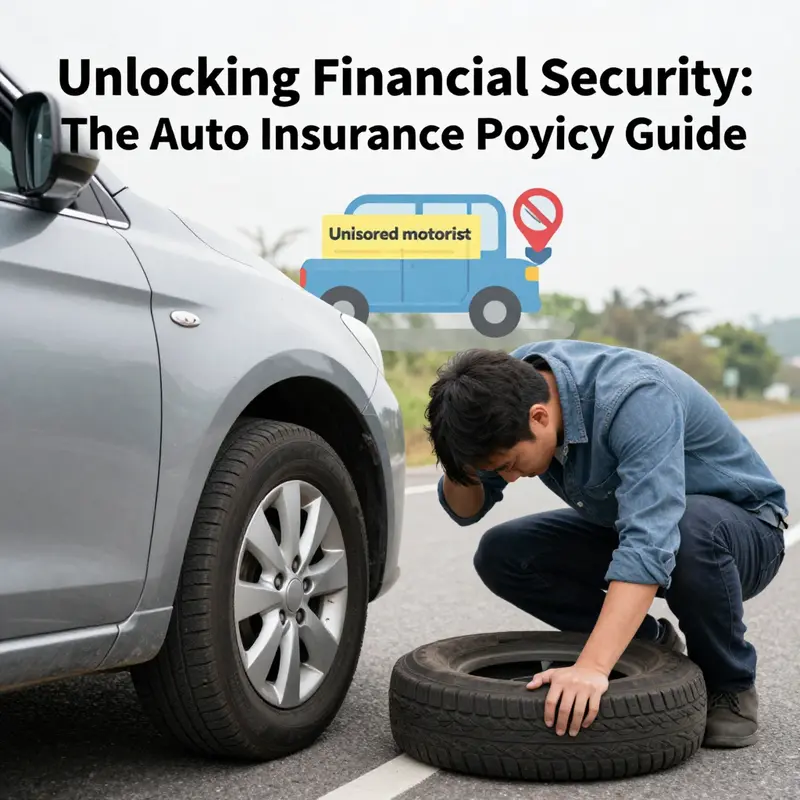
Uninsured motorist (UM) and underinsured motorist (UIM) coverage are defensive layers in an auto policy that protect your finances when another driver cannot or will not fully cover damages. These coverages step in where the at-fault driver’s liability insurance ends — or where there is none. Given rising medical costs, inflation in repair bills, and a notable share of drivers who lack adequate limits, relying solely on state minimums leaves many households exposed. Adding UM and UIM coverage is not about fear; it is a practical move to reduce the chance that a single crash will trigger a cascade of unpaid bills, lost income, and potential lawsuits that erode savings or force the sale of assets.
UM coverage applies when the at-fault driver carries no liability insurance at all. This can happen after a hit-and-run, when a driver lacks coverage, or when an inattentive motorist simply refuses to accept responsibility. UM typically covers medical expenses, pain and suffering, and sometimes lost wages. It can also cover passengers in your car. UIM coverage activates when the at-fault driver’s liability limits are insufficient to cover the damages you sustain. Think of it as the policy topping up what the other driver’s insurer pays, so you are not left on the hook for the remainder.
The financial logic behind UM and UIM is straightforward. Many state minimums for liability are low relative to today’s medical and repair costs. If an at-fault driver carries a $25,000 bodily injury limit and your medical bills after a crash exceed that amount, you need another source of recovery. UIM fills that gap. Likewise, if a driver flees the scene or never had insurance, UM replaces the coverage you would have expected from the other party. Without these protections, you rely solely on your own health insurance, accident benefits, or out-of-pocket resources, each of which can leave substantial holes.
Choosing policy limits for UM and UIM matters. A useful rule is to align UM/UIM limits with your liability limits. If you carry higher liability limits, you lessen the chance that another driver’s limit will cover your costs and increase the value of your own UM/UIM coverage. Many consumers opt for limits like $100,000 per person and $300,000 per accident for bodily injury. Those limits offer a significantly stronger cushion than typical state minimums. When selecting limits, consider medical risk, vehicle usage, household income, assets you need to protect, and whether your health insurance has high deductibles or co-pays. Higher income and greater assets generally justify higher UM/UIM limits.
Policy structure and endorsements vary. Some insurers include UM/UIM automatically, while others require a separate selection or endorsement. Some states require insurers to offer these coverages, and in those states they may be included unless declined in writing. Other states make UM/UIM optional. You should review your policy declarations page to see whether these coverages are present and confirm the chosen limits. The declarations page shows how much coverage you have, and whether you have UM bodily injury, UM property damage, or combined UM/UIM options.
Several practical features deserve attention. “Stacking” allows you to combine UM/UIM limits across multiple policies or vehicles owned by the same person or household. Stacked coverage increases the total amount available after a loss. Not all states allow stacking, and insurers may offer it only with an additional premium. Conversely, an “unstacked” option limits recovery to the coverage tied to the specific vehicle involved. Also check whether your UM/UIM includes property damage coverage, which helps when an uninsured driver damages your vehicle but lacks sufficient funds or insurance to pay for repairs.
UM/UIM coordination with health insurance and other benefits affects what you recover. If your health insurance pays medical bills first, your UM/UIM may reimburse those costs but could be subject to subrogation, where the insurer seeks reimbursement from other liable parties. Some UM/UIM policies contain offsets for payments made by other sources. Understanding these interactions helps set expectations during claims and informs whether you need higher limits to cover what health insurance will not.
Cost is an understandable concern. UM and UIM coverage typically add only a modest amount to premiums compared with the potential financial consequences of going without them. The incremental premium is often small relative to the increase in protection, particularly if you choose limits that match your liability coverage. When budgeting, weigh the annual premium increase against the potential out-of-pocket exposure you face following a serious crash. For many drivers, the monthly or yearly cost of UM/UIM insurance is far cheaper than repaying a single major medical bill or a long recovery-related income loss.
Selecting the right amount of UM/UIM is a balance between risk tolerance and asset protection. If you rent and have limited savings, you might accept lower limits. If you own a home, have retirement accounts, or expect future earnings you wish to safeguard, higher UM/UIM limits are prudent. An umbrella policy can provide an extra layer above both liability and UM/UIM; however, umbrella policies typically require higher underlying liability limits first. Thus, UM/UIM and liability choices work together as part of a broader protection strategy.
Claims scenarios illustrate why UM/UIM matters. Imagine a driver with minimal insurance who causes $150,000 in medical expenses. If that driver carries $25,000 bodily injury coverage, you would be left with $125,000 in unpaid bills without UIM. If you have UIM with limits of $100,000 per person, you still face $25,000 in potential unpaid costs unless other resources are available. With UIM limits matching $100,000 per person and stacked options from multiple vehicles, you could be better positioned to cover the full amount. Alternately, in a hit-and-run where no insurance exists, UM provides the recovery source you would otherwise lack.
Practical steps improve your protection. First, review your declarations page to confirm UM/UIM coverage presence and limits. If your policy lacks these coverages, request them from your insurer. Second, align UM/UIM limits with liability limits where possible, and consider stacking if available and cost-effective. Third, discuss how UM/UIM interacts with your health insurance and wage replacement benefits. Fourth, ask about discounts, multi-policy savings, and whether higher deductibles elsewhere can offset the cost of stronger UM/UIM limits.
Comparing options is essential. Prices and forms vary by insurer and state. Some carriers offer additional features like enhanced injury thresholds, no-fault benefits, or simplified subrogation language. Use comparison tools to examine multiple quotes and ask agents about the specific wording of UM/UIM endorsements. Policy wording can change coverage boundaries in practical ways, so don’t make decisions on pricing alone. A slightly higher premium for clearer, broader coverage often yields better protection.
Regulatory frameworks shape available choices. Some states mandate that insurers offer UM/UIM, while others allow consumers to decline coverage in writing. Where optional, the choice to decline often carries long-term consequences if circumstances change or if a serious crash occurs. Familiarize yourself with your state rules, because they influence stacking legality, mandatory offer requirements, and minimum required forms. Where mandatory offers exist, insurers must explain the coverage and obtain written declination if you opt out.
UM/UIM coverage is a decisive factor when determining which auto insurance policy offers better financial protection. Policies that pair higher liability limits with matching UM/UIM coverage deliver a coherent defense against both underinsured and uninsured drivers. This combination ensures you do not rely solely on the at-fault party’s capacity to pay. If your goal is financial resilience after a crash, prioritize UM/UIM limits that match your liability choices, consider stacking, and confirm policy language and state regulations. For additional guidance on selecting limits and comparing policies, see the company knowledge resource at our knowledge center.
For authoritative background and state-level context about how UM and UIM work, visit the Insurance Information Institute: https://www.iii.org/article/uninsured-and-underinsured-motorist-coverage.
Building Real Financial Protection: How to Evaluate Auto Insurance Policies Strategically
Evaluating an auto insurance policy is more than comparing prices. It is a disciplined exercise in matching coverage to real risk, protecting assets, and preventing expensive surprises after a crash. The most resilient policies combine sufficient liability limits, both collision and comprehensive coverage for your vehicle, and thoughtful optional protections such as uninsured/underinsured motorist coverage and personal injury protection. This chapter walks through a clear, strategic approach to decide which policy offers better financial protection for your situation.
Start with what a policy actually does for you. Liability coverage pays for harm you cause to others. Collision pays to repair your car after a covered accident. Comprehensive covers theft, vandalism, and weather damage. Legal minimums may satisfy the law, but they rarely safeguard your financial future. A single severe claim can exceed low state limits and expose your personal assets. For meaningful protection, consider liability limits in the six figures for bodily injury per accident. Pair that with reasonable property damage limits so a claim involving a luxury vehicle or commercial loss does not leave you personally exposed.
Your personal risk profile determines how much protection makes sense. Driving frequency, commute length, and parking environment change the odds of filing a claim. A driver who parks on the street in a high-theft neighborhood faces different threats than someone who garages a paid-off sedan. Family and financial dependents should influence your choices too. If others rely on your income, higher liability limits mitigate the risk that a liability judgment could jeopardize their financial stability. Equally important is your net worth. If you own a home or have substantial savings, higher liability limits act as insurance for those assets.
When assessing vehicle-related needs, balance vehicle value against the cost of coverage. Comprehensive and collision are particularly relevant when your car’s replacement cost justifies the premium. For older vehicles with low market value, the cost of collision coverage may exceed the expected payout. In those cases, freeing up premium dollars to raise liability limits or buy uninsured motorist protection can yield better overall protection. Conversely, if your vehicle is new or financed, comprehensive and collision are usually non-negotiable requirements imposed by lenders. Deductible selection matters here: a higher deductible lowers your premium but increases your out-of-pocket expense after a claim. Choose a deductible you can comfortably afford to pay in an emergency.
Uninsured and underinsured motorist coverage deserve special attention. A growing portion of drivers carry inadequate insurance. If you are hit by one of them, uninsured/underinsured coverage picks up medical bills and repair costs when the other driver cannot. It also often covers hit-and-run incidents. Many consumers overlook this protection because they assume others carry enough coverage. Don’t. For many households, this coverage is a cheap, high-value layer of defense.
Personal injury protection (PIP) or medical payments coverage varies by state. PIP can cover medical bills, lost wages, and other expenses regardless of who is at fault. In states without PIP, medical payments coverage provides a narrower payment stream for medical expenses. If you have limited health insurance or high deductibles, PIP can reduce financial friction after an injury. If you have comprehensive health coverage and strong wage protections, the incremental benefit of PIP may be lower. Evaluate how health insurance, employer benefits, and workers’ compensation interact with your auto policy before buying duplicate coverage.
Read declarations carefully. The declarations page of a policy condenses what you are buying: coverage types, limits, deductibles, and covered drivers. Make sure listed drivers match reality. Pay attention to endorsements or exclusions that change what is covered. For example, some policies exclude business use of a personal vehicle. If you use a car for work-related tasks, that exclusion can invalidate claims. Business owners should be especially careful. Commercial auto insurance is a separate class of coverage and often includes different liability exposures. If a vehicle serves a business purpose, consider commercial policies tailored to those risks rather than relying on personal auto insurance.
Understanding how insurers price policies helps you shop smarter. Car type, age, safety features, and theft statistics influence premiums. Insurers also weigh driving history, credit-based factors in some states, and demographic variables. A younger driver will often pay more, reflecting higher historical claim rates. But discounts are widespread and worthwhile to seek. Bundling home and auto, installing anti-theft devices, maintaining a good driving record, and qualifying for safe-driver programs can lower your premium. Ask insurers which discounts you qualify for and confirm they are applied in quotes.
Gathering multiple quotes is essential. Different insurers underwrite risk differently and offer unique packages. A lower premium may come with higher deductibles, narrower limits, weaker claim service, or fewer included benefits. When comparing quotes, build a consistent baseline: same liability limits, same comprehensive and collision deductibles, and equivalent optional coverages. This apples-to-apples comparison reveals real differences in price and value. Use comparison tools to streamline this process, but verify details directly with insurers when coverage language is unclear.
Beyond price, consider claims service and financial strength. A low premium has little value if the insurer delays payments or denies valid claims. Look for insurers with strong customer satisfaction and prompt claims handling. Independent ratings from financial analysts can indicate an insurer’s ability to pay large claims. A policy’s written price should be weighed against the insurer’s demonstrated capacity to deliver when needed.
Consider scenarios and stress-test your coverage. Ask what would happen if a liable driver caused a severe accident, or if your vehicle was totaled. Model likely costs and compare them with your policy limits and deductible choices. This thought experiment helps reveal gaps. For instance, if a judgment could exceed liability limits, an umbrella policy might be the lowest-cost way to increase your protection. Umbrella policies extend liability coverage beyond auto and home policies, often at a modest premium relative to the protection they add.
Documentation and periodic review lock in protection over time. Insurers update offerings and pricing, while your life changes. Marriage, buying a home, adding a teen driver, or starting a business alter your risk profile. Treat insurance as a living plan. Review your policy annually and after any major life event. Regular reviews ensure that limits, coverages, and endorsements evolve with your needs.
When evaluating options, pay attention to the small print around exclusions and limits. Some policies cap total payouts for certain losses or exclude specific events. Mileage limits, permissive driver clauses, and international travel exclusions are common traps. Ensure recreational use of a vehicle, modifications, or commercial activities do not invalidate coverage. Clarify these points with an agent and get endorsements in writing when needed.
Finally, adopt a prioritized checklist to decide which policy offers better financial protection. First, confirm liability limits that shield your assets. Second, ensure collision and comprehensive coverage match vehicle value and financing requirements. Third, add uninsured/underinsured motorist coverage and PIP according to your needs. Fourth, verify deductibles you can afford. Fifth, compare claims service, financial strength, and discounts. Sixth, review policy language for exclusions relevant to your situation. Following this sequence helps allocate premium dollars to the protections that matter most.
For business owners, the stakes are higher and rules differ. Personal policies rarely cover commercial exposures. Vehicles used for deliveries, transporting clients, or hauling equipment typically need commercial auto insurance. Commercial policies reflect higher liability limits and specialized coverages. If you operate vehicles for business, consult a specialist and align coverage with your operations. For a practical primer on managing business vehicle costs and risks, see this guide on managing truck ownership finances, which offers insights that parallel insurance decision-making for business vehicles.
Use available public resources to clarify state-specific requirements and consumer protections. The National Association of Insurance Commissioners provides state-by-state information, comparative tools, and consumer guides to help evaluate policy details. Their resources explain required minimums and help you compare them to recommended coverage levels. Visit the NAIC for clear, authoritative guidance on choosing the right mix of coverages for your state.
Evaluating an auto policy is a balancing act between cost and protection. A policy that looks cheap may leave you exposed when it matters. Conversely, the most expensive policy is not always the best value. The right approach is systematic: identify your risks, set priorities, compare equivalent quotes, and verify the insurer’s reliability. With this method, you can select a policy that offers meaningful financial protection without paying for unnecessary extras.
Remember that insurance is risk management. Your goal is to transfer the parts of risk that would cause significant financial harm, while retaining manageable expenses through deductibles and self-insurance. By focusing on liability adequacy, vehicle protections, and optional coverages that close coverage gaps, you build a policy structure that protects your finances through both everyday incidents and severe losses.
External resource: https://www.naic.org/consumer-resources.htm
Final thoughts
Navigating the world of auto insurance policies can seem daunting, but understanding the intricacies of liability coverage, comprehensive and collision protection, and uninsured motorist coverage will empower you to make informed decisions that align with your financial security goals. By assessing your unique needs and utilizing evaluation tools effectively, you can select an auto insurance policy that not only meets legal requirements but also provides comprehensive and robust protection tailored to your specific circumstances. Always remember that investing in higher coverage limits and broad protections generally leads to greater financial security after unforeseen incidents.