

In an ever-evolving automotive market, financing options play a pivotal role in determining how individual buyers, dealers, and small businesses access vehicles. BBAFC Auto Finance Co. and GAC Huili Auto Finance Co. are leading players in this arena, each contributing unique solutions tailored to diverse consumer needs. This article delves into their distinct roles, innovations, and future trajectories, providing crucial insights for individual car buyers, auto dealerships, franchises, and small business fleet buyers. Understanding the contributions of these companies equips consumers with the knowledge to make informed financing decisions.
Driving Toward a Networked Future: BBAFC Auto Finance Co. and the Transformation of China’s Automotive Financing Market
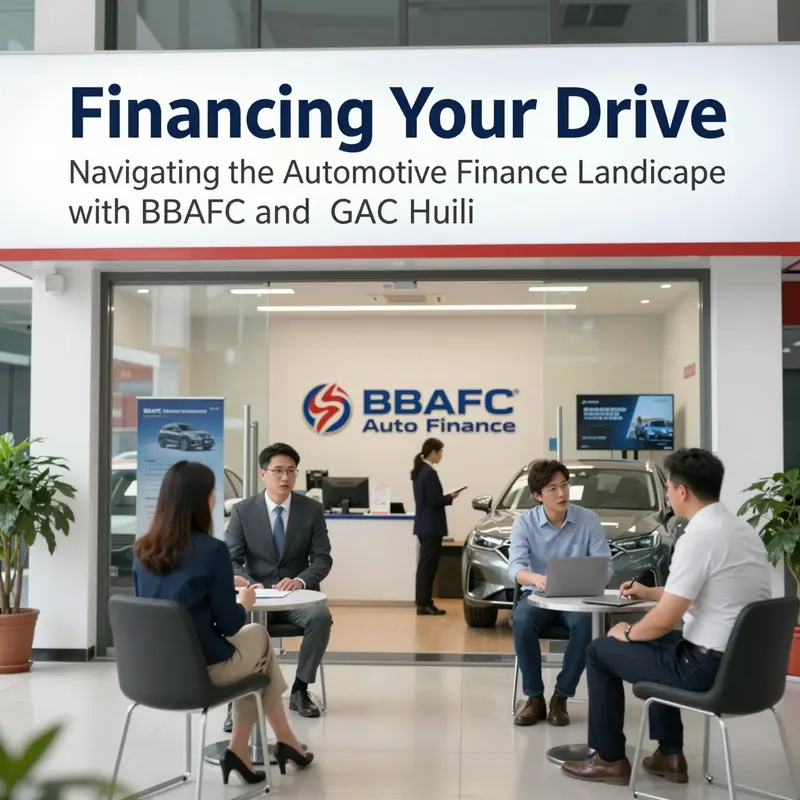
In the crowded landscape of China’s automotive financing, a handful of players have redefined how manufacturers, dealers, and consumers connect through capital. Among them, Brilliance-BEA Auto Finance Company Ltd, known in the market as BBAFC, embodies a distinctive blend of domestic industrial muscle and international financial discipline. Its trajectory offers a revealing case study of how a properly structured joint venture can align incentives across an entire ecosystem, from the showroom floor to the back-office credit desk, while also signaling the market’s broader shift toward digital efficiency, sustainable finance, and cross-border capital partnerships. The narrative of BBAFC is not simply a company profile; it is a lens on how the Chinese auto-finance market has evolved into a sophisticated, multi-layered market where risk, technology, and relationships intertwine to support the country’s ambitions for mobility and industrial upgrading.
At its inception, BBAFC was forged in 2015 through a deliberate alliance among Brilliance China Automotive Holdings Limited, Finconsum, a subsidiary of Caixa Bank, and Credit Gain, a subsidiary of Bank of East Asia. The ownership structure matters as much as the numbers: Brilliance China Automotive holds a majority stake of 55 percent, anchoring the venture in the manufacturer’s interests and ensuring a steady channel for retail and wholesale financing linked to Brilliance’s dealer network. The foreign partners, each holding 22.5 percent, bring international risk management practices and disciplined credit culture to the table. With a registered capital of 16 billion renminbi, the capital base is not a mere symbol; it is a signal that the venture intends to support the long-term loan commitments that underpin one of the most capital-intensive segments of retail finance. The arrangement reflects a broader pattern in China, where manufacturers collaborate with financial partners to decouple credit risk from the retail relationship and to scale financing as a strategic lever for market access and customer satisfaction.
From the outset, the core mission of BBAFC was framed as a win-win ecosystem: a robust financing spine that sustains automakers and their authorized dealers while delivering flexible, customer-centric financing options to end buyers. The logic is straightforward yet powerful. Dealers gain access to reliable wholesale financing that stabilizes inventory turns and reduces working-capital friction, while consumers unlock longer-tenor loans and more favorable approval criteria that narrow the gap between desire and purchase. This triadic alignment—manufacturer, dealer, and financier—transforms financing from a transactional tool into a strategic accelerator of sales velocity and customer loyalty. The company’s emphasis on long-term, stable financing supports the dealer network’s planning horizon and, crucially, helps manufacturers coordinate pricing, incentives, and model mix with greater confidence.
As one scans the early growth of BBAFC, certain strategic choices come into clear view. First, the organization prioritizes scale through a nationwide footprint. With more than 500 retail locations across China, the company can service a broad geography, which reduces frictions for buyers who live far from metropolitan hubs and slows down the financing process. In a market where application-to-funding cycles can be long and opaque, streamlining this flow becomes a competitive differentiator. The second choice centers on the product tapestry. BBAFC develops both consumer loans for vehicle purchases and wholesale financing for dealerships, ensuring that it can influence both demand and supply sides of the market. By offering products that span the full lifecycle of a vehicle purchase—from showroom financing to dealer-level liquidity—the company can shape credit availability in a way that aligns with brand strategies and customer preferences.
The first years also underline the value of external partnerships in risk management and product innovation. The alliance with Caixa Bank and Bank of East Asia injects a set of time-tested international risk controls, governance practices, and capital discipline into a Chinese consumer-credit framework. In practice, this means credit policies that balance growth with prudent risk-taking, underwriting standards that leverage cross-border data and analytics, and a governance structure that respects both domestic regulatory expectations and the stringent risk controls typical of international banks. The CBRC approval process, completed in March 2015, and the official business licensing on April 7, 2015, were more than bureaucratic milestones: they were market signals that blended domestic policy alignment with the appetite of foreign banks to participate in China’s high-growth auto-finance segment. The architecture of BBAFC thus rests on a tripod: the domestic manufacturing backbone, foreign financial best practices, and a governance culture designed to sustain rapid scaling without compromising resilience.
Over time, BBAFC began to widen its horizons beyond the Brilliance brand and broaden its exposure to the rapidly changing contours of the Chinese automotive market. The company’s strategy embraced diversification into partnerships with notable new energy vehicle NEV players. The decision to broaden the product and brand mix was not merely a marketing move; it was a calculated response to market dynamics. As the auto market in China increasingly prioritized NEVs amid policy incentives and consumer enthusiasm, BBAFC positioned itself as a financing partner ready to support a wider array of brands and technologies. In practical terms, this meant offering tailored retail finance options and dealer financing solutions designed to accommodate the needs of a broader set of manufacturers and dealer networks. The objective was not simply growth in loan book size but growth in the quality and accessibility of financing for customers who chose NEVs, a segment that has become central to China’s mobility aspirations and environmental policy.
Digital transformation sits at the heart of this evolution. In 2020, BBAFC launched the Youdai Online Service System, a digital platform designed to streamline the application process for borrowers and dealers alike. The system reduces manual touchpoints, accelerates decisioning, and improves transparency across the credit lifecycle. By enabling online access to credit inquiries, document submissions, and status tracking, the platform helps dealers move volumes more quickly and gives buyers a smoother path to financing approval. The shift toward digital processing does more than improve convenience; it enhances risk management through standardized workflows, faster data collection, and real-time monitoring of portfolio performance. The emphasis on digital infrastructure underscores a broader industry trend toward automation and data-driven decision-making, which in turn supports the regulatory objectives of traceability, anti-fraud controls, and accurate reporting to central authorities.
A key turning point occurred in August 2022 when BBAFC integrated with the People’s Bank of China’s enterprise credit system. This integration raised the bar for credit assessment by enabling direct access to verified corporate credit data. The result is a more transparent underwriting environment in which risk is better quantified and monitored. For a consumer credit business, access to enterprise credit data helps calibrate risk and price loans more effectively while preserving a smooth user experience. The integration also reinforces operational transparency, making it easier for supervisors to audit underwriting decisions and compliance procedures. Such advancements are not cosmetic; they improve the reliability of financing for customers and the stability of the lender’s balance sheet. They also set a template for future collaborations with other data sources and financial networks as China’s financial system continues to digitize at a rapid pace.
The environmental dimension of BBAFC’s growth presents perhaps the most forward-looking aspect of its story. In 2022, the company pioneered China’s first green and carbon-neutral syndicated loan. This milestone demonstrates that BBAFC is not merely aligning with market demand but actively shaping the instruments used to fund sustainable mobility. Green finance has moved from a niche interest to a core component of strategic procurement and portfolio management within the auto-finance sector. By participating in a green syndicated loan, BBAFC signals to manufacturers, dealers, and investors that its financing can support NEV ecosystems while maintaining robust risk controls and a credible cost of capital. The environmental finance initiative also resonates with policy trajectories that reward sustainable mobility, encouraging manufacturers and financiers to allocate capital toward cleaner technologies and more energy-efficient operations.
The impact of these developments is evident in the breadth and depth of BBAFC’s market engagement. The company’s dealer network benefits from stable liquidity and faster funding cycles, which translate into more confident inventory management and improved sales execution. For consumers, the digital tools and integrated credit processes reduce friction and shorten the time from application to funding. In a market where competitive differentiation increasingly hinges on the customer experience, BBAFC positions itself as a partner that can deliver speed, reliability, and a coherent financing experience across multiple brands and platforms. The emphasis on customer-centric service, coupled with the leverage of technology and international risk discipline, makes the BBAFC model a practical blueprint for how automakers and financiers can collaborate to expand access to credit while preserving prudent risk management.
In considering BBAFC’s role within the broader auto-finance ecosystem, it is important to recognize the parallels and contrasts with other prominent players. GAC Huili, for instance, emerges as a parallel force shaped by a different corporate alignment and growth cadence. Founded in 2010 and built under the GAC Group along with a French agricultural credit group joint venture, GAC Huili has grown its footprint with a strong emphasis on consumer financing products, including new car loans and refinancing options. By December 2023, it had increased its registered capital to 30 billion renminbi and reported that it had served a vast and geographically diverse customer base—over 300 million customers across 300 cities. This scale—reaching across many urban centers and touching a broad cross-section of households—reflects a strategic emphasis on broad access and brand reach, complementing the more structure-driven, relationship-based model that BBAFC represents.
What emerges from this comparison is not a simple competition but a complementary dynamic. BBAFC’s strength lies in its deep cross-border governance, its varied brand partnerships, and its capacity to drive efficiency through digital platforms and green finance innovation. GAC Huili’s strength lies in its expansive reach and its capacity to scale consumer financing across a wide geographic and demographic spectrum. Together, these forces illustrate a market that is moving beyond a binary choice between in-house finance and third-party financing toward an integrated ecosystem where manufacturers, financial partners, and digital platforms collaborate to meet the evolving needs of consumers and dealers alike. Each player contributes to a broader narrative in which finance is a strategic instrument for growth, customer experience, and sustainable mobility, rather than a mere risk-adjusted capital allocation tool.
From a macro perspective, the growth of BBAFC and similar institutions reflects the evolving policy and market conditions in China. A regulatory environment that began with careful licensing and supervisory oversight has evolved into one that emphasizes data-driven risk management, digital inclusivity, and environmental responsibility. The CBRC’s earlier role in approving specialized auto finance companies has given way to a broader ecosystem where central bank interfaces, digital credit systems, and cross-border funding arrangements operate in a more integrated, transparent, and scalable manner. In this context, the customer is not simply a loan recipient but a participant in a lifecycle that extends across digital channels, dealer relationships, and a growing constellation of NEV partnerships. The market’s trajectory toward NEV financing, green lending, and syndicated loan structures signals a maturation that aligns with both consumer preferences and national policy objectives around energy efficiency and sustainable growth.
The human dimension of this evolution should not be overlooked. Behind the numbers—loan disbursements, capital commitments, and credit lines—are the people who design, underwrite, approve, and service these loans. The partnerships with international financial institutions bring a discipline to risk management and governance that protects both lenders and borrowers. The digital platforms reduce friction and enable better customer service, making financing not a barrier but a facilitator of mobility. And the commitment to green finance signals a deeper alignment with China’s environmental goals, framing auto financing as a contributor to sustainable development rather than a simple growth vehicle for consumption.
As readers engage with the broader chapter on a & b auto finance co and its significance for the market, it is worth pausing on the practical implications for dealers and buyers alike. For dealers, maintaining liquidity and streamlined credit approval is essential to sustaining inventory, negotiating favorable terms with automakers, and delivering a seamless purchasing experience to customers. BBAFC’s wholesale financing model contributes to this by stabilizing cash flows and reducing the complexity of financing arrangements that dealers must manage. For buyers, the promise of faster approvals, more flexible terms, and access to a diverse set of financing options across multiple brands enhances the likelihood of turning interest into a completed purchase. The digital tools—together with the reliability of cross-border risk management practices—give customers confidence that the financing is transparent, predictable, and responsive to changing credit conditions. The net effect is a more efficient and more customer-centric auto market where financing is closely aligned with the realities of consumer behavior and the strategic aims of manufacturers.
In this sense, the story of BBAFC is emblematic of a broader shift in China’s auto finance market: a shift from a fragmented, dealer-centric approach to a holistic, ecosystem-driven paradigm. The fusion of manufacturing strength with sophisticated financial governance and digital delivery channels creates a model that can adapt to disruptive trends, from the continued expansion of NEVs to the emergence of new financing structures that blend green lending with syndicated credit arrangements. For a market heavily influenced by policy incentives and consumer demand dynamics, such adaptability is not a luxury but a necessity. The ongoing expansion into NEV partnerships, the ongoing digitization of credit processes, and the commitment to sustainable finance together illuminate a path forward for a growing number of auto finance participants seeking resilience, scale, and superior customer experiences.
To readers concerned with practical takeaways, the BBAFC trajectory suggests several guiding principles for current and aspiring auto financiers. First, align capital structure with strategic objectives by combining domestic industrial strength with international risk-management prowess. Second, pursue a diversified brand and product strategy that does not depend on a single partner but leverages multiple brand dynamics to reach different consumer segments. Third, invest in digital platforms that streamline both consumer and dealer journeys while enabling robust, auditable data across the credit lifecycle. Fourth, embed sustainability into the financing playbook through green and carbon-neutral initiatives that can attract capital at attractive terms while supporting policy goals. Finally, cultivate a culture of transparency and customer-centric service that treats the financing journey as a seamless extension of the vehicle ownership experience rather than a separate, opaque process.
The conversation about a & b auto finance co is no longer solely about the mechanics of lending. It is about building trust across a network of actors—manufacturers, dealers, lenders, regulators, and buyers—who share a common interest in moving people into mobility with efficiency, responsibility, and confidence. As BBAFC and peers continue to innovate, the auto finance landscape in China will likely become more interconnected, more data-driven, and more capable of supporting a future in which mobility is accessible, affordable, and aligned with environmental imperatives. That future, while still unfolding, is underway through the deliberate collaboration of seasoned financiers, forward-looking manufacturers, and dynamic digital platforms that together transform the experience of buying and owning a vehicle.
For readers who want to explore related ideas and deepen their understanding of how financing platforms intersect with broader transportation and logistics trends, the following resource offers broader context on how technology and finance are reshaping mobility ecosystems: Knowledge Center.
External resource: a broader, externally hosted analysis of global electric vehicle market growth and implications for financing can be found at https://iea.org/reports/global-ev-outlook-2023. This report situates China’s NEV financing within a global trajectory, offering comparative insights into how sovereign policy, consumer demand, and corporate financing strategies converge to support a cleaner, more connected future of mobility.
GAC Huili Auto Finance Co.: Bridging Global Expertise and South China’s Automotive Credit Frontier

The automotive finance landscape in China is not a single story of lending on a showroom floor; it is a layered narrative of partnerships, cross-border capital, regulatory adaptation, and a relentless push toward digital customer journeys. GAC Huili Auto Finance Co., Ltd. sits at a pivotal point in that narrative. Born out of a Sino-French collaboration between Guangzhou Automobile Group Co., Ltd. and Crédit Agricole Consumer Finance (CAF), this company represents more than a financing arm for a single corporate ecosystem. It embodies a strategic philosophy: leverage long-standing international experience to accelerate the adoption of sophisticated risk management, expansive distribution, and agile product design in one of the world’s most dynamic automotive markets. Since its inception in 2010, the enterprise has been anchored in Guangzhou yet grown to touch hundreds of cities, reinforcing the idea that financing for a vehicle is less about liquidity alone and more about how that liquidity translates into trusted, scalable consumer and dealer experiences across a vast geography. The result is a model that blends global best practices with local sensitivity—a combination that is increasingly vital as the Chinese auto market matures and diversifies in the face of shifting consumer preferences and evolving regulatory expectations.
To understand the significance of GAC Huili within the broader article on a & b auto finance co, one must first appreciate the scale and reach the company has achieved. The headquarters in Guangzhou serves as a nerve center for a network that now operates in more than 300 cities and forges partnerships with upwards of 2,900 dealerships. This expansive footprint does not merely reflect a distribution advantage; it underpins a practical capability to align credit decisions with the realities of local markets. In provinces and municipalities where credit penetration remains a work in progress, the ability to extend financing services through a dense, well-supported dealer network is a crucial differentiator. It means consumers who may be new entrants to financing—first-time buyers, urban migrants, or households expanding their vehicle use—can access credit with a level of convenience and speed that was unthinkable a decade ago. The story of GAC Huili, in this sense, mirrors a broader transformation in Chinese consumer finance: credit products that were once the province of urban centers, large banks, and specialty lenders are increasingly accessible across a national lattice that is both dense and digitized.
At the heart of GAC Huili’s strategy is a carefully balanced partnership framework. CAF brings decades of international experience in consumer finance, including proven credit-risk models, governance practices, and a global perspective on customer experience. The collaboration allows GAC Huili to draw on a bankable playbook for underwriting, capital management, and portfolio discipline, while staying attuned to the unique dynamics of the Chinese market. This cross-border collaboration is not merely symbolic; it translates into structural competencies—from standardized credit assessment procedures to robust risk controls that can adapt to the cyclical nature of auto sales, lender competition, and regulatory shifts. It is a reminder that the most successful auto finance platforms in today’s China are those that fuse foreign expertise with local execution, creating a hybrid that is both technically rigorous and intimately responsive to consumer needs. The alignment with CAF also signals something larger: the willingness of international financial players to embed themselves in China’s automotive ecosystem not as outsiders but as long-term partners dedicated to meeting the high expectations of a fast-evolving market. In practice, this means GAC Huili operates with a governance posture that emphasizes transparency, responsible lending, and a disciplined approach to capital deployment—principles that are essential when a portfolio grows to tens of billions of RMB and a customer base expands across millions.
The scale that GAC Huili has achieved by November 2022—serving over 3 million customers and managing a loan portfolio surpassing RMB 65 billion—speaks to operational prowess as much as it does to strategic vision. This is not merely a statistic; it is a signal of capability: the capacity to manage risk while sustaining growth, to maintain service quality across a dispersed network, and to deliver a financing experience that feels seamless to the end user. The growth narrative is inseparable from the customer-experience narrative. In a market where shopping for a vehicle is increasingly integrated with digital channels, the financing layer must be accessible, transparent, and quick. GAC Huili’s career long emphasis on innovation, risk management, and operational excellence translates into a journey for customers that begins with an online inquiry, proceeds through a multi-channel application process, and culminates in a financing decision that supports actual vehicle acquisition in a timeframe that aligns with both consumer expectations and dealer workflows. The architecture of this process—end-to-end digital onboarding, real-time credit assessment, and efficient contract execution—has become a baseline requirement for competitiveness in modern auto finance, and GAC Huili has positioned itself as a company that not only meets this baseline but attends to the nuances that differentiate a satisfactory experience from an exceptional one.
Integral to that customer journey is the breadth of financing options offered, designed to accommodate the varied circumstances of end customers and the needs of dealerships. While the market often highlights the most visible lending products offered at the point of sale, the real value lies in the flexibility of the financing framework—the ability to tailor repayment terms, calibrate credit thresholds, and facilitate timely refinancing when borrowers’ financial situations change. In the context of a company rooted in an ecosystem as diverse as the GAC Group’s, this means a collaborative approach to product design that considers not only the borrower’s immediate purchase but the long-term financing relationship. The dealer network, too, benefits from a stable, scalable source of credit that supports showroom activity and sustains sales velocity. The operational model—rooted in CAF’s long-standing practices—emphasizes risk-adjusted pricing, data-driven underwriting, and a disciplined portfolio management discipline. Such a framework; fosters resilience during macroeconomic shifts, while still enabling the dealer network to respond to seasonality, inventory cycles, and consumer sentiment changes that can ripple through a region as populous and diverse as South China.
Yet the significance of GAC Huili extends beyond product design and portfolio metrics. It lies in the company’s commitment to digital transformation as a core growth engine. The 60-plus years of CAF’s international experience provide a rich repository of digital practices, from automated workflows and online documentation to sophisticated data analytics that support predictive risk management and proactive customer engagement. In practice, this translates into systems that empower customers to complete applications with minimal frictions, while internal teams access risk signals, repay histories, and alternative data sources to inform decisions with greater confidence. The digital backbone enables real-time monitoring of portfolio performance, anomaly detection, and rapid adjustment of credit policies—capabilities that are essential in a market where competition among lenders is intense and product life cycles are increasingly compressed by technology-enabled alternatives. The emphasis on risk management is not merely about avoiding losses; it is about creating sustainable growth that preserves trust with customers, dealerships, and regulators. A robust risk framework helps ensure that credit expansion does not outpace the capacity of the economy to absorb new debt, thereby maintaining financial stability while supporting vibrant consumer demand.
The geographic reach of GAC Huili is another core element of its strategic advantage. Operating across more than 300 cities means that buyers in smaller urban centers and provincial capitals can access financing in ways that were once the preserve of metropolitan hubs. This geographic dispersion helps stabilize the business model, diversifying risk across regional economies and reducing the concentration risk that accompanies a more centralized footprint. But it also creates a platform for a more inclusive form of consumer finance. By enabling a broad spectrum of households to participate in car ownership through accessible financing, GAC Huili contributes to a broader transformation of mobility in the region. Cars become not just symbols of status or convenience but instruments that enable labor mobility, schooling, entrepreneurship, and family life. In this sense, the company participates in a larger social and economic narrative: the modernization of mobility and the integration of finance into everyday decision-making. The company’s approach—combining scale, discipline, and digital excellence—exemplifies how the Chinese auto finance sector is evolving beyond traditional lending into a more sophisticated, customer-centric enterprise that aligns with national policy goals around financial inclusion and digital economy development.
An important dimension of GAC Huili’s leadership is its industry recognition. Between 2019 and 2021, the company was repeatedly lauded as the Best Auto Finance Company, a reflection of the trust it has earned from customers and partners alike. This accolade is more than ceremonial; it is a signal to the market that the company can maintain high service standards while managing complex credit risk in a rapidly changing environment. Awards of this nature reinforce the brand’s credibility among dealers who rely on dependable finance partners to capture sales and maintain liquidity in their own operations. They also reinforce consumer confidence at the moment of decision when a potential borrower weighs cost, terms, and the reliability of service. In a market where consumer debt levels and regulatory oversight are evolving, such recognitions help anchor a sustainable relationship between lender, borrower, and originator—an ecosystem that benefits the entire value chain.
When we consider the chapter’s broader relevance to the topic of a & b auto finance co, we can see how GAC Huili’s blueprint informs the design of similar joint-venture platforms. The Sino-French collaboration underscores a model of cross-cultural governance and international capital that leverages global best practices while staying firmly rooted in local practice. The result is a finance organization that can scale responsibly, support a multi-brand ecosystem in its corporate orbit, and adapt to the changing regulatory and consumer landscapes. The emphasis on customer-centricity, risk discipline, and digital acceleration speaks to a universal imperative for automotive lenders worldwide: to deliver speed and reliability at the point of sale while building a durable, data-driven underwriting culture that can weather uncertainty. In a sense, GAC Huili captures the tension and harmony that define modern auto finance—where speed must be matched by prudence, where innovation must be anchored in risk-aware processes, and where growth is pursued not at the expense of trust but through earned credibility.
For readers seeking a broader perspective on how financial services firms connected to the transport sector are navigating disruption and transformation, a useful companion resource lies in the knowledge domain that aggregates industry insights and strategic frameworks. This resource provides context on how digital technologies, data-enabled decision making, and evolving regulatory expectations are reshaping the finance landscape for mobility. You can explore it here: Davis Financial Advisors Knowledge.
As the auto finance industry continues to evolve, GAC Huili’s trajectory offers several implications for practitioners and policymakers alike. First, the model demonstrates that cross-border partnerships can accelerate the transfer of governance and analytics capabilities, accelerating time-to-market for new underwriting approaches while maintaining high standards of compliance and customer protection. Second, the scale achieved by a robust dealer network highlights the symbiotic relationship between lenders and distributors in the auto market; a healthy financing ecosystem depends on smooth credit flow to dealerships and predictable, transparent terms for customers. Third, the sustained focus on digital transformation shows that technology is not a fringe enabler but a core driver of competitive advantage in lending—facilitating faster approvals, reducing friction, and enabling more nuanced risk management than traditional, analog processes could deliver. And finally, the recognition awarded to GAC Huili demonstrates that market trust is an enduring asset in financial services. When a lender is perceived as reliable, capable, and fair, it creates a virtuous loop of customer satisfaction, dealer loyalty, and investor confidence that can endure even as external conditions shift.
In closing, GAC Huili Auto Finance Co. embodies a forward-looking synthesis of global best practices and local market intelligence. Its Sino-French roots, expansive reach, and disciplined approach to risk and customer experience position the company as a benchmark within China’s automotive finance landscape. For the broader narrative of a & b auto finance co, GAC Huili serves as a compelling case study of how strategic partnerships, digital-enablement, and scale can combine to deliver not only financing but also mobility futures for millions of Chinese consumers. The company’s story invites readers to consider how similar models might be adapted to other regions and partnerships, emphasizing that the future of auto finance rests on the twin pillars of trust and technology.
External reference: http://www.gacsofinco.com
Financing the Fast Lane: Lessons from BBAFC and GAC Huili for the Future of Auto Financing in China and Beyond

The story of auto finance in China, and by extension the broader global market, unfolds at the intersection of mobility, technology, and evolving consumer expectations. Two case studies anchor this narrative: BBAFC Auto Finance Co., Ltd and 广汽汇理汽车金融有限公司. Each embodies a distinct path to scale, risk management, and customer experience, revealing how joint ventures built on cross-border capital and local know-how can steer a sector through rapid change. The former, a venture anchored by Brilliance China Automotive Holdings with a strategic stake for Caixa Bank and the Bank of East Asia, demonstrates how a venerable automaker’s ecosystem can be translated into a seamless financial pathway for customers purchasing premium brands. The latter, rooted in the GAC Group and a long-standing European financial partner, showcases how a large domestic network can accelerate digital transformation while expanding access to diverse credit products. Taken together, these stories illuminate both the current contours and the probable futures of auto financing, not only in China but also in any market where traditional lending meets the disruptive force of new mobility paradigms.
At the core of this evolving landscape is the simple fact that financing is the enabler of mobility. Consumers want to move, and financing providers want to understand the true value and risk of the asset that enables that movement. This alignment has driven the expansion of consumer loans for vehicle purchases and dealership financing, but it has also pushed companies to rethink relationships across the entire lifecycle of a vehicle. The scale of Chinese auto financing, with the country’s population and urbanization dynamics, has created an opportunity to redefine how credit is extended, how risk is assessed, and how experiences are delivered at scale. The two leading players in focus operate with distinct models but share a common ambition: to convert complex financial decisions into smooth, reliable, and personalized journeys for customers.
The mechanics of scale are instructive. BBAFC, established in 2015, stands as a bridge between consumer demand and automotive distribution, underpinned by a substantial registered capital and a governance structure that couples the strengths of a domestic automotive group with the breadth of international financial repositories. Its market reach—spanning more than five hundred retail locations—speaks to a deliberate insistence on accessibility. A 16 billion RMB registered capital base contains the strategic bets of its primary shareholder, Brilliance China Automotive Holdings, while minority stakes held by Caixa Bank and Bank of East Asia signal the appetite of international lenders for integrated automotive ecosystems. This arrangement is not merely about lending; it is about creating an end-to-end experience in which the consumer can browse, select, and secure financing with a minimum of friction. The real strength of such a construct lies in how effectively it leverages data, location, and customer touchpoints to deliver underwriting that feels intimate yet is governed by prudent, scalable risk controls.
On the other side of the coin, GAC Huili Auto Finance Co., Ltd., which emerged from the GAC Group’s strategic collaboration with a European partner, highlights a different route to scale. Its more than three-decade evolution is marked by a shift from traditional dealership financing toward a more holistic financial services platform. With a registered capital that reached 30 billion RMB by December 2023, the company has signaled its intention to expand beyond conventional new-car financing into a broader suite that includes refinancing and other forms of credit support. The geographic dwelling of its success—headquartered in Guangzhou and serving hundreds of cities—reflects a national footprint that combines local intelligence with the capacity to deploy standardized services across diverse markets. In both cases, the emphasis on customer-centric service remains non-negotiable, but the paths they take to achieve that objective are shaped by ownership structure, risk appetite, and the tempo of digital adoption.
What emerges from this juxtaposition is a deeper appreciation for China’s peculiarity: a large, youthful population eager to adopt mobility solutions but still navigating a complex credit landscape. The penetration of auto finance in China, estimated at around 50 percent, sits below the levels typical of more mature markets where penetration exceeds seventy percent. The gap, rather than a deterrent, becomes a powerful incentive for lenders to innovate. It invites a more granular understanding of consumer segments, a more nuanced use of data, and a more proactive stance toward building trust in financial products. The narrative of BBAFC and GAC Huili is thus not only about growth numbers or market share; it is about how institutions translate opportunity into reliable credit experiences for millions of prospective buyers who may be entering the market for the first time or who are expanding their vehicle ownership as cities evolve.
In parallel with market expansion, the composition of demand is shifting. The global auto finance market is projected to exceed 2.5 trillion dollars by 2026, a milestone that underscores both the scale and velocity of change. Yet, the most compelling regional story remains China, where early-stage growth is converging with a surge in consumer credit options across both new and used vehicle segments. The literature suggests competition is intensifying in new-vehicle financing, driven by a mix of traditional banks, specialized auto financiers, and platform-based lenders that leverage data to reduce cycle times. But beyond new-vehicle credit, a broader and increasingly important trend is the strategic expansion into the used-car market. This is not simply a diversification play; it is a response to consumer demand for affordability, variety, and reliability in a market characterized by rapid depreciation and a dynamic aftermarket ecosystem.
The shift toward used-car financing is accompanied by a rethinking of the customer journey. As standards rise and consumer trust builds, lenders are focusing on experience quality as a differentiator. A smoother onboarding process, faster decisions, and transparent pricing are no longer niceties but baseline expectations. The two companies at the heart of this chapter demonstrate how this philosophy translates into concrete capability. BBAFC’s emphasis on efficiency through technology—processing financial service requests across a nationwide network—serves as a blueprint for what a modern auto finance platform can achieve when data flows, underwriting rules, and service delivery are aligned with customer touchpoints. GAC Huili, likewise, has prioritized digital transformation as a core strategic lever, recognizing that the same consumer who books a test drive remotely expects a refinancing option that is equally accessible and equally straightforward. The convergence of these ideas shapes a market where the consumer is progressively at the center of the financing relationship, rather than merely a recipient of a product.
Leasing and subscription models have emerged as particularly potent engines of growth. In 2023, NEV leasing demand surged by about 40 percent year over year, a figure that captures both policy catalysts and changing consumer preferences. The battery component of electric vehicles, once a financing complication, is increasingly being treated as a separable asset in a battery-to-vehicle model that unlocks more flexible ownership arrangements. This model reduces the upfront cost burden for buyers while enabling lenders to manage residual risk more effectively. It also resonates with Gen Z and younger cohorts who place a premium on flexibility and access over outright ownership. In this context, lease-to-own arrangements and related models can be seen not merely as alternatives to traditional loans but as a pathway to broader inclusion, enabling first-time buyers to participate in the car ownership economy on terms that align with evolving lifestyles and work patterns.
A striking demographic lever also informs the leasing calculus. By the end of 2024, public data points to a vast pool of licensed drivers—1.92 billion—while private-car ownership in the same time frame was about 3.10 billion units. The ratio underscores a latent demand for mobility that is not yet fully monetized by private ownership. Leasing and subscription services, therefore, can unlock access for a large swath of people who would otherwise be constrained by the capital requirements of purchasing a vehicle. This is not merely a growth vector but a social and economic accelerant, capable of extending mobility to urban workers, students, and professionals who value the convenience of transport without long-term asset burdens. It also creates opportunities for the financing ecosystem to engage with a broader ecosystem of partners, from insurers to maintenance providers, who benefit from a shared, seamless customer experience across a vehicle’s lifecycle.
In the face of these trends, technology is not a peripheral enabler but a central engine of change. The future of auto financing will be defined by AI-driven personalization, data-driven risk assessment, and secure, auditable transaction networks. The use of advanced credit models that integrate multi-dimensional data—from traditional credit history to real-time vehicle usage patterns and behavioral signals—promises more accurate risk pricing and better post-loan management. Blockchain and distributed ledger technologies offer potential for secure, immutable transaction records, improving trust across the ecosystem of manufacturers, lenders, dealers, and customers. These capabilities translate into faster approvals, more precise credit terms, and more resilient portfolios that can absorb shocks without sacrificing customer experience. In practice, the two companies cited here demonstrate different facets of this technology-led evolution. BBAFC’s approach to digitization emphasizes operational efficiency and service accessibility across hundreds of retail points, showing how a high-volume financing operation can maintain quality control while expanding reach. GAC Huili, with its large network and capital base, has leaned into digital transformation to unlock product breadth and service consistency across a broad geographic footprint. Both illustrate how technology can harmonize the needs of a dispersed customer base with the discipline required to sustain solvency and profitability in a fast-changing market.
The strategic implications for a new generation of auto financiers—whether they are domestically rooted, cross-border collaborations, or blended ventures such as an imagined a & b auto finance co—are clear. First, scale must be pursued with an integrated architecture that unifies origination, underwriting, risk management, and post-loan servicing into a coherent continuum. The customer’s experience should feel uninterrupted as they move from discovery to decision to repayment, with data flowing safely and transparently across the enterprise. Second, diversification of financing products is both a response to customer demand and a means of spreading risk. While new-car financing will remain a core pillar, the growth of leasing, refinancing, and used-car credit will diversify revenue streams and mitigate cyclicality in new-vehicle demand. And third, regulatory and policy environments will continue to shape the speed and direction of innovation. What looks like a disruptive breakthrough in one jurisdiction may require adaptation elsewhere, underscoring the importance of strong governance and a clear, scalable blueprint for expansion.
The two firms under review offer complementary lessons. BBAFC demonstrates how a strong automaker-influenced platform can convert enthusiasm for a premium brand into a disciplined, data-supported credit flow that spans hundreds of locations. The emphasis on customer-centric service, powered by technology, points to a future in which geographic reach and operational efficiency are not competing priorities but mutually reinforcing capabilities. GAC Huili, with its robust capital base and expansive network, illustrates how to balance breadth with depth: broad access to credit across many cities, paired with a commitment to digital excellence that ensures the quality and consistency of customer interactions. The combination suggests a model where scale is achieved not by simply multiplying branches or portfolios, but by weaving together digital intelligence, standardized processes, and a culture of continuous improvement. As markets evolve, the ability to adapt—without losing the essence of trusted customer relationships—will distinguish winners from followers.
From a strategic perspective, the most compelling implication for the broader auto-finance ecosystem is the centrality of the customer journey. In a landscape where data is abundant and processing power is cheap, the real differentiator is the ability to translate that data into timely, accurate, and empathetic service. Consumers want pre-approved offers that feel tailored to their real-life constraints, a financing experience that respects their time, and ongoing support that helps them manage ownership across the life of the loan. For lenders, this means investing in scalable, modular architectures that can accommodate new channels, new asset classes, and new ways of partnering across the mobility stack. It also means embracing risk frameworks that can adapt to shifting macro conditions, from policy incentives for NEVs to potential changes in credit dynamics as urban mobility patterns continue to evolve. The two case studies show that these principles are not theoretical; they are actionable strategies that can translate into tangible competitive advantages in both mature and emerging markets.
As the industry moves forward, cross-border collaboration will likely intensify. The best practices developed by Chinese auto financiers—combining deep local market understanding with the efficiency and risk discipline of international financial partners—could become a template for new ventures seeking to bridge markets. In this sense, the concept of an a & b auto finance co represents more than a corporate entity; it embodies a philosophy of cooperation, technology-led growth, and customer-centric risk management that is well suited to the era of smart mobility. The future will reward those who can harmonize the speed of innovation with the rigor of governance, and who can do so while keeping the consumer at the center of every decision. The chapter’s broader aim is to illuminate how these dynamics play out in practice, shaping a sector that is no longer confined to the boundaries of a single country but is increasingly a global conversation about how best to fund the move toward a more connected, more sustainable, and more accessible mobility ecosystem.
For readers seeking a concise framework behind these shifts and a curated set of insights, a helpful starting point is the knowledge hub that gathers perspectives on financial services and transportation. This resource offers context on how markets are changing, the drivers behind credit-market evolution, and the technology trends that are accelerating transformation. It serves as a practical touchstone for practitioners who want to connect the strategic dots described above with concrete actions in origination, underwriting, and servicing. Knowledge hub.
Beyond the regional focus, the macroeconomic and policy environment will continue to play a decisive role in shaping the pace of adaptation. Some policies favor accelerated adoption of NEVs through subsidies and tax incentives, while others push toward more standardized credit practices and improved data sharing across lenders, dealers, and manufacturers. The net effect is a market that becomes more transparent, more competitive, and more capable of delivering customized credit solutions at scale. The interplay of these forces—market growth, evolving product mix, advancing technology, and policy signals—will define how well new entrants can establish a foothold and how existing players will defend theirs. The lessons drawn from BBAFC and GAC Huili are not limited to the specifics of their portfolios or their country of origin; they illuminate enduring principles about capital efficiency, customer trust, and the discipline required to sustain growth in a turbulent, rapidly changing industry.
As the narrative moves forward, readers should expect further elaboration on how automation, data science, and cross-border collaboration will shape the next wave of auto financing. The forthcoming chapters will explore how new players can integrate into this evolving ecosystem, how risk management can remain robust while portfolios expand, and how regulatory developments can either accelerate or constrain the pace of innovation. In the meantime, the core takeaway remains clear: auto financing in the era of smart mobility will be defined by the quality of the customer experience, the sophistication of the underwriting engine, and the willingness of institutions to invest in the digital capabilities that make scalable, responsible credit possible at unprecedented speed and scale.
External reading for broader context on the macro-architecture of auto finance and its strategic implications can be found here: https://www.mckinsey.com/industries/automotive-and-assembly/our-insights
Final thoughts
As the automotive finance landscape continues to evolve, BBAFC and GAC Huili stand at the forefront of providing tailored solutions that resonate with individual car buyers, dealerships, and small businesses. Through their commitment to innovation, customer service, and a deep understanding of market needs, these companies are positioned to shape the future of financing. By leveraging the insights and offerings discussed, potential buyers and partners can navigate their automotive financing decisions with confidence.